
Clean water infrastructure matters more than tax cuts
JEREMY GRIMM / Contributing Writer | Bonner County Daily Bee | UPDATED 8 months, 2 weeks AGO
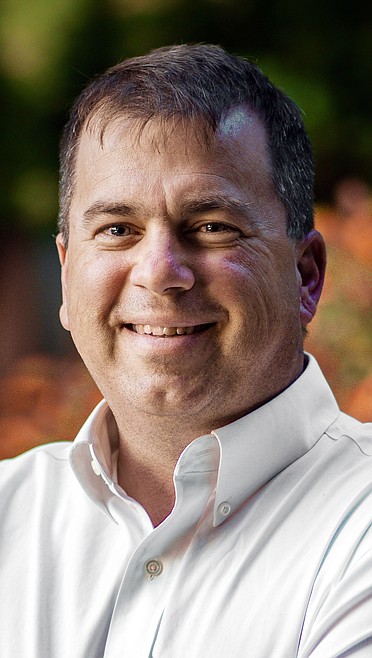
Grimm
At both the state and federal levels, leaders frequently emphasize affordability, economic growth, and the importance of letting hard work pay off. Those goals are broadly shared. Yet across Idaho, a growing contradiction threatens to undermine them: the Clean Water Act — while well-intentioned and essential — has increasingly become an unfunded mandate, shifting the financial burden of compliance onto local communities with little meaningful federal or state support.
In Sandpoint, Idaho, population of plus/minus 10,000, we face a $130 million wastewater treatment plant replacement required to meet Clean Water Act standards. This is not an expansion or a discretionary project. It is the replacement of aging infrastructure — much of it dating back to the World War II era — that has reached the end of its useful life. The project is unavoidable if we are to protect public health, Lake Pend Oreille, and downstream waters.
As communities grew and environmental standards evolved, wastewater systems nationwide were upgraded to meet federal law. Compliance with the Clean Water Act was originally achieved through a shared federal-state-local funding model, reflecting a long-standing recognition in Idaho that clean water infrastructure is foundational to economic and community stability.
That shared funding model has eroded.
To date, Sandpoint has received no federal grant funding for this federally mandated project. The State of Idaho has provided only limited assistance, leaving local utility customers responsible for the overwhelming majority of the cost through long-term debt with anticipated sewer-only rates of $200 per month. This is not unique to Sandpoint — it is increasingly the norm for communities across Idaho.
The consequences of this approach are now measurable.
According to analysis by the Idaho Conservation League, more than 50 percent of Idaho’s wastewater treatment facilities are currently violating their Clean Water Act discharge permits, with hundreds of documented violations statewide involving bacteria, toxic metals, and other regulated pollutants. This is not a marginal compliance issue; it is a clear signal of a statewide infrastructure problem driven by aging systems and insufficient reinvestment. According to a May 2025 study by the University of Idaho McClure Center for Public Policy Research wastewater infrastructure needs in Idaho for FY2026 exceed $730 million alone.
This matters because water is not just an environmental concern in Idaho — it is economic infrastructure. Agriculture, tourism, recreation, manufacturing, housing values, and drinking-water protection all depend on reliable wastewater systems. When those systems are pushed beyond their design life or fall out of compliance, the risk is borne not just locally, but across the state’s economy.
At the same time, fiscal reality at the federal level cannot be ignored. The United States is operating under historically large deficits and a national debt measured in the tens of trillions of dollars. We are, quite plainly, out of money to fund everything.
That reality makes prioritization essential.
If resources are constrained, public spending must focus on foundational investments that allow Americans and Idahoans to prosper. Few investments are more foundational than clean water. Allowing wastewater systems to fail — or forcing compliance costs entirely onto local ratepayers — does not represent fiscal discipline. It represents cost shifting, reduced affordability, and increased economic risk.
Low taxes alone do not create prosperity.
Functioning infrastructure does.
If state and federal leaders are serious about economic growth, affordability, and rural resilience, then Clean Water Act mandates must once again be paired with meaningful investment. The intent of the law remains sound. What is missing is the funding structure that once made compliance realistic.
The question before Idaho’s Legislature and congressional delegation is not whether clean water standards should be enforced — they must be. The question is whether we will restore a funding approach that recognizes clean water for what it is: essential infrastructure that underpins public health, economic opportunity, and long-term stability.
Clean water is not optional.
And it should not be treated as a local problem alone.
Jeremy Grimm is the mayor of the city of Sandpoint. He can be reached at [email protected].