
Animal control: A problem without a clear solution
EMILY HEIMARK | Hagadone News Network | UPDATED 7 months, 2 weeks AGO
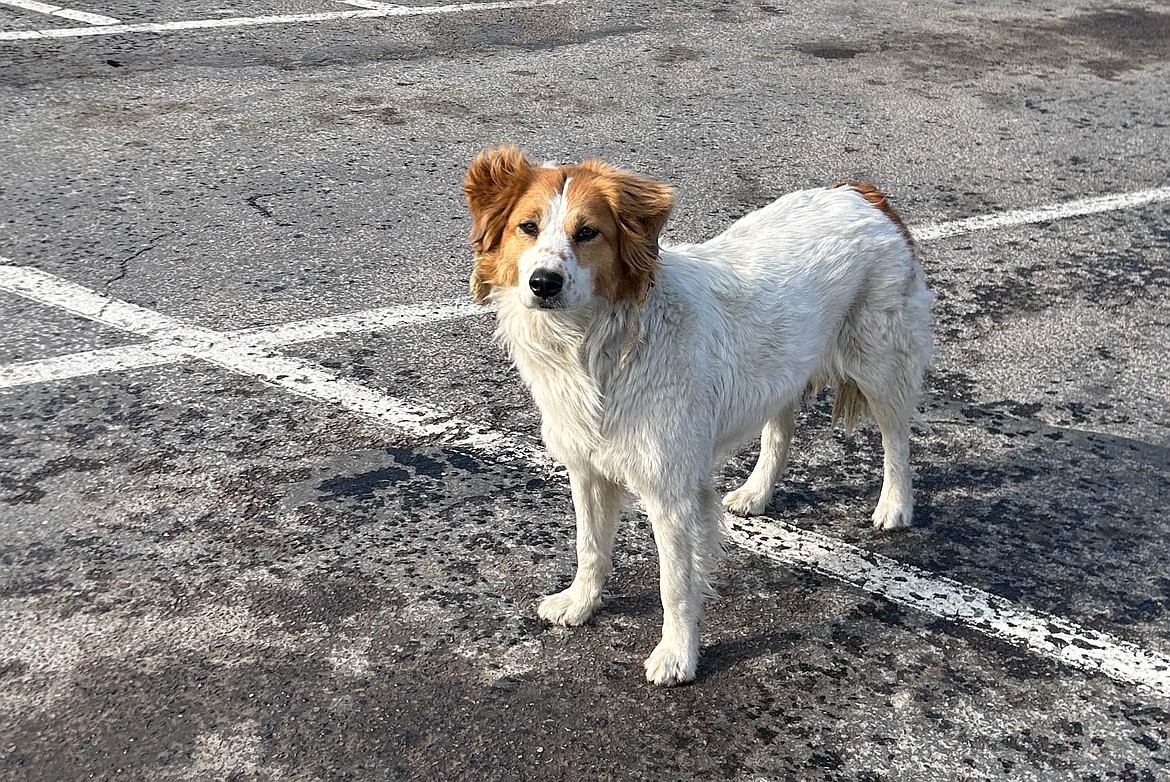
A Pablo dog wanders across Highway 93 and into the Pablo Family Foods parking lot on Monday, March 9. Both the Confederated Salish & Kootenai Tribes and Lake County have attempted to reach a joint agreement on animal control, but the limiting factor is funding. (Emily Messer/Leader)
Emily Heimark (Messer) joined the Lake County Leader in July of 2025 after earning a B.A. degree in Journalism from the University of Montana. Emily grew up in the rolling hills of southeast Missouri. She's lived in Montana since 2022 and honed her reporting craft through the UM J-School newspaper and internships at the RMEF Bugle Magazine and the Missoulian. At the Leader, she covers government, business, education, agriculture and community news. Contact Emily Heimark at [email protected] or 406.883.4343 | March 12, 2026 12:00 AM
As of March 3, Mission Valley Animal Shelter had a waitlist of owner surrenders that included 41 cats or kittens and 28 dogs awaiting placement in the shelter, which is funded by donations.
Across the county, there are packs of feral dogs and cat colonies, an issue that St. Ignatius Mayor Daren Incashola said affects all communities.
“It needs to be controlled better than it is now,” Incashola said.
Some form of code enforcement or dog catcher has existed in each Lake County jurisdiction over the course of history, but no countywide solution has emerged to care for the county’s large population of abandoned or uncared for pets – despite past efforts that have come close.
There have been several attempts at varying joint agreements between government entities over the past two decades, Lake County civil attorney James Raymond said. In 2023, Lake County attempted to forge a joint animal control agreement with the Confederated Salish and Kootenai Tribes. However, they stand at an impasse over funding.
In 2025, there were 196 calls for service regarding “animal control issues,” averaging almost four calls a week, according to Mark Clary, the emergency management coordinator for the Lake County Office of Emergency Management.
Each city has developed a variety of animal ordinances, but all have limited resources and lack code enforcement. It’s a problem that “a patchwork of enforcement” with “limited funding” to deal with it, said CSKT attorney Stu Levit when presenting an animal ordinance update to the CSKT Tribal Council on Jan. 3, 2025.
“The restricting factor is resources, and the concern of passing an unsupported mandate that would roll out without an ability to be successful, that’s a fancy way of saying the limiting issue is funding,” CSKT communications director Rob McDonald said.
The different jurisdictions and tribal enrollment status also play a significant role in animal management. Lake County municipalities attribute the lack of code enforcement to funding. These funding hurdles include a facility to place the animal, paying a civil officer to handle and move the animal, vet bills and food.
Multiple governments noted they had a kennel to house animals at one time, but it comes down to the additional money, resources and time that has to be devoted to maintaining it. According to previous Leader reporting, the Mission Valley Animal Shelter was overrun with stray animals and stopped accepting them from any municipal authority in November of 2022.
The shelter board notified local governments that animals were the responsibility of the municipal authorities. The board’s statement noted that any animals south of Ronan would be referred to the Arlee Rehabilitation Center in Arlee or Life Savers Animal Rescue, centered in Polson. Animals found in Tribal Housing properties would be referred to CSKT Housing Animal Control.
ARC shut down in 2025, and CSKT has no animal control officers, according to McDonald. However, CSKT Housing has an officer on staff.
“The problem now is, if you have a problem dog and catch it, then you have to pay to board it,” said Dan Miller, Ronan's director of public works.
“And that's why we haven't wanted to catch them,” said Ronan Mayor Ryan Corum.
Non-profits step in
Currently, non-profit organizations with limited resources throughout the county are attempting to meet the need. Organizations such as Mission Valley Animal Shelter are at capacity and have no authority to pick up animals.
Others, like Life Savers Animal Rescue in Polson, offer foster-based rescues without a facility and attempt to do what they can. But they still have to turn away stray animals due to their unpredictability, Life Savers board president Nancy Hemphill said.
Hemphill explained that the biggest issue across the county is the lack of enforcement. She said many owners allow their unneutered animals to roam freely, ultimately contributing to population growth.
“Not having active animal control officers makes a huge impact on every city in our whole county,” stated an email statement from the Mission Valley Animal Shelter. “Animal control should be locating and picking up stray animals running loose. They should have a space to hold animals while owners are being located, and fines should be issued for animals not contained within the owners’ property.”
The statement went on to explain that currently lost animals are the responsibility of the community members who find them because the shelter does not have the ability to take them at a moment's notice.
The City of Polson once had a civil officer to manage animals and a shed with kennels but no longer has either in place. Polson City Manager Ed Meece explained that even without a full-time civil officer, it is unsustainable for them to drive the animal to another nearby county.
“When stray numbers are not kept under control, then we start to get dog packs,” the shelter statement said. “These groups can become aggressive with humans as they must fight to survive every day.”
Loss of ARC in Arlee “was gut-wrenching"
Another group was recently formed after the closure of ARC. Emily Thueson, a former board member of ARC, decided to start a Facebook page called Mission Valley CommUNITY. The group of neighbors helping neighbors allows people to post lost animals and their needs, such as animal food.
As the page grows, Thueson is organizing spay and neuter clinic, which ARC used to host. She is working with Spay Montana to offer two clinics this year, the first of which is April 25 and 26 at the St. Ignatius Community Center.
“When the word came out that ARC dissolved, it was gut-wrenching for everybody, because there was a huge difference made here,” Thueson said. “And just because ARC dissolved, doesn't mean that there aren't just animals, but families in need as well.”
Thueson noted that the clinic will spay or neuter about 200 animals that are overrunning the shelters and burdening law enforcement resources. She said that they will stop taking appointment requests at the beginning of April. The group is also in desperate need of more foster homes.
Collaboration between County and Tribes in limbo
Lake County Commissioner Steve Stanley was the commissioner who pushed the most recent efforts for animal control. This agreement was drafted and worked on by both county and tribal attorneys. Raymond calls it a packaged deal that’s “ready to go,” but still lacks the financial support.
Stanley explained that Lake County would have to go to the taxpayers to fund it, and he doesn’t believe in putting the full burden on taxpayers without some funding contribution from CSKT. He said that since they approached CSKT about how to fund it, they have not heard back.
McDonald noted in an email to the Leader that it has been at least a year since tribal attorneys spoke with Lake County attorneys, and funding is the restricting factor on this issue.
“So, the project has not moved ahead and won't until we hear from the Tribes as far as how they want to participate dollar-wise to the project, and there's no guarantee the taxpayers would vote for a mill levy,” Stanley said.
Stanley noted that animal control is the right thing for the county, and the option of a joint agreement remains on the table. Raymond explained that it might be possible to obtain a grant to fund the initial build, but the continuing operating costs are an obstacle.
However, Raymond said they have discussed various options to combat the operating costs, such as charging people to board their animals while on vacation.
Miller even noted that the county was considering placing the animal control facility on Ronan city property. Stanley said the county felt they would sponsor the facility by managing hiring and other administrative duties.
All municipalities expressed interest in a joint agreement with the Tribes and county, but funding is causing the halt of any animal control efforts.
ARTICLES BY EMILY HEIMARK
Proposed changes to City of Polson government to appear on ballot
The Polson Local Government Review Study Commission completed its report earlier this year, and the proposed changes to the city charter and supplementary report of action to be taken will appear on the November ballot.

Native cowboy from Mission Valley travels to Kyrgyzstan for Nomad World Games
Reaching down from the back of his horse, he grabs the goat carcass, a total of 80 pounds of dead weight, as dust strikes him in the face; the adrenaline rush is never-ending, and the physical demands on his body are unreal.

Rollins Fire completes community-funded addition and remodel
After outgrowing its space, the Rollins Volunteer Fire Department sought support from the community and raised $2.2 million to fund necessary upgrades and a station addition.