
The race is on to restore history through lost apples
CHLOE COCHRAN | Hagadone News Network | UPDATED 3 weeks, 2 days AGO
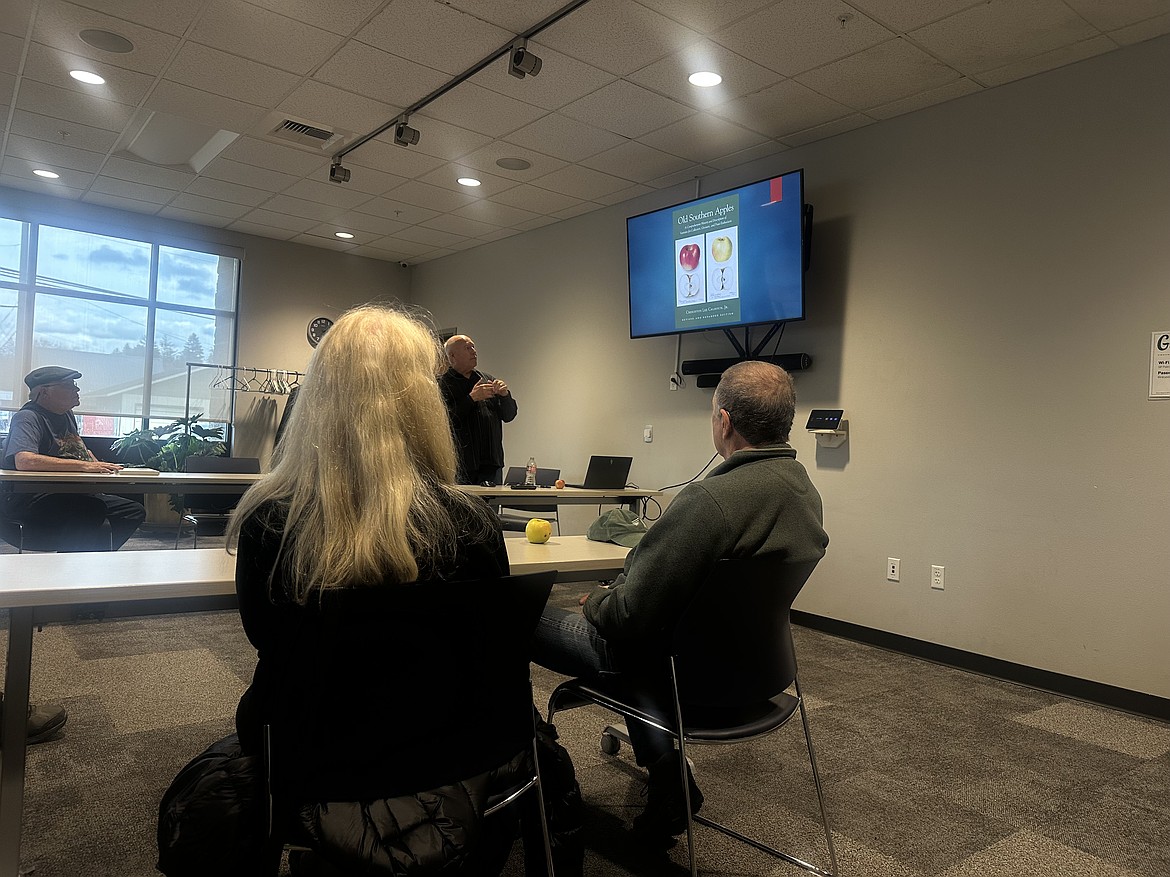
On Saturday, March 7, many community members gathered at the East Bonner County Library to learn how they could help the Lost Apple Project in its quest to find already gone or now going extinct apples.
In a packed conference room, David Benscoter shared his journey to identify and preserve heritage apples brought to the West by early settlers in the late 1800s and early 1900s.
Benscoter told those gathered that of the 17,000 named apple varieties in North America, only 5,000 are known to exist today — sparking his personal search for lost apples and his creation of the Lost Apple Project.
“It’s part of our history, and we just believe it’s very important that we do find these lost apples,” said Benscoter. “All these apple trees are forgotten about. Nobody knows what they are and nobody knows what they taste like.”
Throughout the hour-and-a-half presentation, Benscoter took his audience on a journey through the origin of apples in North America, all the way to his discovery of his first “lost apple” find.
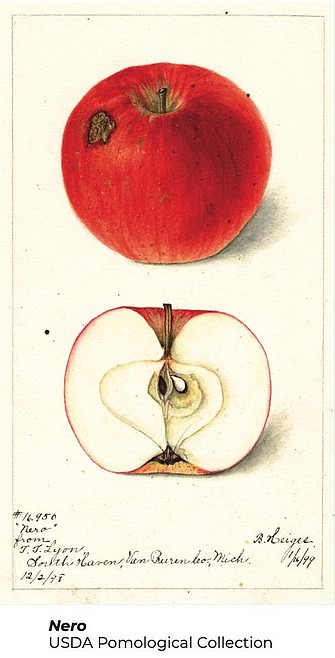
Benscoter shared his back-and-forth journey through historical documents, newsletters and land ownership documents before finding his first “lost apple,” the Nero apple, on Steptoe Butte in Colfax, Washington.
Since his 2015 groundbreaking discovery of the Nero apple, the Lost Apple Project has found over 29 lost apples.
Before apple seeds reached America, Benscoter noted that Europeans drank hard cider rather than water because of deadly contamination. When traveling to America, European settlers brought apple tree seeds with them to secure cider to drink, despite the country’s clear sparkling rivers.
Aside from drinking cider, homesteaders depended on apples as a main food staple, feeding a family from July to the following spring. Apples could be eaten fresh, baked, fried, stewed, dried, made into hard cider or apple cider vinegar, or into apple butter.
A sacred commodity at the time, apples were cherished for their taste and ability to grow throughout specific seasons. Trees that produced healthy apples were shared among neighbors, and “really good apple seeds” were distributed throughout the county. As the first pilgrims tested and planted millions of apple seeds, thousands of good-tasting apple varieties were created.
“Most seedlings, roughly 90-95%, taste awful — so bitter or astringent that you just want to spit them out. Those are called spitters. A small fraction tastes good or even excellent. Those rare, good-tasting seedlings are the starting point for new varieties,” Benscoter said.
Benscoter said that finding the lost varieties of apples is not just for curiosity, but to understand settler life and homesteading, and to reconstruct regional and national agricultural history.
Those interested in assisting the Project’s initiative to rediscover and preserve apple varieties in the Pacific Northwest can contact project officials at lostapples.wiki/contact/.
 An illustration of the Nero apple, the first "lost" apple refound by David Benscoter
ARTICLES BY CHLOE COCHRAN
Armstrong addresses Careywood closure, wildfire deployment concerns
Misinformation and criticism surrounding local fire services were the subject of Tuesday’s “community chat” as Bonner County Commissioner Asia Williams hosted Northside Fire Chief Jeff Armstrong at the event.

Guzzi enters county clerk race
Long-time public servant JoAnne Guzzi has announced her candidacy for Bonner County Clerk.

Williams addresses jail roof, path forward
During a recent Tuesday business meeting, Commissioner Asia Williams provided clarity on long-standing discussions surrounding repairs to the Bonner County jail’s leaking roof.