
EWU earns rare NSA accreditation
JOEL MARTIN | Hagadone News Network | UPDATED 7 months, 1 week AGO
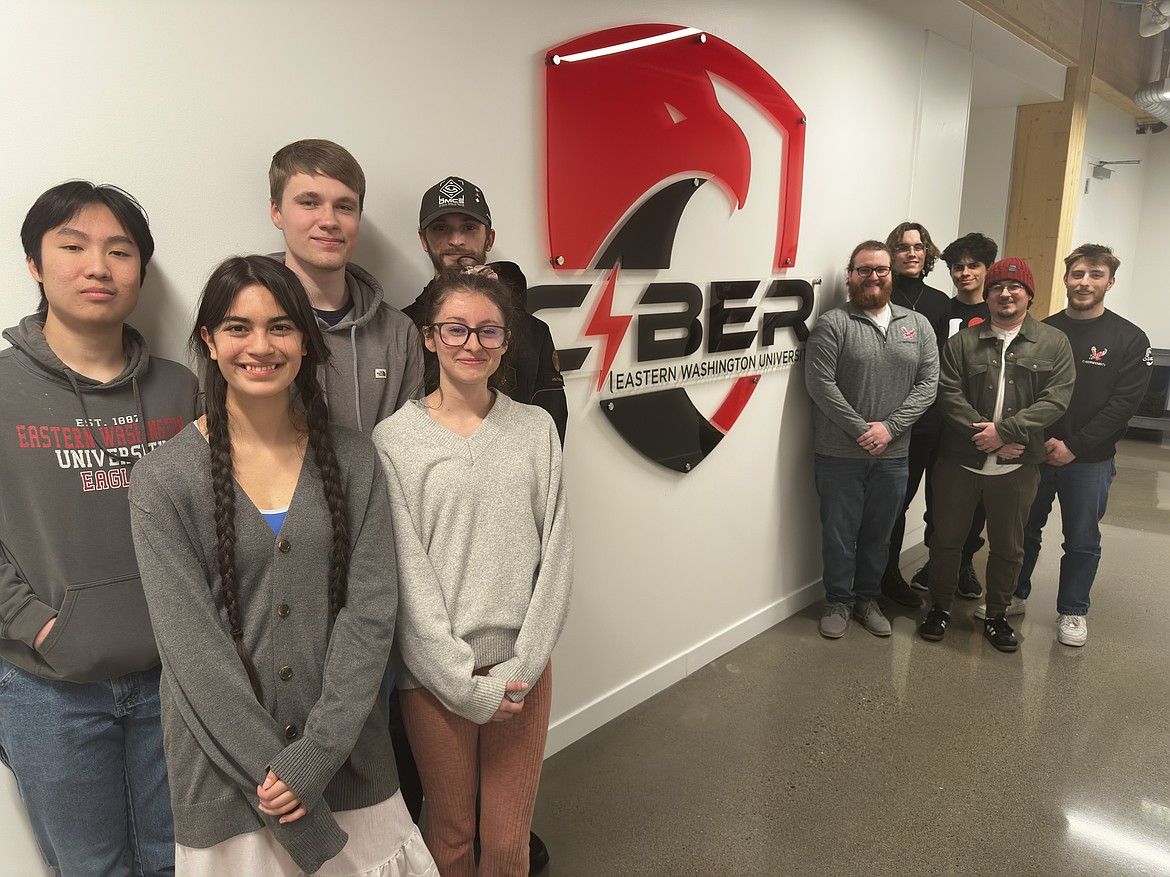
The Eastern Washington University Cybersecurity Institute was recently designated a National Center of Academic Excellence in Cyber Operations by the NSA, the only university in 10 states to hold that distinction.
COURTESY PHOTO/EASTERN WASHINGTON UNIVERSITY
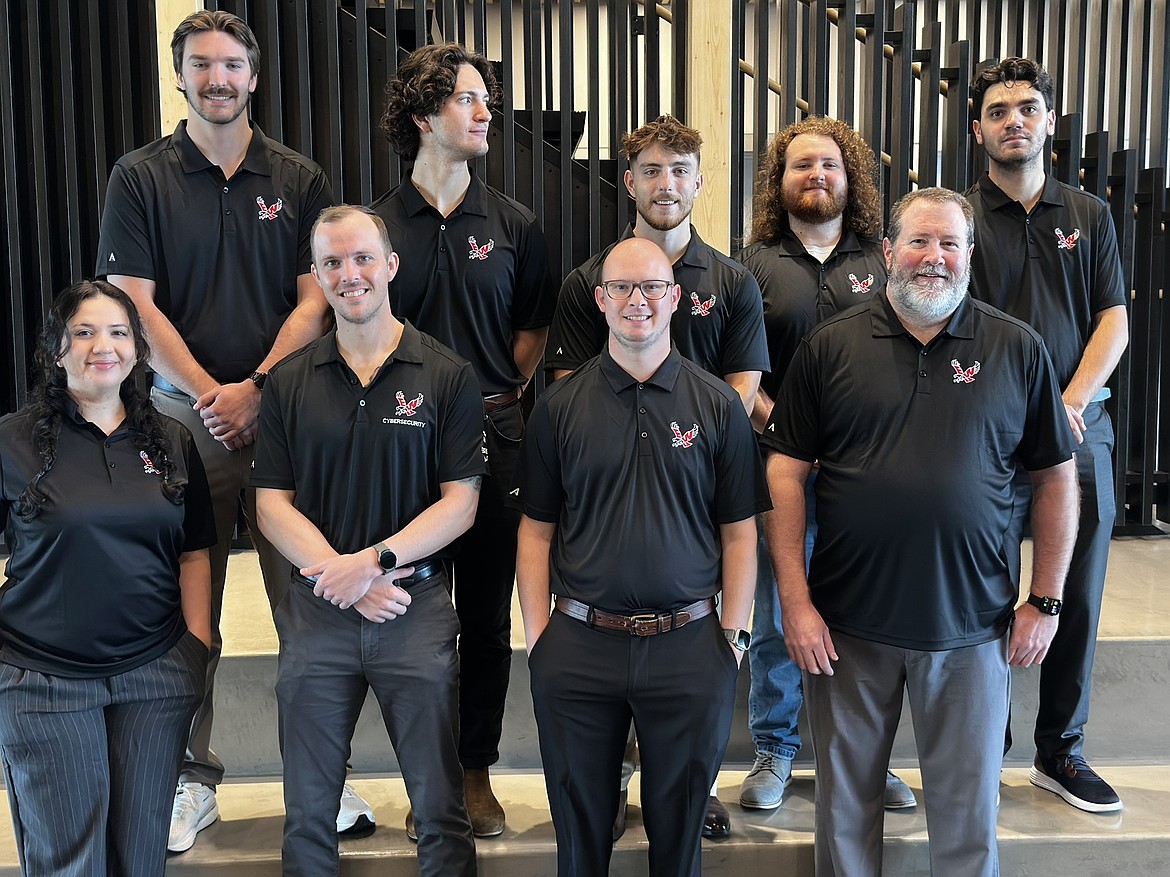
The National Center of Academic Excellence in Cyber Operations designation opens up jobs in sensitive government fields to EWU students from the university’s Cybersecurity Institute.
Joel Martin has been with the Columbia Basin Herald for more than 25 years in a variety of roles and is the most-tenured employee in the building. Martin is a married father of eight and enjoys spending time with his children and his wife, Christina. He is passionate about the paper’s mission of informing the people of the Columbia Basin because he knows it is important to record the history of the communities the publication serves. | March 13, 2026 3:00 AM
CHENEY — Eastern Washington University has been named a National Center of Academic Excellence in Cyber Operations, according to an announcement from the university.
The designation comes from the National Security Agency, the federal agency responsible for collecting foreign signals intelligence and protecting U.S. government communications and information systems.
“The CAE-CO designation is rare, difficult to earn, and serves as a national signal that an institution is equipped to produce graduates capable of working on some of the most sensitive and technically demanding cybersecurity challenges,” Associate Professor Stu Steiner, director of the EWU Cybersecurity Institute, wrote in the announcement.
The CAE-CO designation opens the door to funding and student opportunities not available to other cybersecurity programs, according to the announcement. It also qualifies EWU for priority access to grants from the NSA and the Department of War, makes the school eligible for specialized research collaborations that involve sensitive material and strengthens its position for workforce initiatives by ensuring that its graduates meet the highest technical standards. For students, the designation means jobs and training in high-security environments and access to scholarships and internships at the NSA that other students don’t qualify for.
The designation opens doors to more than just the NSA. According to the cybersecurity job search site cyberseek.org, there were 13,027 jobs open in the cybersecurity field Tuesday in Washington state alone, and only 78 workers available for every 100 open positions. That demand has increased recently as world events have brought the cybersecurity field into even greater demand, Steiner told the Columbia Basin Herald.
“When the Israeli-Iran-US war broke out, there was (encouragement from the Department of War) to see if we could graduate students faster,” he said.
Obtaining the designation was no easy task, Steiner said.
“Last year we when we graduated students in June, we started the designation process, and it took from June until February for us to get the designation,” he said. “It’s a very complex, very scrutinized process.”
First, the university had to prove that its curriculum contained everything students would need to know to qualify, and match the graduates’ competencies up with what the Department of War would require.
“You have to provide labs, you have to provide graded homework … you have to provide transcripts of students to show they've taken the classes and they pass the classes. You have to map (those classes) to either the NSA framework or to the (War) Department's workforce framework for cybersecurity.”
EWU also had to provide the NSA with detailed information about the students in the program: their grades, their homework, their extracurricular activities and how they did in cybersecurity competitions.
“It's not just about coursework,” Steiner said. “It's about actually applying that coursework in real-world situations through competitions and internships.”
Beyond that, the university had to prove that its faculty met the designation’s criteria, and that the university could screen its students to keep out hackers.
Many people think of cybersecurity as keeping thieves from stealing an individual’s identity or emptying their bank account, but that’s only part of the picture, Steiner said.
“We call that cyber defense,” Steiner said. “Cyber defense is both precautionary and reactionary. If you get hacked, you’ve got to get back into your system, get the hackers out and figure out why, and how long they've been in there. The other side of the thing is you’ve got to patch your machines. Microsoft releases new patches and you’ve got to update those. There's new things coming out every day that you’ve got to make sure re installed on your systems.”
Besides defense, there’s also attack, which Steiner called cyber operations.
“In defense, you typically have a class like network security, which is setting up firewalls on in the system, setting up routing tables, stuff like that. In the cyber operations world, you have classes like reverse software engineering or reverse hardware engineering. You're literally ripping hardware apart to find the vulnerabilities in it. You're taking a piece of software that you didn't write the code for and going through it and finding the vulnerabilities.”
The CAE-CO designation is a rare one. EWU is only the 22nd school in the nation to earn it, and the only one in the Pacific Northwest. According to the NSA’s website, it’s the only CAE-CO designated institution in 10 states: Washington, Oregon, Idaho, Montana, Wyoming, Utah, Nevada, Alaska, Hawaii and North Dakota. In fact, the only other CAE-CO-designated schools within 1,000 miles are both military institutes: the Air Force Academy in Colorado Springs, Colorado and the Naval Postgraduate School at Monterey, California.
This makes the program at Eastern very desirable to prospective students, Steiner said.
“In the last three years, we've gone from 24 (students) to 58 to 84 to 100,” he said. “We have grown significantly every year.”
 The National Center of Academic Excellence in Cyber Operations designation opens up jobs in sensitive government fields to EWU students from the university’s Cybersecurity Institute.
ARTICLES BY JOEL MARTIN
Endless battle
Noxious Weed Control Board works to keep invasive plants under control
MOSES LAKE — Some of the nastiest plants in Grant County were the topic of a class led by Jay Johnson, a consultant with the Grant County Noxious Weed Control Board, Tuesday. The Noxious Weed Control Board, as its name would suggest, is tasked with keeping weeds under control in Grant County. That’s not a small job; the board’s website lists 129 species of noxious weeds that are found around Grant County. A noxious weed is defined as an invasive, non-native plant that threatens agricultural crops, local ecosystems or fish and wildlife habitat, according to the Noxious Weed Control Board. Washington state law requires that these weeds be identified and their spread kept to a minimum, if not completely eradicated. “We’re one of those agencies a lot of people don’t really understand,” Johnson said. “We’re a county office and … our funding is tax-based assessment. When you get your tax bill and you look down at all the expenses that you pay for, there we are.”
BASIN EVENTS: Oct. 16-24
COLUMBIA BASIN — Whether you feel like shopping, crafting, learning or seeing a show, there’s something happening for you this week in the Basin. Oct. 16 ‘My Family (Mi Familia)’ screening Spanning three generations, “My Family (Mi Familia)” is a heartfelt drama that follows the Sánchez family as they build their lives in East Los Angeles. Through love, hardship, triumph, and sacrifice, the film explores the immigrant experience, the strength of family bonds, and the traditions that connect one generation to the next. Lowrider show and taco truck before the screening. Sponsored by Columbia Basin Allied Arts, EDUBS C/S and the Moses Lake Creative District. $12 per person. Doors open at 6 p.m., film begins at 7 p.m. at the Moses Lake Civic Center Auditorium, 401 S. Balsam St. Tickets and info: www.cba-arts.org.
Moses Lake author encourages women to look beyond church culture norms
MOSES LAKE — A Moses Lake author’s book, “A Christian Woman Striving to Live Her Faith in a Man-Controlled World,” takes aim at the role to which many churches relegate the female half of their congregations. “It’s to encourage women in the faith,” Linda Curran said. “A lot of churches say, ‘Teach Sunday school, do this, do that, but don’t (evangelize.)’" In her book, Curran recounts a time when she moved to a new community and joined a church there. She was surprised to learn that, as a new female member, she had been automatically assigned church cleaning duties. When she questioned it, she wrote, she was met with condescension and her objections were brushed aside. In other churches, she said, women who were capable of teaching were relegated to “women’s ministry.”