
Aviation experts discuss risks of backcountry flying after 2 fatal crashes last summer
JACK UNDERHILL | Hagadone News Network | UPDATED 2 weeks, 1 day AGO
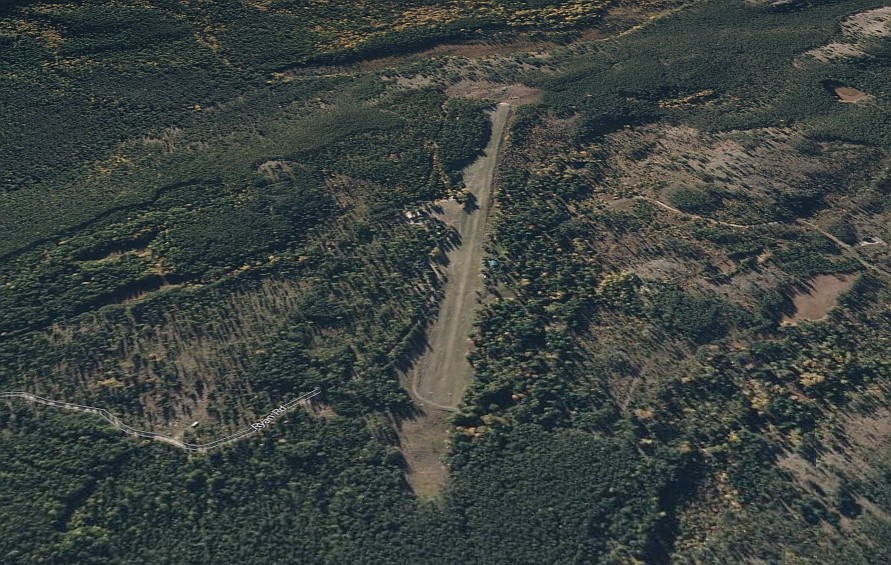
A map screenshot shows Ryan Field near West Glacier. (Microsoft maps)
KALISPELL GOVERNMENT, HOUSING AND TRANSPORTATION REPORTER Jack Underhill covers Kalispell city government, housing and transportation for the Daily Inter Lake. His reporting focuses on how local policy decisions affect residents and the rapidly growing Flathead Valley. Underhill has reported on housing challenges, infrastructure issues and regional service providers across Montana. His work also includes accountability reporting on complex community issues and public institutions. Originally from Massachusetts, Underhill graduated from the University of Massachusetts, Amherst with a degree in Journalism before joining the Inter Lake. In his free time, Underhill enjoys mountain biking around the valley, skiing up on Big Mountain or exploring Glacier National Park. IMPACT: Jack’s work helps residents understand how growth, housing and infrastructure decisions affect the future of their community. | March 14, 2026 12:05 AM
The Ryan Field airstrip near West Glacier had never recorded a fatality until two separate crashes last summer killed three people. While unusual for the grass runway that's tucked into the forest south of Glacier National Park, experts say the tragedies highlight the challenges and inherent risks of backcountry flying in the Rocky Mountains.
At 3,660 feet above sea level, Ryan Field is a narrow runway that is surrounded by tall trees. The landing strip is uneven and can be slippery in wet weather. Longtime pilot John Paul Noyes says taking off and landing in these conditions is a "mastery skill" that is only gained through years of experience.
As general manager and director of operations for Kalispell-based Red Eagle Aviation, Noyes trains pilots by landing at Ryan Field or other remote airstrips in the region — such as Schaffer Meadows or Meadow Creek on the Flathead Forest — to expose them to a variety of backcountry environments.
Red Eagle Aviation also manages Kalispell City Airport, and planes often stop there to refuel before heading to the bare-bones airstrip. Noyes said he will discourage pilots from making the trek after judging their competency in the mountain environment.
One of the pilots who died at Ryan Field last summer refueled at Kalispell City Airport beforehand, Noyes recalled. He had warned other pilots about flying into Ryan Field that day due to the abnormally hot weather. Airplanes don’t perform as well when there is less air. Hot temperatures paired with high altitudes are a recipe for low air density that lower-powered engines struggle to fly in, he said.
People will also naively ask Noyes for a quick lesson in backcountry flying before heading out to remote airstrips on their own.
“I can give you lots of information in two hours, but to become a backcountry pilot takes years, if not decades, to be good at,” Noyes warned.
DESPITE THE off-the-grid appeal of Ryan Field, pilots must review a safety briefing before using the airstrip, according to Mike Perkins, the director and treasurer for the Recreational Aviation Foundation. The nonprofit committed to preserving recreational airstrips manages Ryan Field among many others across the country.
The required reading gives a rundown on the surrounding terrain and flying conditions, including a noticeable dip at each end of the runway. For a clear approach, pilots are advised to land from the north, Perkins said.
A mountain range bordering the Great Bear Wilderness that sits just east requires pilots departing from the south end of the runway to eventually veer right. The terrain is far enough away, however, that pilots can still fly a standard rectangular traffic pattern over the area, Perkins said. The maneuver is fundamental for takeoffs and landings at airports.
“At the end of the day, it’s all up to the pilot,” Perkins said. “The pilot has the authority to make the decision whether they should land or not land based on the conditions and based on their skill set.”
Both planes that crashed over the summer had clipped trees, according to preliminary reports released by the National Transportation Safety Board.
A Grumman AA-5 plane carrying two Washington cousins collided with trees while attempting to take off in July. In August, a pilot was killed after its right wing clipped a tree while trying to land an experimental, amateur-built airplane.
Constantly flying in an out of the area, Perkins has flown the Ryan Field airstrip 40 times over the past year, and he estimated 400 times in his life.
While the private airfield is surrounded by Forest Service land, it is still accessible via road and is equipped with hot water, toilets and cell service. Cabins and tent camping spots are available for pilots stopping by.
“So people can kind of get that backcountry experience in a front country setting,” Perkins said.
Pilots usually access Ryan Field between early May to late October. While it still remains fairly quiet, Perkins said there has been an uptick in traffic since the Covid pandemic.
“Lots more people fly. Lots more people decided to get out. And lots of people are building and buying experimental-type airplanes,” Perkins said.
Last year, the Federal Aviation Foundation released the Modernization of Special Airworthiness Certification rule that eased restrictions for sport pilot certification holders and allowed them to fly more types of aircraft. Getting a sport pilot certification requires less training than recreational or private pilot certifications.
“Basically, it’s going to allow a broader group of pilots to fly airplanes like this with less restrictions,” Perkins said.
With the surge of new pilots comes the higher chance of inexperienced flyers that are overconfident in their skills.
“We get lots of visitors from non-mountainous areas, and flying in those areas is different than flying in the mountains. Wind currents and heat, temperatures and weather that you won’t get when you’re in the plains,” he said.
Noyes and Perkins said social media has created a culture in which pilots share their experiences on different airstrips, creating an illusion that the remote areas are more easily accessible than they really are.
Juan Browne, an aviation journalist behind the popular YouTube channel "Bloncolirio," said he removed a video reviewing his experience landing at Ryan Field.
“I think people were getting the wrong idea that this is a really easy airfield and any ol’ body can get up there and handle it,” he said.
Daily Inter Lake Kalispell Housing & Transportation Reporter Jack Underhill can be reached at 406-758-4407 or [email protected].
Independent, local journalism is essential to keeping Northwest Montana informed and connected. If you value the reporting from the Daily Inter Lake, please consider supporting our work at dailyinterlake.com/support.
ARTICLES BY JACK UNDERHILL

With Woodland Park pond’s skating future on thin ice, Council looks to recast its use
Skating on Woodland Park pond is becoming a memory of winters past.

Updated stormwater plan identifies system shortfalls in Kalispell
Public Works staff on Monday presented Kalispell City Council with new data they say will help upgrade the stormwater system to prevent flooding.

Kalispell City Council reviews updated stormwater plan
Kalispell City Council on Monday will review the city’s updated stormwater facility plan.