
Program monitors fish from the river to the ocean
Bonner County Daily Bee | UPDATED 8 months, 1 week AGO
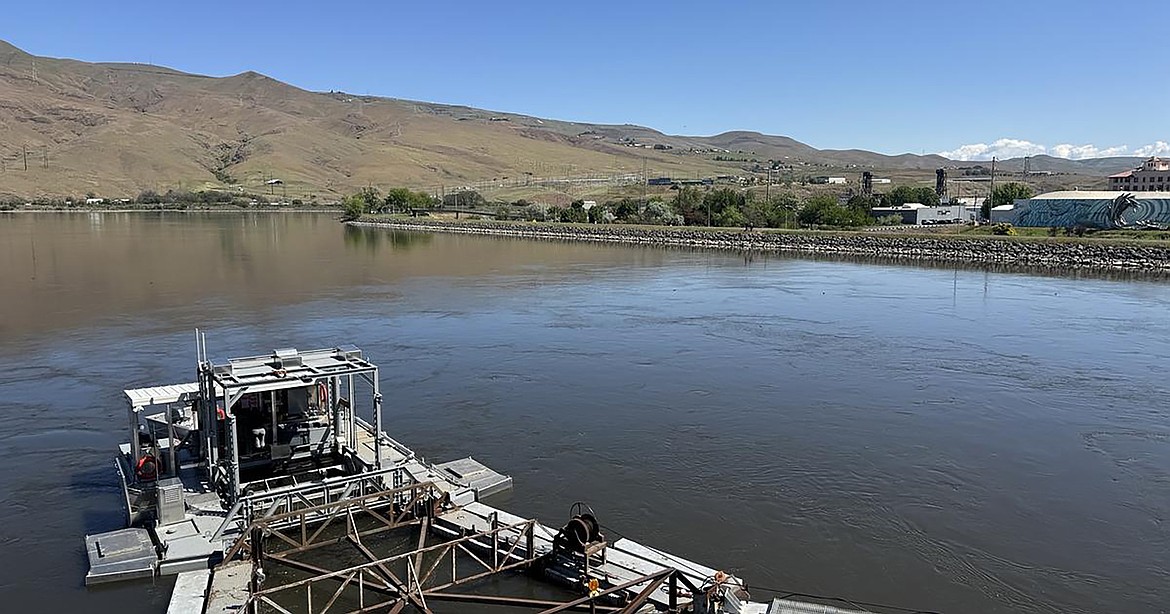
A view of the smolt trap near the Lewiston-Clarkston Blue Bridge. The facility was recently rebuilt and is fully operational to support long-term fish monitoring by the Idaho Department of Fish and Game.
Photo courtesy IDAHO DEPARTMENT OF FISH & GAME
Ever wondered what the large structure beneath the Lewiston-Clarkston Blue Bridge is?
For the curious, it’s a smolt trap, recently rebuilt and now fully operational to support long-term fish monitoring led by the Idaho Department Fish and Game, regional communications manager Jennifer Bruns said.
Built in the 1950s, the location's original trap had reached the end of its service life and needed to be replaced. Bruns said the new facility improves safety for not only the fish passing through and staff operating the smolt trap as it ensures reliable operation into the future.
The trap captures juvenile salmon and steelhead — known as smolts — as they migrate downstream through the Snake River. Biologists examine each fish to determine species, hatchery or wild origin, and overall condition. Many are fitted with PIT (Passive Integrated Transponder) tags, allowing researchers to track survival, travel time, and smolt-to-adult return rates as the fish move through the Columbia River Basin.
There are three parts to the trap, regional fisheries biologist Nolan Smith said in a video posted to the department's website.
The back half, which acts as the structure's "engine" and contains the actual dipping apparatus. The trap's middle section connects to the back half through pencil hitches and a front section comprised of two pontoons deliver fish to the trap's dipper, department officials said.
After the fish enter the trap, water pushes it into a trap box, where IDFG staff carefully tag as many salmon and steelhead as possible using the 12-millimeter PIT tags. The small microchips are inserted into the body cavity of a juvenile salmon or steelhead, allowing IDFG officials to detect them as they make their way downstream, Smith said.
Bruns added that the information gathered at the site is entered into the PTAGIS, a regional database used by fisheries managers and scientists to guide conservation and management decisions.
"This monitoring work helps support sustainable fisheries, local recreation, and the long-term health of salmon and steelhead populations in the Clearwater region," she said.
Boaters are reminded that the trap operates beneath the bridge and should use caution when recreating nearby.
For more information, visit the IDFG website at idfg.idaho.gov.