
The importance of industrial components for businesses in 2026
Lettecha Johnson | Bonner County Daily Bee | UPDATED 6 months, 2 weeks AGO
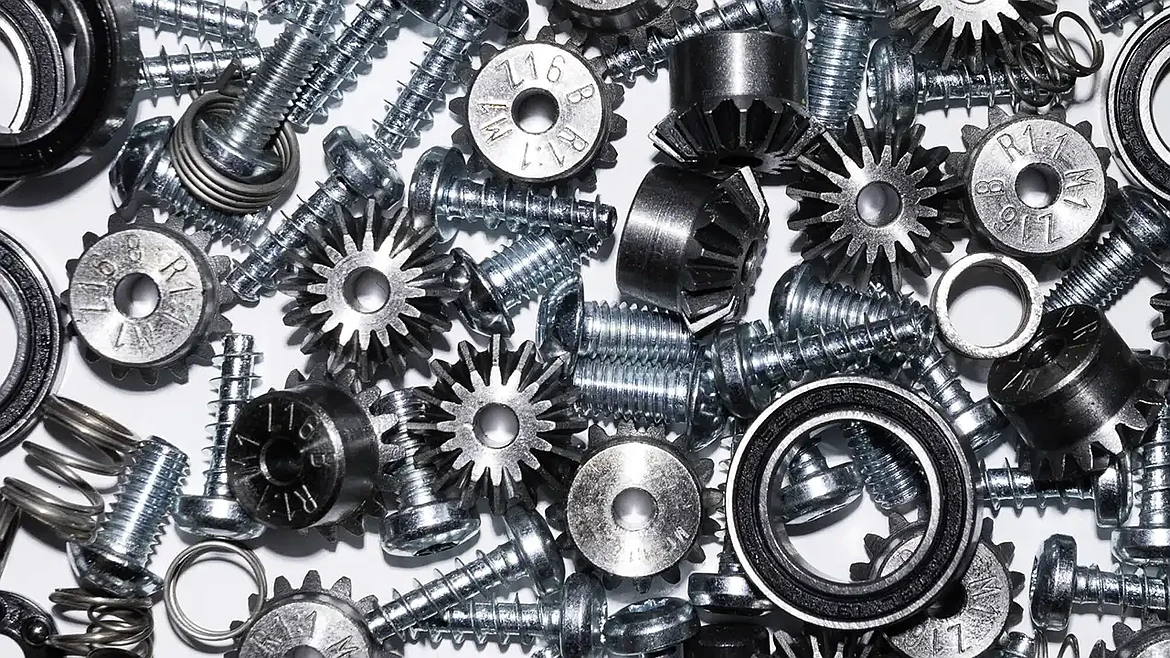
Various industrial components, such as robotic parts, 5G connectivity modules, bearings, and sensors, are among the building blocks of modern industrial operations. Therefore, if one part fails, it can bring business to a halt and cost a company millions within a short amount of time. As technology has increasingly advanced, it has influenced the type and method of industrial elements used to support ongoing automation and smart manufacturing.
According to Grand View Research, the industrial component market size in North America had a $34.85 billion valuation in 2024. This rising value is not a shock as more businesses are treating industrial components strategically due to their role in greater sustainability, digital connectivity, and supply chain continuity that ensure companies save time, costs, and remain competitive.
What Are Typical Industrial Components?
Industrial components are fundamental building blocks across electrical, mechanical, and structural fields. From compressors to sensors, various components may enable movement, connect power, or provide a warning of malfunction.
Compressors
When companies use compression springs from Leeco Spring International, they have shock-absorbing components that maintain pressure and can push components back into position.
Compressors are an essential part of:
- Vehicle suspension
- Medical devices - like inhalers and implantable devices
- Mattresses
- Retractable pens
- Appliances like washing machines
- Aerospace landing gear
- Electronics
- Door locks
Bearings
These parts are essential for reducing friction and heat, which improves product durability in anything from aerospace to automotive parts. EVs require durable bearings made from ceramic balls, engineered polymers, etc, that can handle the unique demands of electric propulsion systems.
High-precision bearings allow aerospace landing gears and flight control systems to operate. Solar tracking systems and wind turbines use large, durable bearings to manage their high loads.
Industrial IoT (IIoT) Devices
These parts enable efficiency by connecting machines to optimize performance in smart facilities through real-time monitoring and predictive maintenance. You may see them in smart building systems to handle climate control and security monitoring. When deployed in drones, they can detect leaks in oil and gas pipes.
Collaborative Robots
These components are used for various manufacturing, assembly, and warehousing tasks, as well as finishing and quality control. Common applications include:
- Screw driving
- Sealing
- Packing
- Sorting
- Loading/unloading CNC machines
- Sanding
- Polishing
- Surgical assistance
- Targeted weed control in agriculture
Smart Sensors
Vibration and temperature sensors can detect failures in machinery, while other sensors monitor the level of flow and pressure to optimize chemical and water treatment plant operations. They're also essential for collision detection and autonomous navigation in robotics.
How Do Manufacturing Components Matter in Industry 4.0?
Industry 4.0 refers to the Fourth Industrial Revolution, or the Intelligence Age, where machines can communicate and collaborate with one another.
Robots, sensors, and AI are helping to quickly usher in innovative industrial solutions such as:
- Predictive maintenance failure that reduces downtime
- Advanced automation
- Feed data into digital twins - virtual copies of real-world objects
- Complex customized production, like rapid prototyping
- Constant monitoring for better quality control
Where Does Sustainability Fit With the Latest Industrial Technologies?
When IoT-connected sensors predict machine failures before they happen, companies can reduce waste related to necessary part replacement by fixing these items ahead of time to optimize their life cycle.
Waste minimization is giving old lithium EV batteries new life by repurposing them for grid energy storage. As developers improve methods for recovering cobalt, nickel, and lithium from these old batteries, it reduces the need for new mining of virgin material.
Digital twins can provide an accurate prediction of resource consumption that allows manufacturers to build out the real model with the highest efficiency.
The Impact on Human Safety
Advanced industrial equipment insights can simulate high-risk scenarios without putting humans at physical risk.
Wearable smart technology is helping more health-conscious people by monitoring their vital signs for problems like heart conditions, high blood pressure, or sleep apnea. When used as PPE, these wearable devices can also locate lost workers during emergencies. Additionally, workers can wear smart helmets with built-in communication systems for further safety.
Frequently Asked Questions
How Are the 7 Categories of Industrial Products?
These seven industrial product categories have been classified for business-to-business markets. These categories include:
- Component parts and materials
- Capital items (Installations), such as factories and large machinery
- Raw materials
- Accessory Equipment - portable factory/office equipment that supports production
- Industrial supplies (MRO)
- Industrial Services
- Business services
Which Technological Improvement Most Impacted Industrial Growth?
The steam engine's ability to convert coal into mechanical energy revolutionized the industry as it became the backbone of industrial machinery and transportation systems. This invention was a huge step in triggering the Industrial Revolution.
Furthermore, other inventions, such as the spinning mule, power loom, and spinning jenny, improved fabric production, especially cotton, as they made production faster and provided a shift to more centralized factories.
The industrial revolution's advancement in transportation was ushered in with improved road networks and canals that allowed faster, more efficient movement of goods and raw materials. As railways and locomotives were powered by the now existing steam engines, it quickly helped increase land transportation. This step enabled more trade for other products, which further enabled the growth of cities and global market expansion.
What Industries Are Growing Fastest?
After analyzing a database of over 1300 American industries, IBISWorld cites the following as the 10 fastest-growing ones. The list includes:
- Solar power
- Ship building
- Autonomous underwater vehicle manufacturing
- 3-D printing and rapid prototyping
- Security software publishing
- SEO and Internet marketing consulting
- Speech and voice recognition software developers
- 3-D printing manufacturing
- Smart thermostat manufacturing
- Business analysis and enterprise software publishing
Well-integrated Industrial Components Are Essential Across Industries
Industrial components, like compressors, are the building blocks of bigger machines and facilities where production takes place. They may be as big as an assistant robot or as tiny as a sensor used in your smart washing machine or wearable device. These integrated components can communicate with other machines for greater efficiency, while enabling greater human safety and production.
Through the use of artificial intelligence, more advanced sensors, and increasingly smaller robots, you can expect to see industrial components advance towards Industry 5.0 soon.
Are you excited about the advances in this ongoing industrial revolution and what it can mean for a connected future? Search our website for more insightful news.
This article was prepared by an independent contributor which helps us continue delivering quality content to our audiences.