
The WA 2026 legislative session ends, but not without a fight
By Elizah Lourdes Rendorio , Legislative Intern | Columbia Basin Herald | UPDATED 2 hours, 5 minutes AGO
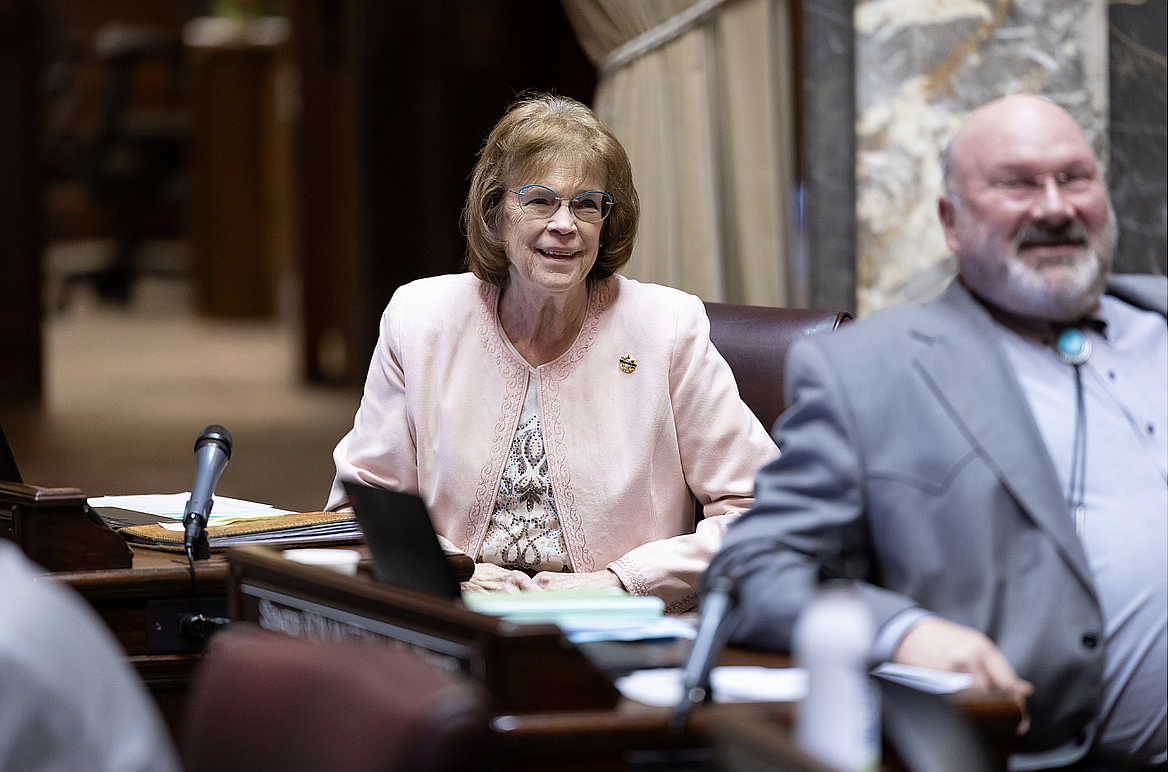
Sen. Judy Warnick, R-Moses Lake, announced her retirement from the Washington Legislature earlier this month. She was elected to the state House of Representatives in December of 2006 and later to the Senate in 2015.
FILE PHOTO
OLYMPIA — Washington lawmakers adjourned Thursday, March 12, concluding the 2026 legislative session, defined by another multibillion-dollar budget deficit and Democratic-backed efforts to restructure the state’s tax code and safeguard Washingtonians from actions by the federal government.
In the final hours, legislators approved a $79.5 billion operating budget proposal following a final push to eliminate a data center tax exemption. The days before also featured a marathon debate over the proposed income tax on those earning more than $1 million dollars a year.
“That was a great session,” Gov. Bob Ferguson said at a press conference. “Especially considering it's a short session, especially considering the challenges we faced.”
Budget Talks
The operating budget proposal advanced without Republican support, adjusting the $77.8 billion biennium budget passed last year. The spending plan largely depends on one-time transfers including $880 million from the state’s rainy day fund and $3 billion from an overfunded police and firefighter pension account, as well as cuts to child care funding.
A four-year forecast, however, projects another $878 million budget shortfall that lawmakers will have to confront next year.
“This budget isn’t perfect, and it required difficult tradeoffs, but it reflects our responsibility to keep people supported now while maintaining the stability our state will need in the years ahead,” said Sen. June Robinson, chair of the Senate Ways and Means Committee.
According to Democratic lawmakers, the plan focuses on maintaining essential public services, such as Medicaid and food assistance programs, amid increased demand and federal funding changes. The proposal also redirects $60 million from the Climate Commitment Act to the Department of Natural Resources for wildfire funding.
Republicans opposed the proposal, arguing it sets the state up for more fiscal trouble in the future.
“This budget is a ticking fiscal time bomb,” Rep. Travis Couture, R-Allyn, lead Republican House budget writer said. “It spends money the state doesn’t actually have.”
Ferguson said that while the state is “not out of the woods” in stabilizing the budget, he believes progress has been made and does not plan to propose new taxes next year.
Legislators also passed the transportation and capital budgets that received more bipartisan support.
What survived?
By far, the biggest headline of the session was the passage of the so-called “millionaires” tax. The bill, spearheaded by Sen. Jamie Pedersen, D-Seattle, places a 9.9% tax on those earning more than $1 million a year, effectively shedding the state’s no income-tax status. The bill received a 51-46 vote, following a historic 25-hour floor debate getting through about 80 mostly Republican-proposed amendments.
The bill would provide tax relief for small businesses, provide free lunch to all K-12 students, expand the Working Families Tax Credit program, and eliminate the sales tax on hygiene and baby products, such as shampoo, toothpaste, and diapers.
Supporters argue the bill is necessary to restructure the state’s regressive tax code that relies on sales and consumption taxes, shifting the tax burden away from low-income households and onto wealthier families. Republicans and critics, however, argue the measure will soon trickle down to working-class Washingtonians and is unconstitutional, pointing to a 1933 state Supreme Court ruling.
Ferguson, who pledged to sign the bill, said that while he expects a legal challenge, he’s confident it will be held up in court. The measure will also go to voter ballots in November.
“I feel that people are ready for this,” Ferguson said to TVW on Thursday.
Additionally, lawmakers scrambled to pass a bill that would eliminate a 6.5% tax break on replacement equipment for data centers. The bill threatened to push legislators into a special session, but was able to receive a 51-49 vote in the nick of time.
The legislation, originally proposed by Ferguson in December, would help balance the state’s budget, estimated to bring in about $63 million in the current budget cycle.
Republicans, Big Tech companies, and labor unions opposed the bill, arguing it would drive data centers elsewhere, which have become economic engines for rural communities.
“If this tax incentive goes away, the jobs go away,” Rep. Alex Ybarra, R-Quincy, said on the floor.
Various measures responding to the federal government’s crackdown on immigration enforcement, passed this session. This includes a bill prohibiting facial coverings worn by law enforcement, one prohibiting the impersonation of law enforcement officers, and another requiring employers to notify workers of federal immigration raids.
What died?
The short session also faced a series of failed bills, such as an attempt to regulate data centers.
The bill spearheaded by Rep. Beth Doglio, D-Olympia, would have established new energy requirements on data centers, including increased transparency on energy and water usage and the creation of new agreements to ensure facilities cover the cost of higher demands instead of passing them on to regular ratepayers.
Tech lobbyists from Microsoft and Amazon aggressively opposed the bill, effectively watering it down until it ultimately died in the Senate.
Additionally, another attempt to lower the legal blood alcohol limit to 0.05 failed, followed by an effort to limit the interest rate on unpaid medical debt to 1%.
Rep. Tom Dent’s, R-Moses Lake bill that would establish a workgroup aiming to identify and relieve regulatory stress in agriculture did not make it past the Senate either.
Changes coming
The end of session also marked the end of a two-decade career by Moses Lake’s Sen. Judy Warnick, R- Moses Lake. Other lawmakers announced their retirement as well as plans to not seek reelection or run for other public office. Both Sen. John Braun, R-Centralia and Sen. Matt Boehnke, R-Kennewick, launched congressional campaigns ahead of midterm elections later this year.
“Serving the people of the 13th Legislative District has been the greatest honor of my professional life,” Warnick said in her announcement. “I am incredibly proud of what we have accomplished together to protect our water rights, support our small business, and empower the next generation of leaders.”
Lawmakers will meet again Jan. 2027.