
Kit home bill would pave the way for small DIY housing
JOEL MARTIN | Hagadone News Network | UPDATED 7 months AGO
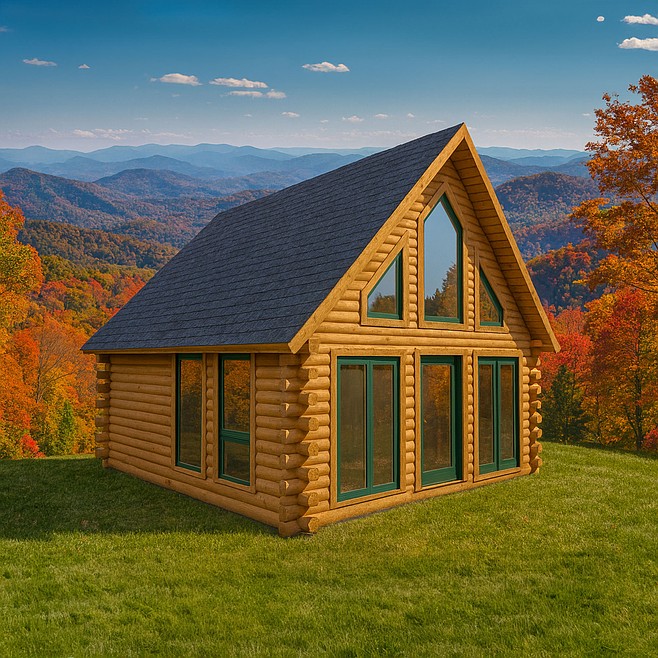
New legislation in Washington state could make kit homes like this 400-square-foot cedar log house easier to buy, build and live in.
COURTESY PHOTO/LITTLE TWIG HOMES
Joel Martin has been with the Columbia Basin Herald for more than 25 years in a variety of roles and is the most-tenured employee in the building. Martin is a married father of eight and enjoys spending time with his children and his wife, Christina. He is passionate about the paper’s mission of informing the people of the Columbia Basin because he knows it is important to record the history of the communities the publication serves. | March 20, 2026 3:00 AM
OLYMPIA — A bill passed in the Washington Legislature and signed by Gov. Bob Ferguson this year could mean some new options for housing in the state in the future, said the bill’s primary sponsor, state Sen. Jeff Wilson, R-Longview.
“When you’ve got a $600,000 beat-up starter home someplace around Seattle, what about a simplified but modernized version of a kit home from the old days?” Wilson said. “We need all choices on the menu for housing options, except living in a blue tarp on the street.”
The law directs the state Building Code Council to develop rules specifically for kit homes 800 square feet and smaller. Before World War II, it wasn’t uncommon to buy a complete home – pre-cut lumber and all the accompanying materials – from the Sears-Roebuck catalog via mail order. The purchaser then built the home himself on whatever land was available.
The times may have changed, but those homes are available. Little Twig Homes, based in Hendersonville, North Carolina, ships pre-packaged home to a number of states, said owner Aaron Dunn, in a 950- and a 400-square-foot size.
“They’re all DIY-friendly,” Dunn said. “They’re pre-cut, numbered and ready to go … You do have to have some carpentry skill, but they come in panels that are numbered. It’s kind of like putting a big Lego puzzle together.”
Little Twig’s 400-square-foot home, which fits with the state’s new definition of a kit home, comes on a single 53-foot truck, Dunn said. It’s 20 feet by 20 feet, a single story with a 200-square-foot loft accessible by a ladder. It includes the shell, walls, roof, windows, and exterior and interior doors. Any further interior work, as well as power and plumbing, is up to the buyer, he said.
The hangup in Washington state, Wilson said, is that up to now there hasn’t been a standard definition of kit homes for the Building Codes Council to work from.
“A kit home has to be put into a category all of its own because it’s not a two- or three-story mansion. It’s not a ranch house. It’s not a manufactured home because it’s a do-it-yourself, potentially.”
The State Building Code Council is made up of volunteers, and they make changes to the state regulations on pre-determined cycles, said Tim Woodard, chair of the Washington Association of Building Officials.
“When we have to advance these rules outside of the normal cycle, it just means more time away from our daily jobs,” Woodard said. “If we can do it combined with the other … processes that go through the state building code council it enables us to more efficiently address these concerns.”
The new legislation required that the standards be in place by March 31, 2027.
The next step, Wilson said, is to find ways to get kit homes into the state.
“When you go online or you go to a dealership, you should be able to get ready to place your orders and start having homes delivered.”
The text of the new law is available at https://bit.ly/WAKitHomeLaw26. Little Twig Homes can be found at littletwig.homes.
ARTICLES BY JOEL MARTIN

Endless battle
Noxious Weed Control Board works to keep invasive plants under control
MOSES LAKE — Some of the nastiest plants in Grant County were the topic of a class led by Jay Johnson, a consultant with the Grant County Noxious Weed Control Board, Tuesday. The Noxious Weed Control Board, as its name would suggest, is tasked with keeping weeds under control in Grant County. That’s not a small job; the board’s website lists 129 species of noxious weeds that are found around Grant County. A noxious weed is defined as an invasive, non-native plant that threatens agricultural crops, local ecosystems or fish and wildlife habitat, according to the Noxious Weed Control Board. Washington state law requires that these weeds be identified and their spread kept to a minimum, if not completely eradicated. “We’re one of those agencies a lot of people don’t really understand,” Johnson said. “We’re a county office and … our funding is tax-based assessment. When you get your tax bill and you look down at all the expenses that you pay for, there we are.”

BASIN EVENTS: Oct. 16-24
COLUMBIA BASIN — Whether you feel like shopping, crafting, learning or seeing a show, there’s something happening for you this week in the Basin. Oct. 16 ‘My Family (Mi Familia)’ screening Spanning three generations, “My Family (Mi Familia)” is a heartfelt drama that follows the Sánchez family as they build their lives in East Los Angeles. Through love, hardship, triumph, and sacrifice, the film explores the immigrant experience, the strength of family bonds, and the traditions that connect one generation to the next. Lowrider show and taco truck before the screening. Sponsored by Columbia Basin Allied Arts, EDUBS C/S and the Moses Lake Creative District. $12 per person. Doors open at 6 p.m., film begins at 7 p.m. at the Moses Lake Civic Center Auditorium, 401 S. Balsam St. Tickets and info: www.cba-arts.org.

Moses Lake author encourages women to look beyond church culture norms
MOSES LAKE — A Moses Lake author’s book, “A Christian Woman Striving to Live Her Faith in a Man-Controlled World,” takes aim at the role to which many churches relegate the female half of their congregations. “It’s to encourage women in the faith,” Linda Curran said. “A lot of churches say, ‘Teach Sunday school, do this, do that, but don’t (evangelize.)’" In her book, Curran recounts a time when she moved to a new community and joined a church there. She was surprised to learn that, as a new female member, she had been automatically assigned church cleaning duties. When she questioned it, she wrote, she was met with condescension and her objections were brushed aside. In other churches, she said, women who were capable of teaching were relegated to “women’s ministry.”