
White-nose syndrome confirmed in Idaho bats for first time
Bonner County Daily Bee | UPDATED 2 weeks AGO
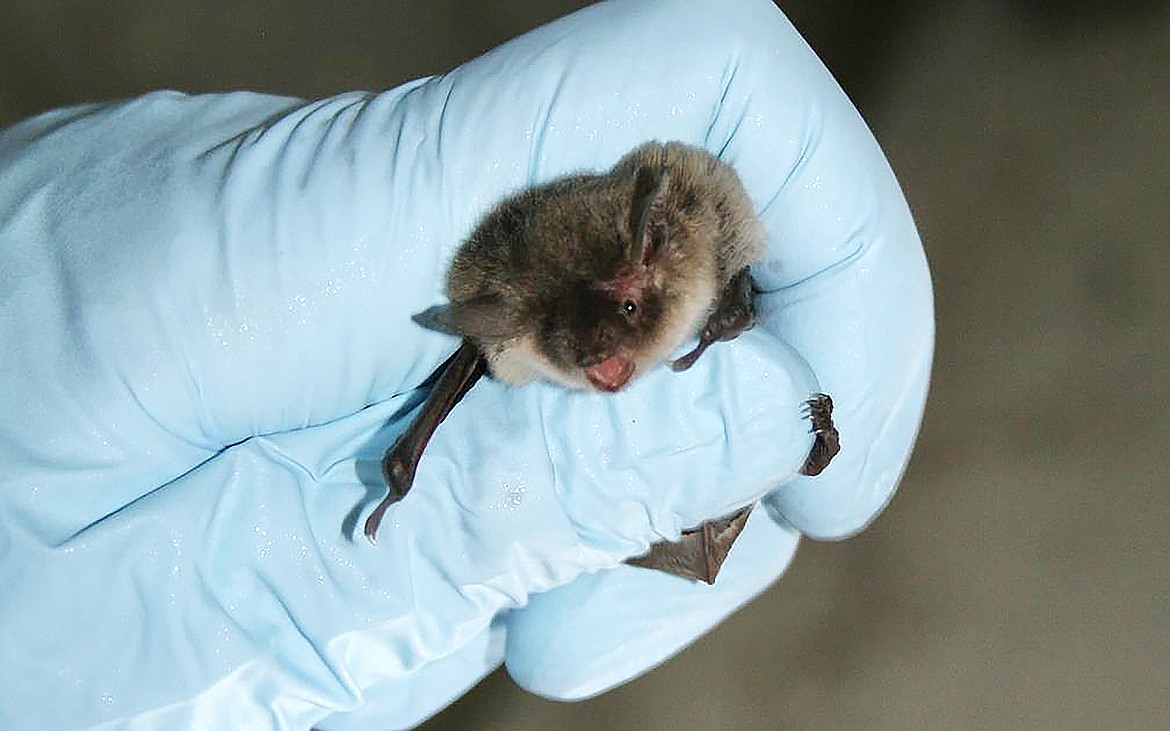
Three bats collected in North Idaho, including one in Bonner County have tested positive for white-nose syndrome, the first cases of the disease in Idaho bats, according to the Idaho Department of Fish & Game.
Photo courtesy IDAHO DEPARTMENT OF FISH & GAME
The Idaho Department of Fish and Game has received laboratory confirmation from the U.S. Geological Survey National Wildlife Health Center that three bats collected in northern Idaho have tested positive for white-nose syndrome, the first cases of the disease in Idaho bats, officials said in a press release.
Fish and Game officials asked the public to avoid disturbing roosting bats and to report bat die-offs — especially if five or more bats are found dead or sick in one location within a short time. Officials reminded residents to not handle bats and keep children and pets away from them.
While white-nose syndrome does not pose a risk to humans, pets, livestock, or other wildlife, IDFG officials said it poses a major threat to bat populations.
Bat observations can be reported online at by contacting a Fish and Game regional office.
Fish and Game is also interested in reports of increased bat activity in areas where bats have not previously been observed, which can help biologists identify important habitats.
A Little Brown Myotis and Long-eared Myotis (also known as Western Long-eared Bat) collected in 2025 from Bonner County, and one bat collected in 2026 from Kootenai County, tested positive for white-nose syndrome. The Kootenai County bat is awaiting final species confirmation.
In addition, two Californian Myotis bats found in Kootenai and Clearwater counties in 2025 tested positive for the fungus that causes white-nose syndrome — Pseudogymnoascus destructans, or Pd for short — but did not show signs of the disease. These detections mark the first record of the fungus in both counties and occurred prior to the confirmation of white-nose syndrome in Kootenai County in 2026.
Fish and Game officials said it is important to understand that not all bats with the fungus on them get sick. Several bat species have been found with Pd, but have not been affected. For those that do get sick, scientists confirm white-nose syndrome by looking at the bat’s skin under a microscope.
Previous detections of Pd in Idaho include six bats representing three species — Little Brown Myotis, Long-legged Myotis, and Yuma Myotis — swabbed at Minnetonka Cave in Bear Lake County in October 2021, marking the first confirmed detection of the fungus in the state. Additional detections were later documented in bats collected in Power County in 2024 (a Silver-haired Bat) and Bonner County in 2025 (a presumed Yuma Myotis). None of these bats showed any signs of the disease and no additional detections of Pd have been documented at Minnetonka Cave since the initial confirmation, Fish and Game officials said.
White-nose syndrome affects hibernating bats and has killed millions of bats in North America since it was first detected in 2006. The fungus is most commonly spread through bat-to-bat contact, but it can also be spread by humans via contaminated clothing, footwear, or equipment.
Fish and Game has monitored for white-nose syndrome and the fungus that causes it through surveys, bat trapping, and public reports since 2009. The department is also evaluating management tools, including vaccination, to help reduce impacts to bat populations.
Bats provide important ecological and agricultural benefits by consuming insect pests. A 2011 study estimated bats provide about $313 million annually in pest-control benefits to Idaho agriculture.
The U.S. Fish and Wildlife Service leads the White-nose Syndrome Response Team, a partnership of more than 150 organizations working to address the disease.