
Customer costs and professionalism shape utility commission primary
TOM LUTEY Montana Free Press | Daily Inter-Lake | UPDATED 1 week, 4 days AGO
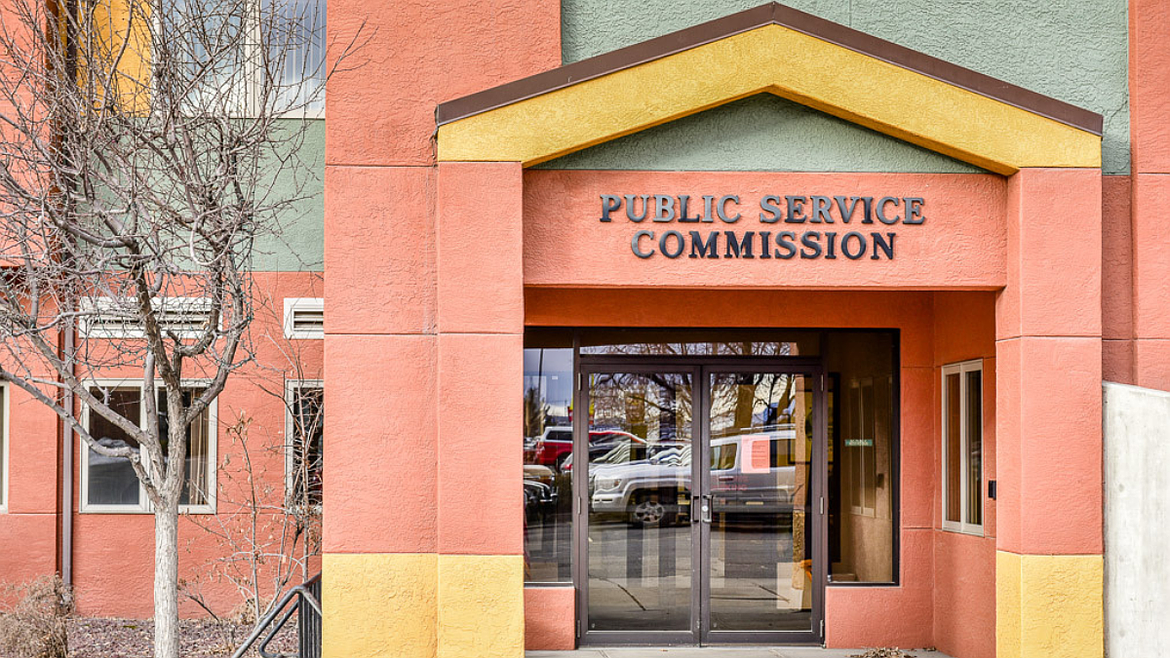
(Eliza Wiley/MTFP)
Two seats on the state commission that oversees the utility rates paid by a majority of Montanans are on the ballot this year. The seats have each drawn multiple Republican candidates and one Democrat, and are likely to be filled by the winners of the Republican primary elections. No Democrat has been elected to the PSC since 2012, and each district, as redrawn in 2023, is majority Republican.
In interviews with Montana Free Press, Republican candidates expressed focus on two primary issues facing the commission: ratemaking — especially regarding the rise of data centers as electricity customers in Montana and the proposed acquisition of NorthWestern Energy by Black Hills Energy — and the professionalism of the commission itself.
The five-member Montana Public Service Commission sets rates for the electric and gas utilities paid by most Montanans. In that capacity, the PSC impacts the budgets of 524,786 metered Montana electric utility customers, or 60% of the market. Those customers are legally recognized as “captive,” meaning they lack the free-market choice of shopping around for a better deal.
Power rates have risen more than 25% in recent years as monopoly utilities like NorthWestern Energy have sought increases to cover myriad service costs while rewarding company shareholders.
Candidates in the two contested Republican primaries are seeking election to districts representing portions of western and eastern Montana.
The seat for District 1, which includes parts of Great Falls, Billings, Miles City, and most of the Hi-Line, is without an incumbent for the first time since 2018. Term limits prevent Commissioner Randy Pinocci from seeking a third four-year term. Jeremy Trebas, of Great Falls, and Jeff Pattison, of Glasgow, are the Republicans running to replace him. The winner of their primary will face Democrat Angeline Cheek of Brockton in the November election. Cheek is unopposed in the Democratic primary.
Both Trebas and Pattison have served in the state Legislature. Pattison was in the Montana House from 2001 through 2004. Trebas is in his ninth year in the Legislature and currently represents Great Falls in the state Senate.
Pattison worked on Pinocci’s campaigns for PSC and said he has consulted with Pinocci about the job.
“I’ve been working intimately with him, trying to learn what is important. How a commissioner is supposed to act, what issues are coming up. And, I’ve been working with [District 2 Commissioner] Brad Molnar a lot too, talking with him on different issues.”
Pattison also said he’s been attending seminars about data centers to get up to speed on a subject that has become relevant to NorthWestern Energy, the state’s largest monopoly utility.
Trebas, an accountant, said utility customers would benefit from having a commissioner with accounting experience involved in ratemaking cases. Trebas also suggested he could help stabilize a commission that’s roiled with political drama.
“I think for a long time, personalities have clashed. That’s got in the way of professionalism,” Trebas said.
Most recently, a majority of the commission asked Republican Gov. Greg Gianforte to suspend its former president, current District 2 Commissioner Brad Molnar, of Laurel. Molnar has been accused by District 5 Commissioner Annie Bukacek of workplace misconduct. Gianforte in December ruled that there wasn’t enough evidence to justify suspending Molnar under the seldom-used portion of state law that empowers the governor to do so.
In 2020, the commission was embroiled in an email spying scandal in which one commissioner’s emails to his wife and daughter were read aloud on a conservative streaming radio service. Pinocci played a role in that incident.
In District 5, first-term Commissioner Bukacek faces a primary challenge from fellow Republicans David Sanders and Joe Dooling, both of Helena. The winner of the primary will face Democrat Kevin Hamm, also of Helena, in November. Sanders is a former PSC executive director, a non-elected position.
Much has changed about Bukacek’s district since she first ran for the PSC in 2022. District 5, which includes parts of Kalispell, Missoula and Helena, was redrawn by the Republican-majority Montana Legislature in 2023. Bukacek’s original constituents were in Flathead, Lake, Lewis and Clark, and Glacier counties. The district now includes parts of six counties, some of which have never had an opportunity to vote for Bukacek.
Legislators have repeatedly suggested replacing the elected five-district PSC with a commission at least partially appointed by the governor. Only 10 states, including Montana, have elected utility commissioners. Trebas described the legislative bills to change the composition of the PSC as warnings to be more professional.
Bukacek said in an email that the commission is working toward that goal.
“There has never been a time in history more important than right now for PSC Commissioners to be directly answerable to the citizens of Montana who elect them,” Bukacek said. “I have experienced the problems firsthand with elected commissioners, and there would be a different set of problems if the commissioners were all appointed.”
The commission has been working on a professional standards plan since 2021.
Dooling, who ran against Bukacek in 2022, is particularly critical of the PSC’s work regarding customer rates. Big decisions on the PSC horizon include whether to approve the acquisition of the state’s largest utility, NorthWestern Energy, by Black Hills Energy. Both companies are based in South Dakota. Shares in NorthWestern will be converted to Black Hills shares if the arrangement goes through, possibly by the end of the year.
“I’d say in the last 130 years that we’ve had electricity, the last 25 have been a pretty bad, haphazard policy for Montana,” Dooling said, referring to the period when NorthWestern has been the state’s largest provider of electricity and natural gas service. “For the life of me, I have no idea why NorthWestern Energy is so excited about selling the company. The PSC deals with a lot of issues. To me, this race is mostly about the merger, about responsible spending.”
Bukacek said the Black Hills transaction deserves scrutiny. She also said the PSC needs to proceed cautiously regarding NorthWestern’s plans to service data centers, several of which are in various stages of planning around the state.
“In Montana, we have an opportunity to avoid the mistakes other states have made with data center development and mergers. I feel fortunate to be a part of this process of making sure it’s done right. It will take rigorous study and significant debate, and I will apply myself with great vigor,” Bukacek said.
Sanders was the PSC’s executive director in 2024, but was then hired away by State Auditor Jim Brown, a former PSC commissioner from 2021 through 2024.
“I think for that year that I was there, the Public Service Commission was pretty well functioning, although it hasn’t always been, but we were able to get our work done and on our mission, and that is no longer the case,” Sanders said. “I’m interested in sort of getting the commission refocused on its mission and to get the commissioners to put aside their petty personal grievances and political ambitions for the good of the people of Montana.”
Sanders also said commissioners need to be cautious about not passing data center-related costs on to other ratepayers. He additionally identified the upcoming Black Hills acquisition of NorthWestern as a big decision for the PSC.
“What is the impact, what are the potential benefits? What are the potential liabilities or challenges that come from such a proposed corporate marriage?” Sanders said.
The Republican primary election for Public Service Commission seats 1 and 5 is June 2, 2026. Democratic candidates for seats 1 and 5 are uncontested in the primary.