
Forrest M. Bird students earn 2nd place in National Radio Club competition
SCOUT GATES / Contributing Writer | Bonner County Daily Bee | UPDATED 8 months AGO
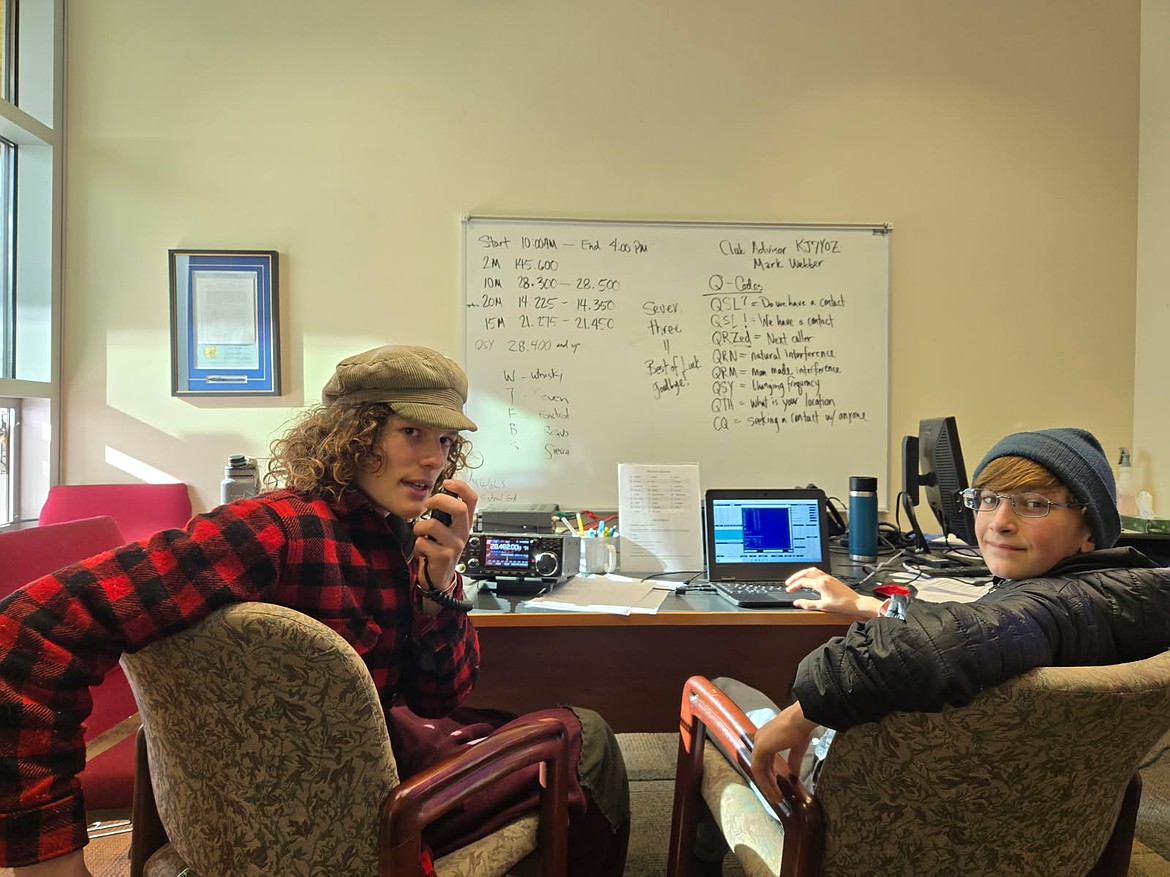
Forrest M. Bird Charter School students Isaac Blessing and Malakai Gonzales work on their radio.
Photo Courtesy FORREST BIRD CHARTER SCHOOL
SANDPOINT — Students at Forrest M. Bird Charter School are celebrating an impressive achievement after earning second place in the high school division and sixth place overall in this year’s highly competitive Radio Club Round-Up Competition.
The nationwide event brought together middle schools, high schools, and universities from across the country, challenging students to demonstrate their technical knowledge, communication skills, and operating proficiency in amateur (ham) radio.
A standout performance came from Raylyn Haworth, who recorded the highest number of QSOs for the Forrest Bird team. In ham radio, a QSO refers to a direct, two-way contact between two amateur radio stations. The purpose of a QSO is to establish communication, exchange signal reports and location information—known as QTH—and often engage in brief conversation. Each successful QSO earns valuable points during competition.
Haworth achieved a particularly rare milestone during the event: she successfully contacted Australia on the 10-meter band. Long-distance international communication on the 10m band depends heavily on atmospheric conditions and solar activity.
Signals must reflect the ionosphere at precisely the right angle. Such optimal conditions typically occur only once every 11 years, making Haworth’s Australia contact a remarkable accomplishment.
“It was exciting to hear the call sign come back from Australia. The signal was so clear I could hear their accent,” Haworth said. “You know the conditions have to be just right, and when it happens, it’s unforgettable.”
Radio Club Round-Up competitions test not only speed and efficiency in making contacts but also technical setup, teamwork, and understanding of radio propagation. Students must quickly log call signs, provide accurate signal reports, and maintain clear communication—all while adapting to constantly changing band conditions.
Forrest Bird’s strong showing reflects the school’s emphasis on hands-on STEM education and real-world problem-solving. Advisors say the students’ dedication to practice, station setup, and understanding radio science played a key role in their success.