
Updated stormwater plan identifies system shortfalls in Kalispell
JACK UNDERHILL | Hagadone News Network | UPDATED 4 days, 18 hours AGO
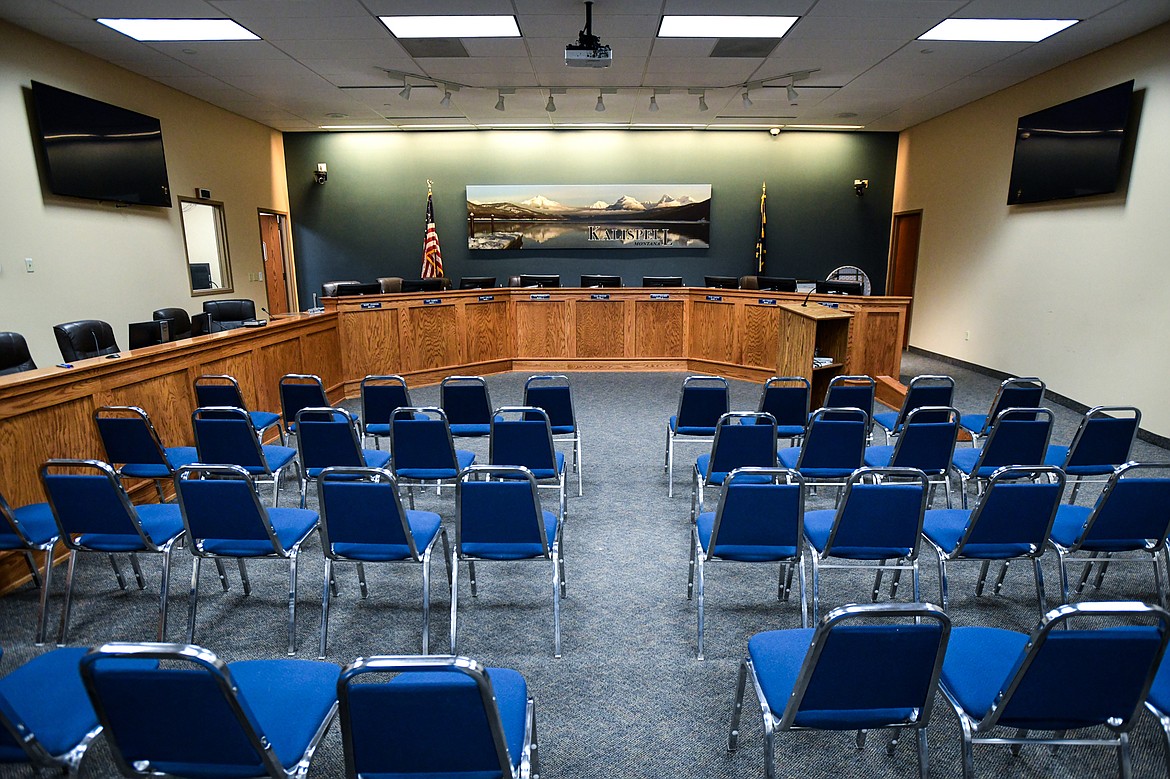
Kalispell City Council chambers in City Hall on Wednesday, April 3. (Casey Kreider/Daily Inter Lake)
Casey Kreider
KALISPELL GOVERNMENT, HOUSING AND TRANSPORTATION REPORTER Jack Underhill covers Kalispell city government, housing and transportation for the Daily Inter Lake. His reporting focuses on how local policy decisions affect residents and the rapidly growing Flathead Valley. Underhill has reported on housing challenges, infrastructure issues and regional service providers across Montana. His work also includes accountability reporting on complex community issues and public institutions. Originally from Massachusetts, Underhill graduated from the University of Massachusetts, Amherst with a degree in Journalism before joining the Inter Lake. In his free time, Underhill enjoys mountain biking around the valley, skiing up on Big Mountain or exploring Glacier National Park. IMPACT: Jack’s work helps residents understand how growth, housing and infrastructure decisions affect the future of their community. | March 25, 2026 12:00 AM
Public Works staff on Monday presented Kalispell City Council with new data they say will help upgrade the stormwater system to prevent flooding.
Council reviewed the updated stormwater facility plan, which identified where the existing network of streets and underground pipes that carry stormwater falls short and where improvements will be needed. New modeling found that about one-third of Kalispell’s existing pipes would struggle to manage a 10-year minor storm.
The plan also significantly reduces the future growth area that was outlined when it was last updated in 2008. Deputy Public Works Director Keith Haskins told Council that the previous boundary was so broad it wasn’t useful for developers. Narrowing it, he said, gives clearer guidance and keeps the city from overbuilding.
“Kalispell is very different looking place than it was nearly two decades ago,” said Public Works Director Susie Turner. “Ultimately, this is about making sure our infrastructure is resilient and is going to handle whatever we’re seeing today while making sure we are fully prepared for tomorrow.”
Using city GIS maps, soil surveys, LiDAR and other tools, engineering firm HDR Inc. provided a detailed look at Kalispell’s stormwater system, “giving us a level of technical accuracy we simply haven’t had before,” Haskins said.
Because the city’s older pipes were built using outdated rainfall data and designed to weather smaller storms, about 35% of the system can’t handle a 10-year minor storm, according to the plan.
A 10-year storm is a storm that has a 10% chance of occurring in any given year, according to Haskins.
The updated plan applied current engineering standards requiring storm drains to handle a 10-year minor storm without getting backed up. The standards also require all culverts and channels to manage a 100-year major storm without flooding roadways.
“By utilizing this updated data, we can ensure our future projects are correctly sized for real world conditions,” Haskins said.
The plan highlighted several problem spots, including flooding on Northridge Drive and an area just north of The Silos apartments on Eighth Avenue West North.
Surveying also found that most of the older stormwater storage facilities — many of which are privately owned — aren’t functioning well because of overgrown vegetation and sediment buildup. The plan calls for working with landowners to improve maintenance while the city advances its own capital improvement projects.
One such project that Turner is looking to get funded next year is improving the ditch along Grandview Drive that occasionally reaches capacity and causes Harrison Boulevard to flood.
The plan generally calls for larger pipes, new trunk lines, channel upgrades and improved lift stations throughout the system. It outlines future infrastructure projects through 2045.
The improvements are typically funded through the city’s stormwater assessment, according to Turner.
“If we cannot afford a project, it’ll be pushed to the next year. Or we’ll focus on design, do a cost estimate, and phase the project in over time,” she said.
Mayor Ryan Hunter asked whether the plan accounted for increased rainfall driven by climate change. Haskins said it did not, explaining that the analysis relied on historical data.
Turner said she aims to start updating the plan every five years to keep data from becoming too outdated.
City Hall will host a public hearing on the plan on April 6.
Reporter Jack Underhill can be reached at 406-758-4407 or [email protected]. If you value local journalism, pledge your support at dailyinterlake.com/support.
ARTICLES BY JACK UNDERHILL

With Woodland Park pond’s skating future on thin ice, Council looks to recast its use
Skating on Woodland Park pond is becoming a memory of winters past.

Updated stormwater plan identifies system shortfalls in Kalispell
Public Works staff on Monday presented Kalispell City Council with new data they say will help upgrade the stormwater system to prevent flooding.

Kalispell City Council reviews updated stormwater plan
Kalispell City Council on Monday will review the city’s updated stormwater facility plan.