
Logan Health physicians raise awareness about colorectal cancer
TAYLOR INMAN | Hagadone News Network | UPDATED 3 days, 10 hours AGO
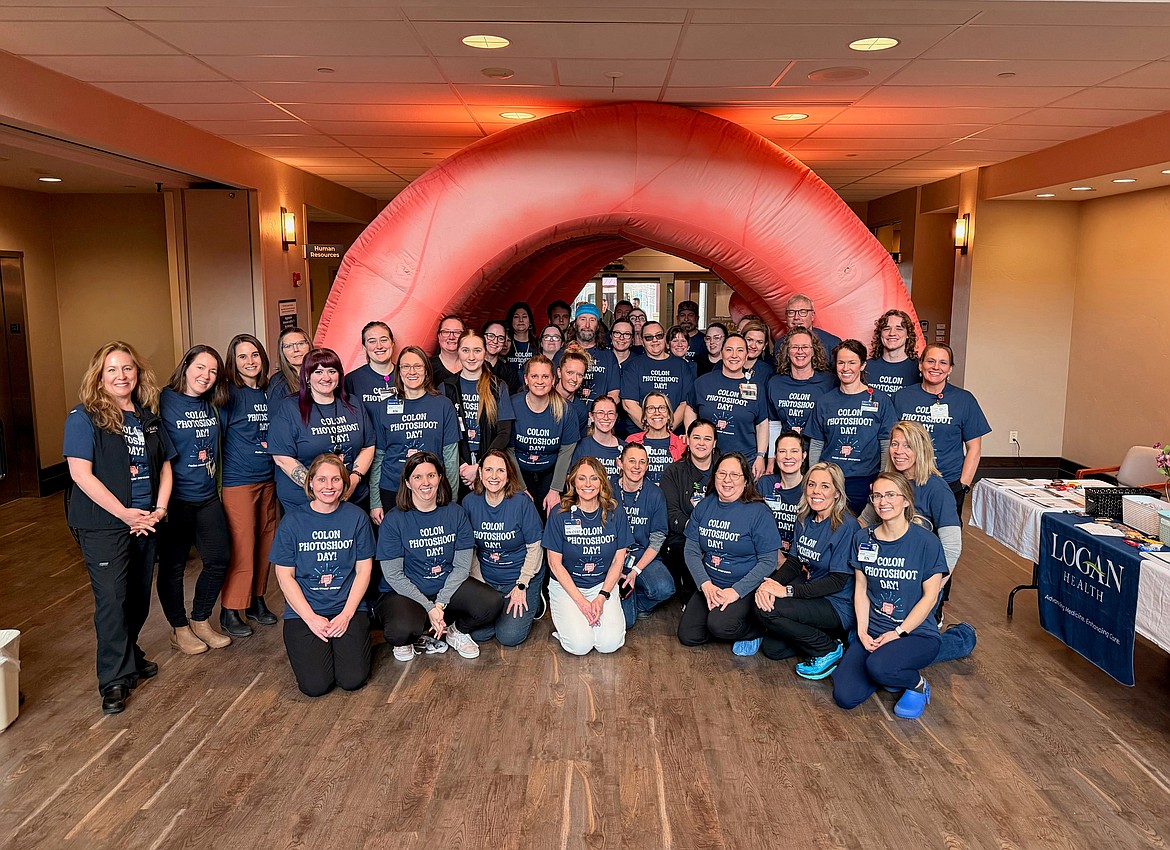
Digestive Health staff at the “Mega Colon” exhibit in the lobby of the Logan Health Medical Center in Kalispell last week. (photo courtesy of Logan Health)
REPORTER AND PODCAST HOST Taylor Inman covers Bigfork and the north shore of Flathead Lake for the Bigfork Eagle and the Daily Inter Lake. Her reporting focuses on local government, community issues and the people who shape life in Northwest Montana. Inman began her journalism career at Murray State University’s public radio newsroom and later reported for WKMS, where her work aired on National Public Radio. In addition to reporting, she hosts and contributes to Daily Inter Lake podcasts including News Now. Her work connects listeners and readers with the stories shaping communities across the Flathead Valley. IMPACT: Taylor’s work expands local journalism through both traditional reporting and digital storytelling. | March 26, 2026 12:00 AM
It’s more important than ever to get screened for colorectal cancer, according to Logan Health gastroenterologist Dr. Kate Wisser, who said catching the disease early saves lives.
Since March is colorectal cancer awareness month, Wisser has been speaking out about the importance of early screenings. Although there has been a decline of colorectal cancer for older people in the United States, she said rates have increased for those under 50.
Why that’s happening is sort of a hot topic, but physicians believe genetics is a factor.
“But the majority, we think it's something we're exposing ourselves to. We’ve become more sedentary. And we feel the at-risk factors associated with that are obesity, rising rates of diabetes, physical inactivity and eating more processed goods — that, along with our genetic make-up, is leading to earlier cancers,” Wisser said.
Colorectal cancer refers to any cancer that can affect the colon or rectum. It usually begins as small clumps of cells called polyps that form inside the colon, which generally aren't cancerous, but can turn into colon cancers over time, according to the Mayo Clinic.
Catching colorectal cancer early makes a world of difference. Wisser said finding and removing cancerous polyps has a survival rate of 100%. But if the cancer starts to spread outside of the polyp — potentially into the lymph nodes or other nearby organs, there is a precipitous drop in chance of survival.
“You can go from 100% if it’s still found in the polyp, to 15% or 20% if it’s already spread to other organs,” Wisser said.
That stark difference is why physicians with the Logan Health Digestive Health Center have been encouraging people 45 and older to get regular colon screenings.
The hospital held a “Mega Colon” exhibit last week, courtesy of Boston Scientific, which featured a giant, inflatable colon that visitors could walk through and learn about colon health. During the event, staff gave out information about colorectal cancer and encouraged patients, visitors and staff to be sure they know their own risk levels when it comes to colorectal cancer.
Even if someone is younger than 45, there are certain factors and symptoms that may prompt a screening for colorectal cancer.
Wisser said any change in bowel habits could be a cause for concern. Barring a change in diet or lifestyle, if someone starts to notice constipation, diarrhea, abdominal pain, weight loss or blood in the stool — it could be a sign that they need to get a colonoscopy.
There is also a consideration for those who have a family history of polyps, any sort of inflammatory bowel disease or colon cancer. And occasionally there are cases with no symptoms at all.
“Sometimes there are no symptoms, which is why we screen people routinely because those are the ones that are silent and go unnoticed and get caught much later,” she said.
The gold standard of colorectal care is a colonoscopy — a procedure that sends a scope through the large intestine. A small video camera at the tip of the colonoscope sends images to a monitor, allowing health professionals to closely examine the lining of the colon. Tissue samples, or biopsies, may also be taken and sent to a laboratory for further evaluation, according to the Mayo Clinic.
There are other tests associated with colorectal cancer screenings — like looking for blood in the stool or for DNA that’s found in advanced polyps and cancers. But Wisser said those tools aren’t diagnostic, so a colonoscopy is the best way to catch early cancer.
Like many preventative procedures, an annual colonoscopy is typically included in most patients’ health insurance coverage, she added.
Now, there is also less of a wait time to get in for a colonoscopy around the Flathead Valley, Wisser said.
“What I'm learning after being here for a while is there was a significant backlog of patients that were in need of a screening procedure, but there were not enough providers. So, there was a long wait to get in for a colonoscopy,” Wisser said. “By-and-large that has gone away — we have several new providers in the area and our current wait time for screening procedures is less than two weeks at the Logan Health Digestive Center.”
She said they are in the process of setting up a self-referral system to get a colonoscopy at the center. Currently, a patient needs a referral from their primary care doctor to come in.
To learn more about colorectal cancer screenings, visit www.logan.org and click on Digestive Health under the “Find Care and Services” tab.
Reporter Taylor Inman can be reached at 406-758-4440 or [email protected]. If you value local journalism, pledge your support at dailyinterlake.com/support.
ARTICLES BY TAYLOR INMAN

Plant Land helps customers spring into the gardening season
Heated greenhouses at the Evergreen garden center are filled with pottery, annuals, houseplants and some early season vegetables like onions, lettuces and herbs.

Despite Barnhart objections, county OK’s gravity septics
Flathead County homeowners can now apply to install a gravity septic system for the first time since 2004.

Logan Health physicians raise awareness about colorectal cancer
It’s more important than ever to get screened for colorectal cancer, according to Logan Health gastroenterologist Dr. Kate Wisser, who said catching the disease early saves lives.