
Bathroom bill passes Senate
ROYCE MCCANDLESS / Coeur d'Alene Press | Coeur d'Alene Press | UPDATED 1 day, 14 hours AGO
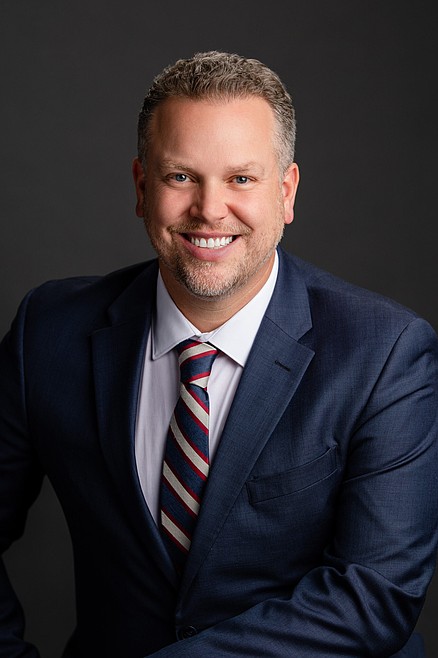
Toews
BOISE — After passing out of the Senate on Friday, Gov. Brad Little will have the final say on legislation that will make it illegal for transgender individuals in Idaho to use bathrooms, changing rooms and other sex-separated public facilities that align with their gender identity.
Sen. Ben Toews, R-Coeur d’Alene, who sponsored House Bill 752, said the aim of the legislation is to protect Idahoans’ safety and privacy. Toews said restrooms, changing areas and showers “are sex separated for a reason” and — without providing evidence — said it was “well known” that voyeurism and exposure-related crimes were on the rise.
Both are already illegal under Idaho law and in 2021 the state passed a statute making video voyeurism a felony.
The bill, which passed out of the Senate in a 28-7 vote, adds a new section to the state’s indecency and obscenity statute to prohibit transgender people from knowingly entering any public accommodation — including a restroom or changing room — if it differs from their biological sex.
Under Idaho Code, public accommodations are defined widely and apply to facilities of private businesses, refreshment, entertainment, recreation or transportation.
Any person who “knowingly and willfully” enters such a facility for the opposite sex would be in violation of the bill. On the first offense an individual is guilty of a misdemeanor and up to a year of jail time. Second and subsequent offenses carry felony charges and up to five years of jail time.
Limited exceptions include the performance of custodial duties, rendering medical aid, assisting a minor child accompanied by a family member or legal guardian of the opposite sex, or when an opposite sex facility is the only one available and a person is in “dire need of urinating or defecating.”
This represents a far more expansive and punitive bill when compared to House Bill 264, which passed in 2025 and required restrooms and sleep facilities for universities, correctional facilities and domestic violence shelters to be restricted to members of the opposite biological sex.
The current law allows a person who encountered someone of the opposite sex in one of these facilities to sue the entity that either provided permission or didn’t “take reasonable steps” to prohibit their access, as was previously reported by the Idaho Press.
Sen. Jim Guthrie, R-McCammon, was the sole Republican to debate against what he described as “harmful” legislation.
Providing a hypothetical of the bill in practice, Guthrie noted if someone transitioning to be a man had male features and facial hair, they would likely upset people if they used the women’s bathroom.
If they used the restroom consistent with their looks, Guthrie noted, they would be doing so “knowingly and willfully” and could in turn be faced with jail time.
House Bill 752 is just one of several bills from this legislative session that have sought to restrict transgender individuals from using bathrooms and other public accommodations in the state. A separate effort that has stalled in the Senate would have opened private businesses up to lawsuits if they were found to be “negligent” in allowing patrons to use restrooms that differed from their biological sex.
“We seem to be really focused on this space and ignoring the fact that there are people that are just like us — human beings just like us,” Guthrie said. “What are they supposed to do?”
Sen. Brian Lenney, R-Nampa, said the bill doesn’t say people can’t use the bathroom, but instead is about protecting women.
“This is a bill to keep women and girls safe because I think it is an absolute objective harm to have men in women's and girls' spaces,” Lenney said. “That’s all this bill does.”
Sen. Josh Kohl, R-Twin Falls, said the bill has a broader aim of both protecting children and “protecting Idaho’s cultural decency.” Kohl described the legislation as keeping Idaho from becoming “California or New York” by pushing back against the “cultural influences” of other states.
“Trans women aren't women, they're men,” Kohl said, “and they need to be treated as such.”
Sen. James Ruchti, D-Pocatello, described the bill as criminalizing trans people for who they are, an effort he said was akin to the Idaho’s discriminatory laws toward Chinese, Mormons and Native Americans in the 19th century or the Jim Crow era that characterized the Southern United States in the first half of the 20th century.
Ruchti said the bill before the Senate doesn’t even allow for “separate but equal” facilities, which in practice only left Black Americans with far worse public accommodations than others.
“We don't even do that here,” Ruchti said. "We just say to trans people, unless you are in ‘dire need’ — and these are the words from the statute — of defecating or urinating, stay out, figure out some other way. This isn't how we treat people in our society.”
Sen. Melissa Wintrow, D-Boise, referred to the committee meeting earlier this week that sent the legislation to the Senate floor and left members of the public who came to testify crying “because they didn’t feel as if they were human.”
Wintrow referenced her first year as a legislator in 2015 when the Idaho Legislature considered — and ultimately held — a bill seeking to add sexual orientation and gender identity to the Idaho Human Rights Act and prohibit discrimination based upon these characteristics.
“My colleagues actually struggled, they were in tears, even though they voted against it,” Wintrow said. “And here we are, 11 years later, trying to take away the very rights that we were trying to protect for human beings."
"True freedom requires compassion, honesty, tolerance — allowing every individual to live authentically and choose their own path in our state,” Wintrow said, "and limiting basic public accommodation feels inhumane and — like the title of the bill says — ‘indecent.’”
During his closing remarks, Toews said his intent was not to be “unkind or to hurt anyone” and said the “proliferation” of single-occupancy, unisex restrooms could serve as a solution to anyone impacted by the legislation.
After passing out of the Senate, the American Civil Liberties of Idaho released a statement urging Little to veto the “dangerous and unprecedented legislation.
“It is the government’s responsibility to protect the safety, dignity, and freedom of all Idahoans, regardless of sex or gender identity,” The ACLU of Idaho stated. “Everyone, including trans people, deserves to feel safe and meet their basic needs in public bathrooms.”