
Collapse becomes ad
D. F. Oliveria / Huckleberries | Coeur d'Alene Press | UPDATED 1 month, 3 weeks AGO
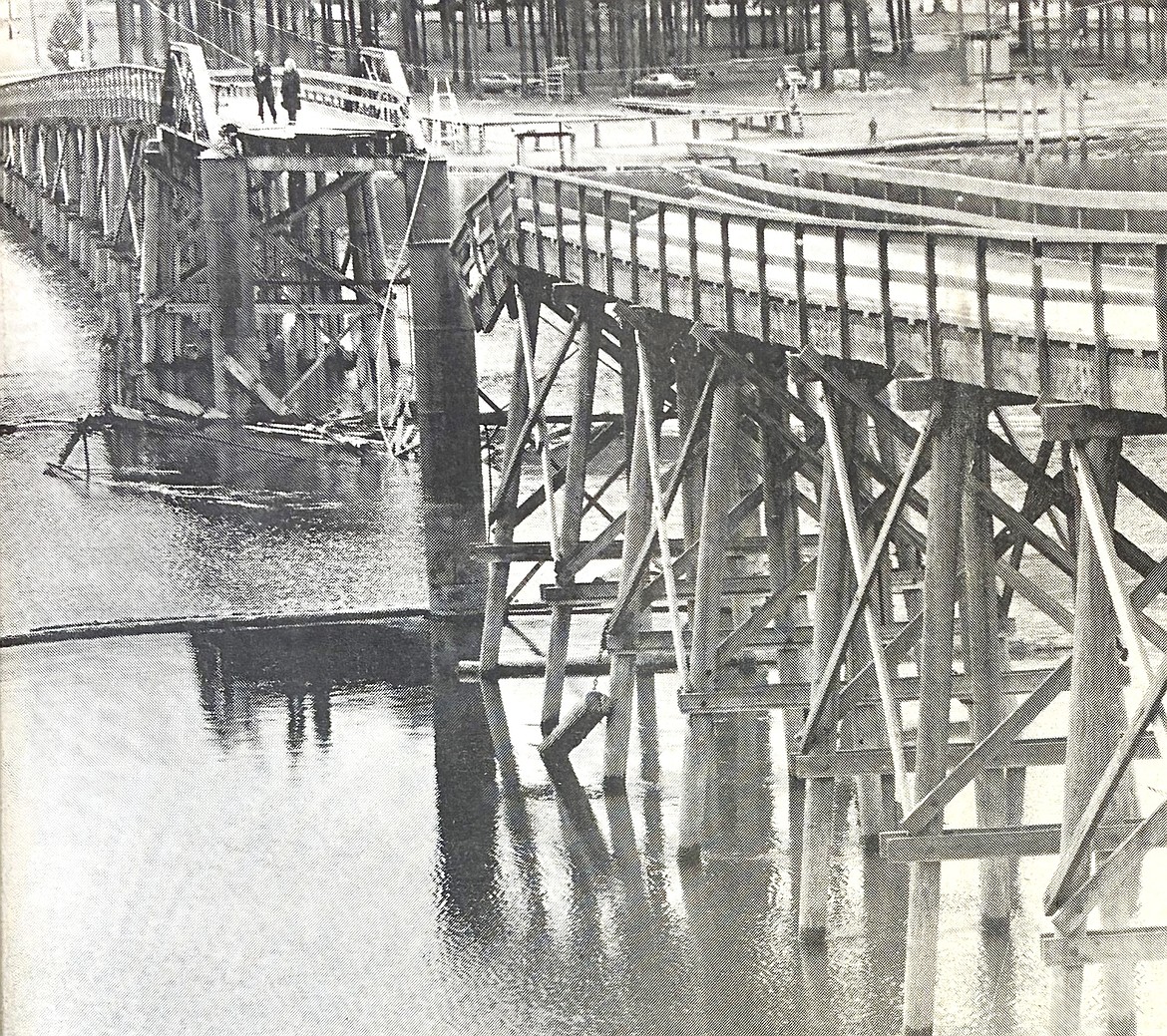
Despite warnings to stay away, two people view the gap created when a section of the old Spokane Street bridge at Post Falls fell in 1971.
Coeur d'Alene Press Archive
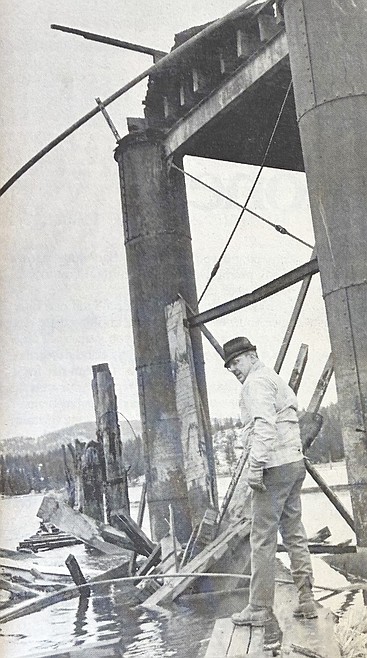
Sheriff’s Deputy Joe Daley surveys debris from the collapse of the Spokane Street bridge in 1971.
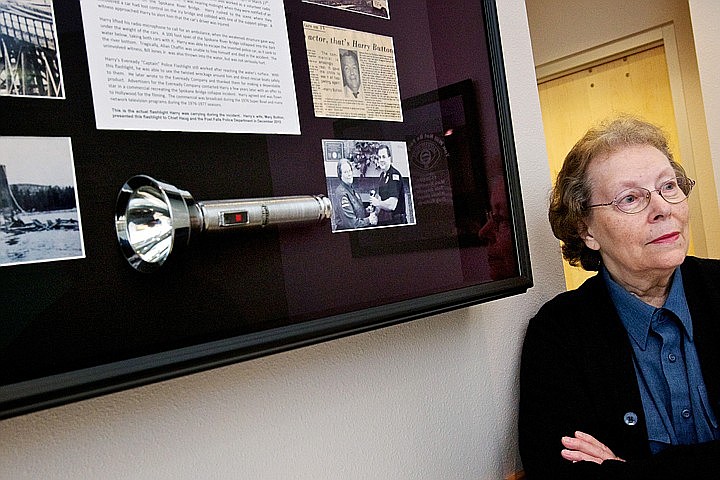
In 2011, Harry Button’s widow, Mary, poses with the display case holding the flashlight her late husband used to alert rescuers.
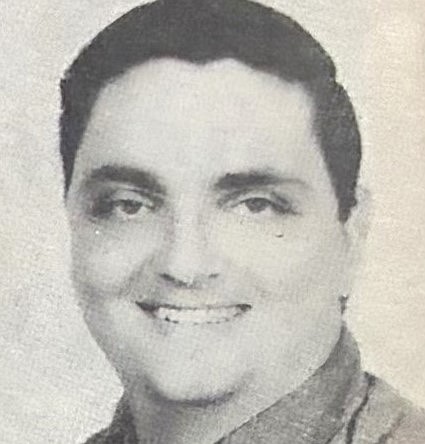
Allen Chaffin.
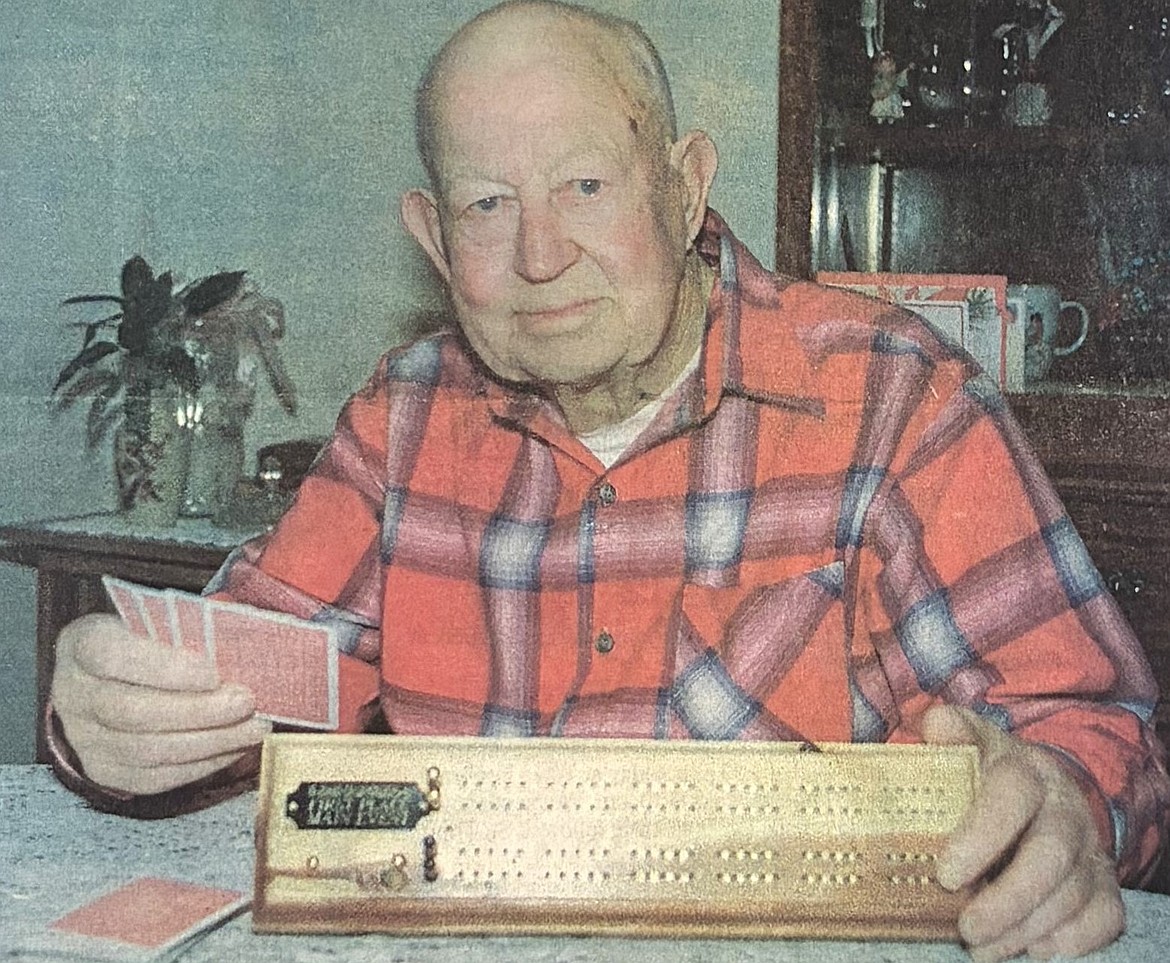
George Maitlin, 91, poses with the board he was awarded at the 1996 Idaho Cribbage Championships in Coeur d’Alene.
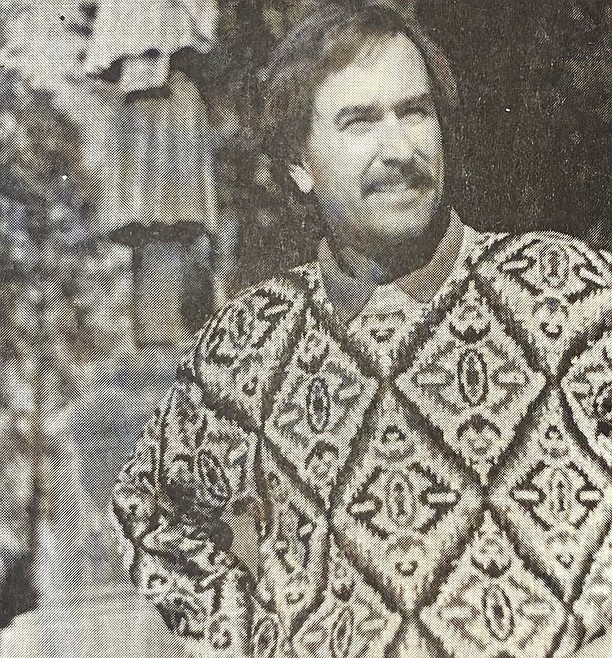
Parks Director Doug Eastwood poses in front of the Civil War Veteran’s Statue at Forest Cemetery in 1991.
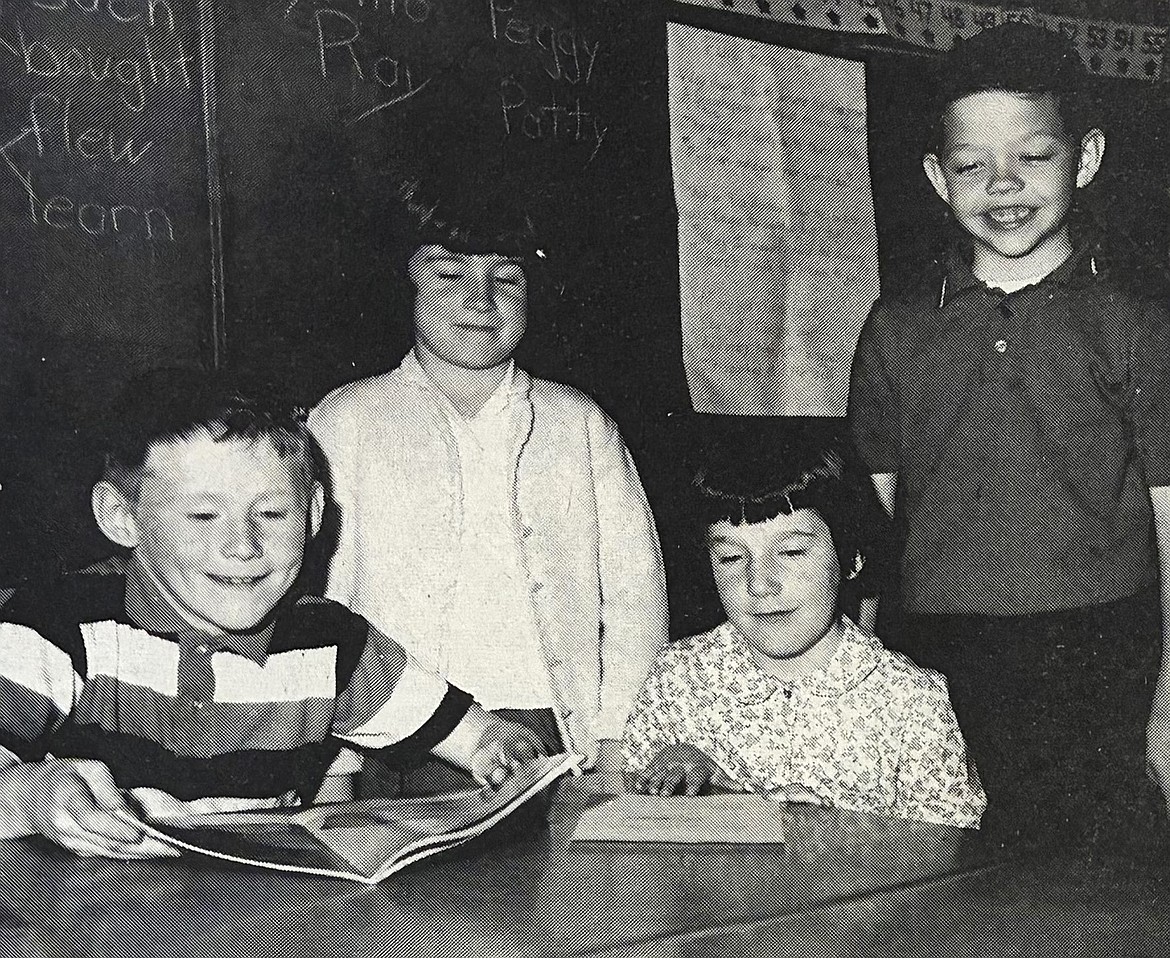
Borah School students display a letter from the White House in 1966. They are, from left: Milo Linville, Peggy Koontz, Patty Kelley and Ray Harris.
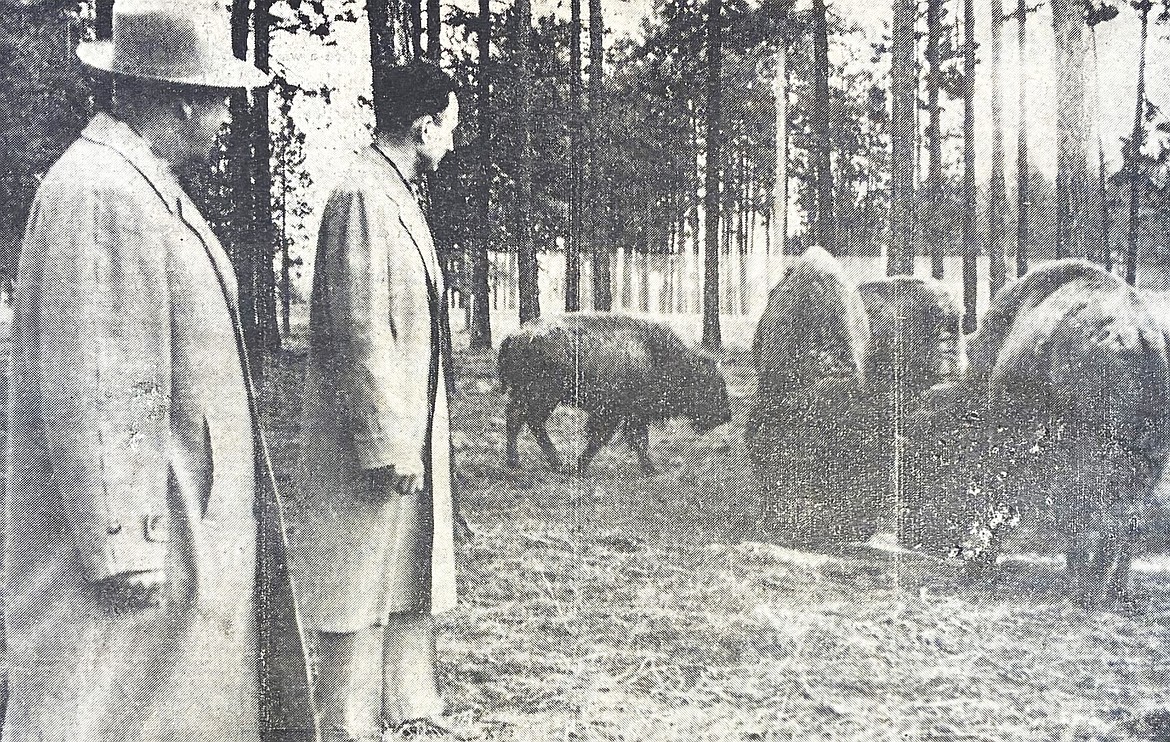
Chamber manager Kyle Walker and Royal Shields of the Coeur d’Alene Wildlife Federation warily eye buffalo brought to town as a promotional gimmick in 1956.
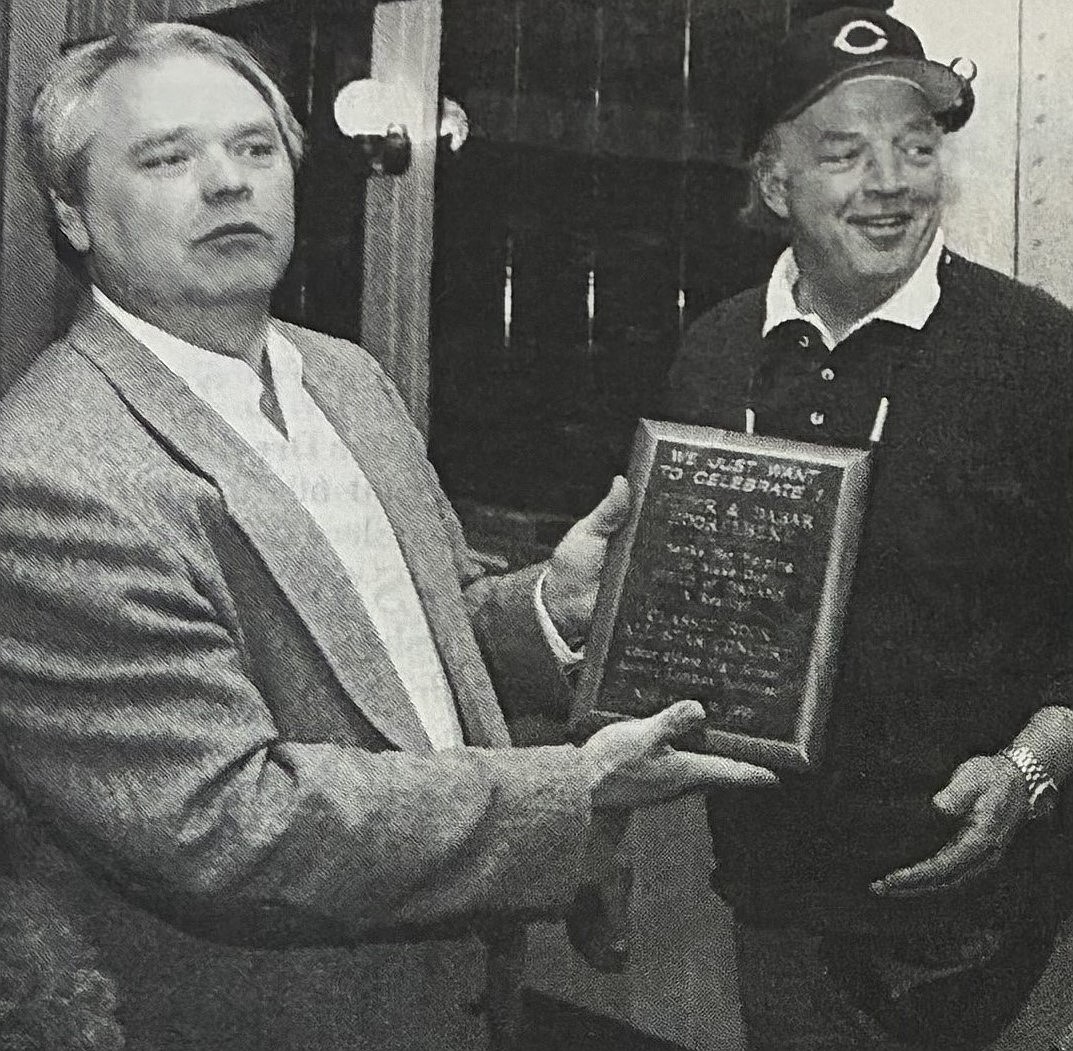
Athletic Director Larry Schwenke presents former Rare Earth drummer Peter Rivera (Hoorelbeke) with a plaque for a fund-raising concert in 1996.
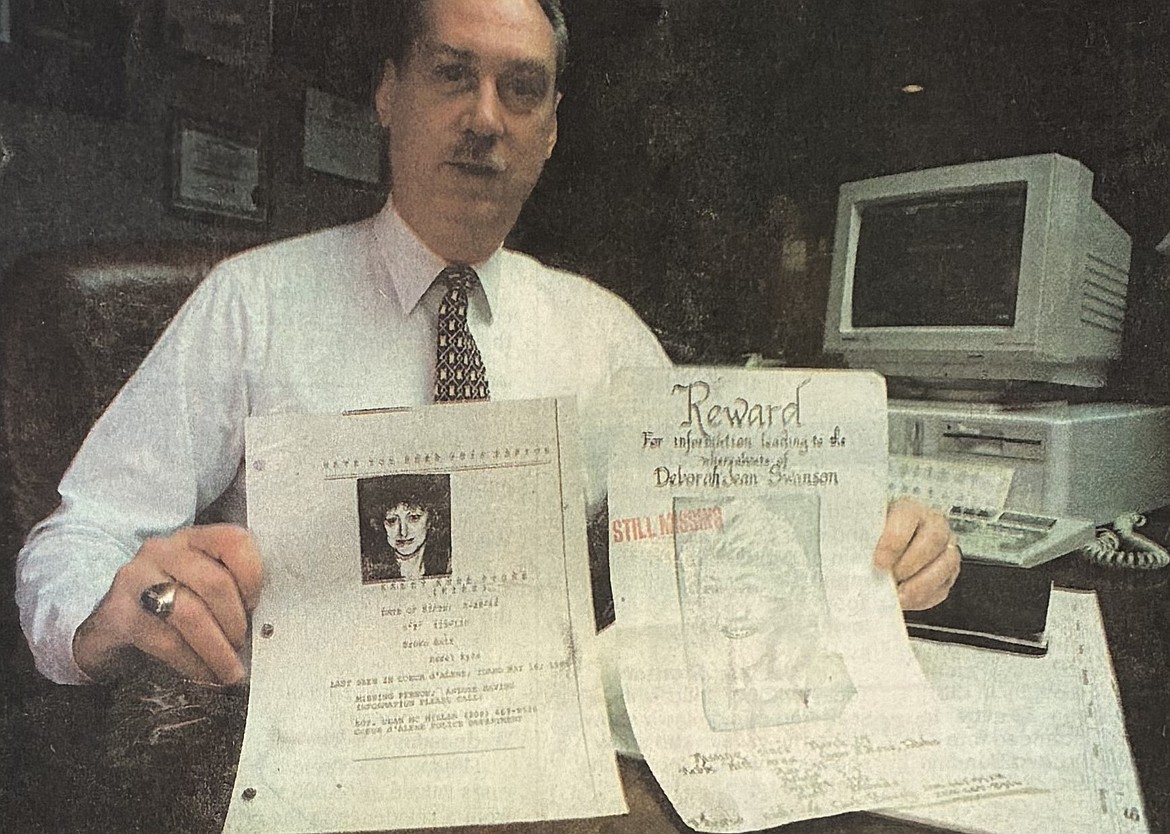
In 1996, Coeur d'Alene police Capt. Carl Bergh holds fliers of two local women who disappeared 10 years earlier: Deborah Swanson and Sally Stone.
Harry Button thought he was a goner when he hit the bottom of the frigid Spokane River.
But he surfaced moments later to become a Post Falls Police Department legend and to narrate a Super Bowl commercial about his narrow escape.
Tragically, the volunteer fire dispatcher who rode with him that night wasn’t as lucky.
The episode began as a routine call March 27, 1971.
Shortly before midnight that freezing Saturday, Officer Button and ride-along passenger Allen Chaffin, 29, of Post Falls, responded to a car crash on the Spokane Street bridge.
According to newspaper reports, a car driven by Allen R. Kelly, 49, of Post Falls, had crashed into a weak spot in the middle of the icy metal-span bridge.
Good Samaritan William Jones, 25, was on the scene helping the crash victim when Officer Button and his unfortunate passenger arrived. Jones had parked his pickup near the crash site. Then, he approached Button’s patrol car and asked the officer to call an ambulance.
Later, Button told The Press: “Just as I sat back down in my car and reached for my radio, the bridge collapsed taking all three of us and two cars down with it.”
Button and Jones climbed aboard bridge debris after surfacing. Chaffin didn’t come up.
“I wanted to go back and look for him,” Button told The Press, “But I couldn’t see the car.”
Trapped in the police car, the father of three drowned. Divers recovered his body the next morning.
The crash, experts said later, jarred a 140-foot section of the bridge that consisted of steel girders and wood pilings. The Post Falls Highway District had discussed replacing the 900-foot bridge since 1968. But finances and red tape delayed the project.
Button and Jones floated on the 32-degree water about 50 minutes before Kootenai County sheriff’s deputies arrived in a borrowed boat. Button shined his flashlight to guide the rescuers to Jones and him. The light’s three, 50-cent batteries worked despite submersion.
Later, the Eveready Battery Company asked Harry to narrate the story of his near-death experience for a 1976 Super Bowl commercial. The ad featured a replica of the bridge and a stuntman who re-enacted Harry’s role in the late-night drama.
Button, who died in 1998, called the commercial “amazingly real” and said, “I definitely was not interested in going down in that car again.”
A $900,000 bridge was built 30 feet west of the old one. It opened in 1972.
Never Too Old
The coordinator for the 1996 Idaho Cribbage Championships at the Eagles Lodge said the outcome had “something Hollywood about it.”
She compared it to the movie “Rudy,” where an underdog athlete overcomes obstacles to fulfill a dream.
Enter George Maitland of Coeur d’Alene.
George was in a slump. In winter 1995, he finished only fourth of 31 in a smaller tournament. And the cribbage whiz from the Lake City Senior Center now faced 100 players, including “heavy hitters” from California and the West Coast.
Also, he was 91 years old.
George was the last player to qualify for the state playoffs. And, when he somehow reached the final round, he faced the top seed who had won 19 of 22 games that day.
That’s when fatigue hit George.
He made mistakes. He moved his peg backward, for example. But a double cheeseburger and a cup of coffee revived him. Still, he trailed slightly in a winner-take-all game.
His opponent was a point from victory when George pulled two aces for the upset and became the oldest tournament winner in American Cribbage Congress history.
“It was almost like a hole in one, 10,000-to-1 odds,” George said afterward. “The whole place went nuts.”
With the $1,000 prize money, George visited Alaska.
George said of his championship: “I never won that big before. It was unbelievable.”
Raptured?
For decades, the Grand Army of the Republic Soldier guarded a troop of empty graves at the heart of historic Forest Cemetery in Coeur d’Alene.
The 12-foot monument and two rows of concentric graves were planned by a Civil War veterans’ group (GAR) in the early 1900s. And, until 1991, no one realized that the ground nearby contained no remains.
An irrigation project uncovered the oversight.
“As we traced the history of that part of the cemetery, we found that the last activity there was in 1954,” Cemetery Director Doug Eastwood told The Press. “Then all the records just stopped.”
City documents and some probing bars confirmed that there were 64 vacancies. So, the city re-platted the gravesites and offered them for sale at $500 each.
The lots were snapped up.
According to The Press, the GAR soldier statue was part of the original, 1-acre tract used by Fort Sherman (1878-1900) as a grave yard. When the fort shut, buried soldiers and their family members were moved to Fort George Wright Cemetery in Spokane.
In 1902, Coeur d’Alene officials asked President Theodore Roosevelt to deed the property to the city. In 1905, Roosevelt did so, transferring the cemetery and 19.7 acres more.
Huckleberries
• Poet’s Corner: April is the month for fibbing, / spinning tall tales and ad-libbing, / with fervent hope they won’t distress / those folks down at the IRS – The Bard of Sherman Avenue (“April”).
• LBJ’s Pets: And the answer is: Kim and Freckles. The question: What were the names of President Lyndon Johnson’s dogs? In 1966, Phyllis Williams’s second-graders at Borah School wanted to know. So, they wrote letters to LBJ as a class assignment. Milo Linville’s letter was picked to send. LBJ’s secretary wrote back. And she sent a picture book about LBJ’s pets, family and life at the White House.
• A Tourist Draw? You are a Coeur d’Alene old-timer if you recall the Markshire, Mark Richeson’s club, or his promotional buffalo. Buffalo can’t compete with a floating green, a boardwalk or Silverwood as attractions today. But a seven-buffalo herd was Page One news in 1956. The beasts appeared in The Press to promote the opening of Richeson’s Markshire (formerly Kirkpatrick’s Boulevard Club) on April 4, 1956.
• Get Ready: We know him as Peter Hoorelbeke, proud father of three Coeur d’Alene High athletes in the 1990s. But fans elsewhere know him as Peter Rivera, the drummer-vocalist for the rock band Rare Earth, of “I Just Want to Celebrate” (1971) fame. On March 16, 1996, Pete and an all-star band celebrated as they wowed 1,200 locals at North Idaho College – and raised $15,000 for a new CHS sports complex.
Parting Shot
On March 29, 1986, 40 years ago today, Deborah Jean Swanson, 31, vanished without a trace from the Tubbs Hill area.
City police found the vehicle that belonged to the special education instructor from Sorensen School in the old Third Street parking lot.
Leads were checked and rechecked. Clues studied. Dead ends encountered. Decades passed.
In June 2025, Doug Eastwood’s book, “Vanished in the Pacific Northwest,” rekindled interest in the 1980s disappearances of Debbie and three other women: exotic dancer Sally Stone, nurse Kathryn Gregory and Bonneville Power Administration employee Julie Weflen.
At this point, the four women may never be found.
But Huckleberries will keep reminding you of them.
D.F. Oliveria can be contacted at [email protected].
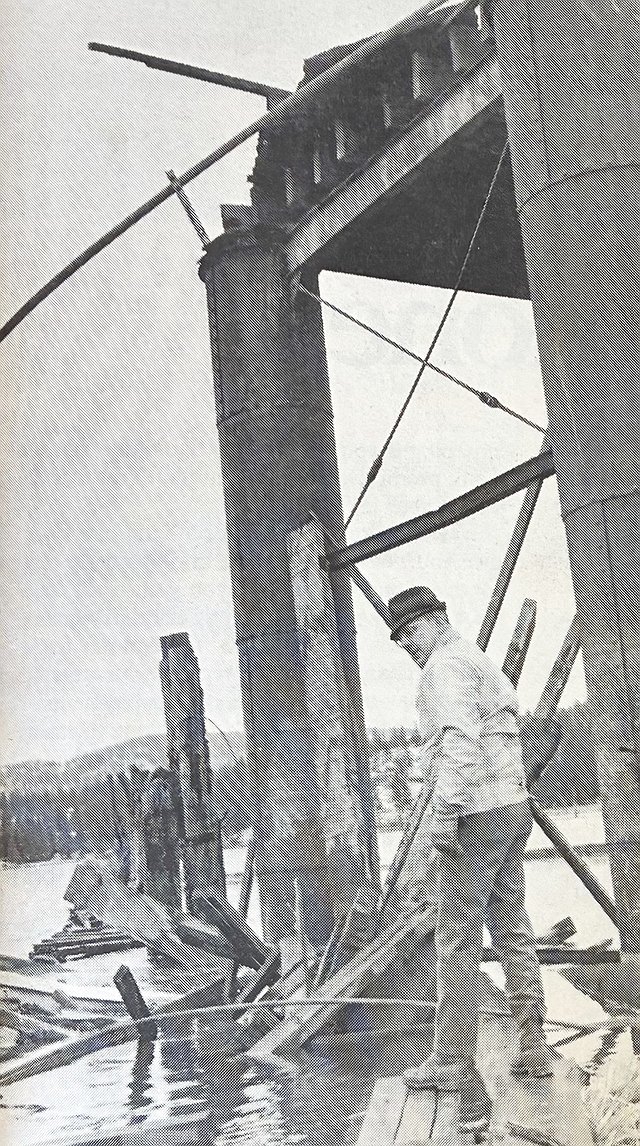 Sheriff’s Deputy Joe Daley surveys debris from the collapse of the Spokane Street bridge in 1971.
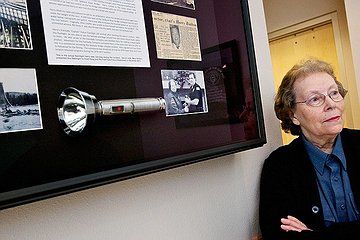 In 2011, Harry Button’s widow, Mary, poses with the display case holding the flashlight her late husband used to alert rescuers.
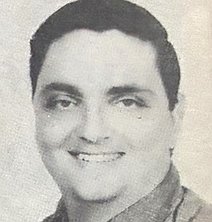 Allen Chaffin.
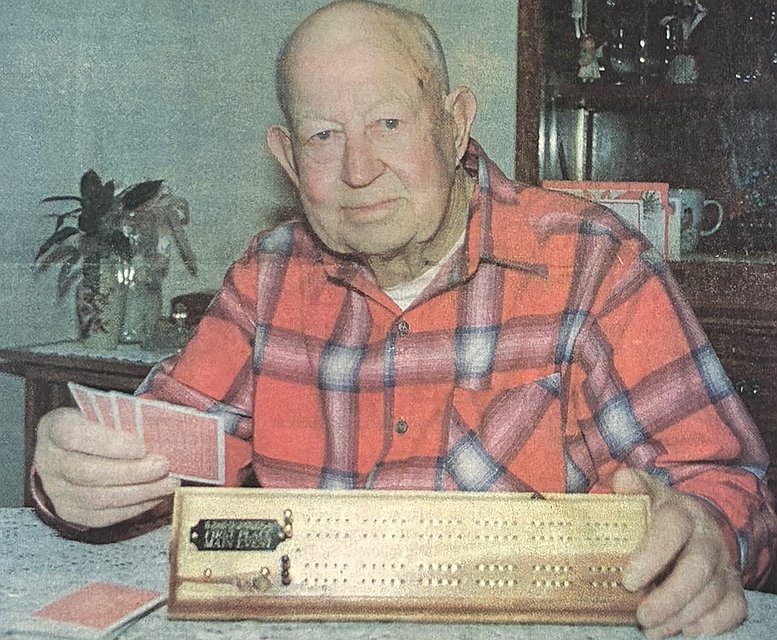 George Maitlin, 91, poses with the board he was awarded at the 1996 Idaho Cribbage Championships in Coeur d’Alene.
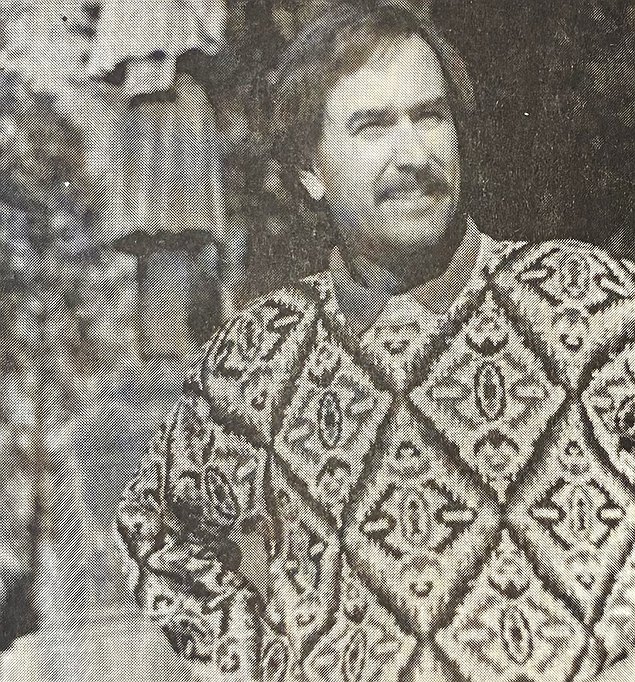 Parks Director Doug Eastwood poses in front of the Civil War Veteran’s Statue at Forest Cemetery in 1991.
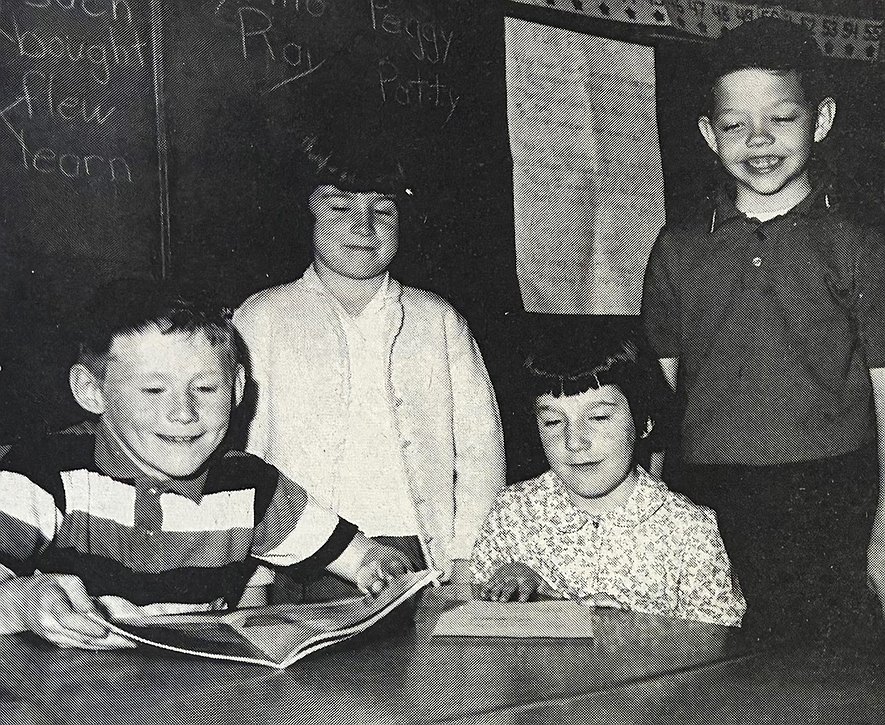 Borah School students display a letter from the White House in 1966. They are, from left: Milo Linville, Peggy Koontz, Patty Kelley and Ray Harris.
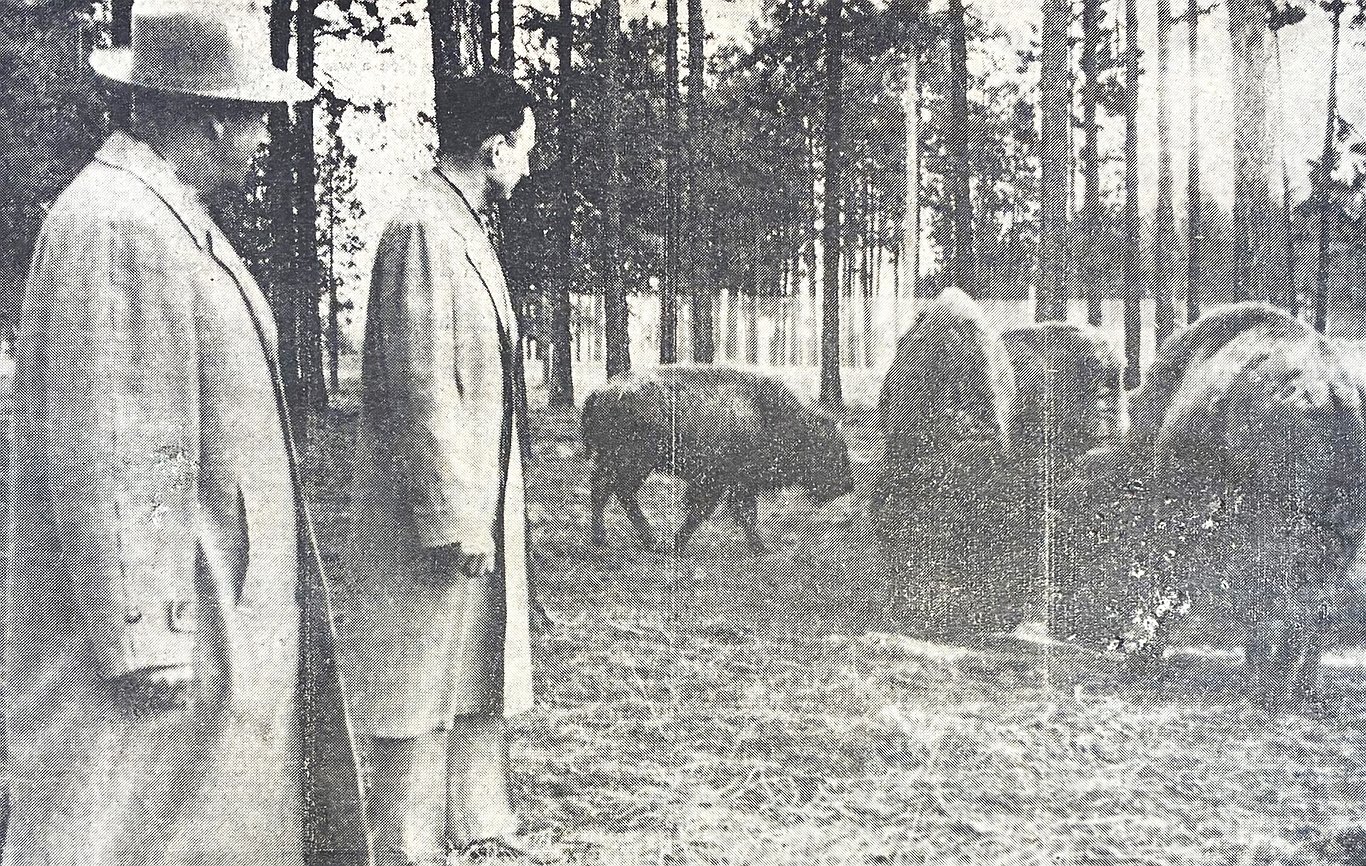 Chamber manager Kyle Walker and Royal Shields of the Coeur d’Alene Wildlife Federation warily eye buffalo brought to town as a promotional gimmick in 1956.
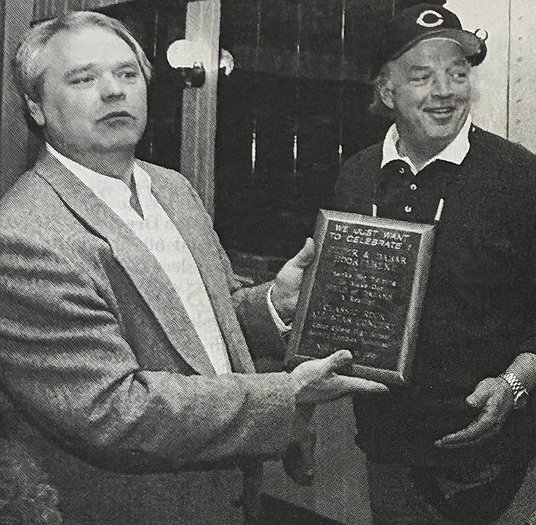 Athletic Director Larry Schwenke presents former Rare Earth drummer Peter Rivera (Hoorelbeke) with a plaque for a fund-raising concert in 1996.
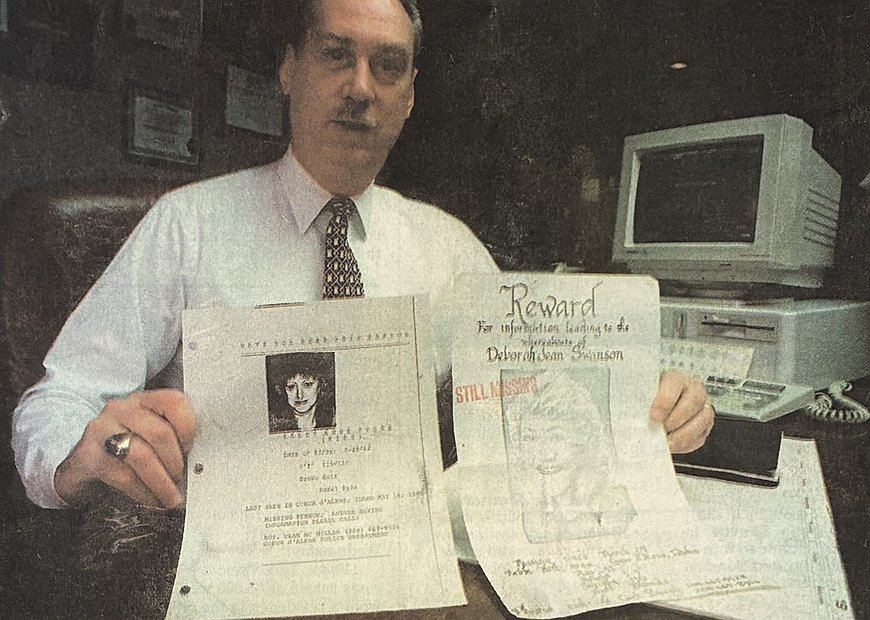 In 1996, Coeur d'Alene police Capt. Carl Bergh holds fliers of two local women who disappeared 10 years earlier: Deborah Swanson and Sally Stone.