
VETERANS PRESS: Portrait of a soldier — Bobie Eby
Coeur d'Alene Press | UPDATED 6 months AGO
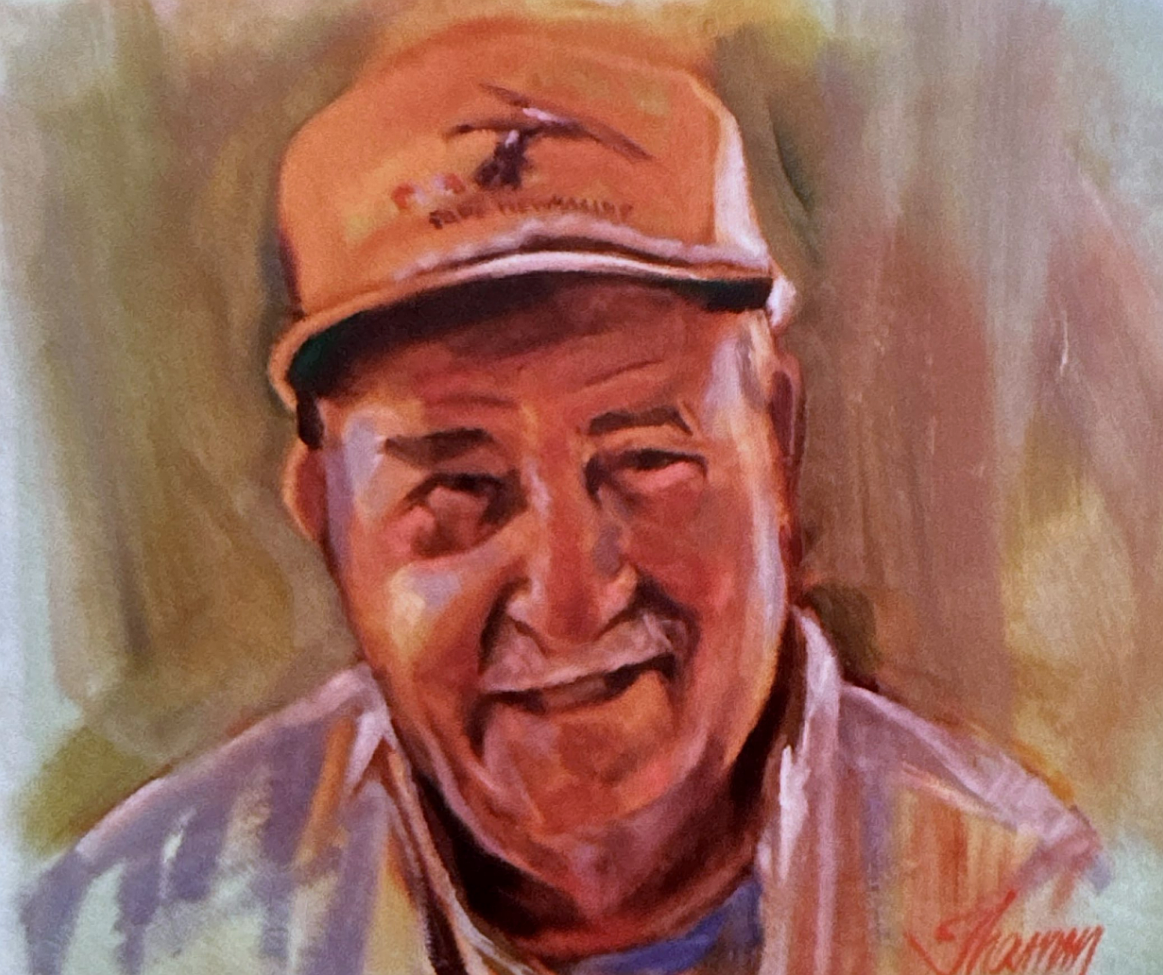
Bobie Eby (1932-2014) of Bonners Ferry, who served in the Korean War and received the Korean Service Medal, United Nations Medal, and five Bronze Stars.
Editor's Note: This profile on Bobie Eby (1932-2014) was originally published in the 2010 book "Vets" by John Thamm and Tom Davis and appears here courtesy of Veterans Help Net.
In 1932, a horse-drawn wagon brought a doctor to the doorstep of a tiny dwelling in rural South Dakota, where he delivered Bobie Eby on a snowy December night. Eby now calls his humble home a "toilet-paper shack" that has no running water or electricity. Within a couple of years, the family moved to Bonners Ferry, Idaho, and there he grew up.
Three older brothers fought in World War II, and Bobie signed on after they all came home safely. Inducted in 1950, Bobie finished boot camp at Fort Ord. He says his early Army experience "wasn't too bad, because I was a company boxer." While still in high school, he had trained hard and boxed competitively, so he relished the challenge in boot camp. "I'd go to the gym and work out with trainers to get ready for the smoker every Friday night," he says. "I'd fight kids from New York, all over. It didn't make a difference where they were from, because I was in good shape. I was a light-weight, 135 pounds."
After basic training, Eby chose leadership school, but it was interrupted because of the Korean conflict. He soon found himself bound for Southeast Asia. "They flew us from Seattle to Alaska and then to Tokyo to join the outfit to go to Korea," he remembers. "They flew us to Tokyo in one of them old four-motor drop planes that had nothing but stretchers in them to bring back the wounded and sick."
He joined the Seventh Division, 31st Field Artillery, and eventually landed at Inchon. "We went in just like boot camp, you know, with the weapons marching. We got up to the Seoul River and dug a hole about 2 feet deep in the sand. I was taking a nap, the last of August — a nice, sunny day for a nap. And then," he says, "all hell broke loose."
Eby and his buddies faced a sudden volley of machine-gun fire, mortars and other rounds. But thanks to the foxholes they had dug, they managed to survive. However, they later realized survival would become even more challenging in the days ahead. During the following winter, they endured temperatures of 40 below zero. They also faced Chinese soldiers who wanted retaliation for the 100-pound rounds they were receiving from the Americans.
Eby served in a forward outfit, surveying the layout of the land to prepare for his unit's next movement." I started as the number-five man, and then I went from five to number one, so I'm shooting a 155." Even though he realizes the danger he faced and the enemy he destroyed, he speaks without emotion about the seriousness of his duties, "I got to pull the trigger. It was just a job."
When Eby completed his enlistment, he joined the Idaho National Guard and "went back to the woods sawing logs." After a particularly snowy winter in Idaho, he moved to Delano, Calif. He worked in his brother-in-law's auto body business, but the hot summers forced him to reconsider, and five years later, he returned to the Northwest. Through it all, he spent almost three decades in the Reserves and the National Guard.
Bobie Eby's strength today can't compare to his boxing stamina in boot camp, though he has no complaints, "A little short on oxygen," he says, "but it's coming back." He continues living as he did in 1932, enjoying simple pleasures and the land around him. He married, had four sons, and became widowed after 50 years of marriage. Each spring, he says, "I plant a garden near my home, tomatoes, cucumbers and squash." And his house, while still humble, is a vast improvement over the “toilet-paper shack” in the South Dakota countryside.
• • •
Bobie Eby's portrait and story are in the book “Vets: Fifty Portraits of Veterans and Their Stories.” The portraits are by John Thamm. Tom Davis compiles the stories. Most of the veterans have local roots or connections, and each story and portrait make up an uplifting and emotional tribute to these and all veterans. A courtroom artist, John lives in Spokane with his wife, Kathy. You can find this book and much more about John Thamm at https://jthamm.com. Portraits and stories printed with their permission.