
The best night sky events for May
JOHN TAYLOR / Press Contributor | Coeur d'Alene Press | UPDATED 5 days, 11 hours AGO
Do you enjoy looking up? Well, May 2026 has a packed calendar for anyone who loves looking up. Here are the celestial wonders that will avail themselves to us in the night sky during May. Prepare yourself for a month filled with the Eta Aquarids meteor shower, lunar appulses and conjunctions, the Full Flower Moon and a Blue Moon.
May 1 — The Flower Moon.
This lunar phase puts the moon on the opposite side of the Earth as the sun and its face will be fully illuminated. This phase occurs at 10:23 a.m. This month’s moon was known by early Native American tribes as the “Flower Moon” because this was the season when spring flowers appeared in abundance. This Moon has also been known as the “Corn Planting Moon” and the “Milk Moon.”
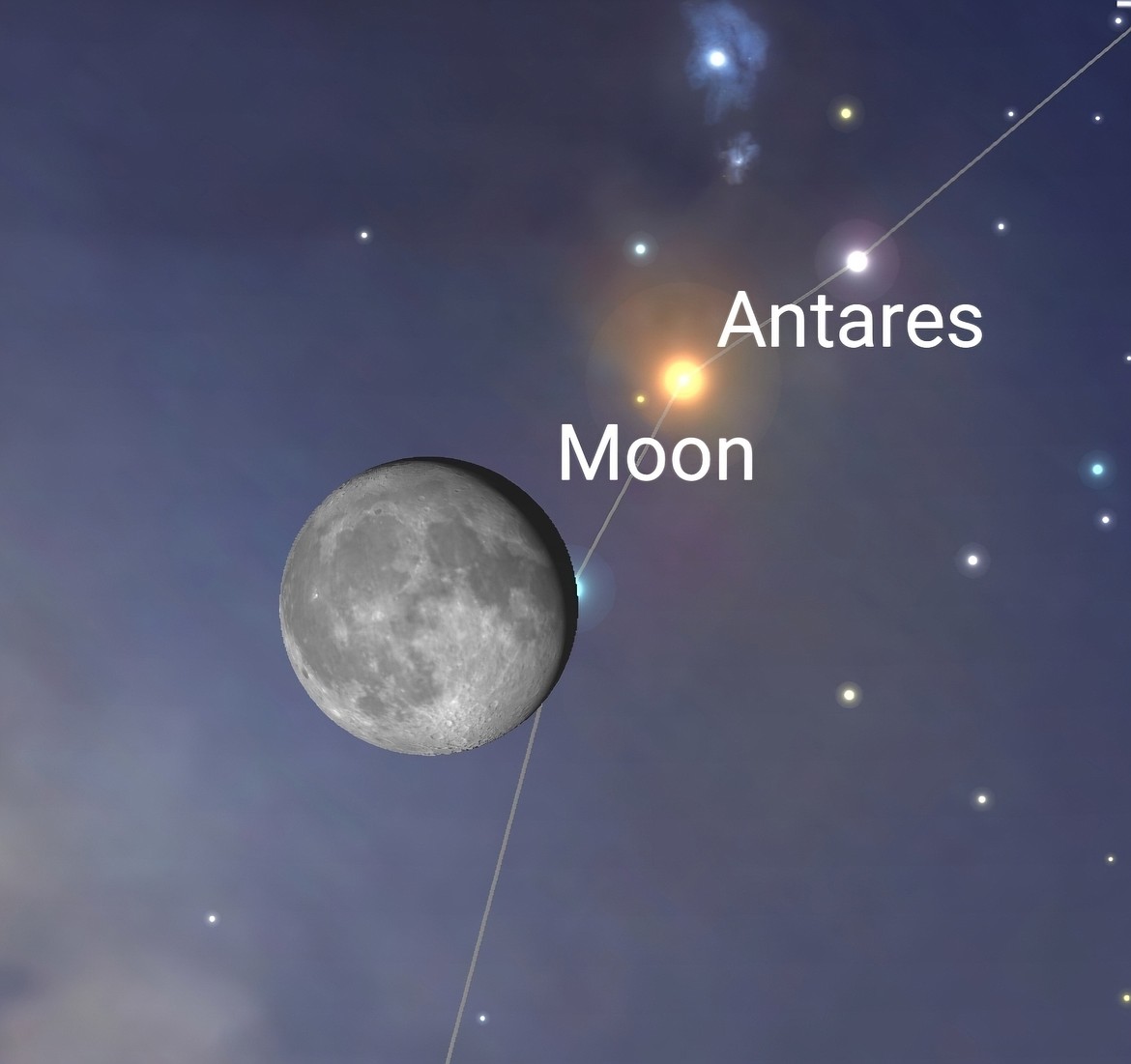
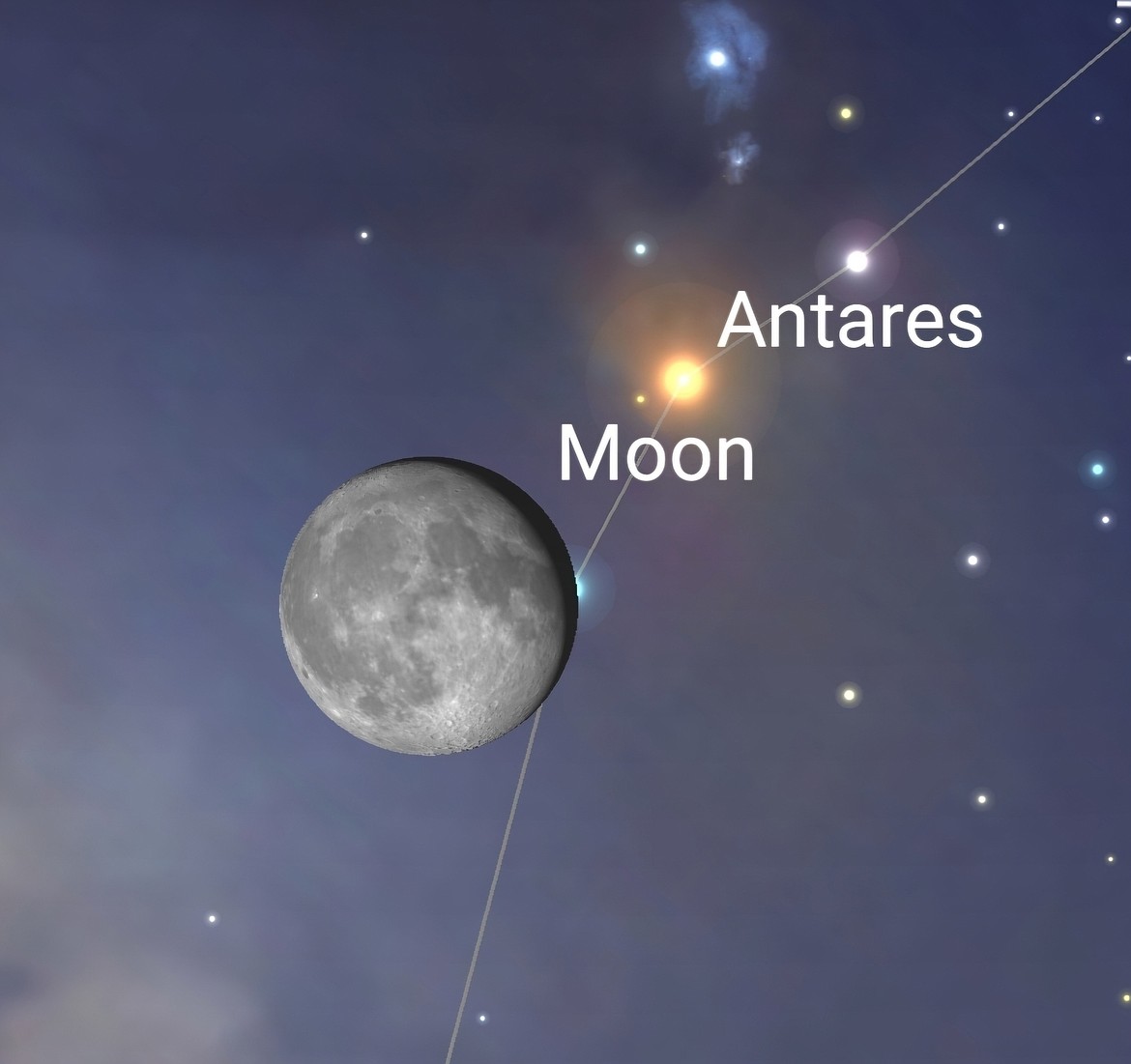
May 4 — Conjunction of the Moon and Antares.
The almost full moon will come within 3° (3 finger width at arm’s length) of the bright red star Antares (in the constellation of Scorpio). Look for this conjunction in the Southeast early in the morning (or late at night) around 1 a.m. Antares will be above and to the right of the moon.
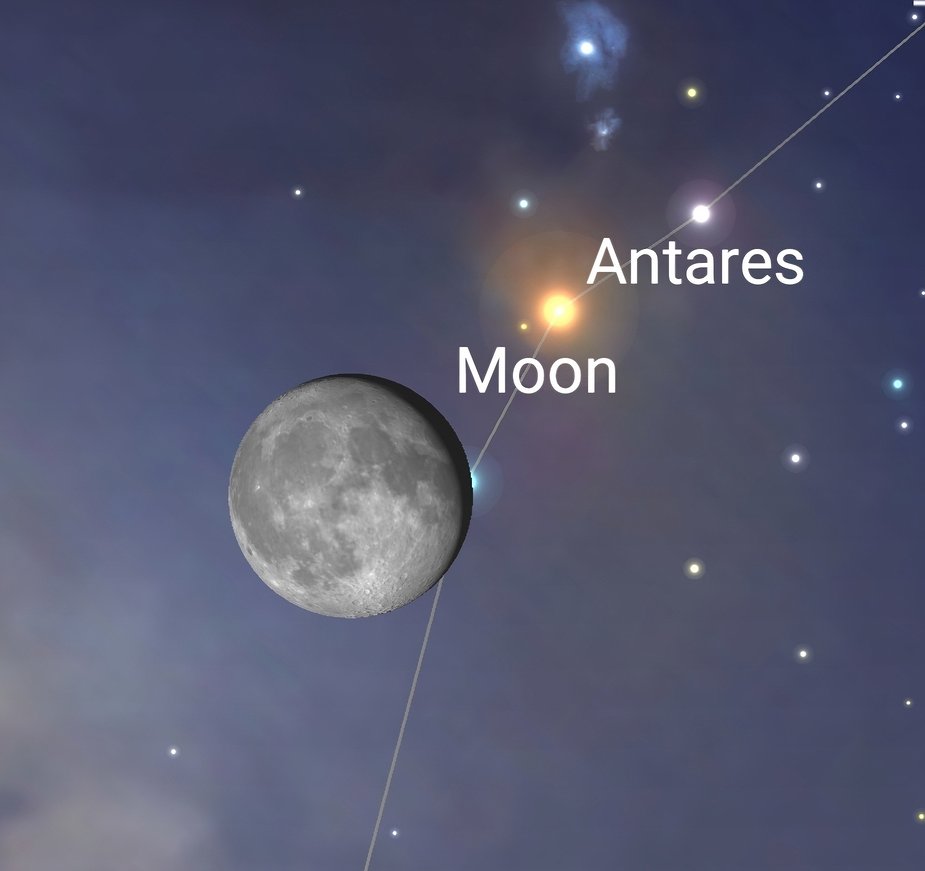 Image courtesy of John Taylor and Sky Safari 6.
May 5, 6 — Eta Aquarids Meteor Shower.
The Eta Aquarids is an “above average” meteor shower, capable of producing up to 30 meteors per hour at its peak. It is produced by dust particles left behind by comet Halley, which has been observed since ancient times. The shower runs annually from April 19 to May 28. It peaks this year on the night of May 5 and the morning of May 6, with a peak time of 2 to 4 a.m. The waning gibbous moon will block out some of the fainter meteors this year, but the moon doesn’t rise until after midnight. If you are patient, you should still be able to catch some of the brighter meteors. Best viewing will be from a dark location after midnight, but the moon will hinder viewing the fainter meteors. The Aquarids meteors will radiate from the constellation Aquarius, but they can appear anywhere in the sky.
May 9 — Last Quarter Moon.
The Last Quarter Moon is the third and final quarter phase of the moon during its monthly cycle. At this time, 2:10 p.m., the moon will be exactly half-illuminated, with the left half visible from the Northern Hemisphere and the right half visible from the Southern Hemisphere. This moon is visible after midnight and throughout the morning.
May 16 — New Moon
The new moon lunar phase puts the moon on the same side of the Earth as the sun and consequently will not be visible in the night sky. This phase occurs at 1:01 p.m. This is the best time of the month to observe faint objects such as galaxies and star clusters because there is no moonlight to interfere.
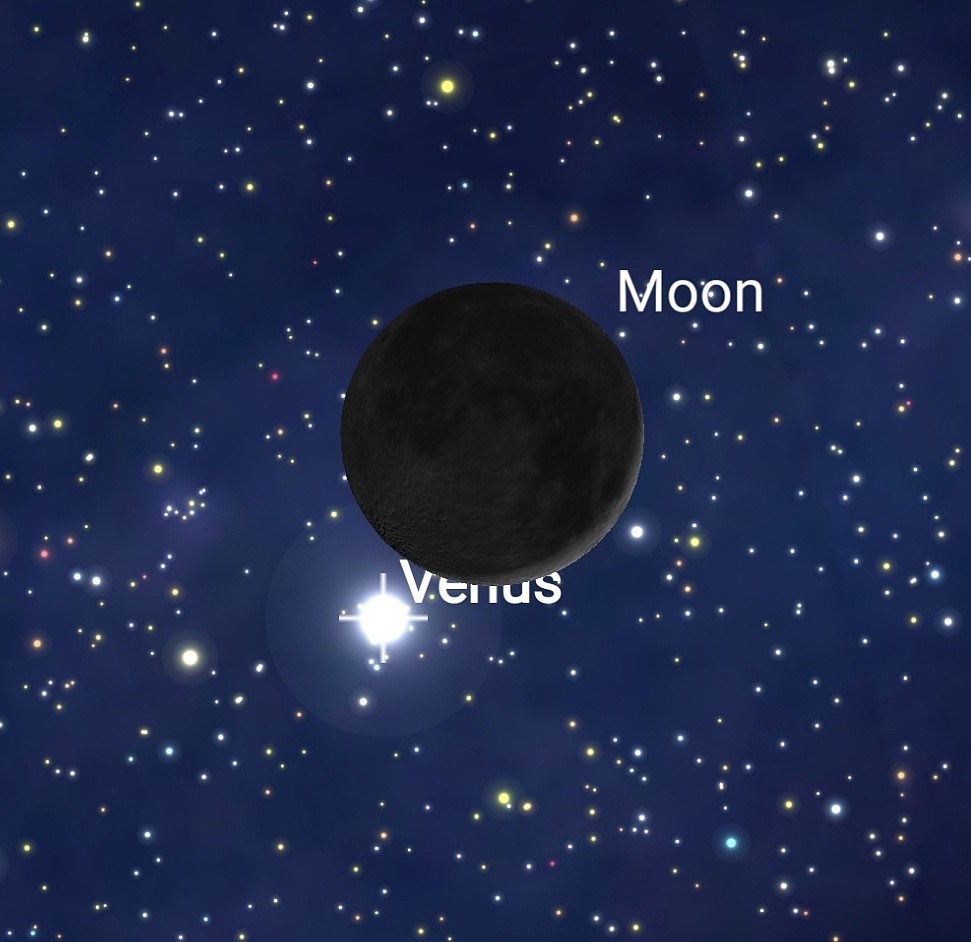
May 18 — An Appulse between the Moon and Venus
The moon and Venus will be close together on this night. The moon will pass just a little over 2° to the north of Venus. The moon will be almost two days old, making it dim and difficult to find. Look to the southwest at 9 p.m. Venus will be right below the “smiling” and dim crescent moon. This is a great photographic opportunity with your smart phone. It will help immensely is you use a tripod to photograph this occurrence.
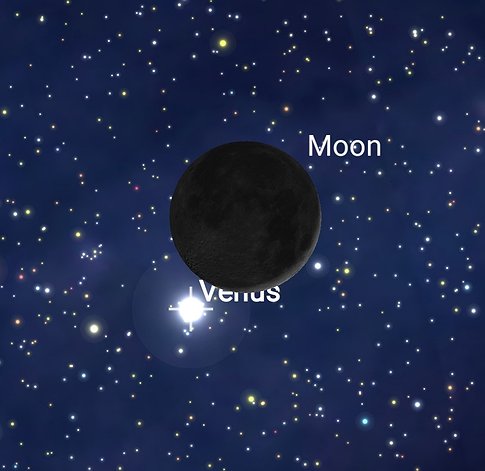 Image courtesy of John Taylor and Sky Safari 6
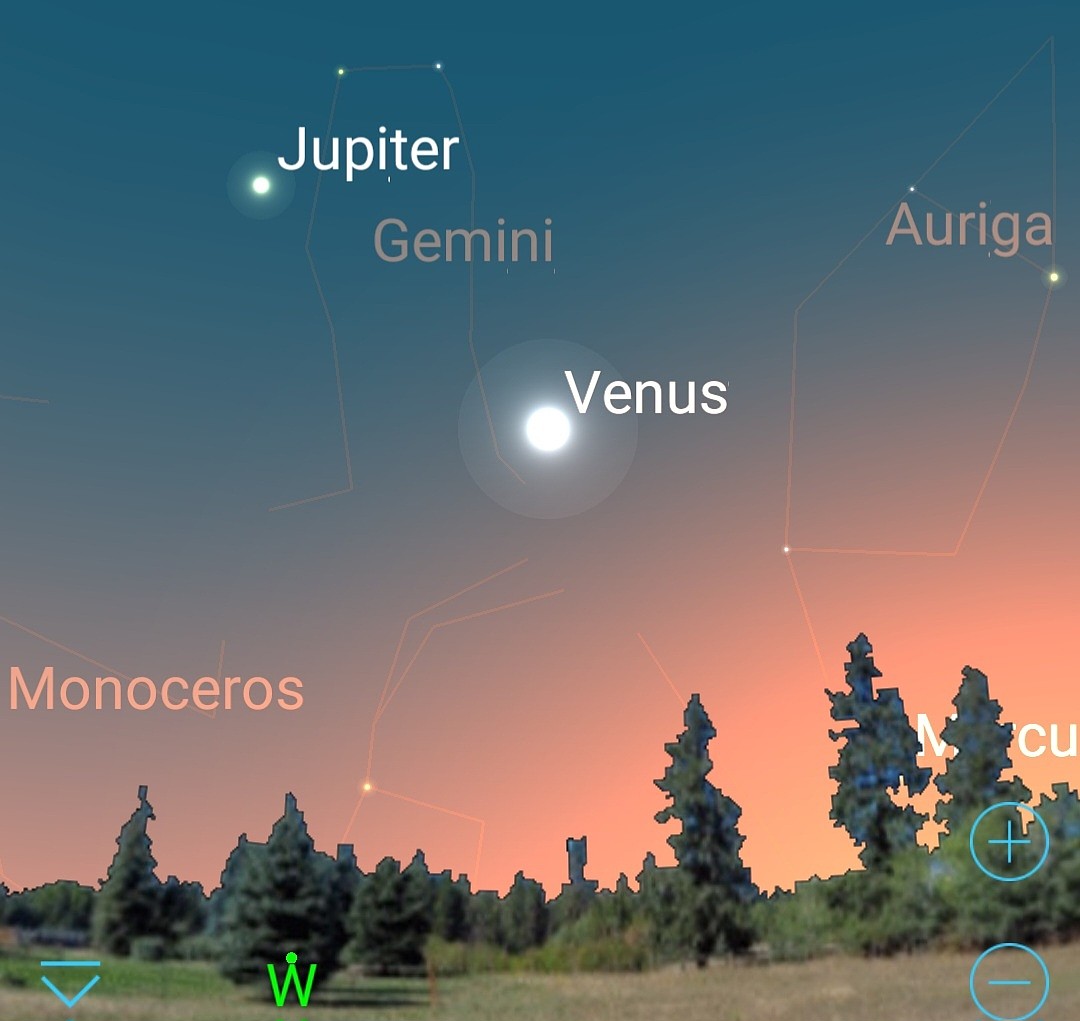
May 22 — Venus will reach its highest point in the sky in its 2026 evening apparition.
Shining brightly at mag -4.3; making it the third brightest object in sky (only surpassed by the sun and the moon.) It will be very prominent in the western sky after sunset. On this day, it will reach a peak altitude of 24° above the western horizon.
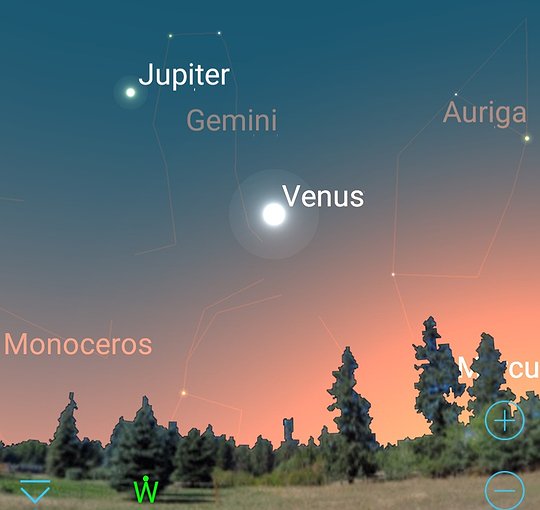 Image courtesy of John Taylor and Sky Safari 6
May 23 — First Quarter Moon.
The First Quarter Moon marks the halfway point between the New Moon and the Full Moon. It appears as a half-illuminated disk, which occurs at 4:11 a.m. The right half will be visible from the Northern Hemisphere and the left half will be visible from the Southern Hemisphere. It will be visible in the afternoon and evening sky.
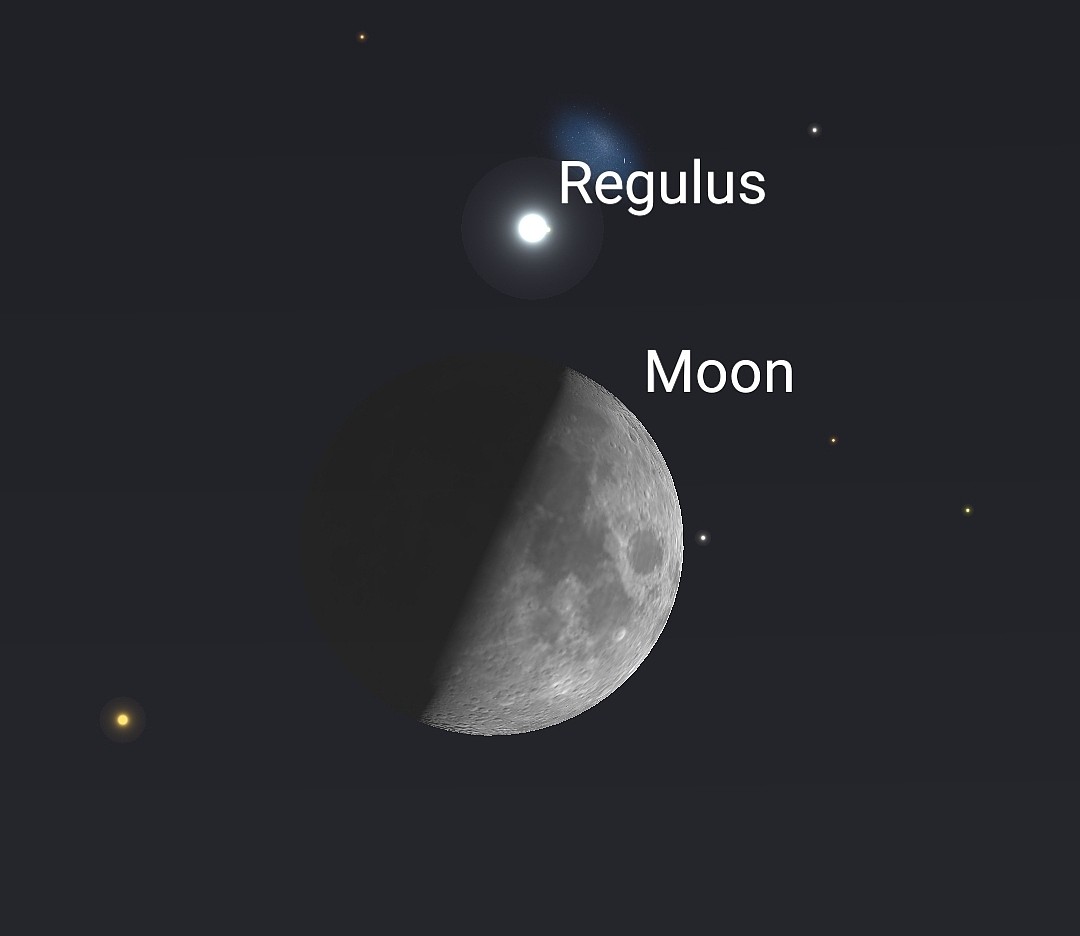
May 23 — An Appulse between the Moon and Regulus
The first quarter moon will be less than 1° (1 finger width at arm’s length) of the bright star Regulus (the brightest star in the constellation of Leo). Look for this appulse in the western sky just after midnight. Regulus will be slightly above the moon.
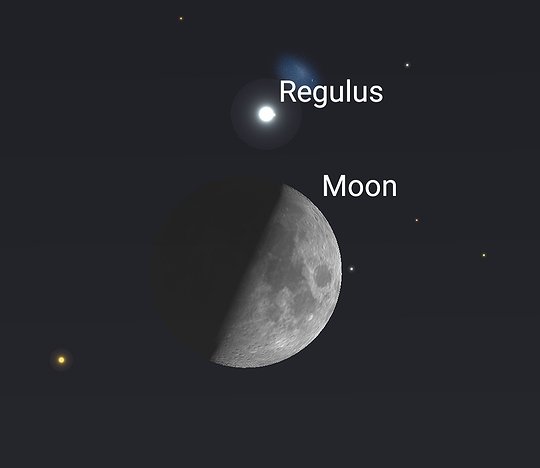 Image courtesy of John Taylor and Stellarium
May 31 — The Blue Moon.
This will be the second full moon of May 2026, making it a blue moon, a term used to describe any full moon which is the second full moon to fall within a single month. The use of this term first appeared in the March 1946 issue of Sky & Telescope magazine. Funnily enough, it was incorrectly stated that this was an established tradition. In fact, it was an entirely new usage of the term. The term had been previously used by the Farmers' Almanac, but with a different definition. However, the Sky & Telescope article became widely cited, and the term has now entered the modern lexicon.
• • •
John Taylor is an amateur astronomer who lives in Hayden.