
Some unforgettable memory boosters
HARVEY MACKAY | Coeur d'Alene Press | UPDATED 3 weeks, 1 day AGO
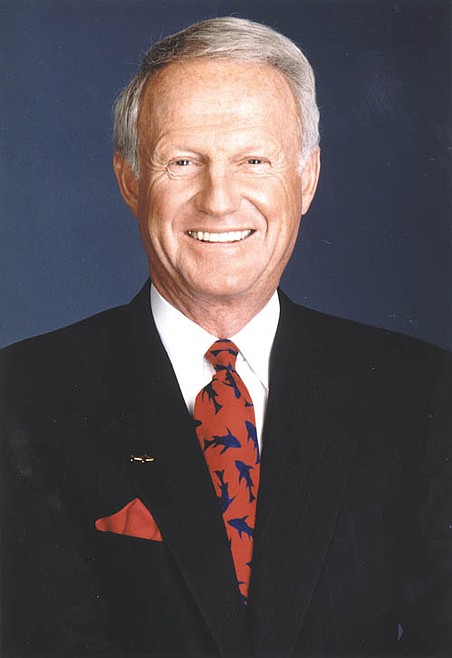
Harvey Mackay
A patient once complained to his psychiatrist that he was always forgetting things and asked, “What shall I do?”
“Pay me in advance,” the doctor advised.
Most people who claim they have a poor memory actually have an untrained memory. Twenty percent remember by hearing, so say things out loud. Forty percent remember by seeing, and the other 40% by doing.
There are many ways that you can train yourself to have a better memory. There are plenty of how-to books and courses available for improving your recall. Like every other skill, it takes practice and commitment to improve.
Improving memory can be beneficial in both personal and professional contexts. Here are some tips that I use to stay sharp.
• Write things down: Take notes during meetings, jot down important dates and make lists of tasks. Writing helps reinforce memory through the physical act of recording information. As I’ve preached a million times, pale ink is better than the most retentive memory.
• Use technology wisely: Use apps and digital calendars to set reminders for personal events and tasks. I constantly set alarms on my phone. On the professional side, leverage tools like dictation apps or voice memos to capture ideas and important information quickly.
• Create associations: Try name association techniques to remember people. For example, link a person's name with a famous person or a visual image. That’s why you will rarely hear me say, “I’ll never forget what’s-his-name.”
• Repetition and review: I repeat things over and over, which helps me remember names, phone numbers and key statistics. Regularly review important personal information, like birthdays and anniversaries. Revisit meeting notes and project plans frequently to reinforce details.
• Visual aids: Use visual aids like mind maps or charts to organize information. Create memorable phrases or acronyms to serve as prompts that will help you remember lists or complex data.
• Stay organized: Keep your living space tidy and use a consistent filing system for personal documents. Organize your workspace and digital files to make information easy to find and recall.
• Healthy lifestyle choices: Maintain a balanced diet, exercise regularly and get enough sleep. These lifestyle choices support brain health and improve memory.
• Practice mindfulness and meditation: Mindfulness and meditation can reduce stress and improve focus, which in turn enhances memory retention.
• Challenge your brain: Engage in activities like puzzles, reading or learning a new language. Take on new challenges at work that require learning new skills or information.
Memory has a significant connection to creativity, another of my favorite topics.
Writing in Psychology Today, author Art Markman, Ph.D., said: “[t]he only route to finding creative solutions to a problem is to find information in your memory that will help you to solve the problem in some way. The key is to find new memories that will relate to the problem you are trying to solve in some way.”
Markman goes on to explain, “Creativity is driven by memory ... The most important thing to keep in mind, though, is that all creative work requires using your existing knowledge to help you to do new things.”
Memory is like a muscle; it gets stronger with use, but every now and then, it might just decide to take a day off!
Here's a final story to illustrate my point: There was a gentleman who prided himself on having an excellent memory. He often boasted to his friends about how he could recall even the smallest details from years ago. One day, he was at a party and decided to demonstrate his remarkable memory skills.
He confidently announced, “Ask me anything about any event we've ever attended together, and I'll tell you exactly what happened!”
A friend, eager to test him, asked, “Do you remember the time we all went to that big concert last summer?”
The man paused for a moment, scratched his head, and replied, “Ah, yes! I remember it like it was yesterday ... but remind me, who was performing again?”
The room erupted in laughter; as it turned out, his memory was excellent for everything except the main event!
Even the best memories can have a few blind spots, so it's always good to have friends who can fill in the gaps!
Mackay’s Moral: A sharp memory is like a well-tuned instrument; with regular practice and care, it can play the symphony of your life with clarity and precision.
• • •
Harvey Mackay is the author of the New York Times bestseller "Swim With the Sharks Without Being Eaten Alive." He can be reached through his website, www.harveymackay.com, by emailing [email protected] or by writing him at MackayMitchell Envelope Co., 2100 Elm St. SE, Minneapolis, MN 55414.