
THE DIRT: Drought conditions increase exposure risks
Coeur d'Alene Press | UPDATED 3 months, 3 weeks AGO
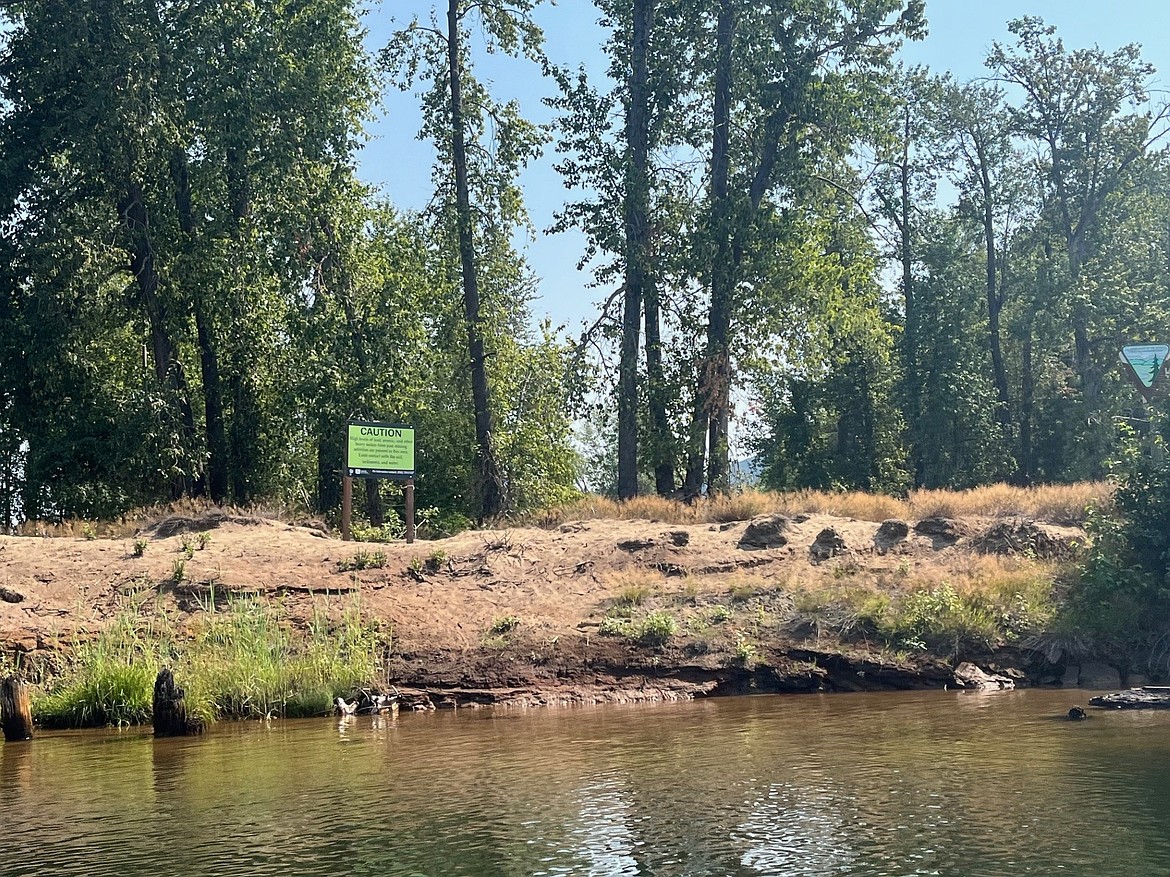
A warning sign along the banks of the Coeur d'Alene River warns recreators of the potential risk of lead exposure at the site.
Courtesy photo
Winter in North Idaho has been an odd one this year. From December flooding to an unseasonably dry & warm February, to several severe windstorms, North Idaho has certainly been through the wringer. Precipitation and snowpack deficits over the past four years have also contributed to a multi-year drought in our region that persists today.
Despite late-season snowfall, snowpack remained below normal for the 2026 water year, as a larger portion of precipitation fell as rain rather than snow. To make matters worse, current climate outlooks forecast dry and warm spring conditions and warmer-than-normal summer temperatures. Drought conditions bring on an abundance of various concerns, such as forest fires and water restrictions, but for those living, working, or recreating in the Bunker Hill Superfund Site, a not-so-commonly known concern is the increased risk of lead exposure.
While thousands of properties in the superfund site have been cleaned up through remedial actions, contaminated areas are still present, even in some popular recreational areas. When droughts occur, soil dries out much faster, leading to dustier-than-normal conditions. If dust is kicked up or disturbed in these contaminated areas, exposure is extremely difficult to prevent. Dust particles stick to clothing, shoes, towels, pets, etc., and are easily tracked into tents, campers, vehicles, and homes. Airborne dust is easily breathed in, and 100% of the lead inhaled enters the bloodstream. Dust consumed when eating with dirty hands or food is also absorbed into the bloodstream at varying rates.
Young children are particularly vulnerable to lead poisoning as they may absorb up to 4–5 times as much lead as adults from an ingested dose. Moreover, children’s innate curiosity and their age-appropriate and frequent hand-to-mouth and object-to-mouth behaviors increase the likelihood of exposure.
When the temperatures rise, people also tend to spend more time around streams and lakes where they can play and cool down at the same time. Due to the historic practice of discharging mine wastes into area water bodies, extra precautions must be taken if recreating in or around impacted areas, such as the South Fork and main stem of the Coeur d’Alene River. If you are not drinking the water, swimming itself is a low-risk activity, but playing, resting, and eating on shores and beaches contaminated by these sediments can be high-risk activities.
So, what can you do to protect yourself and your family? Follow these guidelines:
· Wash your hands and face with clean water and soap before you eat, drink, or smoke
· Avoid eating, drinking, or smoking in dusty environments.
· Eat on clean surfaces such as picnic tables or clean blankets.
· Immediately change out of clothes after working or recreating in dirty or dusty conditions and launder those items separately.
· When working or recreating in dusty areas, wear facial masks or respirators that filter out particulate matter.
· Change furnace filters and the filters on window air conditioning units every 1-2 months.
· Avoid stirring up lead-containing dust with dry sweeping; wet cleaning is safer.
· Have your children’s blood lead levels checked
For more information, please contact Panhandle Health District at (208)783-0707.
The Dirt is a series of informative articles focused on all aspects of cleanup efforts associated with the Bunker Hill Superfund Site. Our goal is to promote community awareness of contamination issues, to provide tools for protecting public health, and to keep the community informed of current and future cleanup projects. The Dirt is a group of committed and local experts from multiple agencies, including the Basin Environmental Improvement Project Commission, Panhandle Health District, Shoshone County, Silver Valley Economic Development Corporation, and the Idaho Department of Environmental Quality.