
Tribal project restores portion of Jocko River to natural flow
EMILY HEIMARK | Hagadone News Network | UPDATED 5 months, 2 weeks AGO
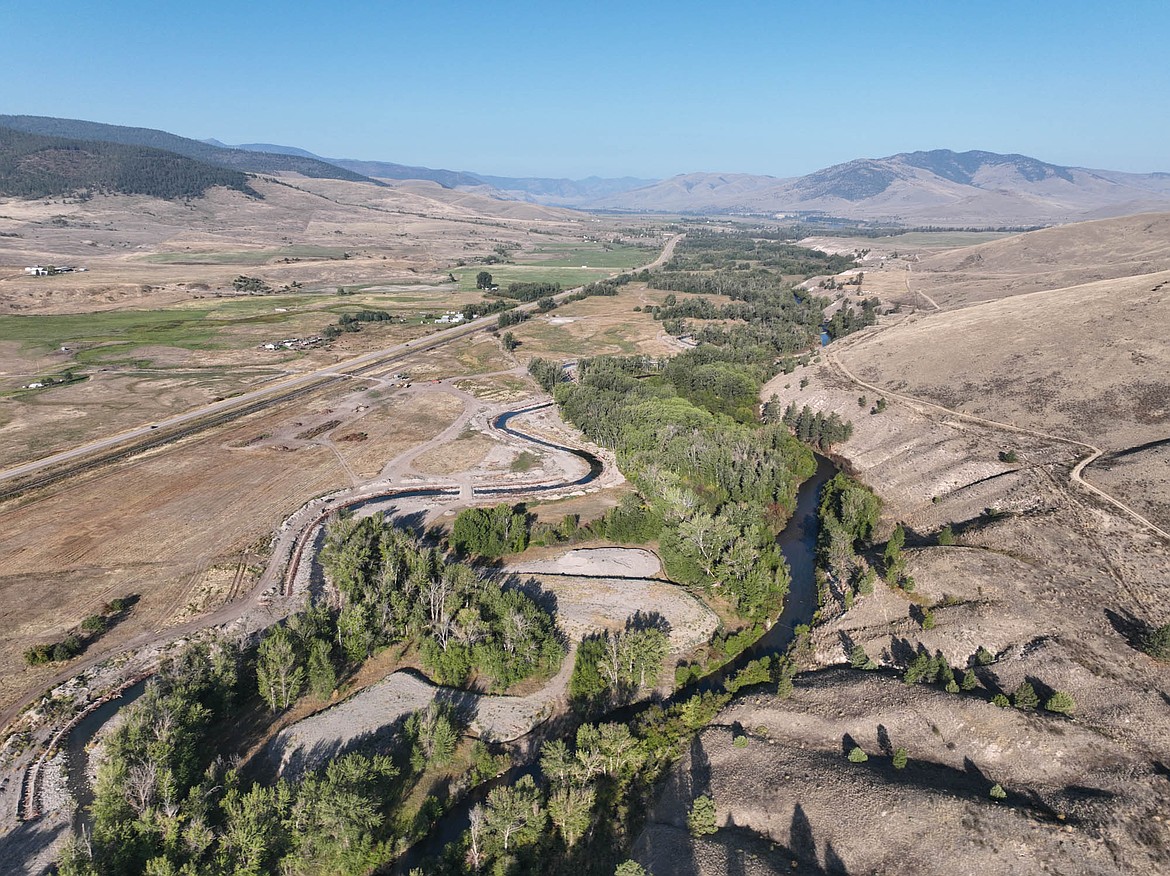
The Jocko River Bison Range Reach Restoration project restores the stream and floodplain. The drone overview shot shows the new meandering channel to the left and the old channel on the right. (Courtesy of CSKT)
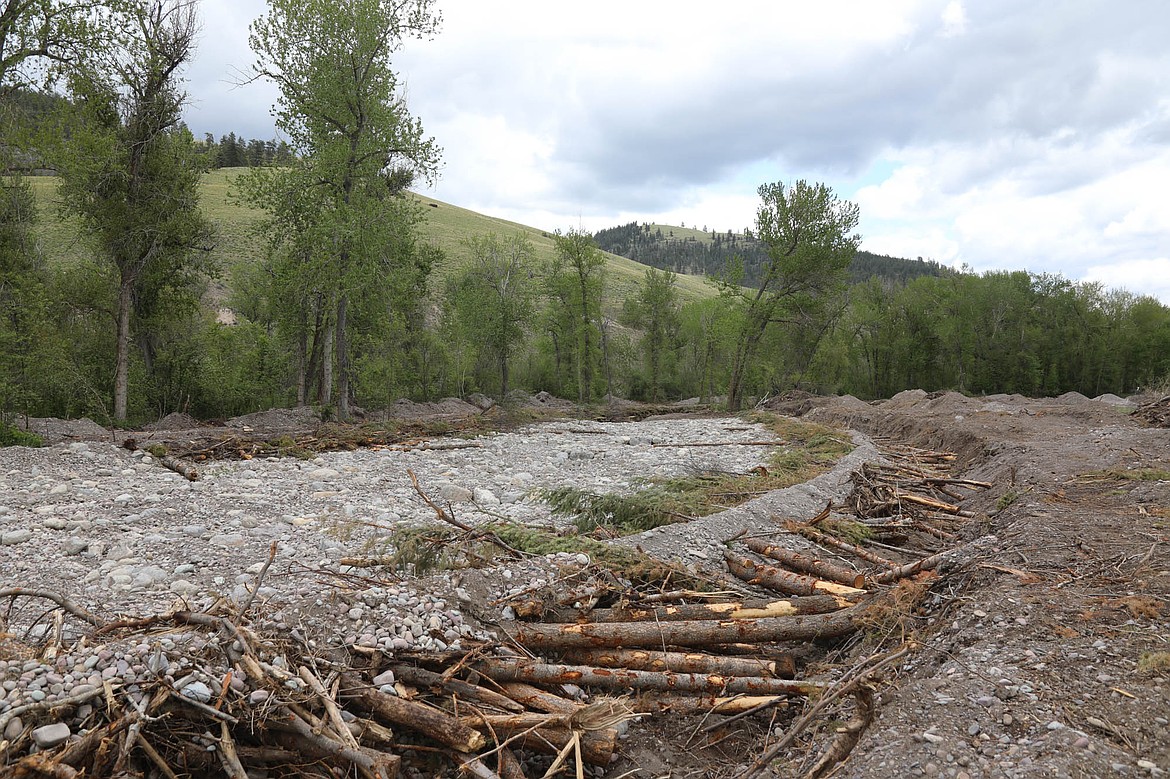
Riparian structures are being built into the bank using jackknifed trees. Portions of these trees will hang into the riverbed, creating protected areas for aquatic species. (Courtesy of CSKT)
Emily Heimark (Messer) joined the Lake County Leader in July of 2025 after earning a B.A. degree in Journalism from the University of Montana. Emily grew up in the rolling hills of southeast Missouri. She's lived in Montana since 2022 and honed her reporting craft through the UM J-School newspaper and internships at the RMEF Bugle Magazine and the Missoulian. At the Leader, she covers government, business, education, agriculture and community news. Contact Emily Heimark at [email protected] or 406.883.4343 | May 14, 2026 12:00 AM
The Jocko River, where it flows alongside the Bison Range boundary west of Ravalli, is getting a major makeover, thanks to a Confederated Salish & Kootenai Tribes Natural Resources Department project.
The goal of the Jocko River Bison Range Reach Restoration project is primarily to restore the stream and floodplain impacted by levees, humans and agricultural uses. The project rebuilds a new channel where the river has historically meandered, revegetates the area with native plants and restores the wetland and riparian habitats.
According to Tabitha Espinoza, manager of the Natural Resource Department’s Environmental Restoration Program, over the years the riverbed has shifted to the edge of the floodplain and straightened, a process called channelization that deepens and narrows the riverbed. It’s a problem often caused by levees or physical barriers that constrain the river.
The current river has been confined against the mountain that defines the southern edge of the Bison Range, causing erosion and increasing sediment in the riverbed.
The restoration project, split into two phases, is reconstructing a meandering channel to its historical course. Riparian structures are being built into the bank using jackknifed trees. Portions of these trees will hang into the riverbed, creating cool, protected areas for aquatic species.
Part of the project includes adding native plants and willow trees along the river. The newly built low banks will allow for natural flooding during heavy waterflow periods, helping plants grow by depositing nutrients. The native vegetation regrowth will benefit the local wildlife, and the repaired floodplain is estimated to restore 30 acres of wetland habitat.
Espinoza explained that the current river conditions seasonally impede some fish from entering tributaries and prevent them from reaching the upper Jocko watershed. She said this was a major driving factor for this project from an ecological perspective.
“To address something this far down on the river then allows fish to have access to many more miles of stream that's really high-quality habitat,” Espinoza said.
Espinoza said historically, almost every stream in the valley has been impacted by the construction and operation of the Flathead Indian Irrigation Project, owned and operated by the Bureau of Indian Affairs — a federal agency within the U.S. Department of the Interior.
The roughly $5 million in construction costs for this project is supported by the $1.9 billion CSKT Water Compact settlement, a tribal-state-federal agreement to fulfill water rights for the Salish, Kalispell, and Kootenai people as guaranteed by the 1855 Hellgate Treaty. One of the authorized uses of the compact is to repair and mitigate the damage caused by FIIP; CSKT is also using it to repair or modernize portions of FIIP’s infrastructure.
Espinoza said this project is just one piece of a larger puzzle in the efforts of the CSKT Fisheries Program to restore the Jocko watershed, and it ties into decades of work they have done and will continue to do in this area.
Fisheries identified this as an area needing action in the early 2000s as a part of the Jocko River Master Plan. As part of the compact, the Tribes regained control of the CSKT Bison Range and acquired additional land in the area, enabling a large-scale restoration project.
Phase one of the project is primarily complete, with the channel rebuilt and water flowing through it. The previous channel has been backfilled, and crews are currently installing temporary fences to protect the freshly planted vegetation from wildlife.
The new channel and floodplain features are currently under construction as part of phase two, and water will be moved into it in September. Espinoza said the majority of construction will be completed by the end of this calendar year.
During construction, the site is closed to the public. Typically, the area offers walk-in access to tribal members and non-tribal members with the appropriate conversation permits.
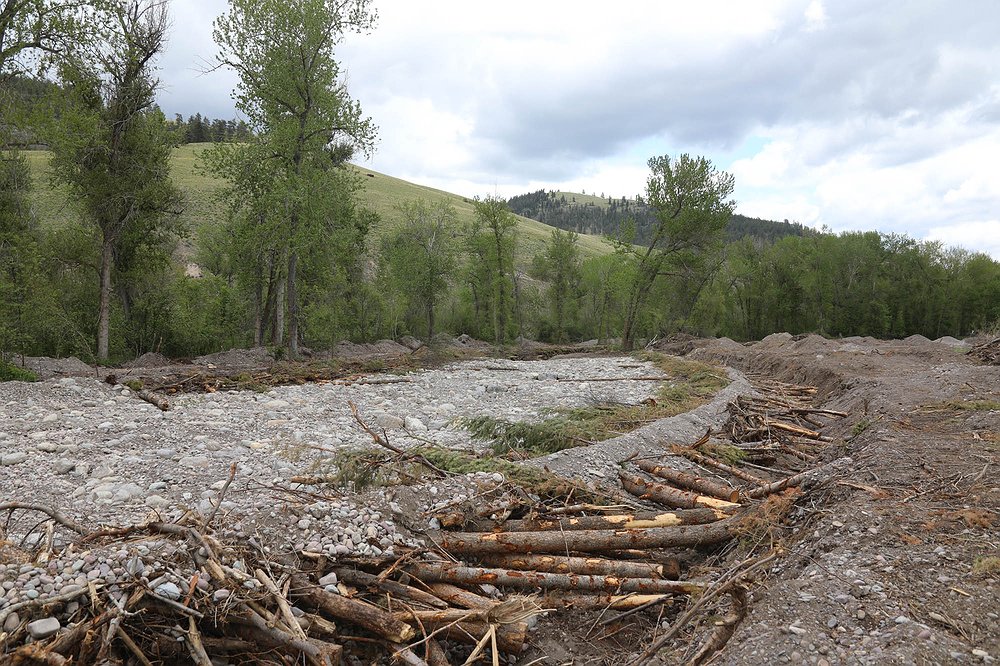 Riparian structures are being built into the bank using jackknifed trees. Portions of these trees will hang into the riverbed, creating protected areas for aquatic species. (Courtesy of CSKT)
ARTICLES BY EMILY HEIMARK
Proposed changes to City of Polson government to appear on ballot
The Polson Local Government Review Study Commission completed its report earlier this year, and the proposed changes to the city charter and supplementary report of action to be taken will appear on the November ballot.
Native cowboy from Mission Valley travels to Kyrgyzstan for Nomad World Games
Reaching down from the back of his horse, he grabs the goat carcass, a total of 80 pounds of dead weight, as dust strikes him in the face; the adrenaline rush is never-ending, and the physical demands on his body are unreal.
Rollins Fire completes community-funded addition and remodel
After outgrowing its space, the Rollins Volunteer Fire Department sought support from the community and raised $2.2 million to fund necessary upgrades and a station addition.