
OUR GEM: Heavy metal assessment complete
OUR GEM, Special to The Press | Coeur d'Alene Press | UPDATED 1 month AGO
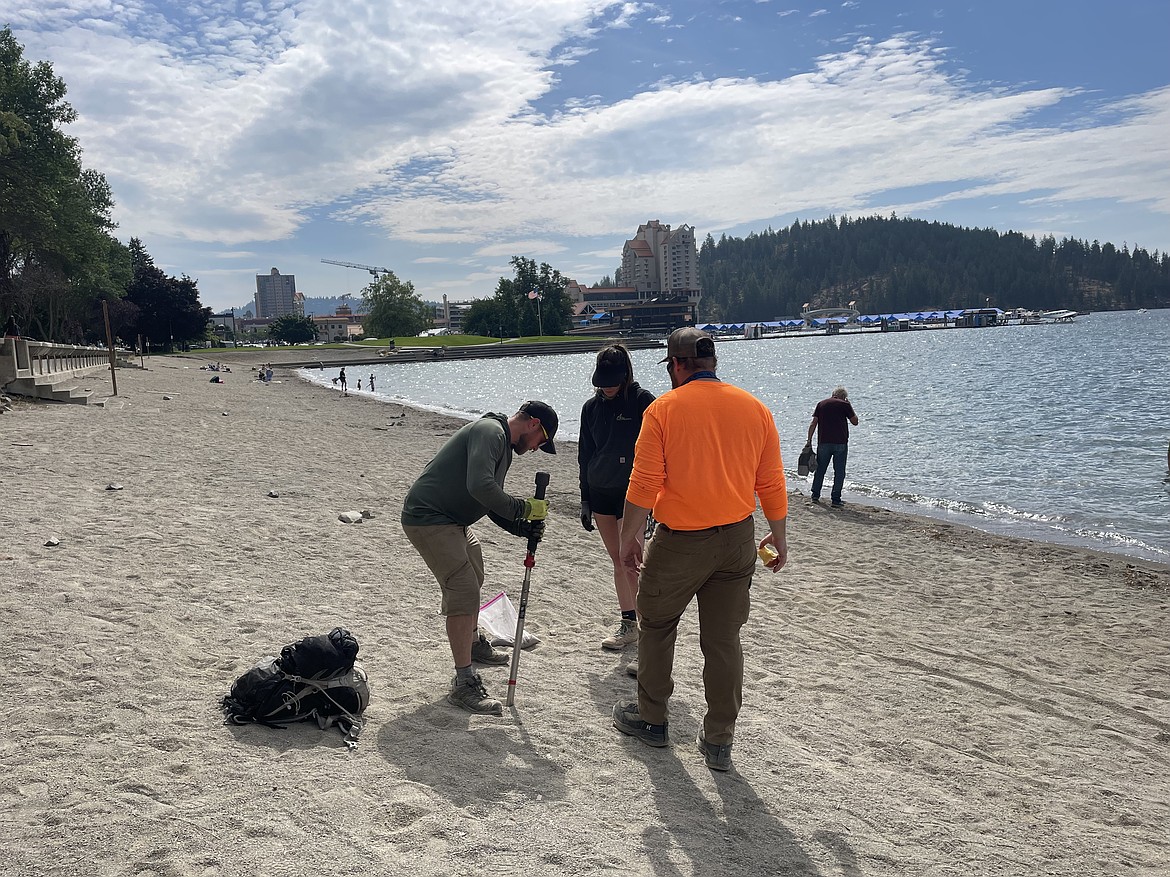
In this 2024 photo, Alta Science and Engineering consultants collect samples along City Beach. Photo via Our Gem.
Over a year has passed since the Our Gem Collaborative reported on work underway to assess potential risks to heavy metal exposures at recreation sites around Lake Coeur d'Alene and the Idaho portion of the Spokane River.
Since that time, Alta Science & Engineering has evaluated the results against risk-based screening levels for metals. A comprehensive risk evaluation report has been published and is available on the Idaho Department of Environmental Quality’s (IDEQ) website. The report can be found here: https://www2.deq.idaho.gov/admin/LEIA/api/document/download/24574.
This evaluation enhances our understanding of metals levels in sediment and water from historic mining impacts upstream. This helps to identify potential areas for further consideration and prioritize next steps. The findings allow us to make informed decisions about how to protect our community and Our Gem, Lake Coeur d'Alene.
Alta, along with staff from IDEQ, presented preliminary findings at the Basin Environmental Improvement Project Commission in August 2025 and again at the 4 County Natural Resource Committee in early January. A copy of the presentation materials can be found on the BEIPC website here: https://www.basincommission.com/wp-content/uploads/2025/09/CDA_Lake_BEIPC-8-27-25.pdf
In order to understand the results, it is essential to understand the scope of the study and what the results tell us. The goal of the project was to provide current data on where we might need to take a closer look for potential risk of exposure to heavy metals in areas near the water where people recreate. The last study of this sort happened in the late 1990s.
A “screening-level risk evaluation” looks at how much contamination is present and estimates “exposure point concentrations” (EPC) — the levels people may come into contact with during recreational activities. At the recreation sites assessed in this study, scenarios such as swimming and playing in the sand were evaluated.
The process compares EPCs to screening levels to see if they are high enough to need further review. The screening levels are specific to CDA Lake and Spokane River and follow the U.S Environmental Protection Agency guidance. The screening approach also considers natural background levels of metals present in the area. The screening approach is a good way to cover a larger general area and prioritize, or screen, each recreational site that is worth digging into deeper for more information.
Contaminants assessed included lead, arsenic, antimony, copper, iron, cadmium, manganese, mercury and zinc. Media sampled for these contaminants included dry shoreline sediments, nearshore shallow water, wet sediment, upland soil and nearby open water. Sediment samples were sieved to separate the finer particles that are more likely to stick to hands/bodies and incidentally ingested. Lead and arsenic were also evaluated for bioavailability to further ascertain the possibility of these contaminants being absorbed by the human body.
Overall, the results were similar to what was found in the late 1990s. Of the 32 sites evaluated, 21 of them were below screening levels and/or background levels for our area. Of the 11 sites that had at least one sample above screening and background levels, all were below action levels used in Superfund cleanup activities (levels set by the U.S. Environmental Protection Agency). The results showed none of the open water screening levels being exceeded.
The take-home message is that beaches have not become more contaminated since the original study from the late 90s. Efforts on lake management continue to be driven by managing nutrients to keep metals in lakebed sediments. Our priority on recreational lead exposure continues to focus on Lower Coeur d’Alene River, where lead levels are, in some cases, 50 times higher than the concentrations found from this risk evaluation.
The message to the public from IDEQ has not changed. There are metals in beach sediments around the lake and Spokane River but not nearly what exists along the South Fork Coeur d’Alene and the Lower Coeur d’Alene Rivers. As is the case with any beach, practice safe recreation guidelines when recreating along the shoreline of Lake Coeur d'Alene or the Spokane River, such as: avoid eating on the beach (use blankets, grassy areas, or tables), wash your hands and face with soap and clean water after playing at the beach and before eating and bring clean water for drinking, cooking and washing. Learn more at https://cdabasin.idaho.gov/safe-recreation/.
Learn more about the Our Gem Collaborative at uidaho.edu/OurGem