
The day the stacks came down: 30 years later
JOSH McDONALD | Hagadone News Network | UPDATED 3 months AGO
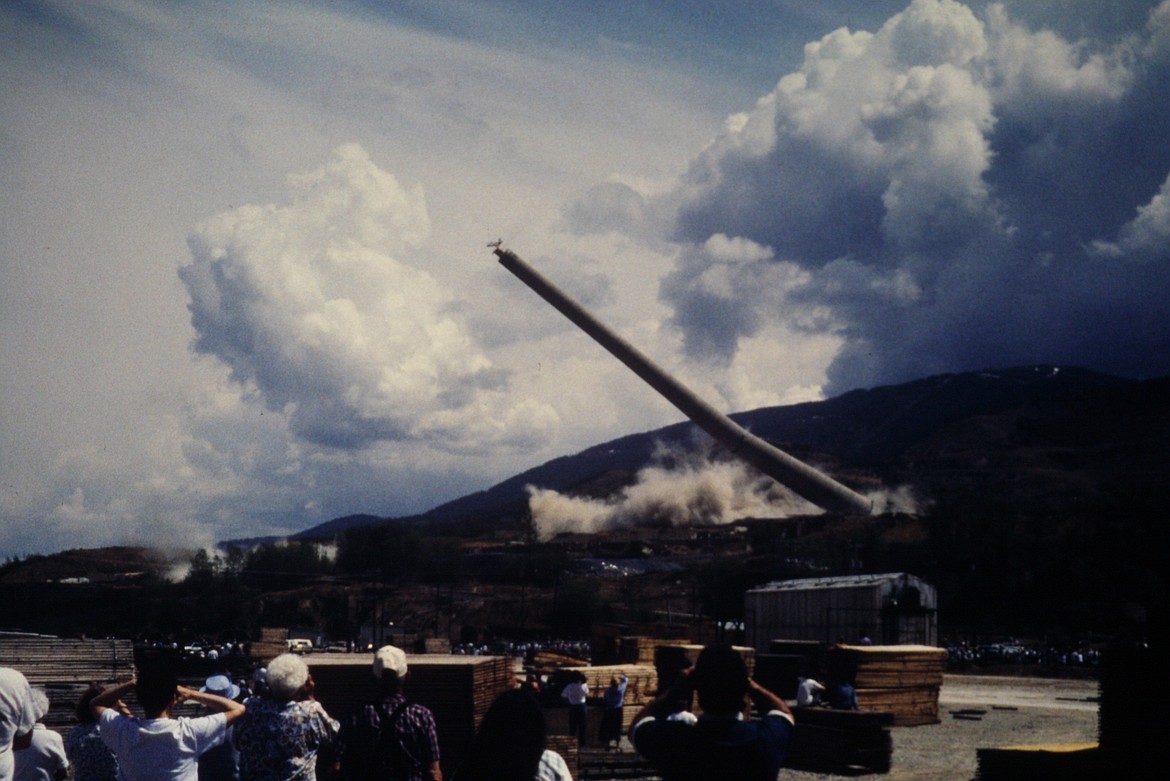
Just after 2 p.m. on May 26, 1996, the final Bunker Hill smokestack was demolished in front of thousands of spectators - many who had traveled from outside the area to watch the destruction. The demolition signified the end of the previous mining era and a shift toward tourism for the Silver Valley.
Courtesy photo
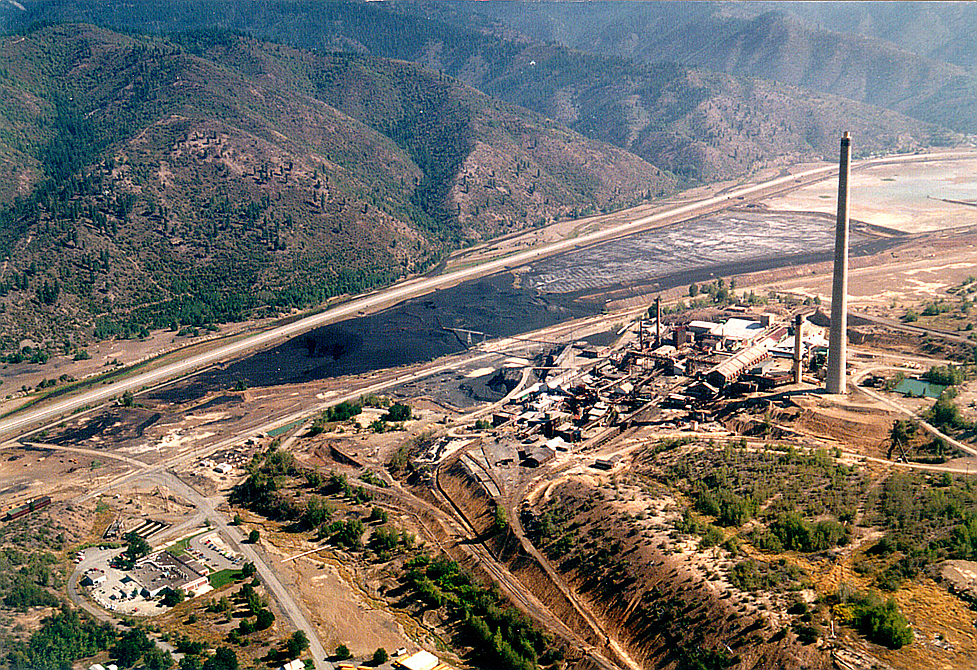
An aerial shot of the Bunker Hill Smelting Complex. You can see at least three of the facility's four smokestacks in the image.
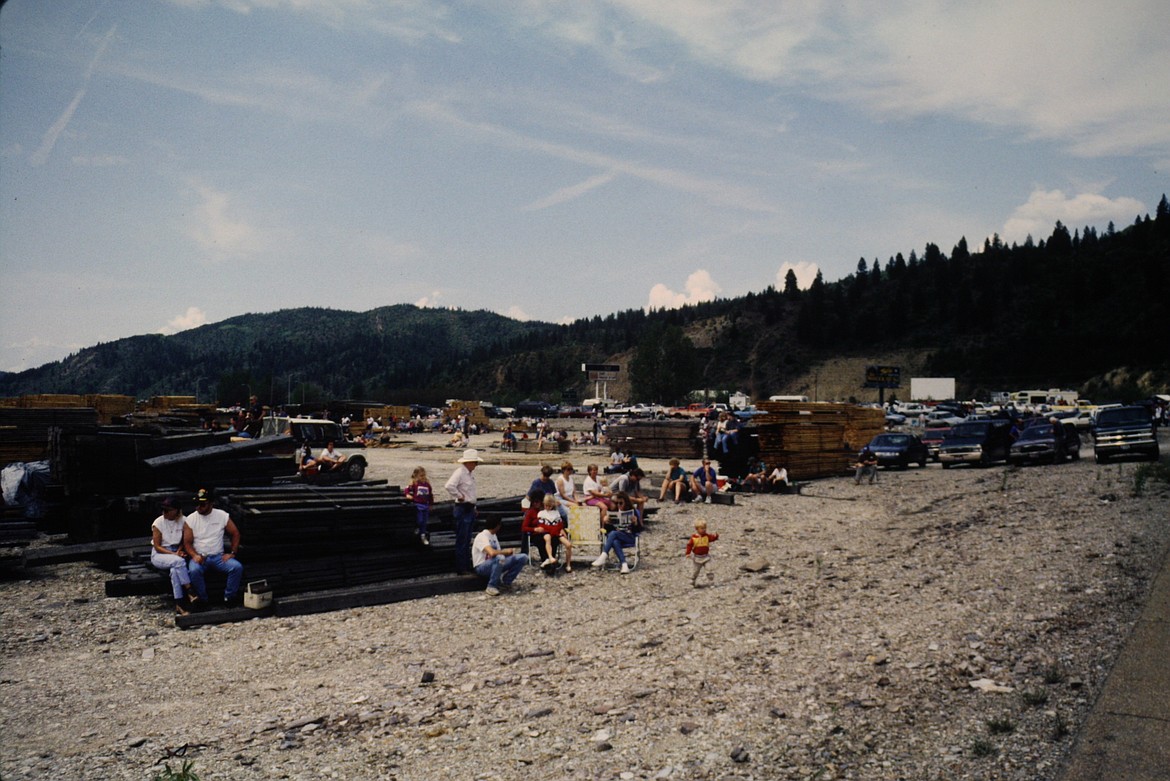
Almost any flat area near Kellogg or Smelterville was filled with spectators for the demolition. Those feeling especially brave watched from places like this railyard, which sat just a few hundred feet from the stacks.
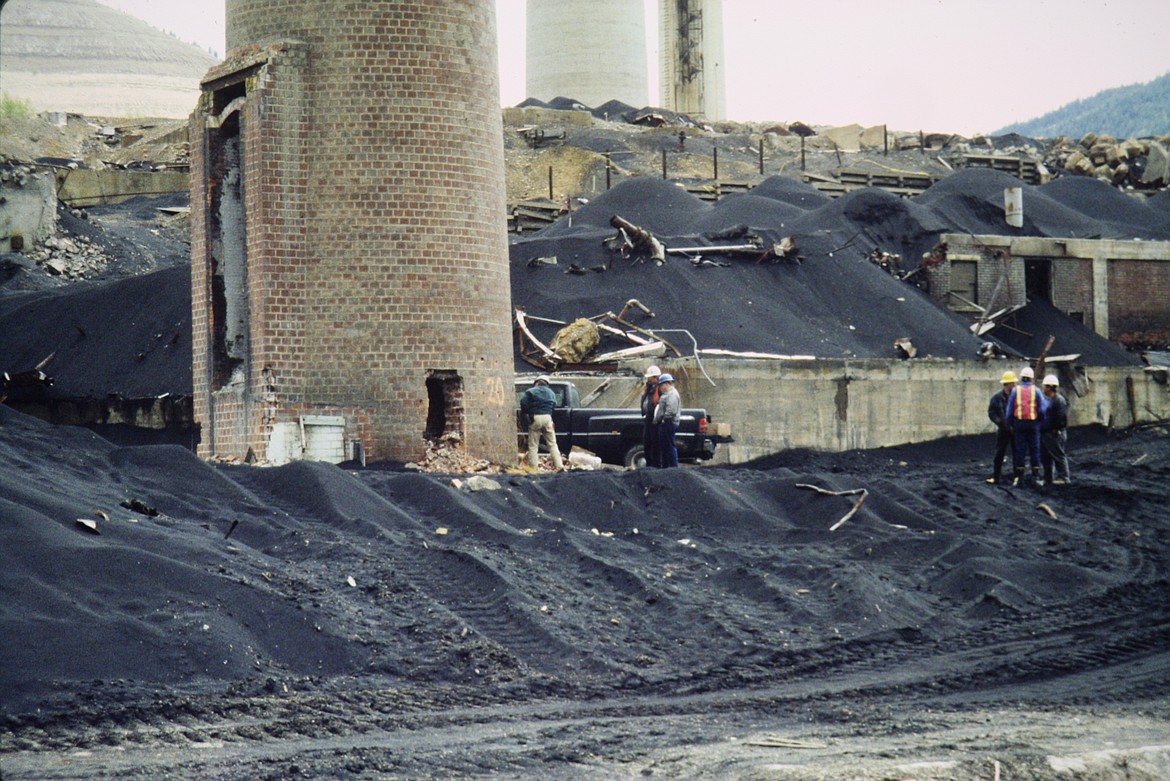
Crews prep the base of one of the Bunker Hill smokestacks prior to their demolition in 1996.
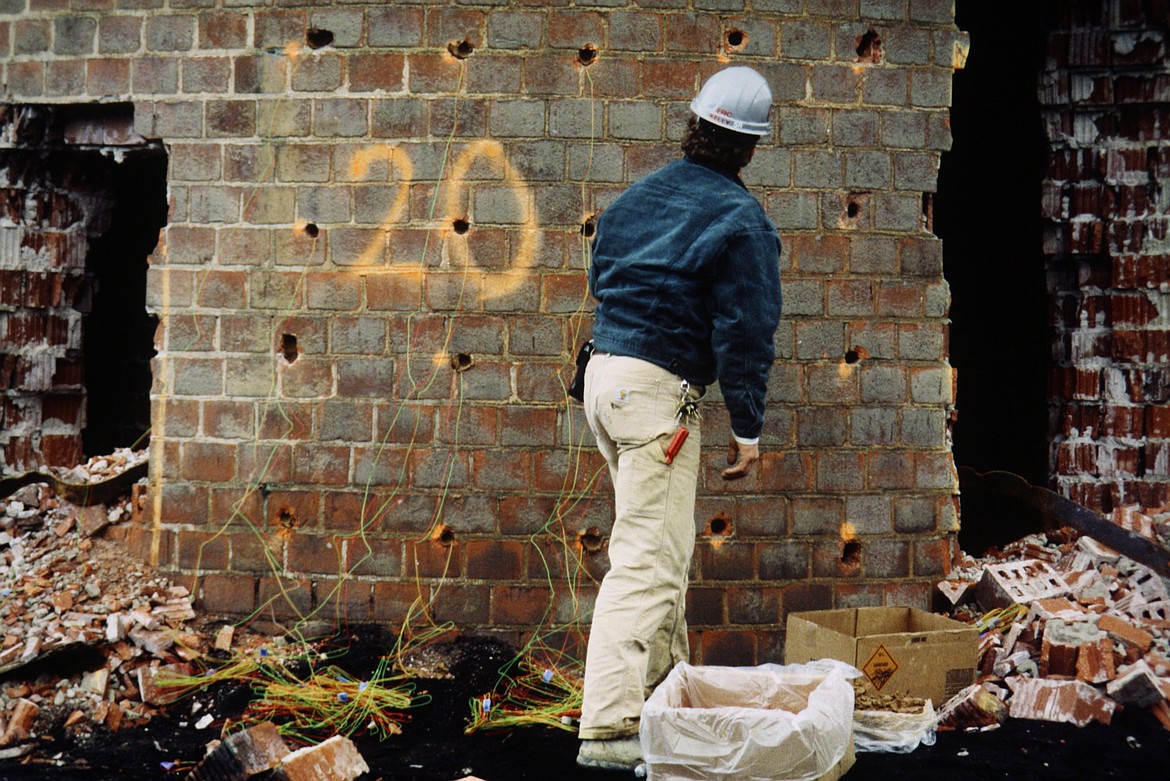
This photo shows the holes that were drilled into the bases of the stacks before demolition crews filled them with explosives.
KELLOGG — Thirty years is a long time, but for many Silver Valley residents, it feels like just yesterday when the community gathered to watch the Bunker Hill stacks come tumbling down.
May 26, 1996, was the day the stacks fell. But to understand why they were demolished, it’s necessary to go back to a time before they even existed.
The legacy of the stacks is complicated. They represented one of the most egregious examples of pollution in Idaho’s history, yet many remember them fondly as a symbol of the community’s mining heritage.
Mary Rehnborg, an Institutional Controls Program Manager with the Panhandle Health District, still remembers that day. Much of her adult life, however, has been spent working to undo the damage tied to the stacks and the era of industry they served.
“Many people considered the demolition of the stacks as the mournful end of the Silver Valley’s industrial era, while others saw it as an optimistic new beginning for what was to come,” she said.
Before its recent restart, the Bunker Hill Mine operated continuously from 1885 until its closure in 1981. As one of the richest mineral-producing mines in the world, its owners sought to maximize profits by building a large-scale smelting facility.
In 1917, just a few miles west of the mine offices and the Kellogg Tunnel, they constructed what was then one of the largest smelting operations in the world.
Millions of tons of ore were processed there. The smelter heated crushed ore at high temperatures, separating valuable metals — primarily lead-bearing silver — from waste rock and refining them into usable products such as lead, silver, zinc and other industrial metals.
But the process came at a steep environmental cost.
When ore was heated, toxic metals such as lead and arsenic were released into the air as fine particles and gases through smokestacks. These pollutants spread across the region, contaminating soil and water and traveling along the Coeur d’Alene River into Lake Coeur d’Alene and the Spokane River.
At the time, there was a limited understanding of pollution, somewhere between misunderstanding and ignoring it. Mining executives were aware emissions were harmful, but did not grasp the full scope of the damage they caused.
That became evident during the baghouse fire of 1973. The fire destroyed a filtration system designed to capture some of the smelter’s emissions. Rather than halt operations to repair it, Gulf Resources — the company operating the mine — bypassed the system and released unfiltered emissions directly into the valley’s air.
During the same period, environmental regulation began to reshape the industry.
In 1970, Congress created the Environmental Protection Agency and established the Clean Air Act and the Water Quality Improvement Act. These laws required states to meet federal air and water quality standards.
Pollution controls quickly became critical across the mining industry — especially for Bunker Hill’s aging lead smelter and zinc plant.
The company knew its outdated facilities would struggle to meet new standards for lead and sulfur dioxide emissions without costly upgrades. While the EPA recommended measures such as sulfur burners and improved capture systems, Bunker Hill pursued a more cost-effective solution.
In the mid-1970s, officials decided to build two new smokestacks to supplement the facility’s existing ones. Standing more than 600 and 700 feet tall, the new stacks were designed to release emissions higher into the atmosphere, allowing winds to disperse pollutants over a wider area and reduce concentrated exposure in Kellogg and Smelterville.
“While the State Department of Health and Welfare officials deemed the company’s plan acceptable, the EPA disagreed and pressed for the capturing of more SO2 through improved acid plant designs. Facing a 1977 state deadline, the company moved forward with the construction of the tall stacks and began work in the spring of 1976.”
Each stack was made of thick concrete and contained a 10-foot-diameter fiberglass flue to carry emissions to the top before release.
Dave Merrick, an instrument technician at Bunker Hill, monitored air-quality equipment mounted on the stacks and ensured proper calibration. He was one of about 20 technicians assigned to similar work, but only one of six who were brave enough to do it regularly.
He recalled climbing the towering structures, a task that earned an extra four hours of pay.
According to Merrick, the stacks would sway in the wind near the top, and the grated walkways beneath his feet gave the sensation of walking on air hundreds of feet above the ground.
Despite these efforts, the operation struggled.
Metal prices became increasingly unstable, and the rising cost of environmental compliance added pressure. The stacks operated for less than five years before Bunker Hill shut down in 1981 amid pressure from the EPA and volatile markets.
“The ill fate of the stacks was all but sealed when Gulf Resources announced the closure of the mine and the smelter complex in the fall of 1981,” Rehnborg said. “With no one to foot the bill for continued maintenance costs and running of the aircraft warning lights, the decision was made to demolish the landmark stacks.”
A group of residents attempted to save the structures by placing them on the historic registry, but the effort failed. Concerns about maintaining the more than 700-foot-tall stack and the cost of operating required warning lights proved too great.
By then, the EPA had already spent more than $12 million on cleanup, including demolishing contaminated structures such as the Silver King School in Government Gulch.
The demolition of the stacks became a community event, drawing thousands to the area to witness the spectacle.
Organizers scheduled it for Memorial Day weekend in 1996 so residents and visitors could attend. A carnival filled the Silver Mountain parking lot, and vendors sold memorabilia bearing the phrase “Blowing Our Stacks.” A raffle winner was selected to push the ceremonial plunger.
Residents gathered in open areas, sports venues and on nearby hillsides for a clear view.
At 1 p.m., speakers shared the mine’s history and discussed the community’s future. The blast was set for 2 p.m., with warning sirens sounding as the time approached.
Crews from a Minnesota-based blasting company spent days preparing the site, placing nearly 500 pounds of explosives at the base of the stacks and making precise cuts to control their fall.
When the final siren sounded, all eyes turned toward Smelterville. The plunger was pressed, and the explosion rippled through the valley.
The stacks appeared to fall in slow motion, as if resisting gravity. The crowd reacted with a mix of emotions. Tears, anger and joy followed by cheers that broke the eerie silence.
The closure of Bunker Hill in 1981 eliminated roughly 2,000 jobs, forcing the Silver Valley to reinvent itself. By the late 1980s and early 1990s, tourism had become a major economic focus.
“The Silver Valley and its residents are resilient,” Rehnborg said. “Despite the loss of the valley’s largest employer, the community came together and shifted the focus away from industry into tourism.”
Today, mining has returned as a major employer, with the Bunker Hill Mine nearing its first full restart in more than 40 years and other operations expanding.
Even so, few residents long for the environmental conditions of the past, when hillsides were barren and contaminated. Cleanup efforts have dramatically reduced lead exposure, thanks in part to organizations like Panhandle Health.
“The landscape has transformed with years of environmental cleanup, and the Silver Valley has become a highly sought after tourist destination,” she said. “The mining industry is also flourishing once again. We have entered a new era where industry practices and environmental regulations co-exist. It is a pretty amazing partnership to see and to be a part of. The Silver Valley is back and better than ever.”
For those who grew up in the Silver Valley in the early 1990s, the stacks once felt like a gateway to Kellogg. And despite what is now known about their impact, many still remember the sight of those towering structures blinking in the night as something hard to forget.
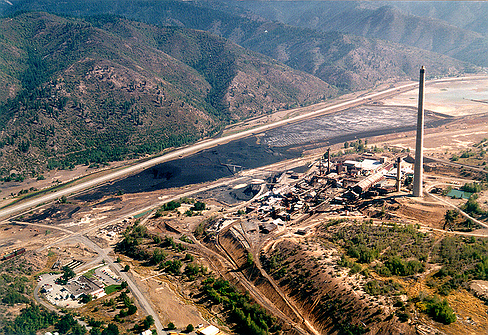 An aerial shot of the Bunker Hill Smelting Complex. You can see at least three of the facility’s four smokestacks in the image.
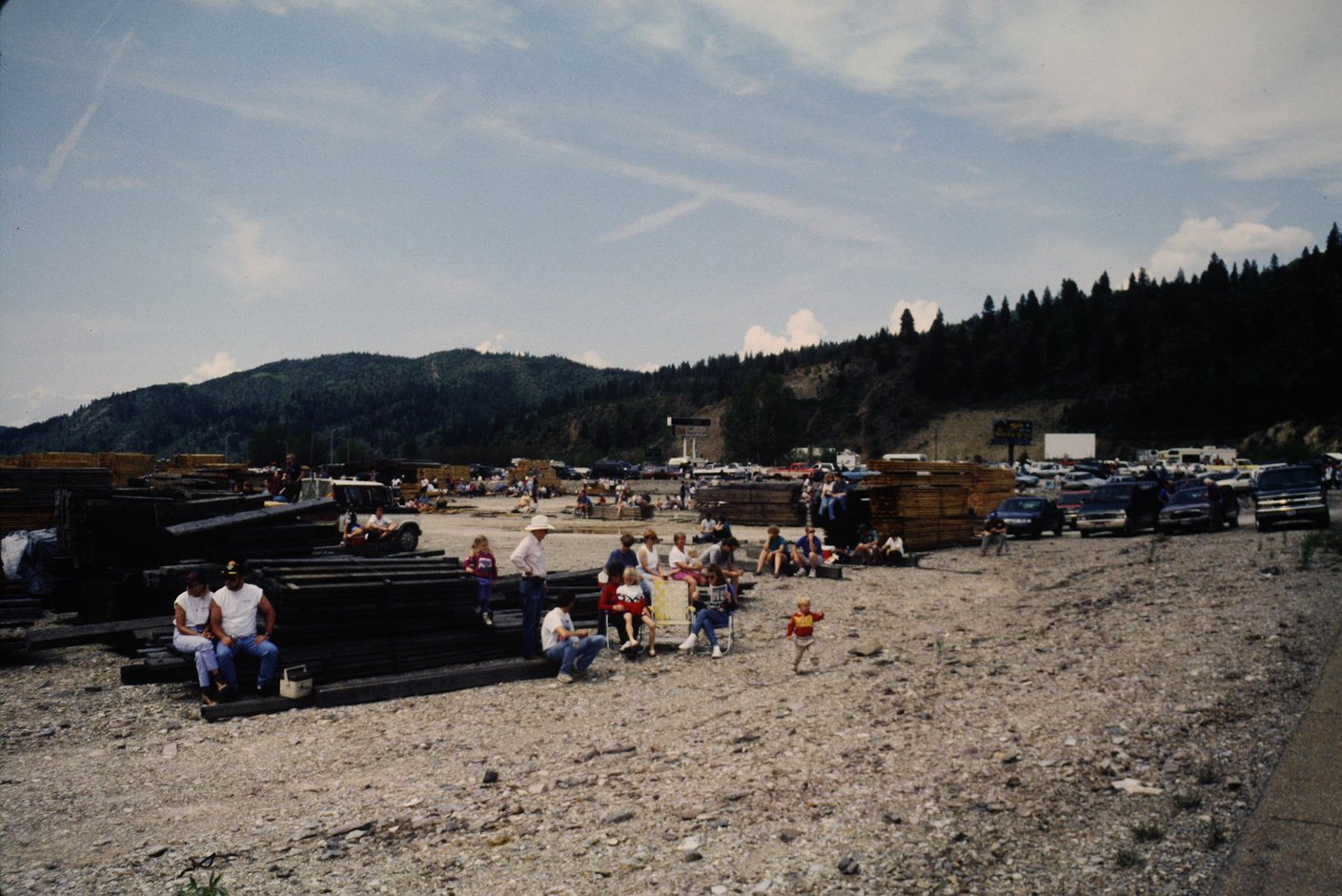 Almost any flat area near Kellogg or Smelterville was filled with spectators for the demolition. Those feeling especially brave watched from places like this railyard, which sat just a few hundred feet from the stacks.
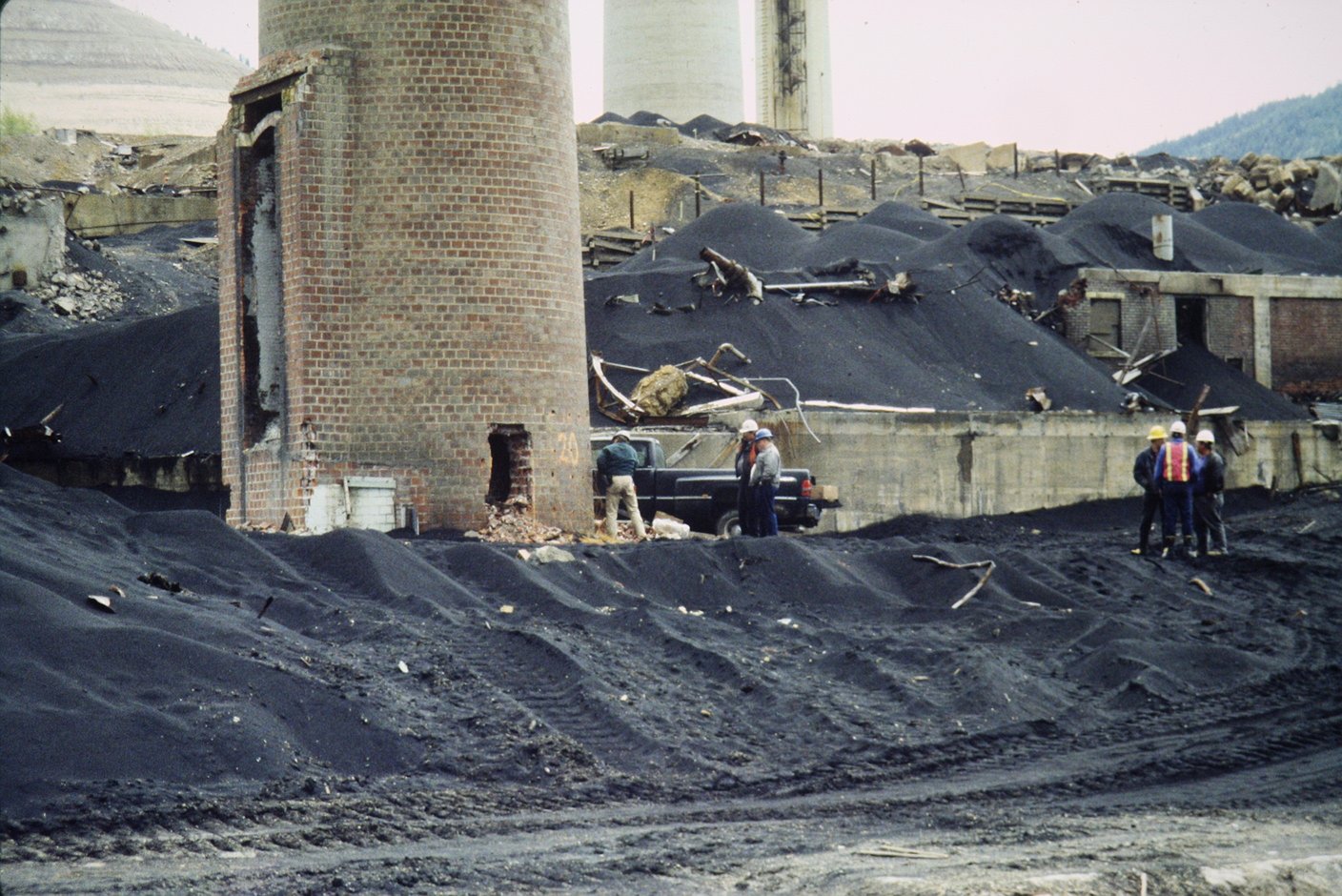 Crews prep the base of one of the Bunker Hill smokestacks prior to their demolition in 1996.
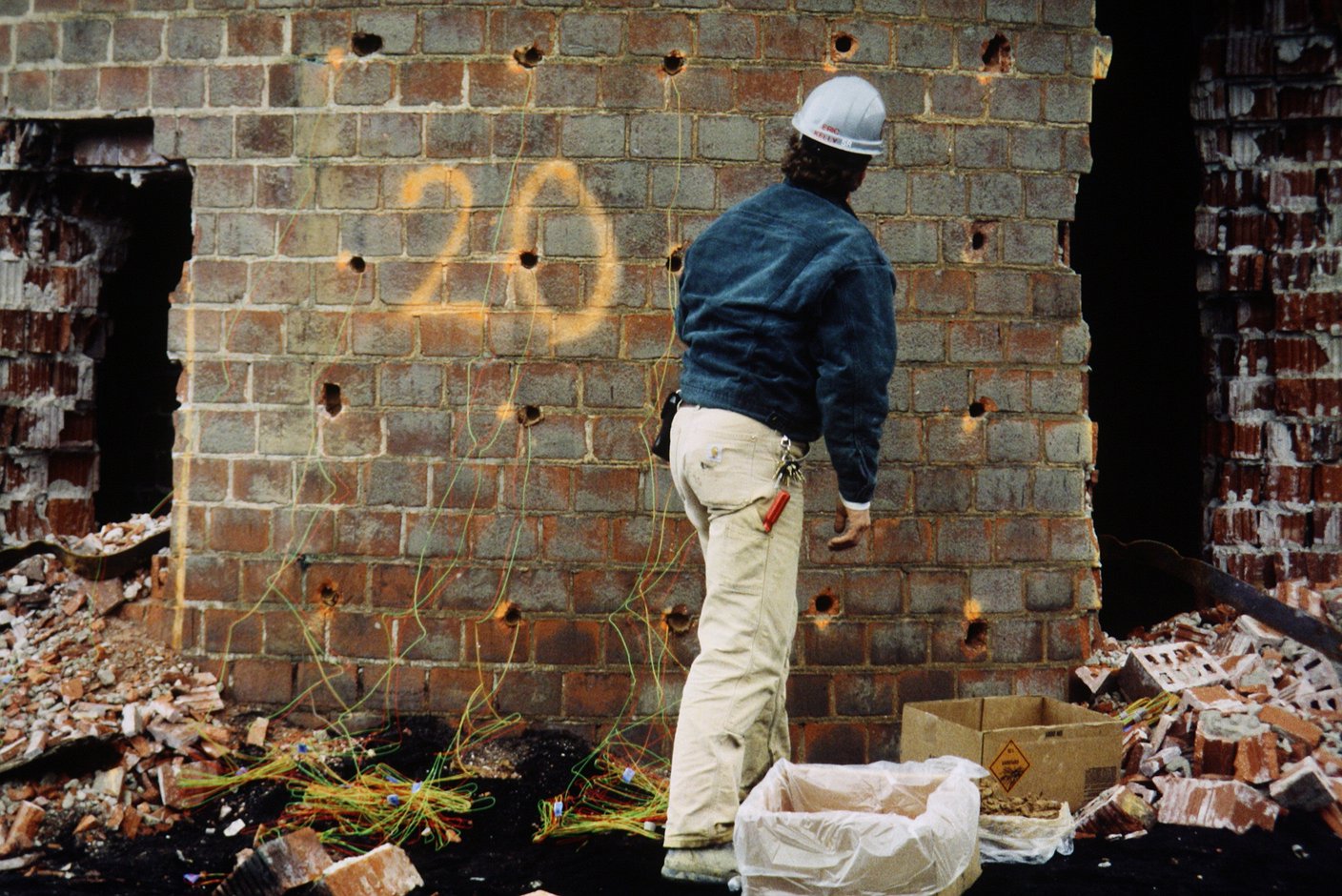 This photo shows the holes drilled into the bases of the stacks before demolition crews filled them with explosives.
ARTICLES BY JOSH MCDONALD
Dudley Fire continues to grow

Dudley Fire continues to grow
