
Strong support for public lands, poll finds
Hungry Horse News | Hungry Horse News | UPDATED 1 month, 2 weeks AGO
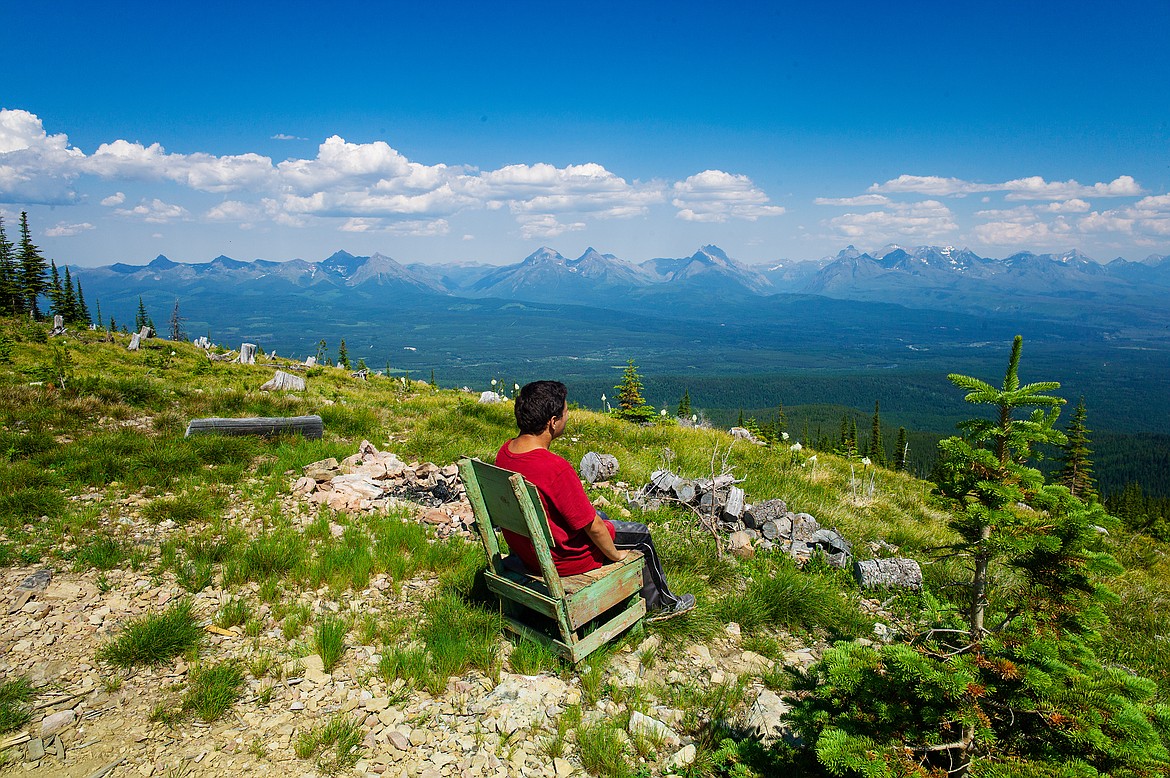
A hiker enjoys the view from Thoma Lookout in this file photo.
A statewide poll recently commissioned by the University of Montana’s Crown of the Continent and Greater Yellowstone Initiative reveals growing concern among Montanans about access to public lands, increasing environmental pressures, and the impacts of reduced funding and staffing for land management.
The results build on a long-running series of surveys conducted biennially since 2014, providing valuable trend data on Montanans’ views toward public lands and conservation.
The bipartisan survey highlights a sharp rise in concern over access to public lands. Seventy-one percent of respondents now say loss of access is an extremely or very serious problem — an increase of 30 percentage points since 2022. The strongest intensity of support polled was for banning the sale or transfer of public lands, with 84% in support.
The poll also finds widespread concern over recent firings and funding cuts affecting public lands. Nearly three in five respondents say they are extremely or very concerned, with that number climbing above 80% when including those who are somewhat concerned. A majority of voters believe these reductions will negatively impact all areas tested, with wildfire management topping the list of concerns.
More Montanans report heightened worry about low snowpack and drought compared to prior surveys, underscoring growing awareness of changing conditions across the state.
Support for conservation policies remains strong and consistent across the political spectrum. Nine in 10 Montanans say conservation issues are important when deciding whether to support an elected official, including 82% of Republicans, 92% of independents, and 99% of Democrats.
UM initiative director Rick Graetz said the bipartisan poll gives Montana decision-makers helpful information about the sentiment among voters when it comes to policy decisions.
“Since this poll began a dozen years ago, Montanans’ interest in protecting public lands has only grown stronger. Bipartisan support for conservation is undeniable and deeply rooted. Wherever I go in Montana, I hear from people wanting to safeguard their quality of life and their freedom to visit public lands and waters. There is no appetite for sell-off or industrialization of public lands here and that clearly shows in the data,” Graetz said.
Additionally, there is near-universal agreement on the importance of public input in public lands decision-making.
The statewide poll of 515 registered Montana voters was conducted by a bipartisan research team, New Bridge Strategy (Republican) and FM3 Research (Democrat), and carries a margin of error of ±4.38% at the 95% confidence level.
Among specific policy findings:
• Public Lands Sales: The strongest intensity of support was for banning the sale or transfer of public lands, with 84% in support and 65% strongly supporting such a ban.
• Land and Water Conservation Fund (LWCF): Two-thirds of respondents prefer continued funding for conservation over infrastructure uses.
• Wilderness Study Areas (WSAs): A plurality favors maintaining current protections, while support for increasing protections continues to grow. Only 7% support eliminating protections altogether.
• National Monuments: A record-high 87% support presidential authority to designate national monuments to protect public lands.
• Corner Crossing: 76% of respondents support allowing corner crossing to access public lands.
• Mining and Development: Two-thirds oppose rare earth mineral mining in public lands areas, and similar opposition exists for reducing protections in WSAs.
• Data Centers: Two-thirds or more of Montana voters believe that data centers would have a negative impact on the availability of water, the reliability of the electric grid and the price they pay for electricity. They are more apt to foresee a positive impact on the state’s economy but only by a five point margin (40 percent positive to 35 percent negative).