
Charity Reimagined launches column in The Press
MAGGIE LYONS/Charity Reimagined | Coeur d'Alene Press | UPDATED 1 month, 1 week AGO
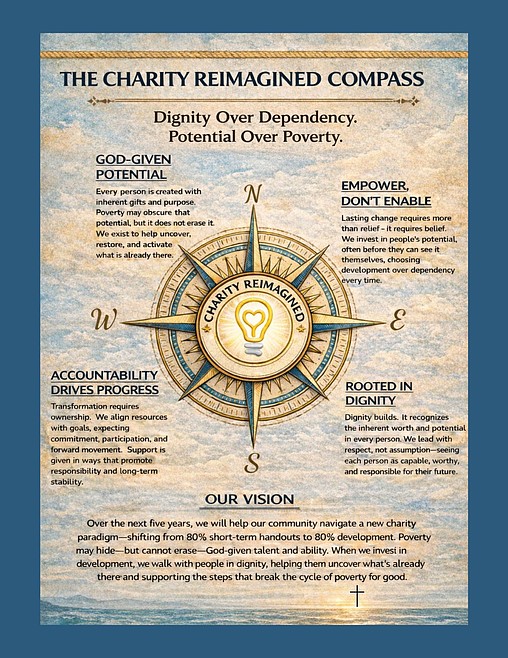
What if some of our most compassionate efforts are actually keeping people stuck?
That's not an easy question to ask in a community as generous as North Idaho. Yet it may be one of the most important conversations we can have.
For decades, we've responded when neighbors face hardship. We donate food, pay utility bills, provide Christmas gifts, and rally around families in crisis. Those acts of generosity matter. Sometimes relief is exactly what is needed.
But what if helping someone through today's immediate need is not the same as helping them build a different tomorrow?
This isn't about less compassion — it's about strengthening it.
Over the coming months, Charity Reimagined will explore a simple but powerful idea: poverty may hide a person's potential, but it does not erase it. Behind every struggle is a human being with gifts, abilities, dreams, and the capacity to grow when given the right opportunities and support.
Together, we'll examine the barriers that quietly keep people stuck — transportation, housing, trauma, isolation, lack of education and skills, broken systems, and the exhausting reality of living in survival mode. We'll talk about the difference between generational poverty and a hardworking family one unexpected expense away from crisis. And we'll explore why understanding those differences matters if we genuinely want to help.
Some of these conversations may challenge long-held assumptions. We will examine where traditional charity helps, where it falls short, and where well-intentioned assistance can unintentionally create dependency instead of opportunity.
But this column is ultimately about hope.
It's about development instead of dependency. It's about restoring dignity, building capacity, strengthening families, and creating pathways for people to move forward. It's about helping people discover gifts and abilities that may have been buried beneath years of hardship.
And it's about children.
Because when families move beyond constant survival, children begin to see possibilities they couldn't see before. They begin believing their future can look different from their past.
This work is rarely quick or simple. It is often messy, relational work that requires time, trust, accountability, and commitment. But it is also how cycles are broken — not just for one person, but for generations.
Our community has never lacked compassion. The question before us is how to make that compassion as effective as it is generous.
We invite you to join the conversation.
And if this conversation has piqued your interest, we encourage you to read Toxic Charity by Roberty Lupton. This books significantly influenced the founding of Charity Reimagined. In fewer than 200 pages, Dr. Lupton provides some of the clearest and most practical examples of how well-intentioned charity can unintentionally do harm — and how communities can help in ways that restore dignity, responsibility, and opportunity.
It's a quick and inexpensive read, and a worthwhile challenge for rethinking how we help people move forward.