
Northwest Montana groups threaten new lawsuit in years-long legal battle over logging roads
HAILEY SMALLEY | Hagadone News Network | UPDATED 5 hours, 46 minutes AGO

Signs outside the U.S. Forest Service Flathead National Forest Supervisor's Office on Wolfpack Way in Kalispell on Wednesday, Oct. 1. (Casey Kreider/Daily Inter Lake)
Casey Kreider
Environmental groups are threatening to sue the U.S. Forest Service and U.S. Fish and Wildlife for "fail[ing] to rationally consider the impacts" of logging roads on endangered species, further entrenching the federal agencies in a legal battle that has already spanned eight years and three lawsuits.
The ongoing dispute centers around a shift in the Flathead National Forest's approach to rehabilitating temporary logging routes, which was formalized in a 2018 revision to the forest-wide management plan.
Instead of fully reclaiming the entire length of a road system, officials could now render an unused road impassable by impeding motorized travel along the 50-300 feet of the route. The Forest Service treats "reclaimed" and "impassable" roads the same in its calculations of total road density and motorized use.
But local nonprofits Friends of the Wild Swan and Swan View Coalition say the definitions vary greatly in the on-the-ground impact to grizzly bears and bull trout. The groups filed the first in what would become a string of chain of interlocking lawsuits against the federal government in 2019, alleging the rule change violated the Endangered Species Act.
A body of research suggests that grizzly bears avoid areas with high road densities, with some researchers even finding intergenerational impacts as mothers teach cubs to avoid known roads. The lawsuit alleged the Forest Service and Fish and Wildlife Service arbitrarily dismissed the impact that the new impassable road definition would have on grizzly bear habitat and connectivity, as well as the potential impacts of unauthorized motorized use along impassable roads.
The rule change also exempted officials from a long-standing requirement to fully rehabilitate roadside culverts, which the environmental groups claimed would lead to increased instream sedimentation that could harm native bull trout populations.
A federal judge ruled partially in favor of the environmental groups and remanded the biological opinion that Fish and Wildlife Service had written for the Revised Forest Plan back to the federal agency for review. The environmental groups claimed the edits were insufficient and filed another lawsuit in 2024, with much the same results. The federal agencies published a newly revised biological opinion in September.
In a notice of intent to sue dated Oct. 23, both local nonprofits alleged that the second round of court-mandated revisions "replicate the previous errors, perpetuating an eight-year-long series of Endangered Species Act violations by the Fish and Wildlife Service and Forest Service concerning road management within the Flathead National Forest’s habitat for grizzly bears and bull trout."
The groups stated that they intend to file a lawsuit in federal court if the federal government fails to take action on the matter within 60 days.
Both groups are also plaintiffs in an ongoing lawsuit, filed June 5, that challenges the Forest Service's approval of a 7,700-acre forestry project west of Hungry Horse Reservoir. That complaint alleged the Forest Service improperly declared the project an emergency to streamline intra-agency consultation procedures required by the Endangered Species Act.
The latest legal maneuver introduces few fresh arguments into the longstanding fight, but recent shifts in the federal government's approach to endangered species management could play a role in the impending litigation.
July brought sweeping changes to the way that Fish and Wildlife Service manages many of the species listed under the Endangered Species Act, including an announcement that states will take on management of federally protected grizzly bears.
Protections for other threatened species, which have long benefited from the same safeguards as endangered species, were rolled back, and the federal wildlife agency rescinded the definition of "harm" from the Endangered Species Act, essentially opening the door for projects that alter or destroy the habitat that endangered and threatened species rely on.
Those rule changes are now subject to several lawsuits, one of which Swan View Coalition and Friends of the Wild Swan are co-plaintiffs in.
Reporter Hailey Smalley can be reached at 406-758-4433 or [email protected]. If you value local journalism, pledge your support at dailyinterlake.com/support.
ARTICLES BY HAILEY SMALLEY

Northwest Montana groups threaten new lawsuit in years-long legal battle over logging roads
Local environmental groups are threatening to sue the U.S. Forest Service and U.S. Fish and Wildlife for "fail[ing] to rationally consider the impacts" of logging roads on endangered species, further entrenching the federal agencies in a legal battle that has already spanned eight years and three lawsuits.

Independent Seth Bodnar courts 'politically homeless' voters in Senate race's final stretch
Standing in front of the fireplace at the Montana Taphouse in Whitefish, independent U.S. Senate candidate Seth Bodnar regaled patrons with the story of the first operation he commanded as a lieutenant in the U.S. Army.
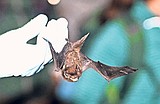
White nose syndrome found in Glacier National Park bats
A bat found dead in the St. Mary area of Glacier National Park has tested positive for white nose syndrome, marking the first confirmed case of the deadly fungal disease within the park’s boundaries.