
GC Public Utility District proposed rates subject of Nov. 10 hearing
CHERYL SCHWEIZER | Hagadone News Network | UPDATED 8 hours, 29 minutes AGO
Senior Reporter Cheryl Schweizer is a journalist with more than 30 years of experience serving small communities in the Pacific Northwest. She began her post-high-school education at Treasure Valley Community College and enerned her journalism degree at Oregon State University. After working for multiple publications, she has settled down at the Columbia Basin Herald and has been a staple of the newsroom for more than a decade. Schweizer’s dedication to her communities and profession has earned her the nickname “The Baroness of Bylines.” She covers a variety of beats including health, business and various municipalities. | November 3, 2026 2:00 AM
EPHRATA — Grant County Public Utility District customers are being invited to submit their reactions to proposed 2027 electrical rates at a hearing at 2 p.m. Nov. 10 in the PUD commission meeting room, 30 C St. SW, Ephrata. There's also a virtual option for people who can't attend the meeting in person; the link is under the "2027 rates" tab on the PUD website, grantpud.org.
Comments can also be submitted on the PUD website under the 2027 rates tab.
Rates will be going up for all customer classes, said Ty Ehrman, senior vice president of retail operations.
"We're working very hard at keeping costs down for all of our customers, and we want to make sure that we can meet customer demand as businesses want to locate here, but that does require higher-cost power," Ehrman said in an earlier interview. "We're making sure and insulating that growth from our core customers, so they don't end up carrying any of that load. But costs do increase over time, and inflation has an effect on that. Wages go up over time. Materials certainly have gone up a lot."
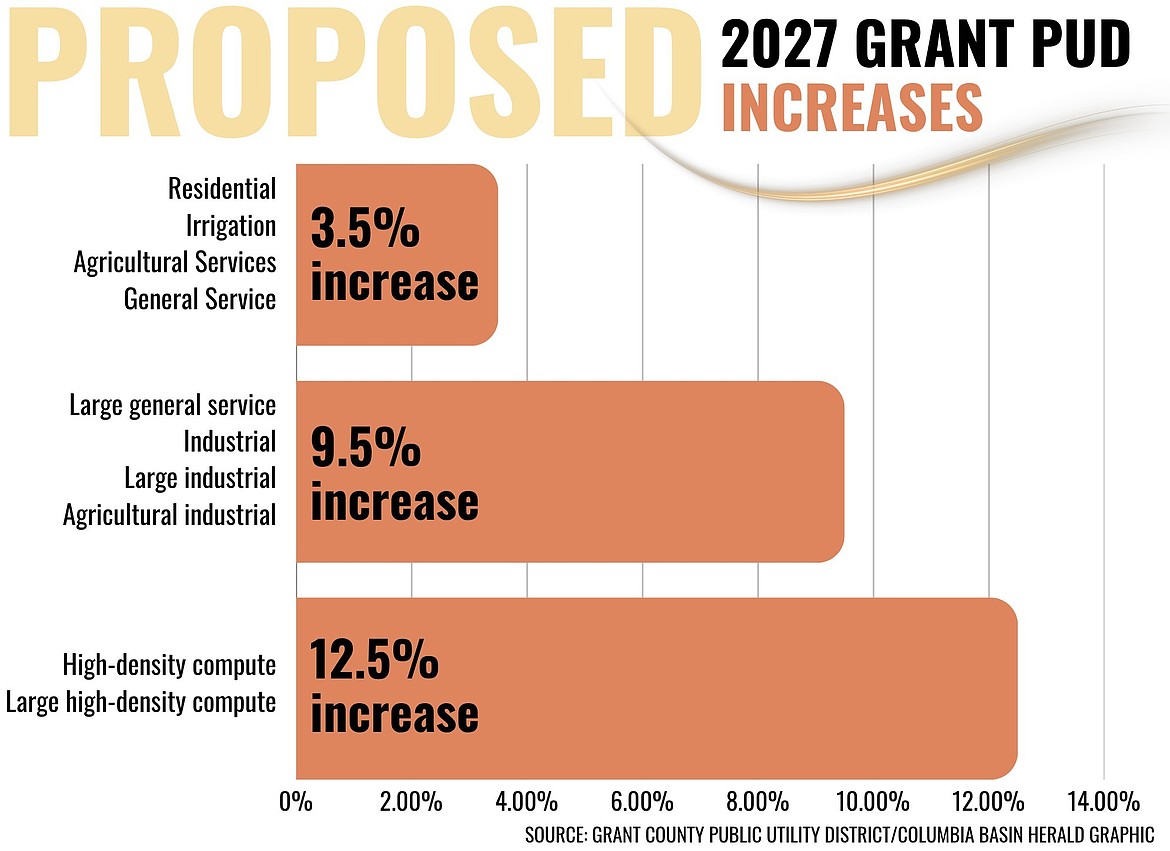
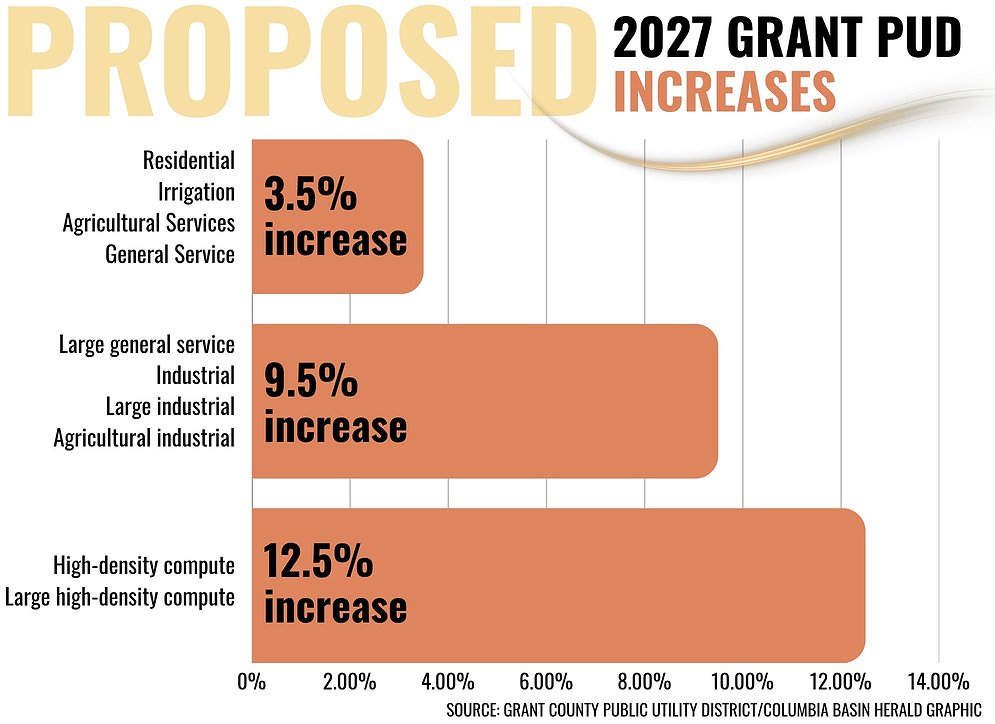
Utility district officials have proposed a 3.5% rate increase for residential, irrigation, general service (small businesses) and ag services. They're designated as "core customers."
Core customers use about 30% of the existing PUD-generated power, Ehrman said. Utility district commissioners have established the goal of prioritizing core customers when it comes to using the power generated by Wanapum and Priest Rapids dams.
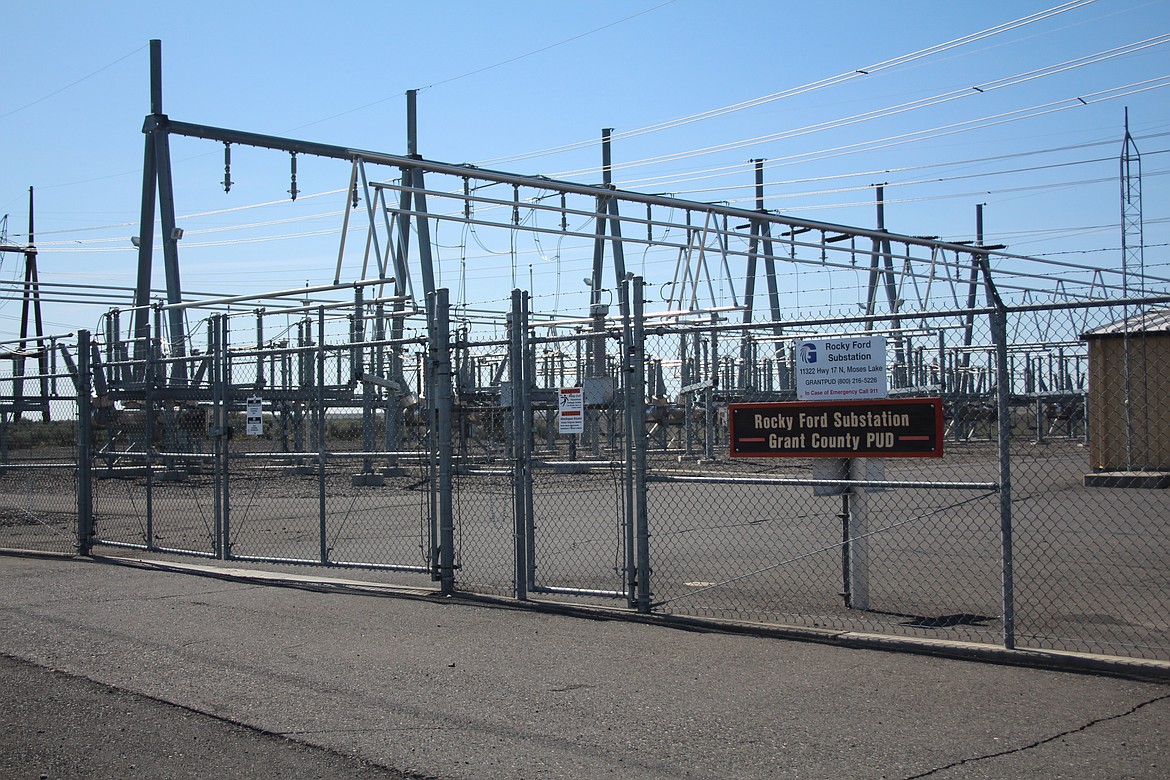
The PUD operates Priest Rapids and Wanapum dams and is entitled to a percentage of electricity generated by those projects. Demand has reached the point where all of that's allocated, and most of that demand has come from industrial customers, including but not limited to data centers.
The PUD revised its rate schedule to group remaining customers by the amount of electricity they use. Tier One includes industrial and large industrial businesses, large general service and industrial agriculture. A 9.5% increase is proposed for Tier One.
Jeremy Stewart, manager of rates and pricing, said a new classification is being established for the customers that use a lot of power.
"We're pulling data centers out into their own rate schedules," Stewart said.
Data centers and cryptocurrency operations will be in the newly established Tier Two. Their rates would increase by 12.5% under the proposal.
Demand has reached the point where the PUD is using all its share of the electricity from Priest Rapids and Wanapum dams and continues to increase. The PUD is required to meet that demand from sources outside Grant County, which are more expensive. Ehrman said the rate schedules are set up to ensure the customers that are asking for more power are paying the additional cost.
"Those folks end up carrying the highest cost incremental power as we bring it online, not so much they're the largest power users, but they are where the growth is occurring, and so because the growth is occurring there, they've got to pick up the highest cost power as we've got to bring it online," Ehrman said.
The PUD does have programs designed to help people stay current or help catch up on payments if they've fallen behind.
"We recognize that we've got some folks out there that do have trouble paying their utility bills, and we do have programs for customers who are having difficulty paying your bills, and income-qualified programs who need assistance," Ehrman said.
Utility district employees can help people who need payment options and works with customers to set up payment plans, according to the PUD website. Some customers may be able to qualify for financial assistance. People looking for more information can contact the PUD at 509-766-2505 from 6 a.m. to 6 p.m. seven days per week.
ARTICLES BY CHERYL SCHWEIZER
GC Public Utility District proposed rates subject of Nov. 10 hearing
EPHRATA — Grant County Public Utility District customers are being invited to submit their reactions to proposed 2027 electrical rates at a hearing at 2 p.m. Nov. 10 in the PUD commission meeting room, 30 C St. SW, Ephrata. There's also a virtual option for people who can't attend the meeting in person; the link is under the "2027 rates" tab on the PUD website, grantpud.org.

Lodging tax money to be used to upgrade Larson, Lauzier playfields and other projects
MOSES LAKE — Fields in Lauzier Park and some at the Larson Playfields will get upgrades with money generated by the city's lodging tax. Those were at the top of a list of projects recommended by the city's lodging tax committee and approved by the Moses Lake City Council Oct. 27.
Samaritan hospital use up from 2025, but below 2026 budget expectations
MOSES LAKE — While Samaritan Hospital is a little busier in 2026 than 2025, patient utilization is less than projected in 2026 budget through the first three quarters of the year. Chief Financial Officer Darryl Wolfe said inpatient revenue was about 6% below the budget projection for the year to date, and about 12% below the projected revenue for September. Revenues were higher than budget projections in May, June and August, but lower than projections during the rest of the year. As of the end of September, Samaritan had a net loss of about $3.4 million for the year. The 2026 budget projected a year-to-date loss of about $456,700 through September.