
Guest Column: Future of AI in manufacturing is already here, but it’s just not evenly distributed yet
Daily Inter-Lake | UPDATED 2 hours, 53 minutes AGO
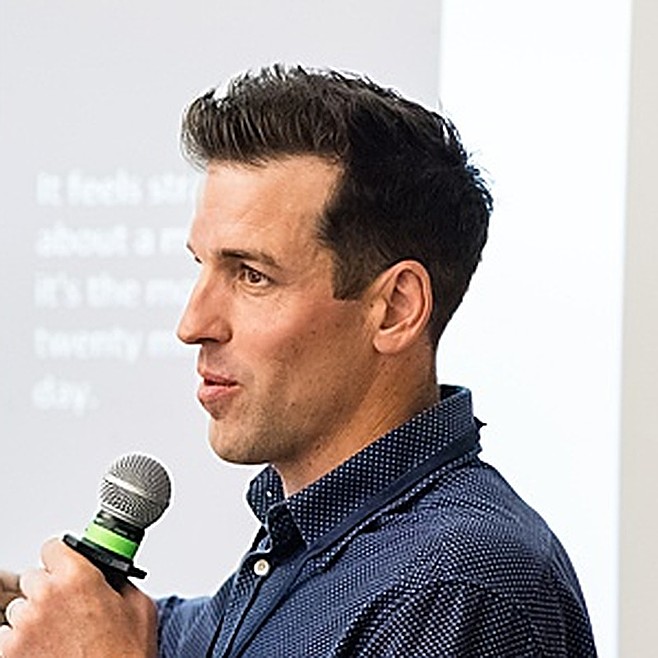
Eric Harry
On Oct. 13 I asked a room of Flathead manufacturers four questions, hands up, then down. Do your people use AI at work? Does your software have it built in? Does AI touch your floor? Do you know where your data goes?
The hands came down at different questions. The science fiction writer William Gibson said the future is already here; it’s just not evenly distributed.
AI is essential, and it needs to be done well. Essential, because it’s coming either way, often in a routine update to software you already run. Done well, because AI is an accelerator. It speeds up whatever direction you’re already going. A good process gets better faster. A broken one breaks faster.
I run the Wachholz Innovation and Entrepreneurship Center (WIEC) at Flathead Valley Community College, and I invest in companies building AI for the physical world. From the investor seat, I watch billions go into new AI-run factories.
The money isn’t evenly distributed either. In October, venture firm Andreessen Horowitz argued for manufacturing as an asset class. Russell Winter, a third-generation tool and die maker who bought four shops, answered, “It’s not that simple.” He’s right. Most of that money isn’t coming to shops like ours. The firm’s own essay says 83% of U.S. machine shops have fewer than 20 people. Some of what it buys is already within reach.
Life Line builds custom ambulances in Sumner, Iowa, a town of about 2,000. Sanding was one of the plant’s least favorite jobs, and the company couldn’t hire enough people for it. Now a robot scans each truck and sands it. The vendor reports finishing time fell 30% to 40%, and nobody lost a job.
In 2015, Deschutes Brewery in Bend, Oregon, had temperature spikes in its fermenters. The brewers added one more sensor, ran the cooling off it and put off an $8 million project. A year later, the brewery added machine learning to predict how each batch would finish. The fix came first, and the AI came second.
Will it pay off? Yes, but it takes time. Companies getting real results either rebuild from the ground up or set the direction first, then add speed.
At the WIEC, we teach it in four parts. Fluency: Get everyone using it and keep customer and controlled data out of public tools. Agency: Pick the job nobody wants, learn it end to end, then point AI at it. Sovereignty: Ask each software vendor, in writing, where your data goes when AI switches on. Safety: Check AI’s work like the first part off a new machine.
That last one takes taste and judgment. Before the symposium, I had AI play two dozen likely audience members. A brewer said he’d tune out at the word “reindustrialization.” An AI fact-check against the source caught an error in my Deschutes example. I fixed the error and kept the word. AI gave me two dozen critics, and the calls were still mine.
The future isn’t evenly distributed yet, and “yet” is the part this valley gets to decide. Go back to those four questions. Wherever your hand dropped is where you start. Bring one person from your floor or your office to our free monthly AI lab and AI meetup at WIEC.
Details at flatheadaimeetup.com.
Eric Harry is the founding director of the Wachholz Innovation and Entrepreneurship Center at Flathead Valley Community College.