
Warsh grapples with AI’s potential economic impact, steers clear of its inflation risk
CHRISTOPHER RUGABER AP Economics Writer | Daily Inter-Lake | UPDATED 1 hour, 25 minutes AGO
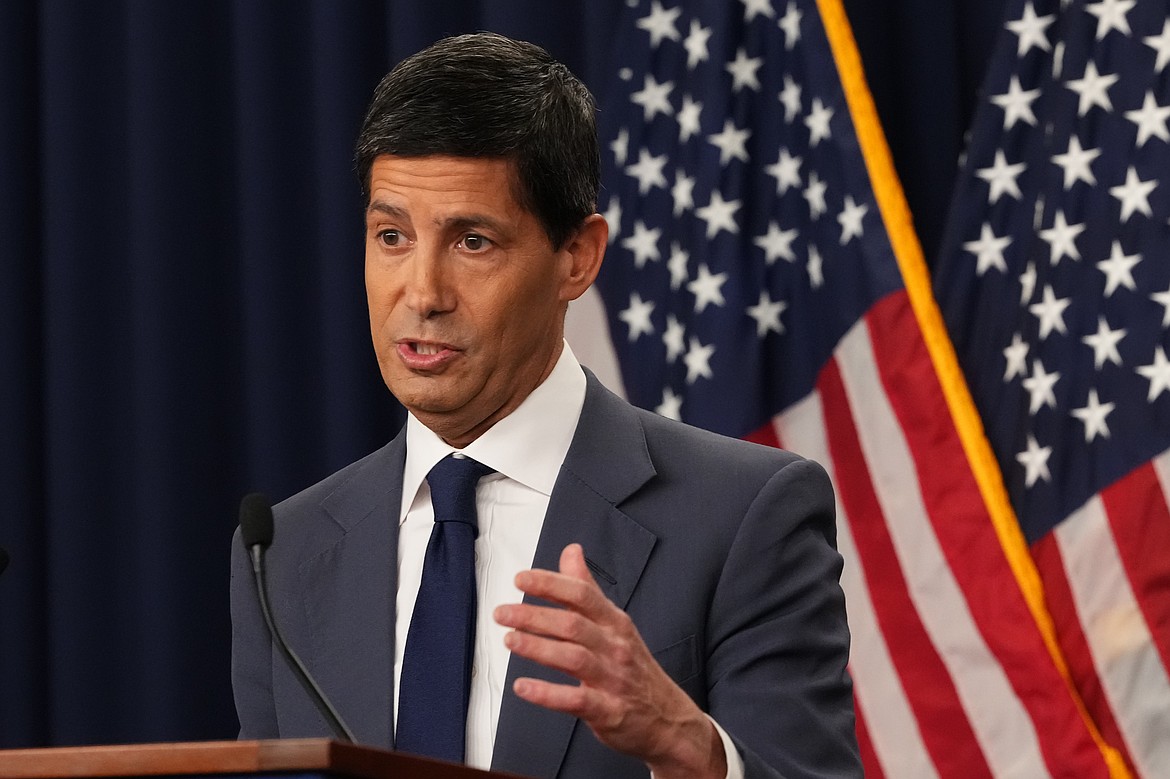
Federal Reserve Board Chairman Kevin Warsh speaks during a news conference at the Federal Reserve, Wednesday, Oct. 28, 2026, in Washington. (AP Photo/Julia Demaree Nikhinson)
WASHINGTON (AP) — Artificial intelligence could accelerate innovation and usher in an era of faster economic growth, Federal Reserve Chairman Kevin Warsh said Monday in remarks that underscored his generally optimistic outlook on the new technology, a view at odds with many of his colleagues.
At the same time, Warsh acknowledged that the development of AI carries some risks for the economy, including widespread job loss or a steep drop in the stock market if the healthy returns expected from the huge investments in AI infrastructure don't materialize. But he did not mention inflation, even though many of his colleagues blame the buildout of data centers for accelerating price increases.
Warsh's remarks kicked off a one-day conference on AI and productivity at the Fed's San Francisco branch. The Fed chairman did not comment on what the Fed's next steps would be on interest rates, nor did he say anything about recent inflation data showing that inflation accelerated last month. That data led many of Warsh's colleagues on the Fed's rate-setting committee to signal their support for additional interest rate hikes, including at the Fed's next meeting in December.
Warsh refers to AI as "SI," or super-intelligence, the moniker preferred by President Donald Trump.
"What might set SI apart, as an economic influence, is that it could supercharge idea generation," Warsh said, according to his written remarks. "It appears to be changing the method — and the speed — of innovation. If idea generation broadens, growth could be sustained at a level substantially higher than the long-run average."
Warsh has long said, including before his nomination as Fed chair, that AI could significantly boost the economy's efficiency, which would enable it to grow without worsening inflation.
Yet other Fed officials have increasingly voiced concern that AI is fanning inflation because the buildout of AI infrastructure has sharply raised demand for computer chips, electronic components, electricity and copper.
Those increases, in turn, have lifted the cost of smartphones, computers and other consumer electronics. Smartphone prices rose last month at the fastest pace on record, the government said last week.