
THE DIRT: Brick by brick
Shoshone News-Press | UPDATED 6 hours, 45 minutes AGO
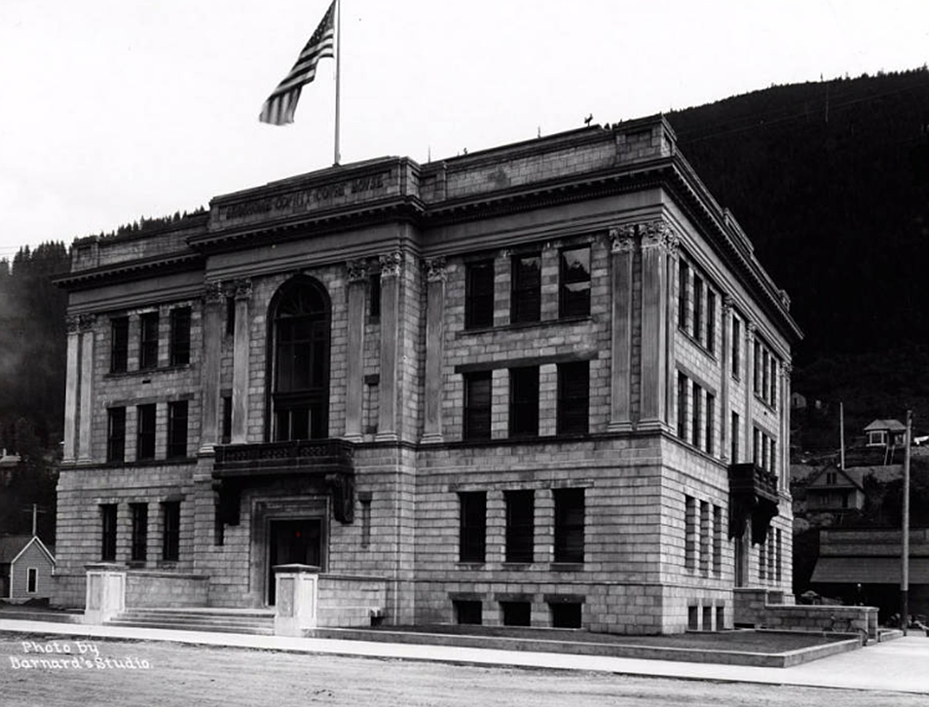
The Shoshone County Courthouse is made from bricks forged out of old mine tailings.
Courtesy photo
Most residents of the Silver Valley are familiar with the abundance of tailings waste that flowed down area streams and blanketed the valley floor from decades of outdated disposal practices that were historically used by the mines and mills of the Coeur d’Alene Mining District. These mine tailings were not always regarded as a waste product but rather a useful ingredient for new construction, especially in the manufacturing of bricks and concrete. Many of the Silver Valley’s iconic historic buildings still contain mine tailings incorporated into their original construction materials.
Brick and stone buildings can be found in most of the silver valley communities, but the City of Wallace is home to the most, boasting an entire downtown area that is listed on the National Register of Historic Places with these ornate structures. The city had humble beginnings dating back to 1884 when Colonel William R. Wallace purchased what would become the future townsite.
Prospectors looking for their share of the mining boom flooded the area and spurred the quick development of the townsite where they could obtain the supplies and housing necessary for the burgeoning mining industry. Hastily built wooden structures began to pop up across the 80-acre cedar swamp that developed into the prosperous town of Wallace. But in 1890, a fire broke out in the Central Hotel and quickly spread across the business district, destroying most of these wooden buildings.
With more riches to be made from the surrounding hills, the townspeople persevered and rebuilt the business district with brick, concrete block, stone, terra cotta, and masonry structures, many of which still stand today. The town even implemented new building codes that required fireproof construction, which favored brick, cast iron elements, and sheet iron cornices in hopes of reducing risk of future fires.
Due to the relatively low-grade of many of the lead-zinc-silver ores found in the Coeur d’Alene Mining District, various methods of concentrating were implemented to liberate the profit generating metals from the surrounding rock bodies. This practice generated massive volumes of metal laden waste materials known as tailings that were often cast aside as refuse.
The new requirement for fireproof construction materials and an overabundance of tailings naturally worked hand in hand as a solution to this new construction demand. Those in the masonry business seized the opportunity to incorporate mine tailings into their products. The Wallace Concrete Company was one such business to start up operations during this time.
The materials they used consisted of five parts tailings and sand to one of cement. Bricks and blocks were produced in assorted sizes for different applications and were formed in a mold then put under a pressure of 2,500 lbs. per inch. Construction boomed and soon downtown Wallace was re-built.
The town and its newly constructed structures were put to the test when the Great Fire of 1910 swept through the area, destroying a third of the town. While it was a devastating event, the town did not withstand the same damage as encountered in 1890 in part to the sturdy construction materials and the valiant firefighting efforts of the towns people.
Yet again, Wallace re-built continuing to follow the tradition of constructing the new buildings with stone products rather than wood. As a testament to the qualify craftsmanship and durable products used, most of these buildings still stand today, preserving our areas amazing history. But these buildings will continue to age and if not properly maintained, the metals bound up in the bricks and concrete begin to flake, break, and turn into dust.
These materials can inadvertently become a source of exposure to those living and working within their walls. Encapsulating the bricks with paint, clear coat, or stucco material can help maintain their structural integrity. Preserving these structures is not only a historical obligation to our community but also acts to protect our communities from these lesser-known sources of lead and other metal exposures.
Residents who have concerns about potential lead or other metal contamination in historic bricks or concrete materials can contact the Panhandle Health District (PHD) for information about available testing resources and recommendations for reducing potential exposure.
The Dirt is a series of informative articles focused on all aspects of cleanup efforts associated with the Bunker Hill Superfund Site. Our goal is to promote community awareness of contamination issues, to provide tools for protecting public health, and to keep the community informed of current and future cleanup projects. The Dirt is a group of committed and local experts from multiple agencies, including the Basin Environmental Improvement Project Commission, Panhandle Health District, Shoshone County, Silver Valley Economic Development Corporation and the Idaho Department of Environmental Quality.