
Study tracks mountain lions in western Montana
MONTE TURNER | Hagadone News Network | UPDATED 2 days, 12 hours AGO
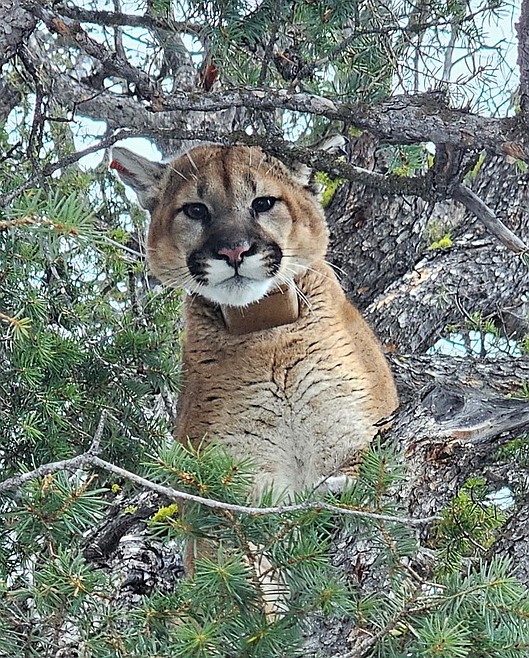
Mountain lions like this one are collared as one component of Montana's mountain lion monitoring project. This research season FWP will be collecting genetic samples and collaring more lions in the upper and middle Clark Fork area. (Photo supplied by FWP)
Mountain lions have been part of the rugged landscape of Mineral County long before the first settlers, miners and homesteaders made their homes along the Clark Fork River.
Now, Montana Fish, Wildlife and Parks is preparing to take a closer look at just how many of these elusive cats are living in the mountains and forests between Alberton and Haugan.
Beginning Dec. 1, and continuing through April 2027, Fish, Wildlife and Parks biologists and experienced local hound handlers will conduct field research throughout the middle and upper Clark Fork Valley. The project is designed to estimate mountain lion numbers and population density in the area as part of a larger, multi-year statewide effort to better understand and manage Montana's mountain lion population.
The work is part of the state's Mountain Lion Monitoring and Management Strategy, adopted in 2019. The strategy calls for periodic population estimates using genetic samples collected from lions in different management regions across the state. Fish, Wildlife and Parks is now in its eighth year of implementing the monitoring strategy, and this winter's work represents the second round of population estimates in the northwest lion ecoregion, which includes portions of both Region 1 and Region 2.
For those who might wonder what mountain lion research looks like in the field, it involves some pretty remarkable teamwork between biologists and trained dogs. Experienced houndsmen use specially trained dogs to track mountain lion scent through the forest. Once a lion is located and treed, biologists can safely approach the animal and use a biopsy dart to collect a small tissue sample. The genetic material provides information that helps researchers identify individual animals and develop estimates of the population.
This winter's research will also include collecting DNA from mountain lions harvested by hunters in Hunting Districts 122, 123, 124, 201, 202, 240 and 299. In addition, biologists plan to fit 10 individual lions with tracking collars to help improve the accuracy of population models. Rather than relying on occasional sightings or simply counting animals taken by hunters, Fish, Wildlife and Parks is combining genetic information, harvest records, collar data and years of field research to build a more complete picture of the population.
The reason for all this research goes back to a time when mountain lions were viewed very differently in Montana. For many years, lions were considered unwanted predators, particularly as settlers moved into the state and livestock operations expanded. Montana paid bounties on mountain lions beginning in 1879, a practice that continued until 1962.
Between 1900 and 1930 alone, at least 1,562 bounty payments were made. By 1930, mountain lions had nearly disappeared from much of the state because of widespread persecution and declining deer and elk populations. Their fortunes began to change as wildlife populations recovered.
In 1971, the Montana Legislature reclassified mountain lions as game animals, placing them under regulated hunting seasons and management by the Fish and Game Commission. Over time, the cats reclaimed much of their historic range in Montana, including the mountainous regions of western Montana.
Today, Fish, Wildlife and Parks recognizes the importance of having reliable population information rather than depending solely on hunter harvest numbers or occasional sightings. The monitoring strategy combines more than 25 years of field research with annual harvest information and periodic genetic sampling to help biologists understand population trends and the effects of hunting. The ultimate goal is to maintain viable mountain lion populations while balancing their numbers with other wildlife species and the various interests of Montana residents.
The local research area covers nearly 1,000 square miles and includes a variety of landownership, making cooperation from landowners especially important.
"Our mountain lion monitoring study area covers almost 1,000 square miles across a variety of landownership. We are very grateful to all the private landowners, ranch managers, state and federal partners who allow access crucial to the success of this effort," shared Ashley Hodge, mountain lion monitoring biologist.
The information gathered this winter will contribute to a much larger understanding of mountain lions throughout Montana and help guide management decisions in the years ahead. For additional information about the research, contact Mountain Lion Monitoring Biologist Ashley Hodge at [email protected].
ARTICLES BY MONTE TURNER

Tarkio's Two Hot Chili Pot winners
Superior Volunteer Fire and Rescue Department’s Second Annual Two Hot Chili Pot was fun, educational and successful in raising money for their Tarkio Fire Station building on Nov. 14.
Superior holiday dinner celebrate togetherness
The celebration will include a free traditional Christmas dinner featuring turkey, potatoes, stuffing, cranberry sauce, rolls, yams and vegetables. There will also be crafts, a gingerbread house decorating contest, an opportunity to visit with Santa and the return of the kids-only gift shop.
Christmas spirit will shine at Alberton community event
The newly formed Alberton Community Association is keeping that community spirit rolling with plans for Christmas in Alberton, set for Saturday, Dec. 5, from 5 to 7 p.m. at the Alberton Community Center/Library, 701 Railroad Ave.