
Guest workers and beyond: The Bracero Program
Dollie Boyd/Contributed Report | Columbia Basin Herald | UPDATED 3 hours, 57 minutes AGO
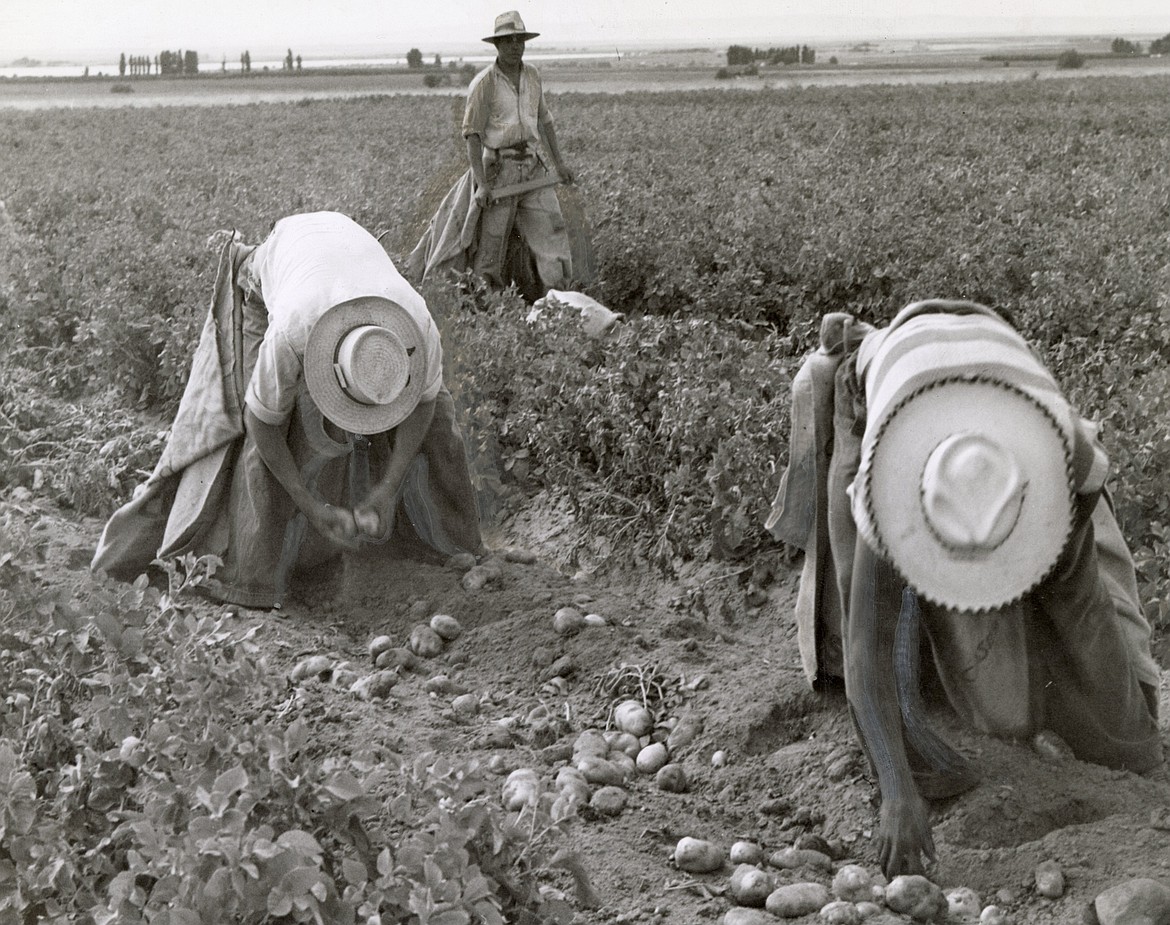
Braceros dig potatoes near Moses Lake in 1945. The Bracero Program brought thousands of workers from Mexico to fill the labor shortage caused by World War II.
COURTESY PHOTO/MOSES LAKE MUSEUM & ART CENTER
The Bracero Program was an agreement with Mexico, originally crafted during World War II to ease labor shortages in the United States. The program outlasted the war and from 1942 to 1962 guest workers were brought from Mexico to work in the agriculture and railroad industries.
The word bracero translates as “manual laborer” and during the war years and beyond, Moses Lake farmers benefited from that labor. Nationally, nearly 4.6 million Mexican citizens entered the U.S. for temporary work during the 22 years the program was active. In 1944, one hundred and thirty young men from Mexico arrived to harvest Grant County crops. The numbers of braceros here only increased after this initial group.
Agreements between the two governments protected laborers from forced military service, set standards for living and working conditions, and guaranteed that a portion of their wages would be deposited into private savings accounts in Mexico. In actual practice, pay and working conditions frequently fell far short of expectations and some of those promised savings accounts never materialized.
Housing for the temporary workers came in the form of worker camps, the style of which varied from place to place. In Moses Lake braceros were housed in the most common type of housing; canvas-roofed tents with wood floors in a camp on Stratford Road. The tents, designed by a former Barnum and Bailey Circus engineer, were equipped with cots and wood burning or kerosene heaters. They were designed to be portable, expandable, and storable in the off-season. Typically, six workers bunked together in a 16-by-16-foot tent. Workers weren’t permitted to bring much from home, so a few pictures or a favorite blanket were important personal touches.
The tents were too hot in the summer and cold in the fall and winter and dusty year-round, but they weren’t the only challenge faced by workers. Poor safety practices made the work they did more hazardous than necessary. Braceros got substandard medical care, and a high number of vehicle accidents took a toll on the population. Braceros were frequently transported to and from the fields on flatbed trucks, which was extra dangerous on the return trip when beds were piled high with produce boxes leaving little room to sit.
One of the most frequent sources of friction between braceros and their employers was the food provided. In a Skagit Valley camp, the daily schedule started with breakfast at 4:30 a.m. with lunch seven and a half hours later at noon. Lunch typically consisted of three sandwiches: one meat, one egg spread, and one jelly with a sweet roll and a half pint of milk on the side. There was no refrigeration, by noon the sandwiches which had been made the day before were unappetizing and the milk was sour. Aside from the poor quality and unsafe food practices, the offerings were strange and unappealing to young men from a different culture.
In the Skagit Valley, braceros went on strike to protest the poor food in their camp, an act that was not unusual in our state. Historian Erasmo Gamboa described the Northwest as a “hotbed for labor unrest” during the bracero period. Apparently, the stereotype of braceros as a calm, undemanding work force incapable of standing up for themselves did not hold true in this region where braceros were “constantly on strike.”
The World War II decade was an inflection point in the history of Mexican migration to Washington as large numbers of Mexican people were recruited to work here. As more guest workers arrived, the temporary program gave rise to something more permanent. Studies have shown that a large percentage of braceros returned to the U.S. with worker visas after their participation in the program, this time they put down roots.
This historical fact is on full display in our town. By 1945, Spanish-English lessons for businesspeople were being offered in Moses Lake. Throughout the 1950s, photographs from Hilderbrand’s studio, town directories, and birth announcements in the Herald clearly show Latino/Latina men and women living and working here. We can’t give the Bracero Program full credit for the establishment of the Hispanic community in Moses Lake, but we can say that for some, it was the impetus to reach for a new life as an American.
At the Moses Lake Museum & Art Center we are seeking more information about the bracero experience in Moses Lake. Personal stories, family photographs, and objects help tell the story so that future generations can learn this key part of our history. Are there any braceros in your family? It’s never too soon to sit down with your elders and have a conversation. You may learn a personal connection to largest guest worker program in American history.
Back in the Day appears bi-weekly and looks at the rich and sometimes little-known history of the Columbia Basin.