
Can citizen-initiated zoning save Lakeside's neighborhoods?
ELSA ERICKSEN | Hagadone News Network | UPDATED 18 hours, 14 minutes AGO
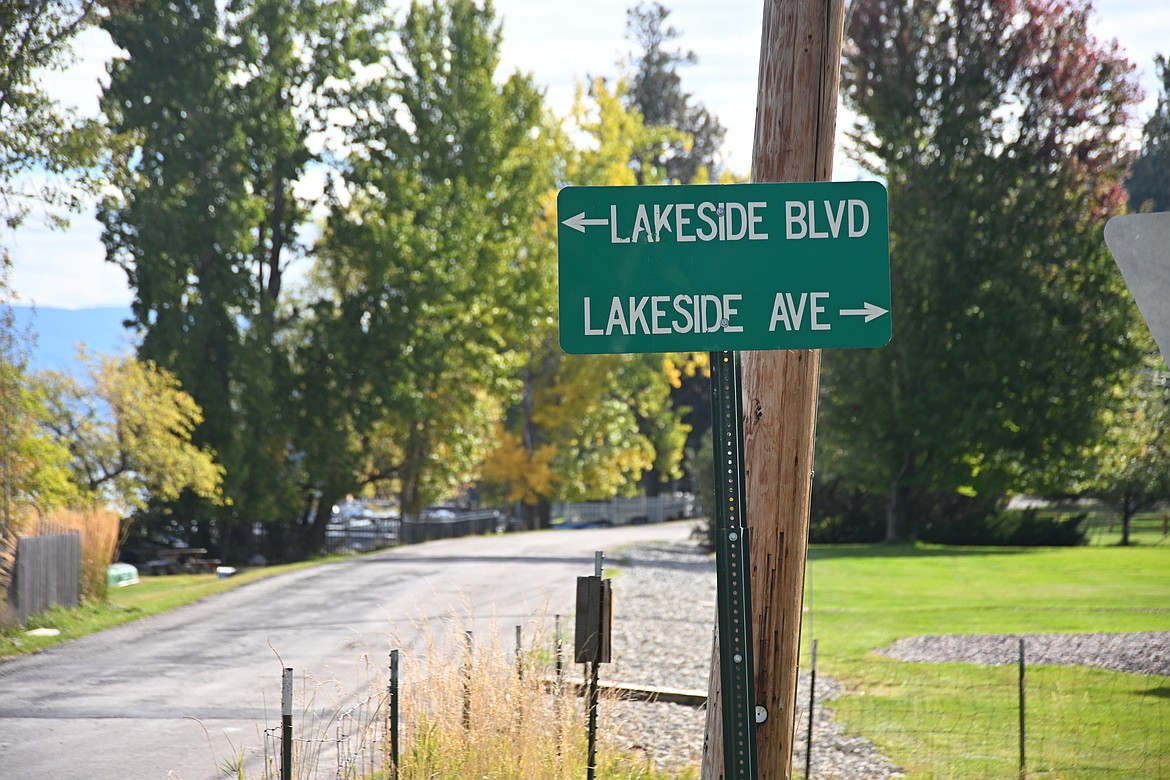
Lakeside Boulevard, whose residents have applied to be zoned for residential use only to protect the character of the neighborhood, on Friday, Oct. 2, 2026. (Elsa Ericksen/Bigfork Eagle)
Lakeside Boulevard is a quiet street that winds and meanders its way along Flathead Lake south of downtown Lakeside, glimpses of family homes and lake cabins flashing through the trees. It's the type of street where people stroll with their dogs on crisp fall afternoons and nod at passing cars.
It's also the type of place that's "a pretty prime target for a resort project or a condo," resident David Fetveit said. At present, Lakeside Boulevard is unzoned, meaning there's nothing to prevent high density development in the quiet neighborhood.
For the last three years, Fetveit has spearheaded a neighbor-led effort to create a new zoning district in Lakeside that would protect this area along the lakeshore from overdevelopment. It's a strategy that's gaining traction in Montana as a way for residents to combat unwanted growth and is one of the few lifelines to hold on to as they attempt to preserve the character of the community that they love.
The proposed district, known as Lakeside Boulevard South Zoning District, would incorporate properties along Lakeside Boulevard, Overlook Terrace and Political Hill Road south of downtown Lakeside. The proposed district encompasses approximately 90 acres and 50 ownership parties, according to application documents submitted to the Flathead County Planning and Zoning Board.
The zoning district would be designated for a mix of One Family Limited Residential zones and Low Density Resort Residential. Under such designations, multi-family units or tourist accommodations with more than five units would be required to obtain conditional approval and go through a public comment process. It would also set a maximum height of 35 feet for buildings.
Without any zoning in the area, Fetveit said, there's nothing to stop the development of a multistory condominium or high-density resort that would change the character of the residential neighborhood, impede views of the lake and possibly impact water quality.
"The main impetus was just to maintain the residential nature of that stretch and protect it from development," Fetveit said.
Fetveit is no stranger to land use planning in Lakeside. His experience stretches back more than 20 years, and he was part of the effort to craft the Lakeside Neighborhood Plan in 2008. At the time, he said, the plan was a non-event. Amid a recession, there wasn't much growth or activity to speak of, and a plan policing the non-existent development seemed unnecessary.
Now, the neighborhood plan is an anchor in stormy seas, as longtime locals and new transplants grapple with the prospect of unprecedented development that will reshape the community. Proposed resorts have drawn the ire of frustrated residents and ignited years-long legal battles.
"This land use designation is intended to promote the traditional development pattern of single-family structures and summer cabins in the lakefront area, while protecting lake water quality by discouraging high-density, multi-family development along the waterfront," the Lakeside Neighborhood Plan reads, the sentence upon which residents are building their case for the new zoning district.
Fetveit said the move to initiate a new zoning district was not in response to any one development project. Rather, he views it as the fulfillment of the neighborhood plan, which nearly two decades ago laid out which parts of Lakeside were to be commercial and which were to be residential. Lakeside Boulevard was one of the areas earmarked for residential use, but no one had ever gone forward with the process of establishing that zone.
As Fetveit and his neighbors have been quietly working on a proposal to save their own neighborhood, other Lakeside residents have been grasping at straws to challenge the development of luxury resorts and private marinas.
The process Fetveit and his neighbors are using in a bid to protect their corner of Lakeside is known as citizen-initiated zoning, or "Part 1 zoning." Under the 1953 Montana law, when at least 60% of property owners are in support of a proposed district, they can petition county commissioners to create a planning and zoning district.
As growth continues to be a mainstay issue in Montana, residents in unincorporated areas with large swaths of unzoned land have more frequently turned to citizen-initiated zoning to combat unwanted development.
As recently as September, Madison County's first citizen-initiated zoning district was approved by county commissioners, capping a three-year effort by locals to oppose a high-density RV park and safeguard wildlife corridors in the Greater Yellowstone area.
Elsewhere in the state, more than 130 areas have been incorporated into zoning districts through citizen-initiated zoning.
Citizen-initiated zoning is far from a silver bullet. Fetveit estimates that his neighborhood has invested close to $11,000 over the three-year process to develop a sound application. He hired Missoula-based Orion Planning and Design to handle the technical details of the application.
Significant effort was put into creating a website and sending out mailers to educate neighbors and residents about the zoning effort. Knowing that the zoning district would require 60% approval, Fetveit aimed to get 75% of residents on board to ensure the proposal was worth the time and money invested. Following up with people and answering questions required considerable volunteer time.
Of the 57 properties that would be included in the new district, 40 were in favor, a margin of 70% approval. When combined with those who expressed interest but were "maybes," support rose to 77%. No one responded in opposition to the proposal.
At a Sept. 29 Lakeside Community Council meeting, no one spoke against the proposed district during public comment, and the council voted unanimously to recommend approval of the proposed district.
"It's not impossible. It's not," Fetveit said. "Could we run it on a smaller budget? Maybe. It depends on the size of the project, too, and how many acres are involved and how many how many lots and all that kind of stuff. It just takes a level of organization."
Fetveit said he and another resident fronted the money to get the application rolling but also set up a foundation so that neighbors could make tax-free donations to support the effort. Fetveit estimates that he's been reimbursed for about 50% of what he spent on the application process.
Split between the 50 property owners, the $11,000 would amount to roughly $250 per property owner, which Fetveit views as a worthy investment to protect the future of the neighborhood.
The Lakeside Boulevard South Zoning District application will go before the Flathead County Planning and Zoning Board on Oct. 14 at 6 p.m. Flathead County Commissioners will then hold a yet-to-be-scheduled public hearing on the proposal.
Reporter Elsa Ericksen can be reached at 406-758-4459 or [email protected]. If you value local journalism, pledge your support at dailyinterlake.com/support.
ARTICLES BY ELSA ERICKSEN
Can citizen-initiated zoning save Lakeside's neighborhoods?
For the last three years, Fetveit has spearheaded a neighbor-led effort to create a new zoning district in Lakeside that would protect this area along the lakeshore from overdevelopment.
Effort to rebuild iconic Bigfork cross kicks off this weekend
When completed, the new cross will stand 100 feet tall with a crossbeam that spans 53 feet. The metal roof trusses that will be used to construct the cross will be 5 feet wide.

Wayfarers collaboration redefines accessible trails in Montana
These trail crew members have traversed hundreds of miles of Montana’s backcountry, sawing fallen trees and reinforcing single track trails cutting through forests and mountain paths, but it’s the first time they’ve worked on a project like this. Instead, they’re reimaging these well-worn trails so that Montana’s wild spaces are accessible to people with disabilities.