
Effort to rebuild iconic Bigfork cross kicks off this weekend
ELSA ERICKSEN | Hagadone News Network | UPDATED 18 hours, 9 minutes AGO
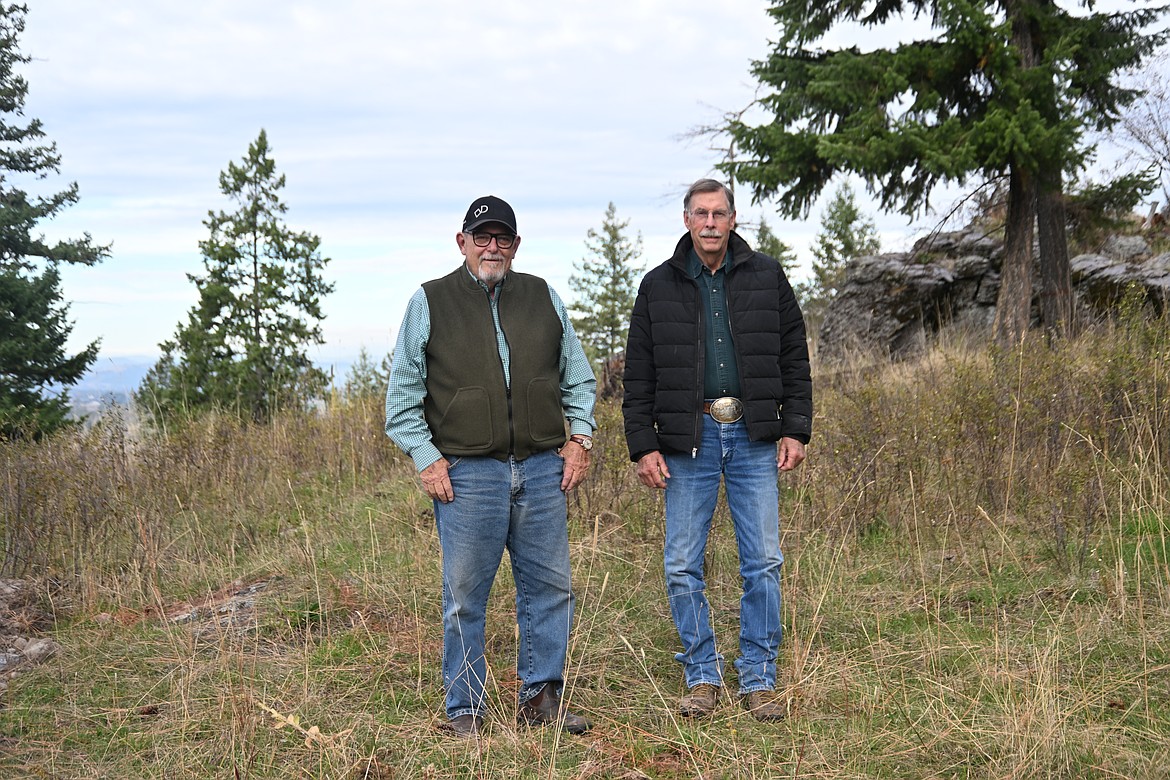
Rey Johnson and Doug Averill stand at the site on Johnson's property where the pair plans to erect a new Bigfork cross on Friday, Oct. 2, 2026. (Elsa Ericksen/Bigfork Eagle)
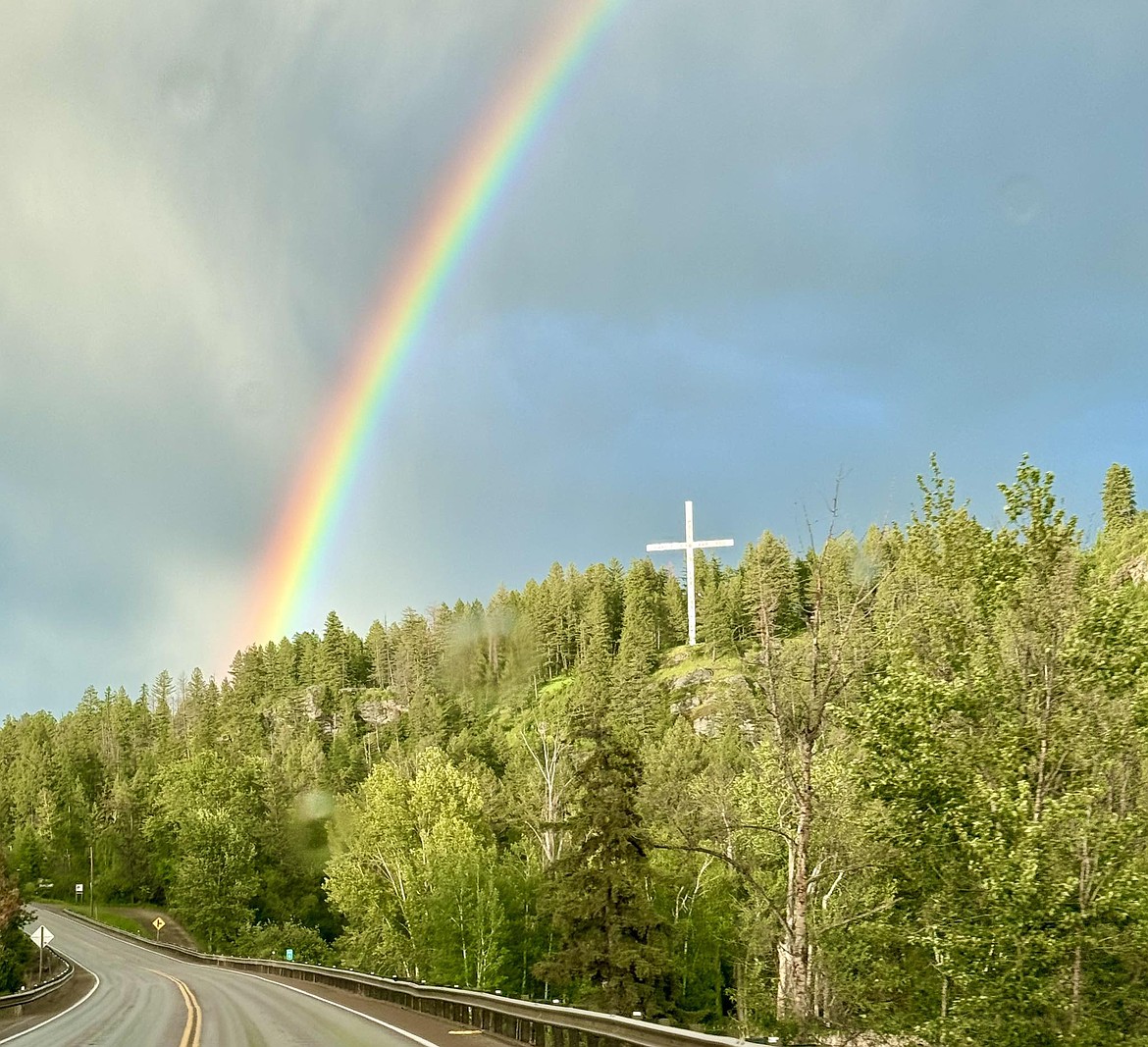
A rainbow fills the sky behind the Bigfork cross, which fell during Dec. 17th's windstorm. (photo courtesy of Jamie Wenzel)
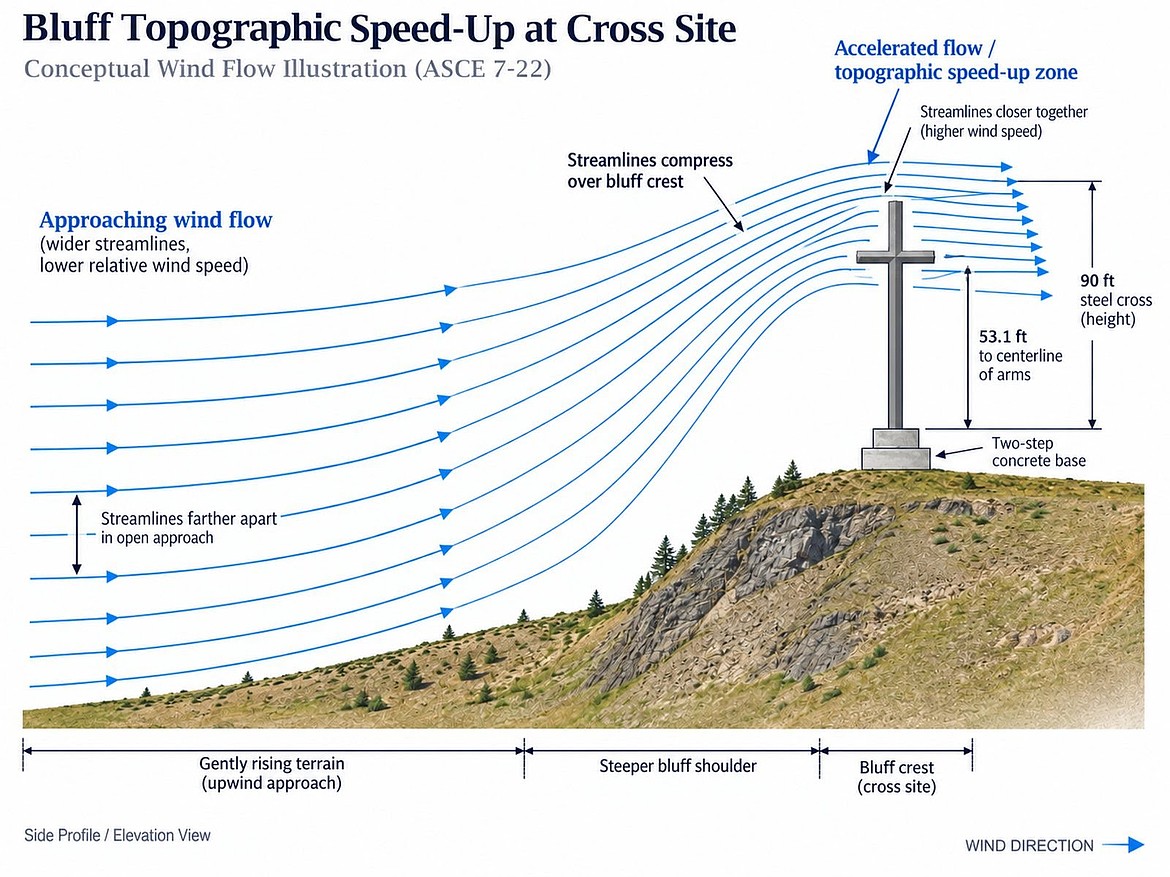
An engineering mock-up of the planned Bigfork cross replacement, which has been designed to withstand winds up to 120 miles per hour. (Courtesy Rey Johnson)
Doug Averill was 24 or 25 years old, flying a six-seater puddle jumper with two friends on a return trip from Southern California in the 70s. After hopscotching up the Pacific Coast, they fueled up in Boise late in the evening before pointing the nose of the plane toward home. There was a smidge of bad weather in the forecast, but it was expected to clear up.
"Well, we took off and we never came out of the weather," Averill said.
They thought to turn around and try to land again in Boise, but all the instruments went out. For two hours, deep in the soupy fog with snow pelting the windshield, Averill was quite literally flying blind. He navigated his way through the jagged peaks of the Rocky Mountains using a compass and a flashlight.
Finally, Averill said, " There was a big hole in the clouds, the only hole we saw in the two-hour flight, and the cross was right in the middle of it. We looked down and all three of us thought, 'We're dead and don't know it.' But once we realized it was a cross, we spun down in that hole and came out right over here by the bridge."
Averill hadn't had any sense of where they were. They had started to let the plane down, thinking they were around Great Falls. In reality, they were less than 30 seconds from smashing into the Jewel Basin.
"So anyway," Averill trailed off, "I have great appreciation for the cross. It's always just a delight when you fly in after you've been on a trip to come into the valley and see the cross there, a kind of 'welcome home.'"
And for more than 50 years, the Bigfork cross, perched on the cliffs overlooking Montana 82, served as a beacon in the Flathead Valley. "Christ Died For You, Will You Live For Him?" read the oversized red block letters on the 112-foot cross.
Standing on a hilltop on Rey Johnson's ranch across the highway, the glint of steel is just barely visible through the fir trees. Johnson, a jovial man with graying hair, knows exactly where to stand to make out the skeletal remains of the beloved landmark that toppled after a violent windstorm swept across the region in December 2025.
This is the spot, with its sweeping views of the north end of Flathead Lake, that Johnson and Averill plan to raise a new Bigfork cross. The pair have formed a nonprofit organization to undertake the monumental effort and will host a kick-off event Sunday, Oct. 11, at 1 p.m. at Averill’s Wrangler Springs Ranch to share their vision for the new cross with the Bigfork community.
Averill and Johnson never planned to rebuild the cross. When the cross toppled last year, after a Douglas fir crashed into the guidewires that supported the cross and brought the whole thing down, the Ottosen family announced they had no intentions of rebuilding it. Ed Ottosen, who originally built the cross in the 70s, is getting up there in years, and maintaining the cross over the decades has involved recruiting local mountain climbers to engage in gravity-defying stunts.
The community was devastated, though, and wasn't ready to let go of the iconic Flathead Valley landmark. Johnson and Averill were impressed by the outpouring of community supporting the aftermath of the storm. They hadn't realized how much the local monument had impacted a wide swath of people from around the Flathead Valley and the broader country.
The longer they talked, the more the two realized that Johnson was sitting on the perfect site to raise a new cross. His couple hundred acres of pasture and forested hills sit directly across from Ottosen's property.
Johnson and Averill, who describe themselves as semi-retired ranchers with decades of tinkering on projects under their belt buckles, figured they could prop up an old radio tower on the cliff and call it a day.
But as the pair started to talk to more friends in the community about the project, they realized they might be in for a bit more than they had bargained for.
"We've all done a lot of big projects, so we take this one in stride, and we put together a wonderful group of people that really have the professional skills to make it happen," Johnson said. "One of the neatest parts of this project is that it got put together by just a bunch of common folks. It's just a broad, diverse group of people that's involved in it, and that's the way Bigfork has always been.”
The effort to rebuild the cross quickly became a community-driven effort.
Kim Gray, a structural engineer, nixed the radio tower idea and drew up plans for a cross so sound it would take an actual act of God to bring it down. The Romans themselves would have had to nod in appreciation at the thought put into the design.
When completed, the new cross will stand 100 feet tall with a crossbeam that spans 53 feet. The metal roof trusses that will be used to construct the cross will be 5 feet wide.
It will be a skeletal cross, without siding, to lessen the chance it's knocked over in another windstorm. The last cross was covered in thin sheet metal siding, which often caused a safety hazard when working to repair the cross. It wasn't uncommon for gusts of wind to catch the edges of the sheet metal and "send it flying through the air like a giant razor blade," Don Schwennesen reported in the Bigfork Eagle in 1997.
The cross will be set farther back from the highway than Ottosen’s cross, making it more subtle, Johnson said. The effect will be like that of a silhouette, but it will still be lit up at night like the previous cross.
Dwight Taylor is taking on the role of lead contractor. Kirt Taylor undertook the effort to dig an 1,100-foot ditch to the site of the new cross to ensure there will be electricity for the spotlights. Flathead Electric Cooperative also contributed to that undertaking.
The base of the cross will consist of 190 cubic yards of concrete. A 40-square-foot pedestal foundation is required because the crossbeams create 1.3 million pounds of torque when the wind is blowing at 110 miles per hour. The group wants to ensure the cross can endure winds of up to 120 miles per hour.
They also considered the physics of optics to determine how large to make the cross. Gray ran the numbers, considering the distance of the new location from the highway, and how large something has to be for a person's eye to detect an object, resulting in the planned dimensions of the new cross. They've done ground structure tests to ensure that it won't slide down the hill in an earthquake.
"If we're going to put up a new cross, we don't want it to come down again in the next windstorm," Johnson's wife Kathy said. "We want it to outlive us."
This kind of quality, though, comes with a hefty price tag. The group has estimated a budget of around $250,000 for the new cross and at present has raised about $50,000. Materials are expensive, but they hope that donated materials and volunteer labor will help them to keep costs down.
"We've had everything from a $10 contribution so far to a $25,000 contribution from one person," Johnson said. "It's a broad spectrum and it doesn't matter how much someone donates. One lady from Lakeside sent us some pictures. She says, 'I could see the old cross from my backyard,' and she sent $10."
There will be an official kickoff event for the project on Sunday, Oct. 11 at 1 p.m. at the Red Barn at Wrangler Springs Ranch, located at 6850 Montana 35. RSVPs are requested at (530) 277-9262.
More information about the project can be found at flatheadvalleycross.com.
Reporter Elsa Ericksen can be reached at 406-758-4459 or [email protected]. If you value local journalism, pledge your support at dailyinterlake.com/support.
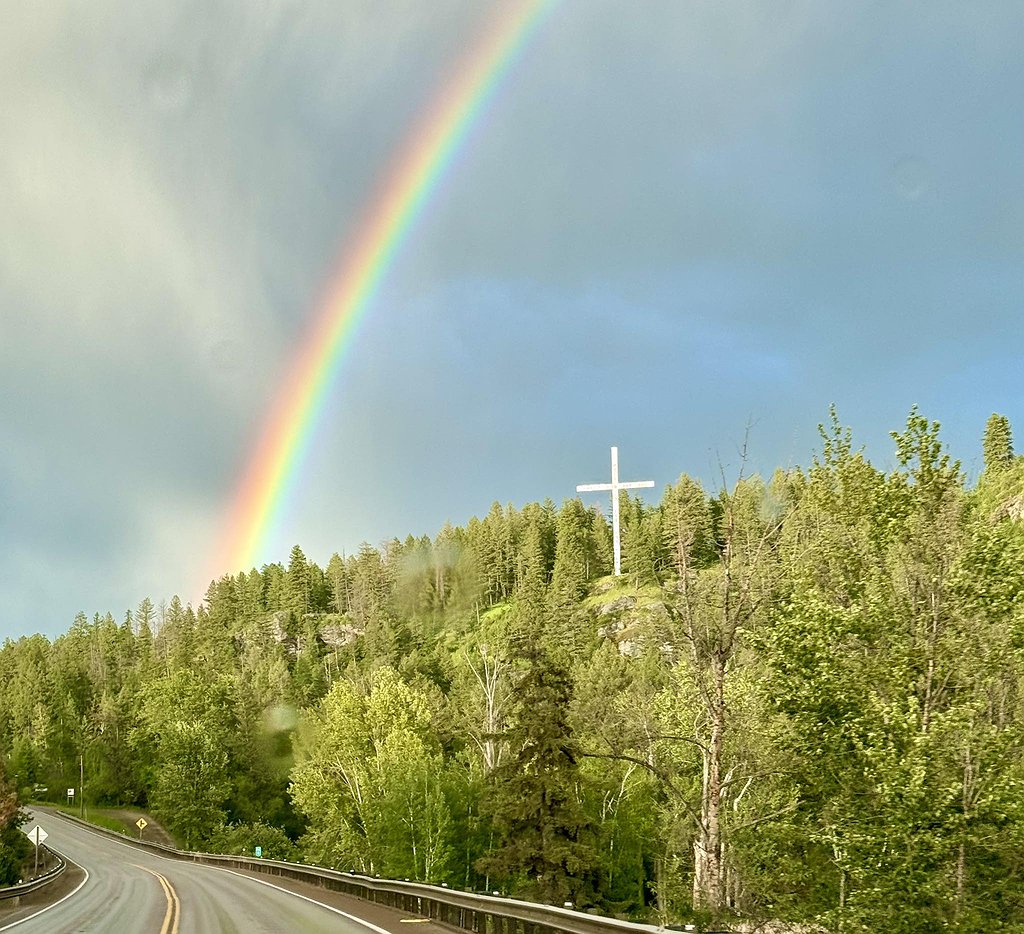 A rainbow fills the sky behind the Bigfork cross, which fell during Dec. 17th's windstorm. (photo courtesy of Jamie Wenzel)
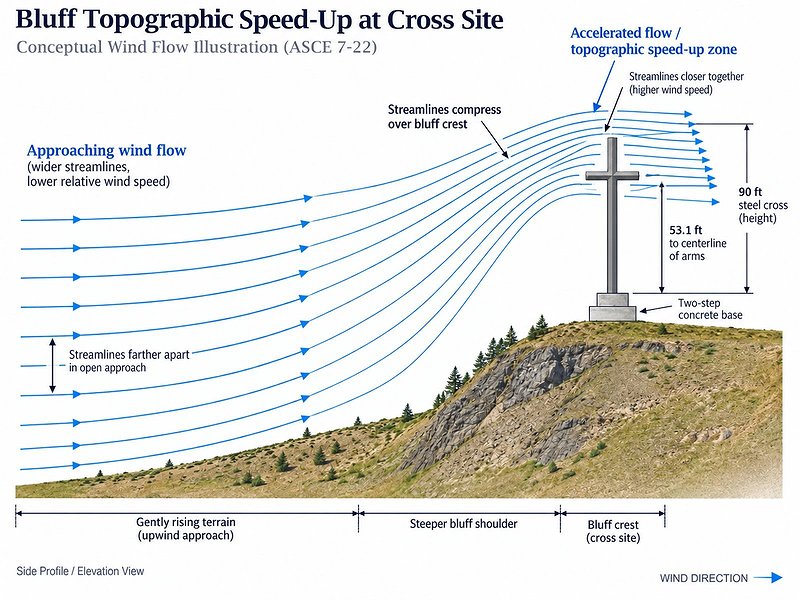 An engineering mock-up of the planned Bigfork cross replacement, which has been designed to withstand winds up to 120 miles per hour. (Courtesy Rey Johnson)
ARTICLES BY ELSA ERICKSEN
Can citizen-initiated zoning save Lakeside's neighborhoods?
For the last three years, Fetveit has spearheaded a neighbor-led effort to create a new zoning district in Lakeside that would protect this area along the lakeshore from overdevelopment.
Effort to rebuild iconic Bigfork cross kicks off this weekend
When completed, the new cross will stand 100 feet tall with a crossbeam that spans 53 feet. The metal roof trusses that will be used to construct the cross will be 5 feet wide.
Wayfarers collaboration redefines accessible trails in Montana
These trail crew members have traversed hundreds of miles of Montana’s backcountry, sawing fallen trees and reinforcing single track trails cutting through forests and mountain paths, but it’s the first time they’ve worked on a project like this. Instead, they’re reimaging these well-worn trails so that Montana’s wild spaces are accessible to people with disabilities.