
County commissioners discuss ending county collection of irrigation fees
EMILY HEIMARK | Hagadone News Network | UPDATED 2 weeks, 5 days AGO
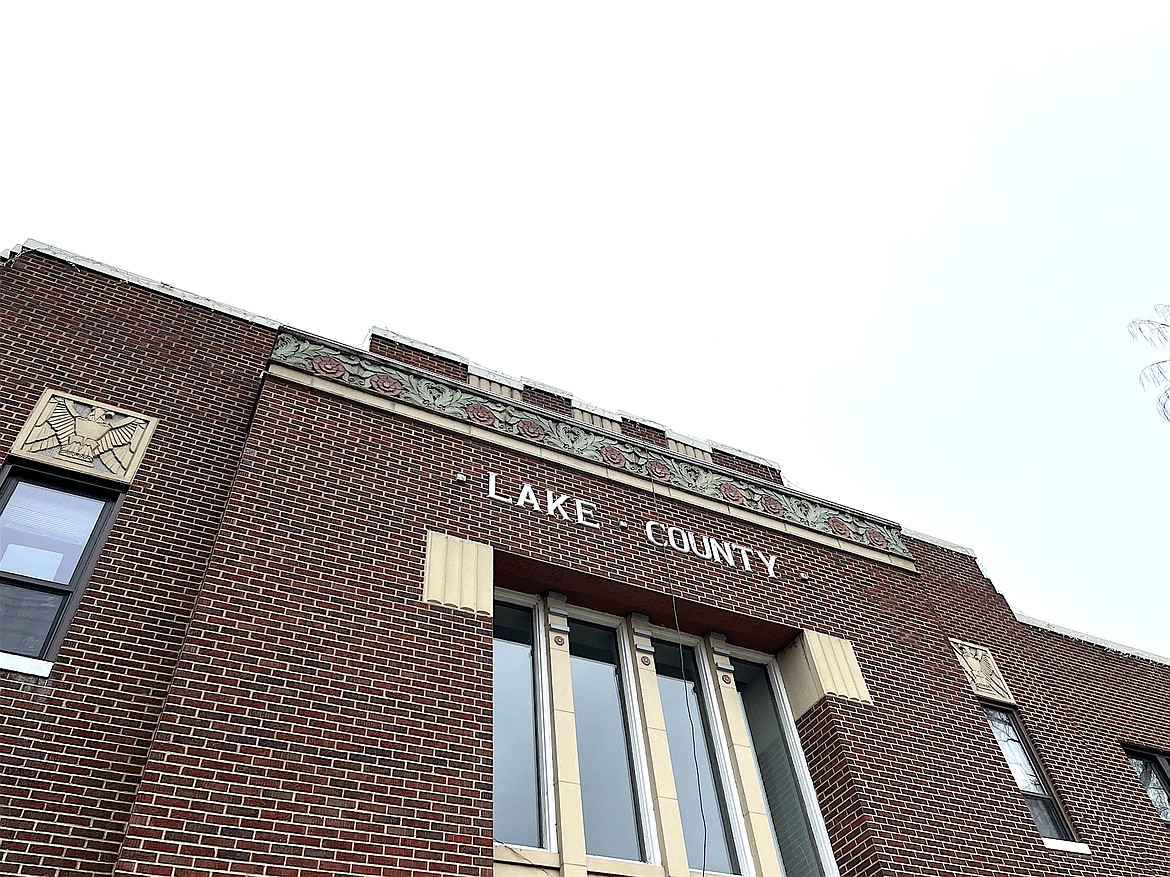
Lake County Courthouse
Emily Heimark (Messer) joined the Lake County Leader in July of 2025 after earning a B.A. degree in Journalism from the University of Montana. Emily grew up in the rolling hills of southeast Missouri. She's lived in Montana since 2022 and honed her reporting craft through the UM J-School newspaper and internships at the RMEF Bugle Magazine and the Missoulian. At the Leader, she covers government, business, education, agriculture and community news. Contact Emily Heimark at [email protected] or 406.883.4343 | October 8, 2026 12:00 AM
Lake County Commissioners once again considered no longer collecting Flathead Irrigation District fees during a commissioner meeting on Wednesday, Sept. 30, after news broke about another minimum fee increase for small parcels.
In a letter to the Flathead Irrigation District, the county commissioners stated they are “especially concerned” about the minimum fee increasing from $75 to $220 because it affects smaller tracts at five acres or less, “many” of which lack access to irrigation water.
Commissioner Gale Decker, who suggested bringing this discussion forward, explained during the meeting that many property owners have tried to get the Bureau of Indian Affairs to waive their fees but have not succeeded.
Decker added that the county has no way to know who is receiving water. But regardless of who is receiving water, these fees are attached to property tax bills, and nonpayment would result in a lien and eventually foreclosure.
The Bureau of Indian Affairs owns and operates the Flathead Indian Irrigation Project, while the Flathead Irrigation District represents the irrigators and works closely with the BIA.
The county letter stated that “in our opinion, there is no reason for the county treasurer to act as banker for the irrigation districts.” Commissioner Bill Barron explained that it gives him heartburn that these fees are attached to county property tax bills, and the county would like either the BIA or the irrigation districts to collect these fees.
Commissioner Steven Stanley added that it doesn’t feel fair to him that people who aren’t even receiving water have to pay a $220 fee. Decker also explained that for residents who pay directly to the BIA, if they refuse to pay, the only thing the BIA can do is take away water they don’t even have access to.
Under contract
Decker explained that the contract the United States entered into to create the project has been fulfilled and the county has no obligation to continue collecting these fees. While Montana state law created the irrigation districts, their letter further stated that Montana law no longer has authority over this issue after the passage of the CSKT Water Compact.
However, Five Valley Law, representing the Flathead Irrigation District, returned a letter detailing that those statutes, federal enactment or court order have not displaced the authority to levy these assessments. The irrigation district also remains subject to longstanding contracts the United States entered into.
Attorney Cassie Dellwo, legal counsel for the Flathead Irrigation District, reiterated during the meeting that state statutes were created for this purpose and that, if the county wants to terminate the contract, it would need a “declaratory judgment” against the federal government.
“I don’t think that is a wise use of our taxpayers’ money,” Dellwo said. “Nobody's coming here to have a big fight. I think the biggest goal here is to avoid unnecessary expenses to the irrigators and all of the county taxpayers.”
Dellwo added that Sanders, Missoula nor Flathead Counties, which have portions of the Flathead Indian Irrigation Project, have raised questions about these statutes. She added that it’s interesting that this issue keeps coming up with Lake County.
However, most of the project sits within Lake County, meaning it has significantly more property owners receiving these fees than other counties.
According to previous Leader reporting, in 2023, the county commissioners passed a resolution of intent to end collecting these fees, but the resolution was rescinded 2-to-1 after a room full of irrigators mostly supported the county continuing to collect them.
During the meeting, Decker cited state law stating that the formal appointment of the Flathead Reservation Water Management Board — serving as the independent body that grants water rights on the reservation — names the board as the “fiscal agent” for the United States, meaning it can accept payments. He asked Dellwo whether the board was formally appointed.
Dellwo said previous contracts establish the appointed districts but just don’t use the term “fiscal agent.” She added that they can “nitpick” which word is used in either state or federal contracts, but ultimately they have the same meaning.
“We have to use that unless you want to take it up to the federal court and fight with the feds about whether or not a federal contract is good,” she said.
Subsidizing the expense
During the meeting, it was discussed that many property owners cannot access irrigation canals because of how the property was developed.
In response, Dellwo explained that she recently learned the BIA is not “typically” removing these fees unless the project itself interfered with water access, because access would technically be available again. It was also clarified during the meeting that this is a major issue because subdivision development likely did not require accounting for irrigation access, but currently does, meaning many properties may have lost access as development occurred over the years.
Decker also said he looked into the district’s financials and they paid over $3 million to the BIA over 2024-2025, and he asked Dellwo what would happen if the district refused to pay. She explained that the BIA has been very clear that they’ll cut off water, leaving many farmers and ranchers to go bankrupt.
While there was push for the irrigation district or BIA to take over fees, Boone Cole, the Chairman of the Mission Jocko Irrigation District, explained that it would be challenging to complete these actions and isn’t something they can do overnight. Dellwo also explained that trust land properties pay directly to the BIA, but other types of land do not.
She said that the irrigation district is discussing a cooperative management agreement for the entity to manage the project directly. Dellwo added that this “may alleviate” some of the commissioners' concerns and hopefully allow them to maintain a local budget instead of a federal budget.
However, she said this is just in the “introductory” stage, and there are ways they can work under the Water Compact to get out of the “BIA’s hands.” She also noted she understands Decker’s concerns about the fee increase and that the irrigation district pushed against it.
“Unfortunately, when we’re dealing with the federal government, as everyone knows, it’s tough,” she said. “We don’t have a lot of options.”
Decker said what he dislikes about this situation is that the county and the irrigation district have been at each other over collecting these fees since 1909. He said they are here now with no real solution.
Cole added that the irrigation commissioners are on the same side as the county commissioners, but he said charging these irrigation fees regardless of whether people get water is similar to paying school levies because not everyone has kids.
“We are all well accustomed to paying taxes and fees for services that we did not receive; that's kind of the nature of our form of government,” Cole said. “But I would just like to point out that water was at one time.”
He added that his comment was not to defend the irrigation project, but that the lack of water is due to developers' lack of diligence. Cole said he fears that if people are allowed to opt out of paying this fee, irrigators would ultimately be charged more, pricing them out of affording to irrigate altogether.
He added that small tracts require just as much headache and paperwork as a 160-acre tract to get water to it, so there may be a “reasonable argument” for increasing fees on smaller properties.
However, resident Christopher Chavasse said during public comment that he believes other property owners should not subsidize irrigators' expenses.
“Leave the rest of Lake County alone,” Chavasse said.
Chavasse also asked whether the county knew how much Lake County residents pay in irrigation fees, and Decker said it would be hard to determine. However, Decker said they know that within Polson alone, 300 people pay the fee, but there is no way to know which of those properties are receiving water.
According to a BIA document from 2000, there were 1,700 irrigators on the project. However, the project encompasses 127,000, and that total may have changed significantly since 2000 as properties have been subdivided.
Barron also asked Dellwo if the irrigation district would support changing legislation on fee collection, but Dellwo said she was unsure because she has not talked to her client about that.
ARTICLES BY EMILY HEIMARK
Proposed changes to City of Polson government to appear on ballot
The Polson Local Government Review Study Commission completed its report earlier this year, and the proposed changes to the city charter and supplementary report of action to be taken will appear on the November ballot.

Native cowboy from Mission Valley travels to Kyrgyzstan for Nomad World Games
Reaching down from the back of his horse, he grabs the goat carcass, a total of 80 pounds of dead weight, as dust strikes him in the face; the adrenaline rush is never-ending, and the physical demands on his body are unreal.

Rollins Fire completes community-funded addition and remodel
After outgrowing its space, the Rollins Volunteer Fire Department sought support from the community and raised $2.2 million to fund necessary upgrades and a station addition.