
Study of Glacier bats aids effort to combat encroaching disease
HAILEY SMALLEY | Hagadone News Network | UPDATED 1 week AGO
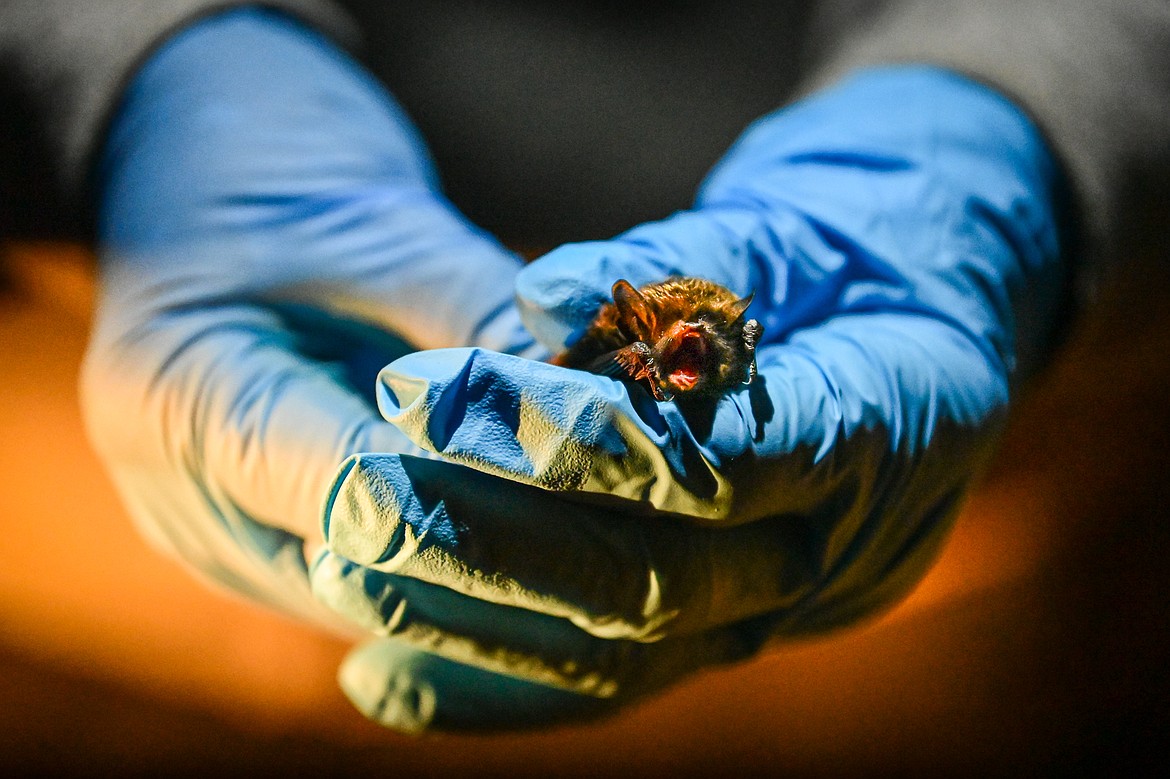
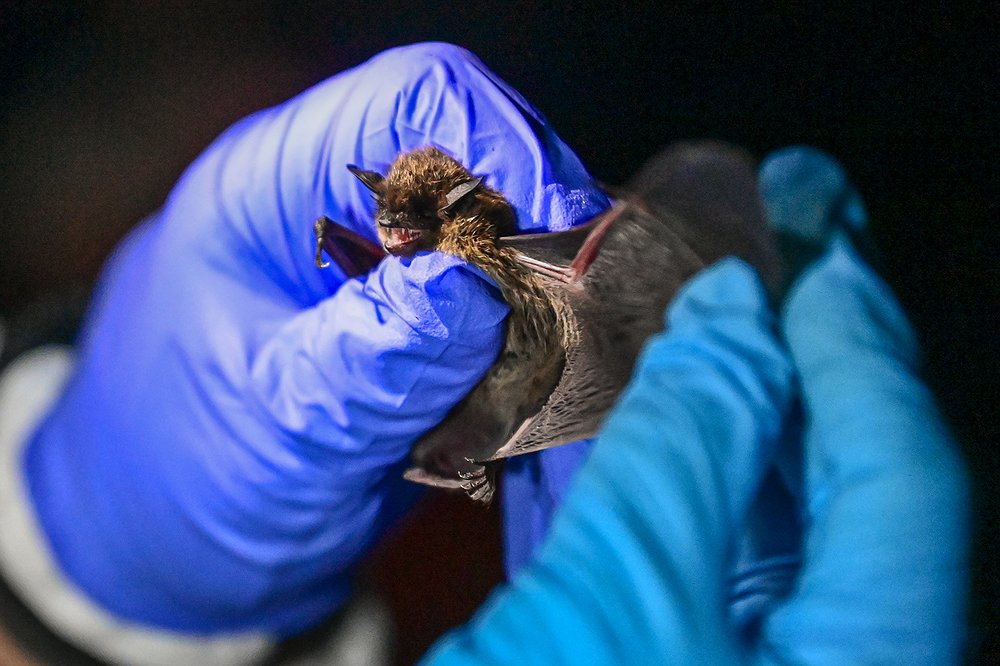
Glacier National Park biologist Lisa Bate holds a bat as she takes measurements during a "Going Batty" field trip in the park on Thursday, July 9. (Casey Kreider/Daily Inter Lake)
Casey Kreider
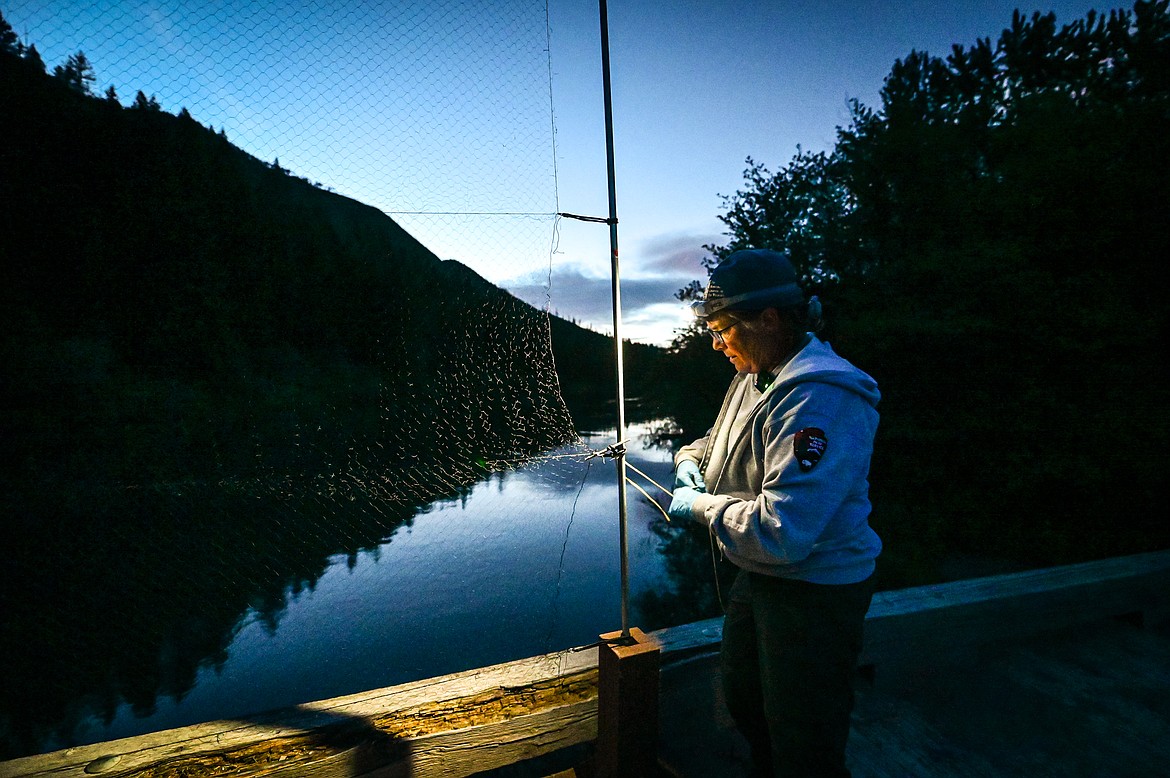
Glacier National Park biologist Lisa Bate lowers a mist net to capture bats on the Quarter Circle Bridge above McDonald Creek during a "Going Batty" field trip in the park on Thursday, July 9. (Casey Kreider/Daily Inter Lake)
Casey Kreider
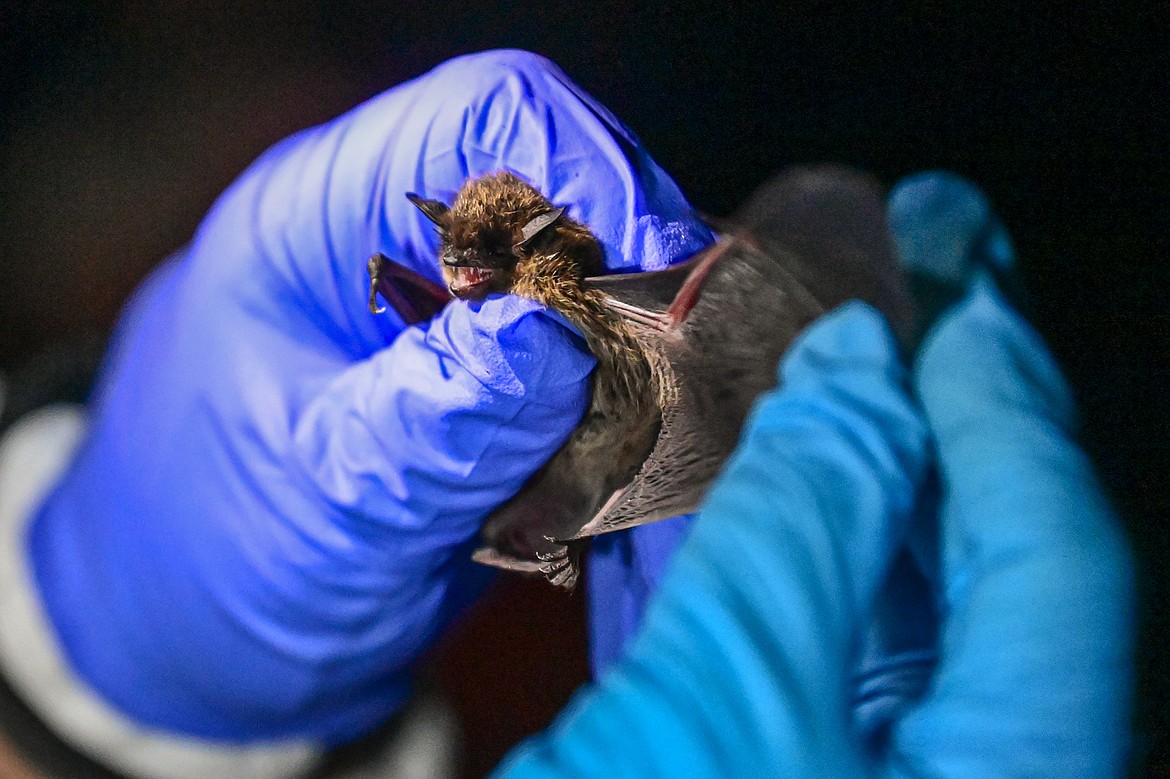
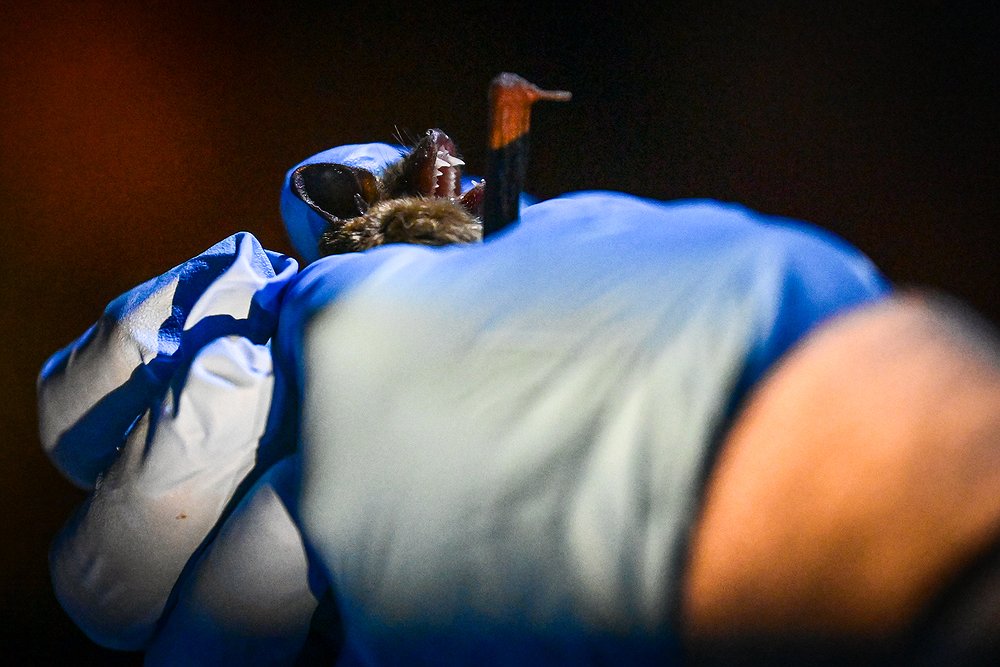
Glacier National Park biologist Lisa Bate checks the wings of a bat as she takes measurements during a "Going Batty" field trip in the park on Thursday, July 9. (Casey Kreider/Daily Inter Lake)
Casey Kreider
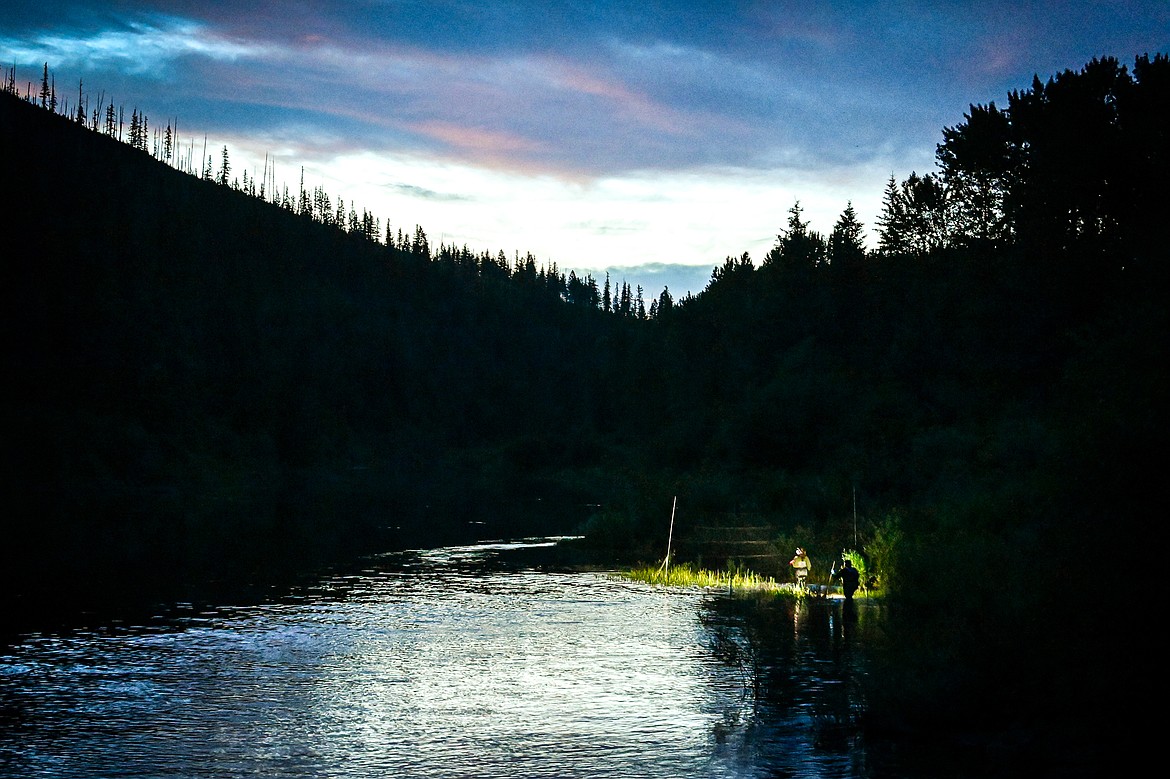
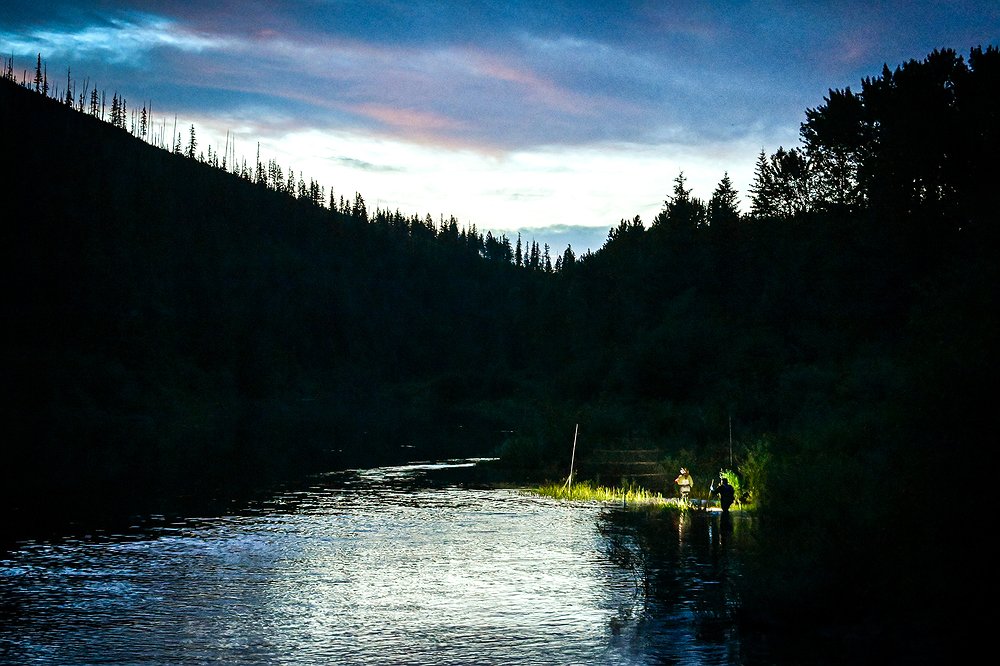
Researches check a pair of mist nets used to capture bats along McDonald Creek during a "Going Batty" field trip in the park on Thursday, July 9. (Casey Kreider/Daily Inter Lake)
Casey Kreider
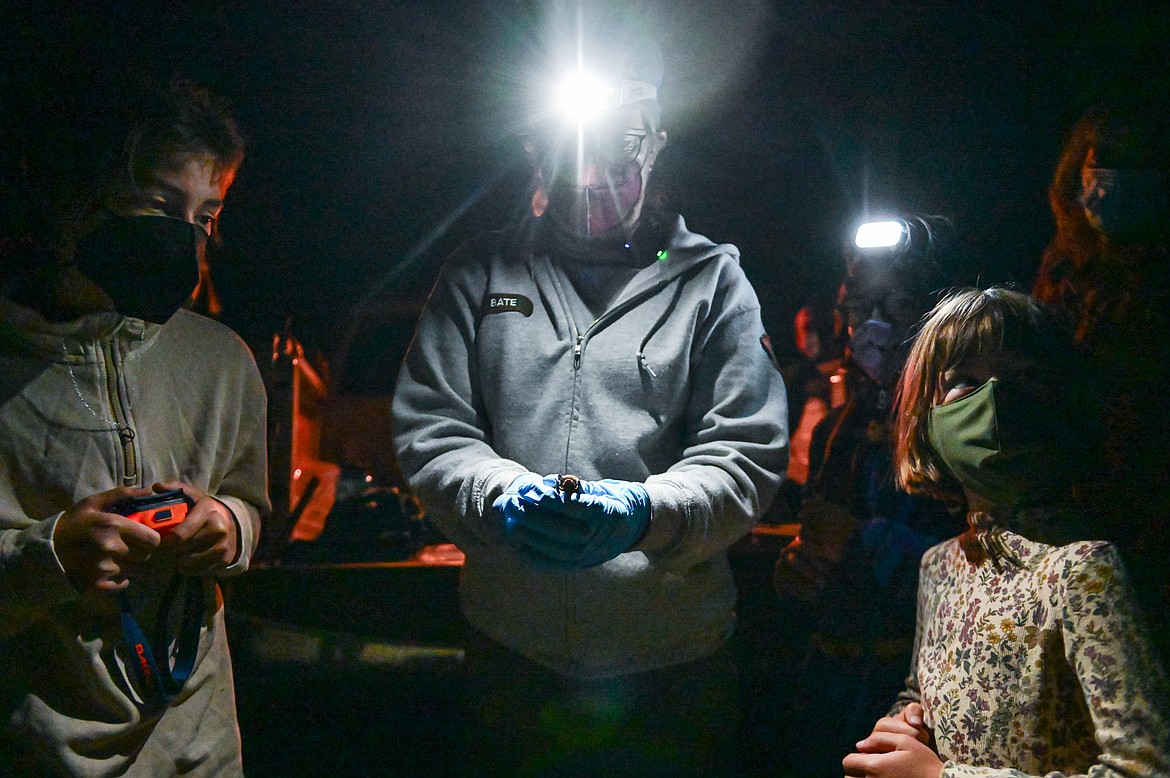
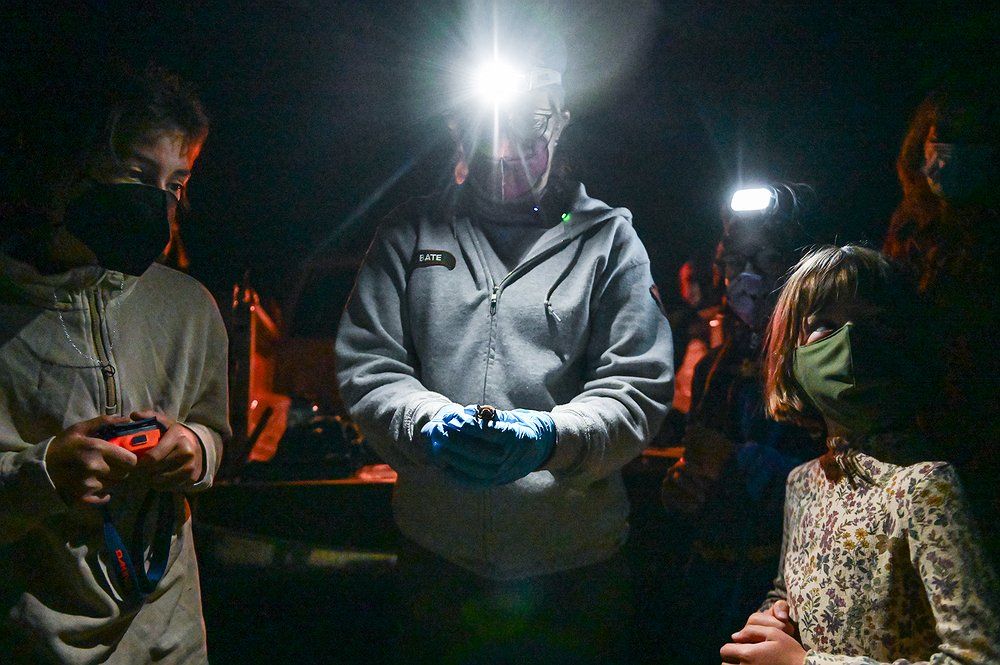
Glacier National Park biologist Lisa Bate holds a bat as she takes measurements during a "Going Batty" field trip in the park on Thursday, July 9. (Casey Kreider/Daily Inter Lake)
Casey Kreider
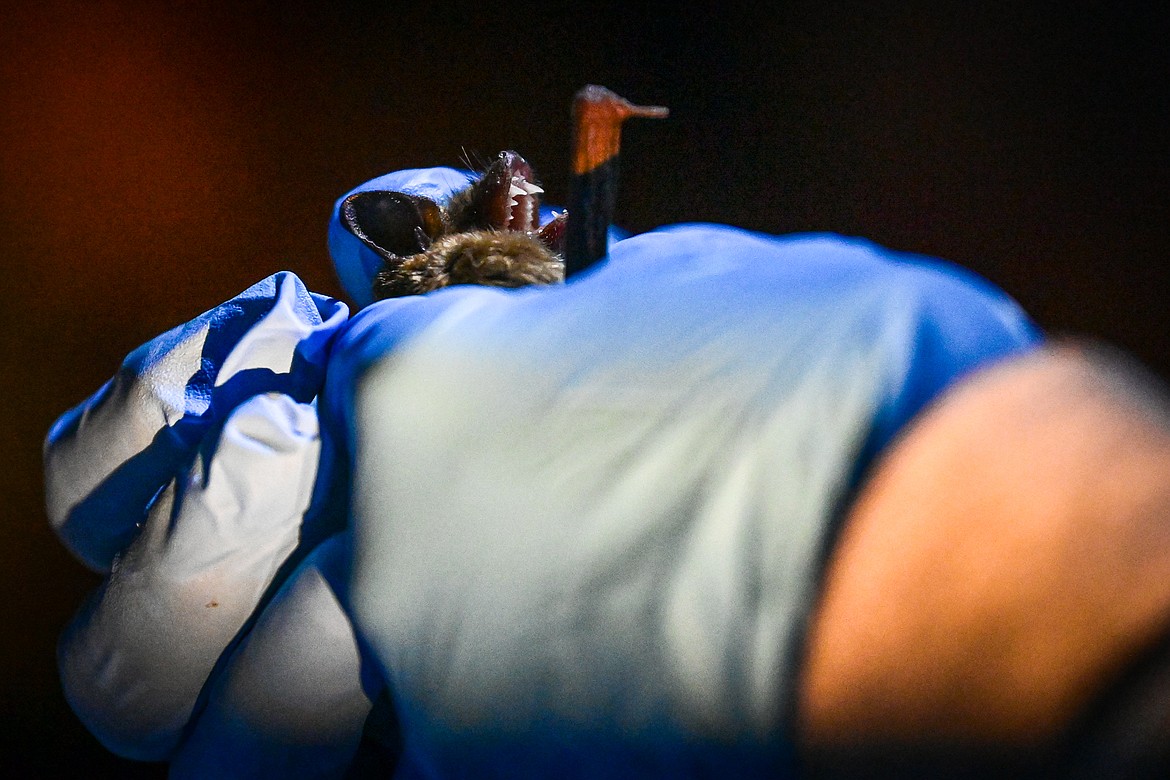
Glacier National Park biologist Lisa Bate holds a bat as she takes measurements during a "Going Batty" field trip in the park on Thursday, July 9. (Casey Kreider/Daily Inter Lake)
Casey Kreider
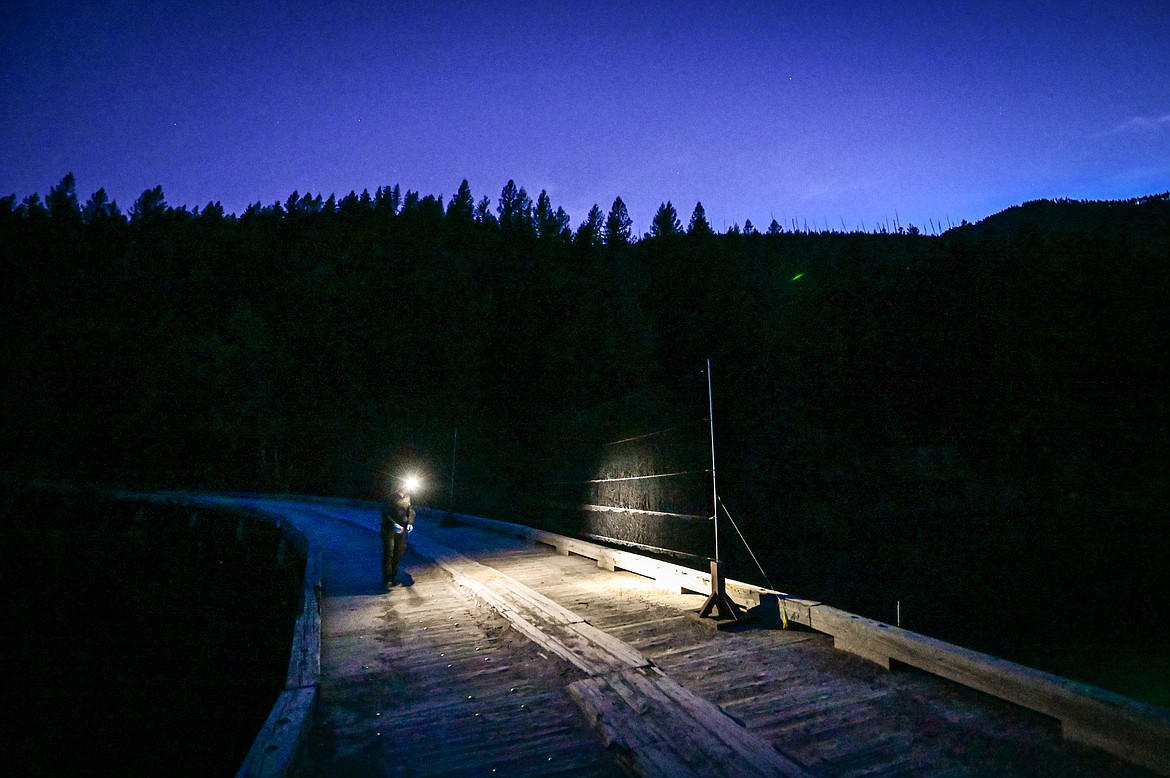
Montana State professor Andrea Litt checks a mist net on the Quarter Circle Bridge above McDonald Creek during a "Going Batty" field trip in Glacier National Park on Thursday, July 9. (Casey Kreider/Daily Inter Lake)
Casey Kreider
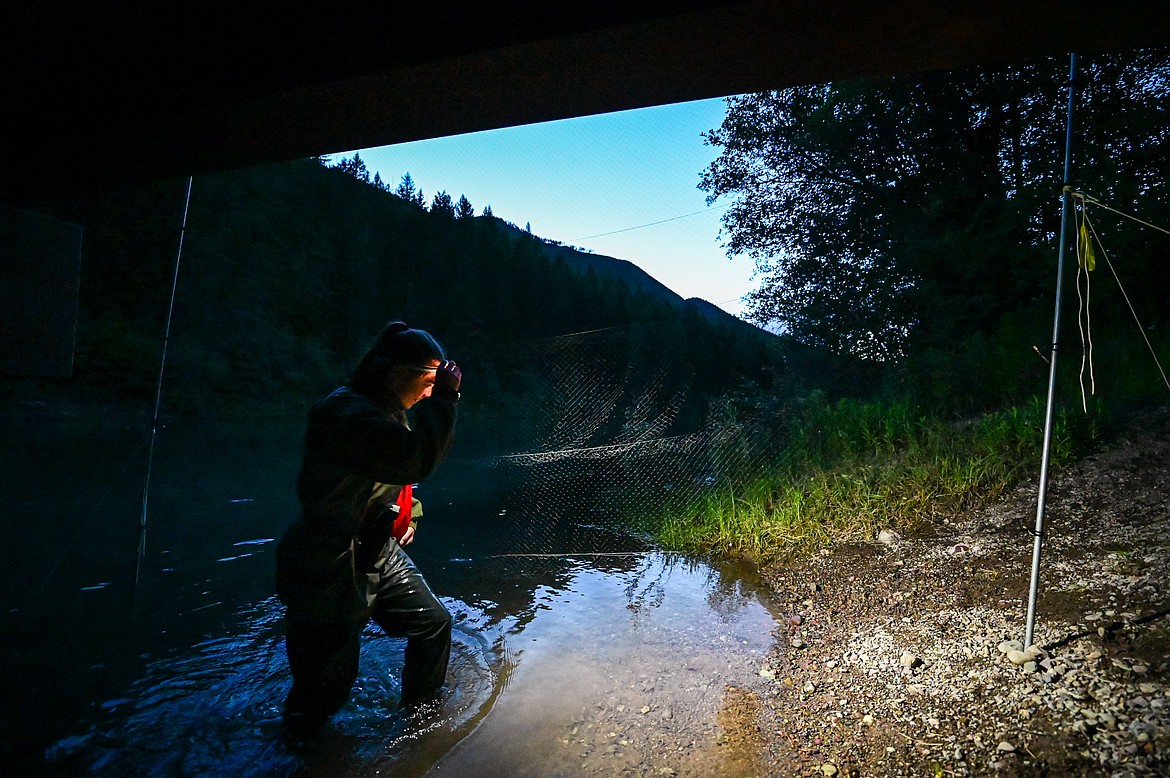
Gabriella Cantrell, a masters student at Montana State University and Glacier National Park biological science technician, checks a mist net for bats under the Quarter Circle Bridge along McDonald Creek during a "Going Batty" field trip in the park on Thursday, July 9. (Casey Kreider/Daily Inter Lake)
Casey Kreider
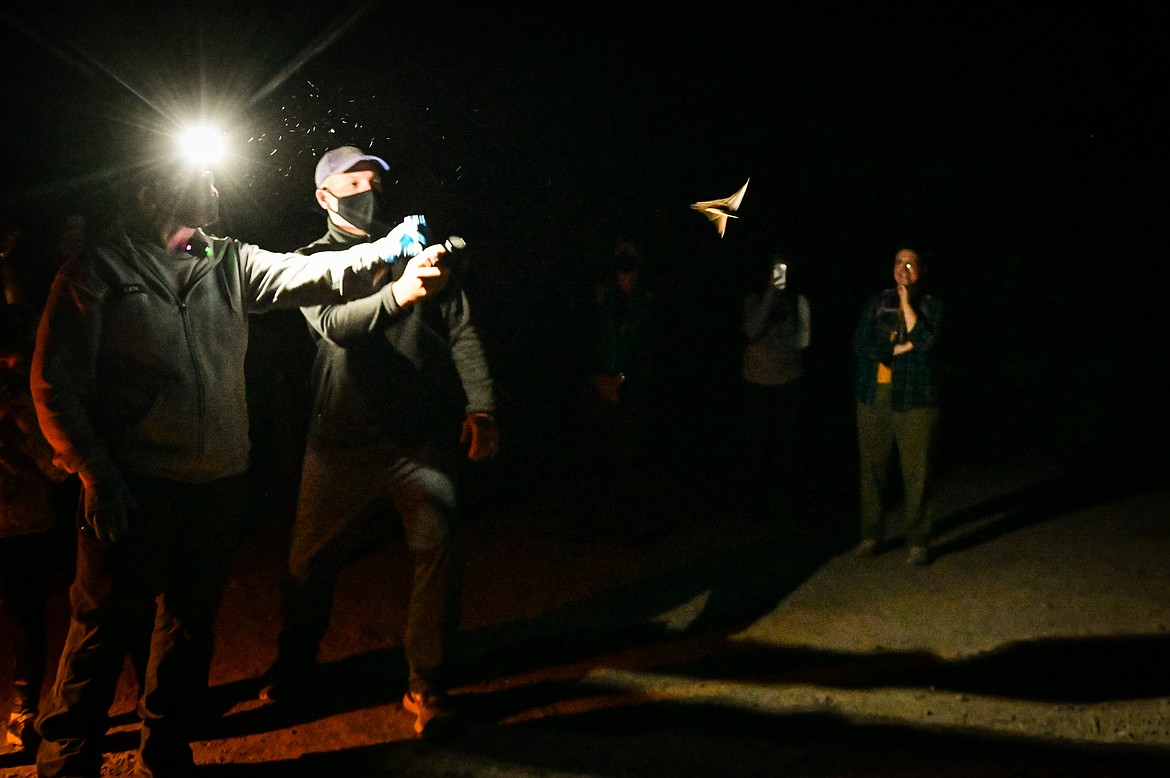
Glacier National Park biologist Lisa Bate, left, releases a bat after taking measurements during a "Going Batty" field trip in the park on Thursday, July 9. (Casey Kreider/Daily Inter Lake)
Casey Kreider
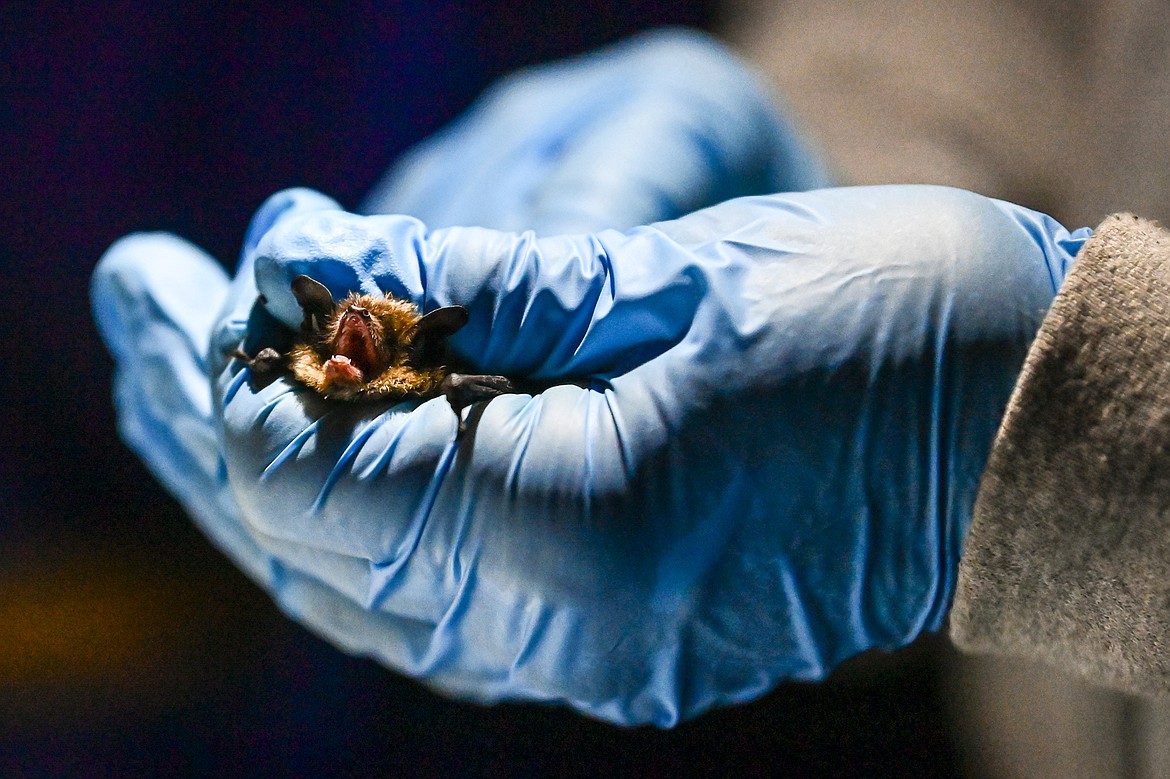
Glacier National Park biologist Lisa Bate holds a bat as she takes measurements during a "Going Batty" field trip in the park on Thursday, July 9. (Casey Kreider/Daily Inter Lake)
Casey Kreider
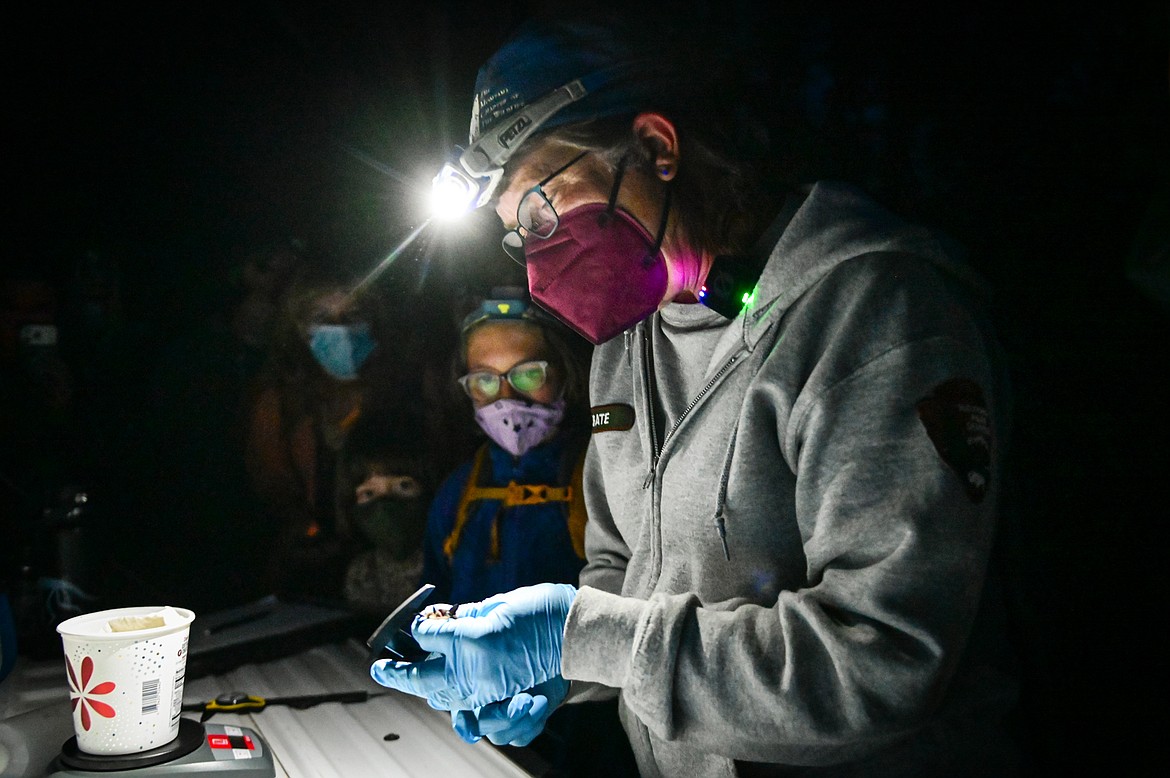
Glacier National Park biologist Lisa Bate holds a bat as she takes measurements during a "Going Batty" field trip in the park on Thursday, July 9. (Casey Kreider/Daily Inter Lake)
Casey Kreider
Lisa Bate will never forget the first time a hoary bat tangled itself in her net.
The wildlife biologist hardly breathed as she took in the creature’s frost-colored fur and wide-cast eyes, its cavernous ears and scrunched nose. Tiny fangs glinted in the glow of Bate’s headlamp as she gently untangled the bat from her mist net.
“It was gorgeous and beautiful, and it hissed and clicked,” Bate said. “I couldn’t believe that this thing had been flying over my head all this time. Its fur was soft as a bunny’s.”
Bate continued to marvel at the bat as she prodded its belly, examined its teeth and extended each leathery wing. She jotted down a few notes, then scooped the creature in her hand toward the night sky. For a moment, the bat remained, intwined in Bate's fingers. In the next, it was gone, dissolved back into the inky blackness from which it had emerged.
Over the past 15 years, Bate has conducted this same catch-and-release exercise with thousands of bats in Glacier National Park. She has combed through nearly every corner of the Crown of the Continent in an effort to better understand an often overlooked well of biodiversity. Now, as a deadly wildlife disease creeps closer to the park’s borders, her research is proving more critical than ever.
Two decades ago, wildlife biologists uncovered a copse of bat corpses outside a cave in upstate New York. A strange white powder dusted their snouts, prompting researchers to label the deaths the result of a novel disease called white-nose syndrome.
The snowy residue was later identified as Pseudogymnoascus destructans, a cold-loving fungus likely native to Europe and introduced to American caves on the boots of unaware spelunkers. While harmless to humans and other animals, the fungus invades the skin of hibernating bats and eats lesions across their wings, ears, tail and snout. Crucial winter fat reserves quickly thin as the bat attempts to fight off the infection, eventually leading to starvation and death.
Unlike their overseas counterparts, American bats lacked natural immunity to the fungus. Not all species proved susceptible to the white-nose syndrome, but those that were saw precipitous drops in their populations as the fungus spread across the country. In many colonies, nearly 90% of the bats perished.
By 2010, the death toll had reached more than 1 million bats.
More than 2,000 miles from the cave where white-nose syndrome was first discovered, Bate watched the devastation unfold via news clippings and scientific reports. She knew it was only a matter of time before the threat reached Glacier National Park, where she had recently been hired as a wildlife biologist.
At the time, scarcely anything was known about the park's resident bats — an issue Bate said was chronic to many areas of the country.
Besides their nocturnal nature, bats' propensity to roost in caves and other hard-to-reach places have long stymied more thorough scientific exploration. Many of the modern technologies like GPS collars that biologists use to study larger mammals are ill-suited to the delicate frames of American bats. Plus, there's the stereotypes to contend with, of bats as supernatural entities or harbingers of zoonotic disease.
“My understanding is that most people fear something if they don’t understand it,” Bate said. "We still know a fraction of what we should know about bats."
The small amount that is known proves how important the nocturnal creatures are to Northwest Montana's ecosystems. All of the state's 15 documented bat species are insectivores; their nightly feasts help keep pesky bugs like mosquitos and gnats in check. Montana Fish, Wildlife and Parks estimated that bats provide $680 million a year to farmers and other Montanans in the form of natural pest control services.
Bate knew that saving the region's bats from the impending epidemic meant first understanding exactly what there was to save. Only four species of bat had been documented within the park boundaries, all by way of informal observations from untrained staff and visitors. Bate suspected a far greater diversity of bats resided in the park's extensive backcountry. She just wasn't quite sure how to prove it.
An ornithologist by trade, Bate had ample experience studying winged residents of the animal kingdom, but bats presented a host of new challenges.
With birds, “you grab your binoculars and you clean out your ears and you go out and you look and listen,” Bate said. “With bats, you can’t hear them, you can’t see them.”
She started with a handful of roost loggers capable of recording the ultrasonic sounds that bats use to echolocate prey and communicate with each other. Students from Bigfork High School's caving club guided Bate into some of Glacier National Park's caves to deposit the loggers, but most of the machines picked up hardly any or no signs of bats — something Bate now suspects is the result of bats solitarily roosting in trees or small crevices throughout the park, rather than in the large cave hibernacula often seen in other parts of the country.
In 2011, Bate turned to a more intensive study design. Glacier National Park Conservancy granted enough funding for Bate to contract with Cori Lauson, a biologist from Wildlife Conservation Society Canada who specializes in bat research. Bate would later receive additional funding from Natural Resource Stewardship and Science and the Bats for the Future Fund.
Lauson showed Bate how to position mist nets across roads and natural corridors as the sun sank below the western horizon and how to maneuver the entangled bats into individual canvas bags so they could be identified and weighed and examined for signs of white-nose syndrome.
Bate had determined she would need to complete at least 400 surveys to fully document the bats that inhabited Glacier National Park's more than 1 million acres. She split the park into a grid of 10 kilometer-squared units, allocating at least one night of surveying to each unit. Then, she set to work, gradually making her way across the map with the help of Lauson and a group of volunteers, and later with a small staff of seasonal workers.
At first, they only caught little brown bats — a common species known to roost under eaves and in old buildings — but the farther they ventured into the park's vast backcountry, the more varied the bats became. Within 15 years, Bate's crew has documented 10 different bat species, more than doubling the park's known diversity.
The bats vary widely in both appearance and temperament. Some nestle calmly into the palm of Bate's hand as she observes them. Others issue a constant stream of high-pitched chatter one could only assume contained a host of angry bat insults. A few irate bats have even nipped at Bate's fingers.
“It doesn’t hurt,” she added quickly. “Lots of bat poo, but that’s OK. Sometimes we collect the bat poo.”
The guano can be sent to labs to test for the fungus that causes white-nose syndrome. So can fur samples and swabs taken from a bat's snout and forearm. Bate also shines an ultraviolet flashlight over some of the bats she captures; the white-nose fungus appears fluorescent orange under the high-frequency beam, making it easy to pinpoint infection sites.
The likelihood of detecting the fungus on a bat decreases as the summer wears on because exposure to sunlight eventually kills the spores, but remnants of the fungus can thrive year-round in caves and dark crevices, reinfecting bats once they return to hibernate through the winter.
To date, Bate has found no signs of the fungus within the boundaries of Glacier National Park, though every year brings the disease closer.
In 2020, it appeared in Azure Cave in eastern Montana, the largest known bat hibernaculum west of the Mississippi River. Within a few years, the 1,700-strong roost dwindled to just 40 little brown bats by 2022. In 2025, routine sampling of a roost of little brown and Yuma myotis bats at Libby Dam revealed that the fungus had crossed into western Montana.
"It's not a matter of if, it's a matter of when," Bate said.
She harbors hope, despite the dire prediction, in large part thanks to a vaccine currently being developed by the U.S. Geological Survey's National Wildlife Health Center. In 2024, Glacier National Park became one of the first locations to test the medication in the field.
To date, Bate and her team of wildlife technicians have captured and microchipped about 500 little brown bats in St. Mary. Half received a dose of the vaccine, and half received a placebo with no effect on immunological response. The team regularly uses a handheld scanner — what Bate described as "a Darth Vader little reader thing" — to sweep the bat houses on the east side of the park for signals from the microchips.
Over time, the team will be able to track how the vaccine affects the survival rate of bats. Glacier National Park is an especially useful field site, Bate said, as it is one of the few locations in the country where the vaccine was introduced ahead of the fungus. When white-nose syndrome does hit the park, researchers will be able to see firsthand just how effective the vaccine is.
"It feels cool that we’re doing something,” Gabby Cantrell said. “I try to take that hope and run with it.”
An alumnus of the Bigfork High School caving club, Cantrell now spends most of the year working toward a graduate degree in fish and wildlife management at Montana State University. During the summer, she works with Bate to better understand some of the non-fungal threats facing bats.
Researchers on the East Coast recently noticed another disturbing trend of bat deaths, this time near bat boxes. The artificial roosting sites are commonly used as an alternative to old buildings, eaves and other sites where bat roosts may come into conflict with people.
But "bat boxes can cause bats to die because they can be prone to temperature extremes," Cantrell said. "Learning more about what's going on with temperatures can help us to be better informed when using these as a conservation tool."
Volunteers helped Cantrell construct a total of 40 bat boxes, following four different designs with various insulation strategies and dimensions. For the past two summers, she has visited each box twice a week to record the internal temperature and count the number of bats roosting inside.
While other studies have measured temperatures in unpopulated bat boxes, Cantrell believes her project is the first to evaluate how different bat box designs perform in the field, with anywhere from one to 80 bats actively roosting inside.
Both Bate and Cantrell can trace their fascination with bats to early childhood, but they aren't ignorant to the sense of squeamishness that often surrounds the creatures. That's why they invite the public to see the work they do with bats firsthand at the annual Going Batty event.
On a warm night in early July, Bate led a crowd of three dozen curious visitors across the Quarter Circle Bridge, just inside the boundary of Glacier National Park. Black commas were already beginning to skim along the surface of the Middle Fork of the Flathead River, though the sun lingered on the western horizon.
“Wow, look at the bats,” Bate said. “We’re going to get bats. Wow, I don’t think I’ve ever seen this many. I don’t think it’s ever been this calm. There are so many bats, you guys.”
The sky swiftly darkened from lavender to deep indigo to black, erasing the bats’ swooping movements from sight as Bate's team slung mist nets across the gravel road. The thrushes stopped singing, and then the cedar waxwings fell silent too. Bate took a final swig of her coffee before donning a pair of Latex gloves and flicking her headlamp on.
Within moments, her radio crackled. The first bat had been caught.
The next hours passed in a blur of activity as researchers untangled bats from nets and delivered them to the bed of Bate's truck to be identified, weighed and measured. Each step of the process had been smoothed over by years of practice.
Still, the bats always seem to find a way to surprise Bate. That night, the team netted a big brown bat — one of only about five that Bate can remember capturing within the park. She suspects there's still more secrets to be found in the park after dark: species not yet documented within the park boundaries, or perhaps some new insights into white-nose syndrome and ways to combat it.
"That's the thing about bats," she said. "You never know."
Reporter Hailey Smalley can be reached at 406-758-4433 or [email protected].
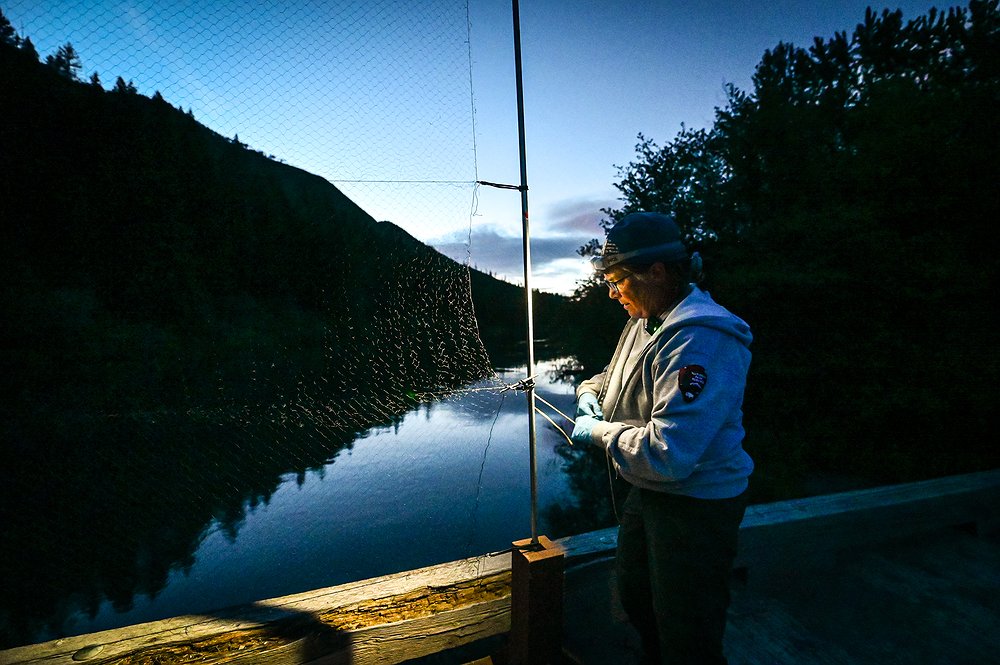 Glacier National Park biologist Lisa Bate lowers a mist net to capture bats on the Quarter Circle Bridge above McDonald Creek during a "Going Batty" field trip in the park on Thursday, July 9. (Casey Kreider/Daily Inter Lake)
Casey Kreider
 Glacier National Park biologist Lisa Bate checks the wings of a bat as she takes measurements during a "Going Batty" field trip in the park on Thursday, July 9. (Casey Kreider/Daily Inter Lake)
Casey Kreider
 Researches check a pair of mist nets used to capture bats along McDonald Creek during a "Going Batty" field trip in the park on Thursday, July 9. (Casey Kreider/Daily Inter Lake)
Casey Kreider
 Glacier National Park biologist Lisa Bate holds a bat as she takes measurements during a "Going Batty" field trip in the park on Thursday, July 9. (Casey Kreider/Daily Inter Lake)
Casey Kreider
 Glacier National Park biologist Lisa Bate holds a bat as she takes measurements during a "Going Batty" field trip in the park on Thursday, July 9. (Casey Kreider/Daily Inter Lake)
Casey Kreider
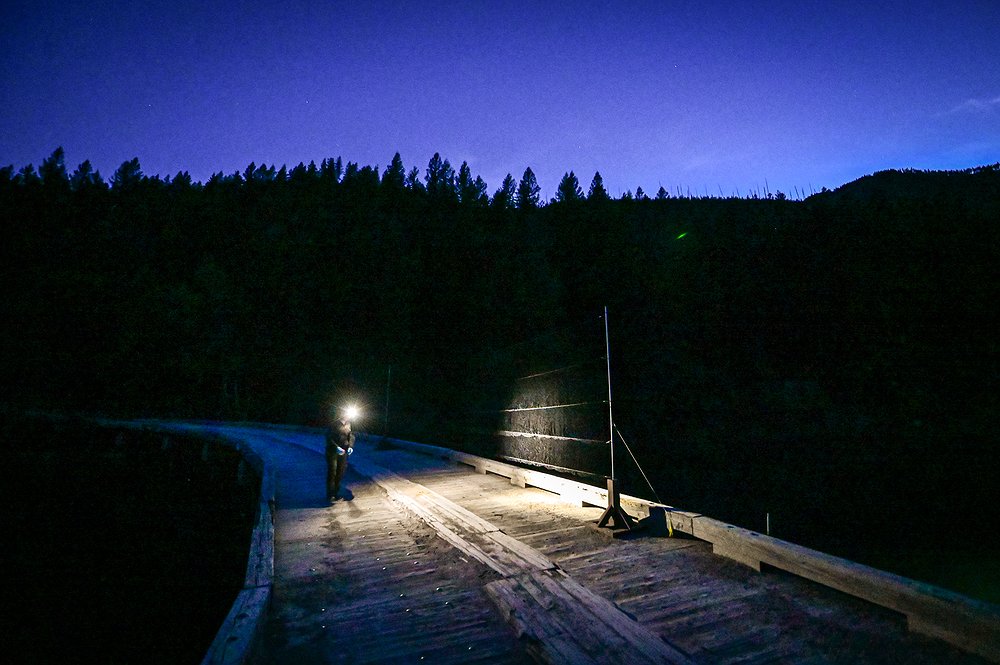 Montana State professor Andrea Litt checks a mist net on the Quarter Circle Bridge above McDonald Creek during a "Going Batty" field trip in Glacier National Park on Thursday, July 9. (Casey Kreider/Daily Inter Lake)
Casey Kreider
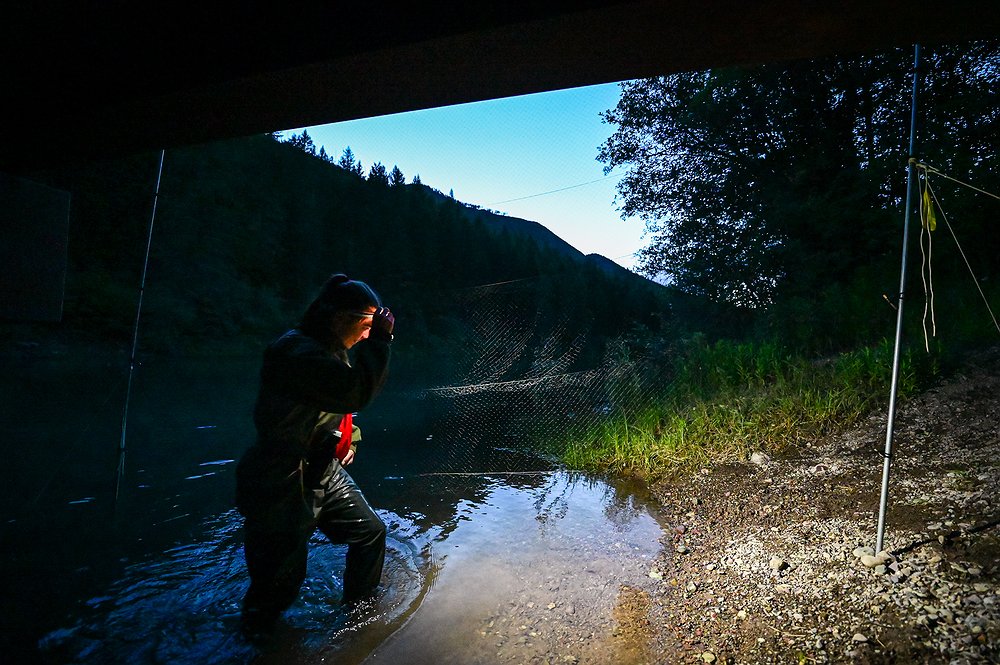 Gabriella Cantrell, a masters student at Montana State University and Glacier National Park biological science technician, checks a mist net for bats under the Quarter Circle Bridge along McDonald Creek during a "Going Batty" field trip in the park on Thursday, July 9. (Casey Kreider/Daily Inter Lake)
Casey Kreider
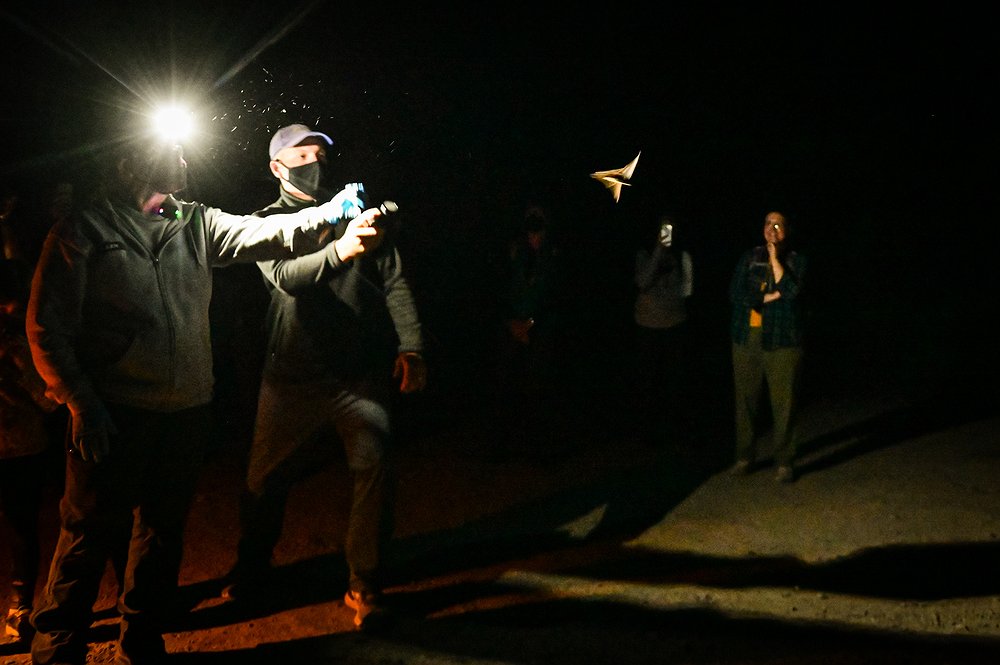 Glacier National Park biologist Lisa Bate, left, releases a bat after taking measurements during a "Going Batty" field trip in the park on Thursday, July 9. (Casey Kreider/Daily Inter Lake)
Casey Kreider
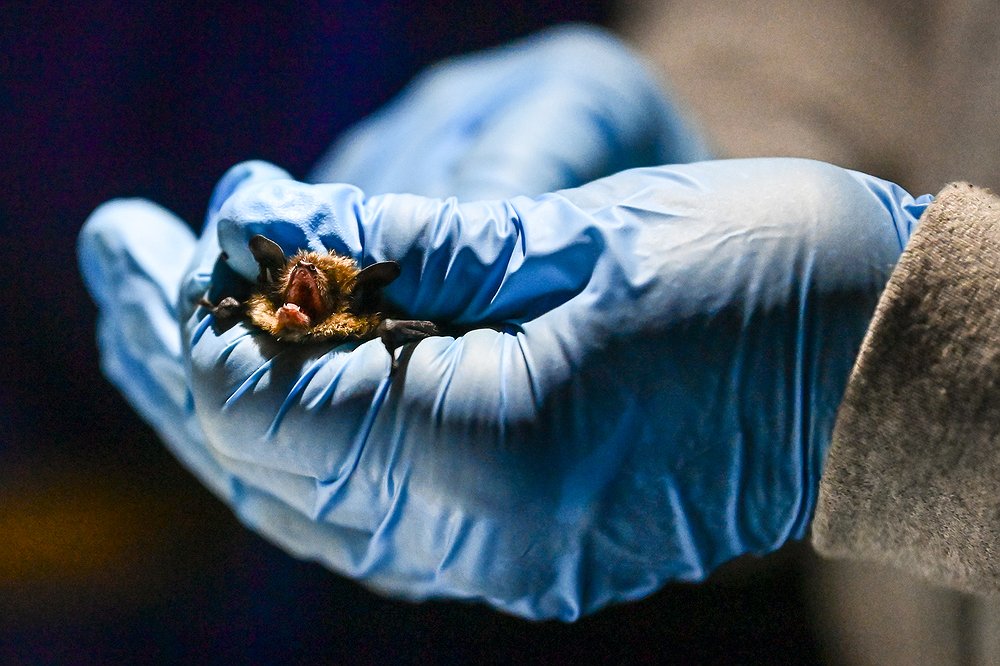 Glacier National Park biologist Lisa Bate holds a bat as she takes measurements during a "Going Batty" field trip in the park on Thursday, July 9. (Casey Kreider/Daily Inter Lake)
Casey Kreider
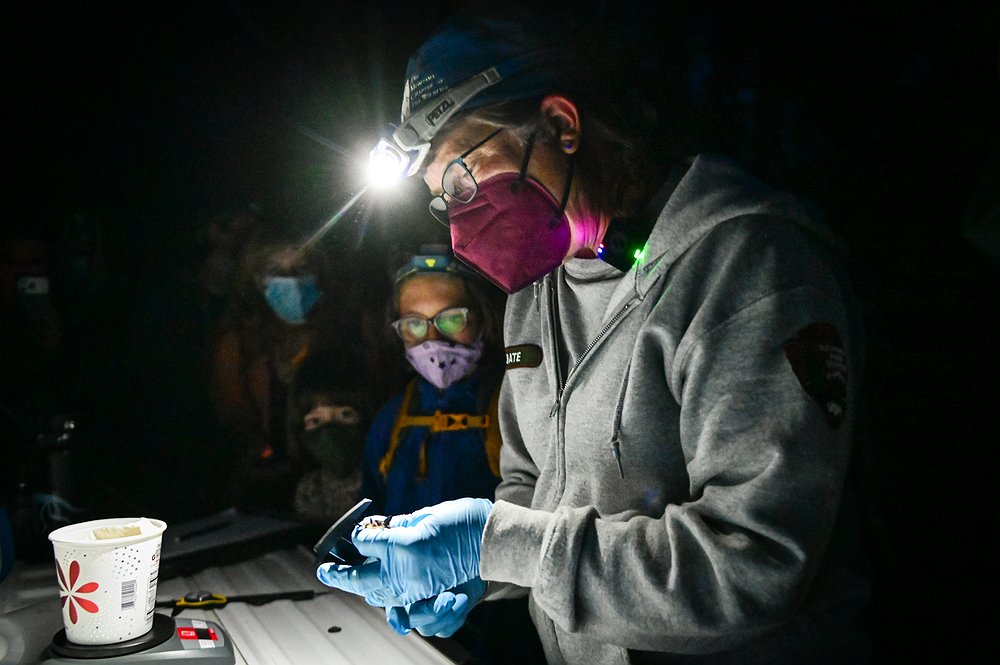 Glacier National Park biologist Lisa Bate holds a bat as she takes measurements during a "Going Batty" field trip in the park on Thursday, July 9. (Casey Kreider/Daily Inter Lake)
Casey Kreider
ARTICLES BY HAILEY SMALLEY

Trump stumps for Flint in Kalispell as Election Day nears
President Donald Trump, wearing a dark suit, red tie and red USA cap, ambled into the Majestic Valley Arena to the raucous roar of a crowd.

Flathead National Forest greenlights Swan Valley timber project
A 2,307-acre timber project is now under way in the Swan Valley.
Flathead National Forest greenlights Swan Valley timber project
A 2,307-acre timber project is now under way in the Swan Valley.