
Glacier bumble bee study explores population declines
HAILEY SMALLEY | Hagadone News Network | UPDATED 1 week AGO
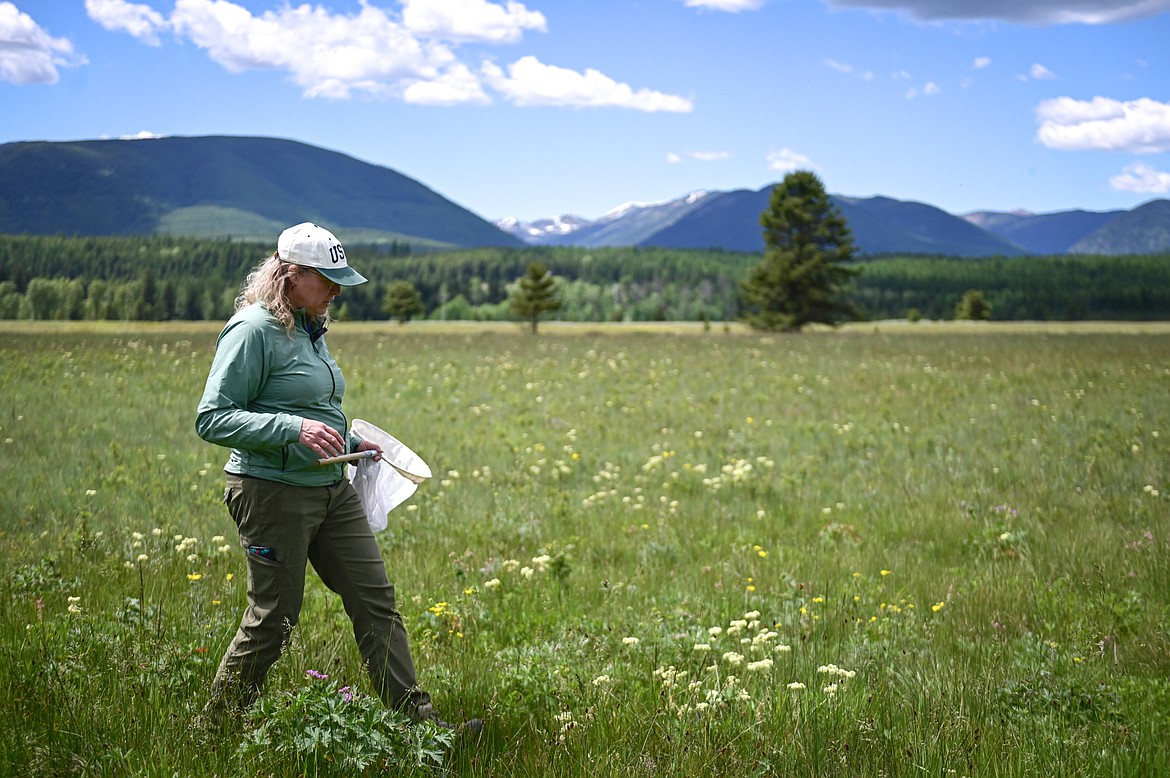
Tabitha Graves, a research ecologist at the USGS's Northern Rocky Mountain Science Center, looks for bumble bees in a meadow along the North Fork Road in Glacier National Park as part of a conservation survey on Wednesday, June 17. (Casey Kreider/Daily Inter Lake)
Casey Kreider
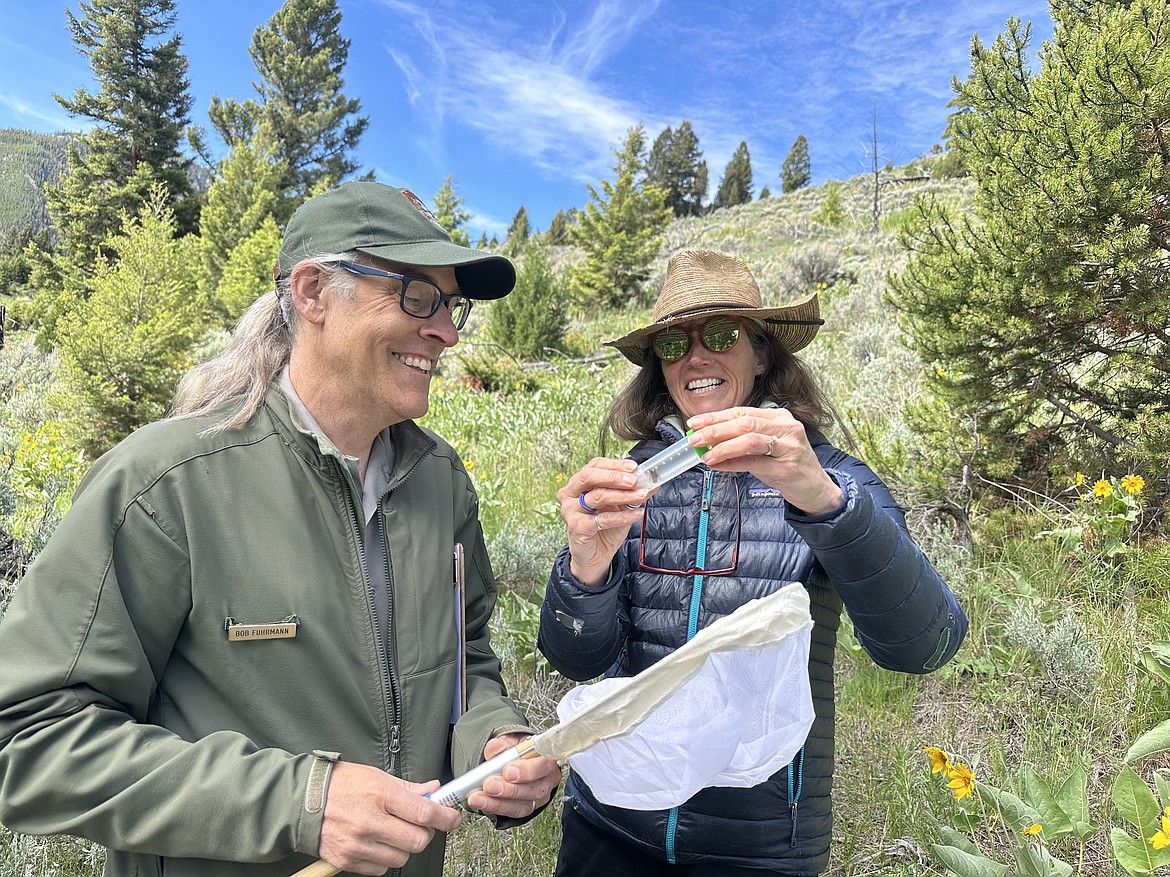
Volunteers with the Montana Bumble Bee Atlas transfer a bumble bee into a plastic vial. (Courtesy of Michelle Toshack, Xerces Society)
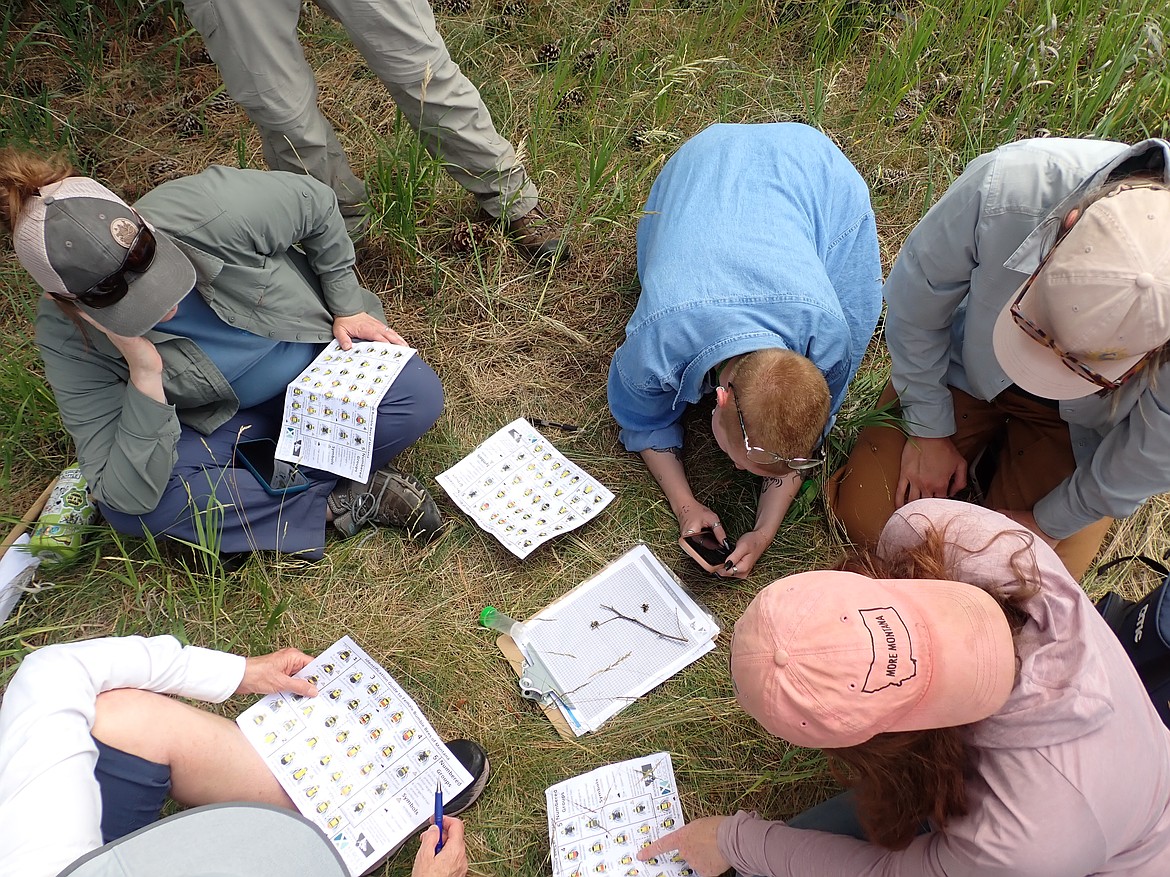
Volunteers reference species identification charts as they photograph bumble bees for the Montana Bumble Bee Atlas. (Courtesy of Michelle Toshack, Xerces Society)
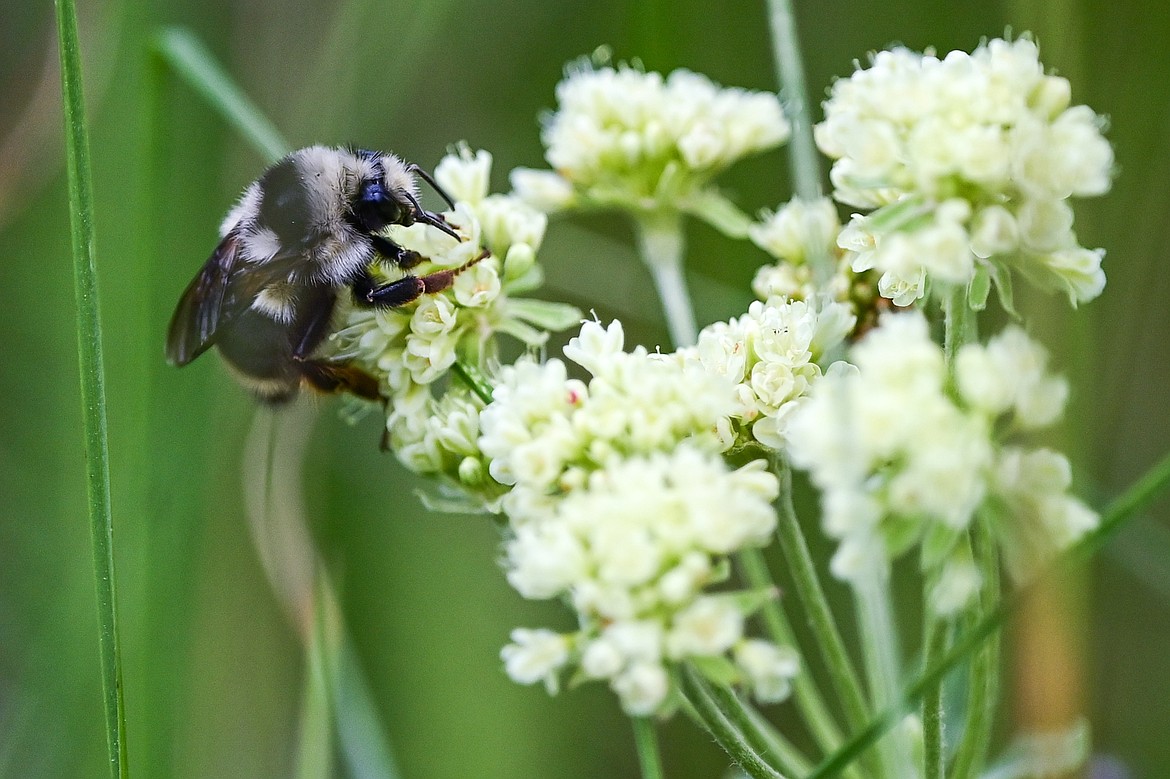
A western bumble bee pauses on a common buckwheat flower in a meadow along the North Fork Road in Glacier National Park on Wednesday, June 17. (Casey Kreider/Daily Inter Lake)
Casey Kreider
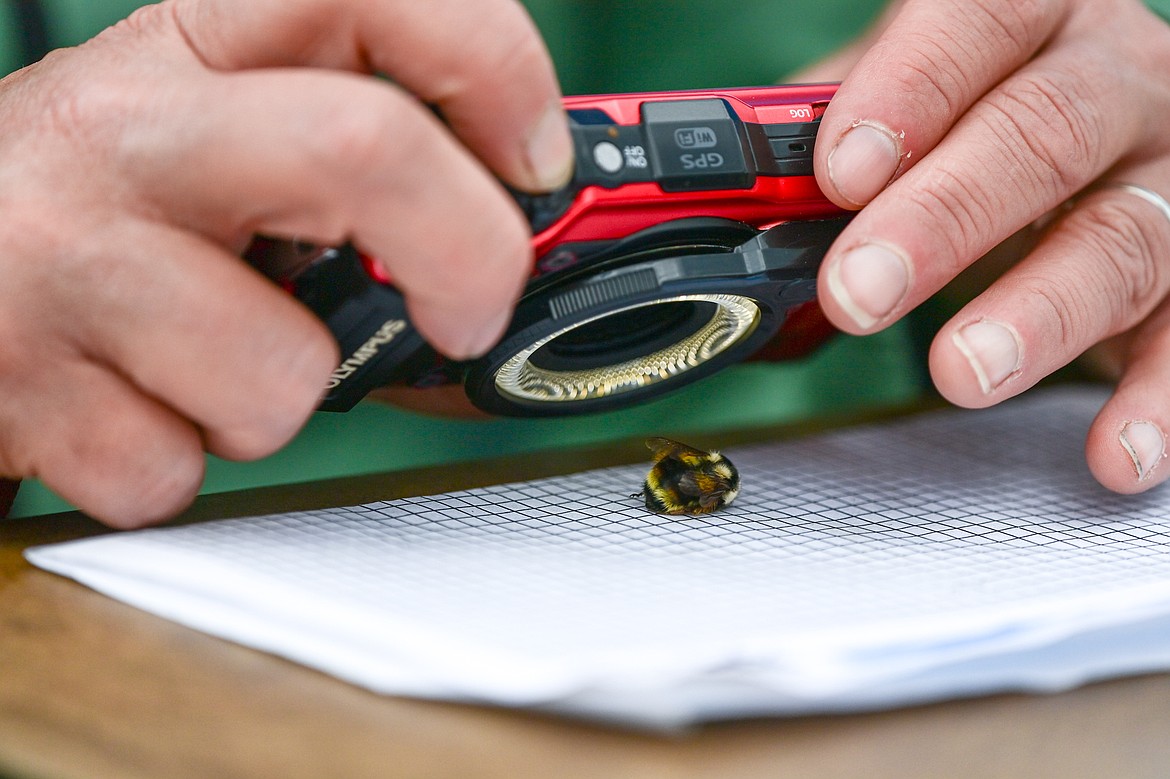
Tabitha Graves, a research ecologist at the USGS's Northern Rocky Mountain Science Center, takes photographs of a cold-stunned western bumble bee along the North Fork Road in Glacier National Park as part of a conservation survey on Wednesday, June 17. (Casey Kreider/Daily Inter Lake)
Casey Kreider
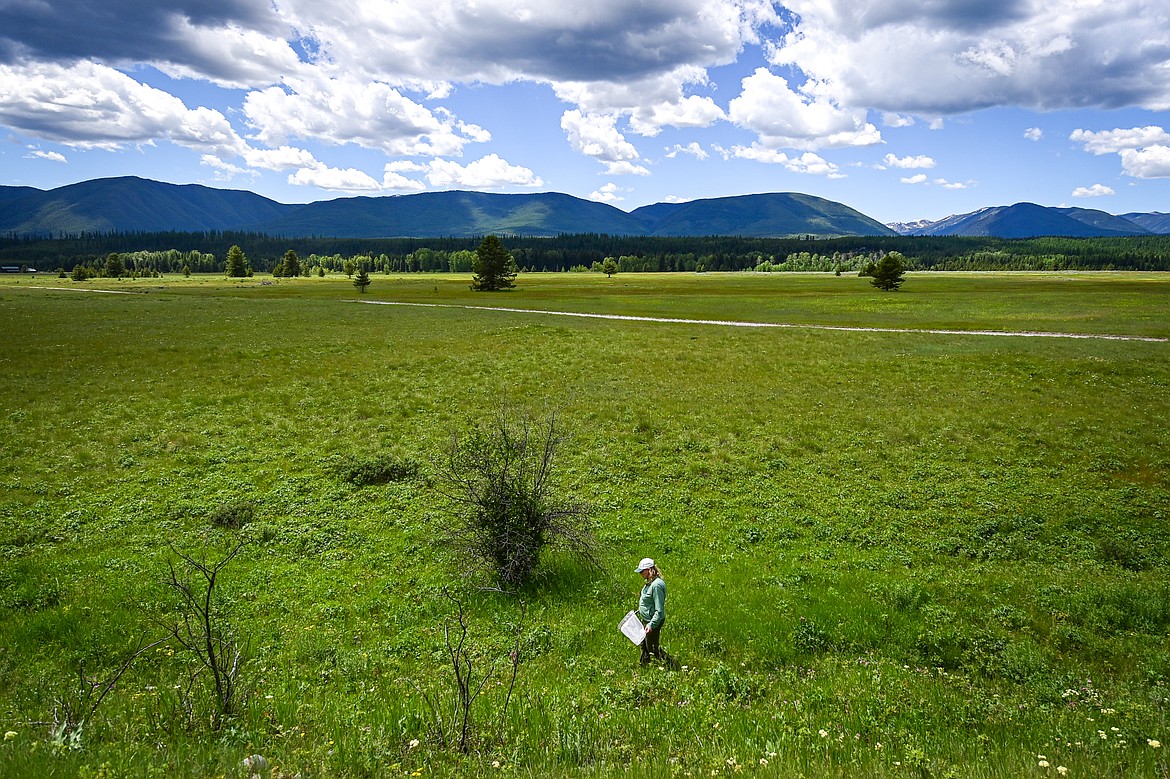
Tabitha Graves, a research ecologist at the USGS's Northern Rocky Mountain Science Center, looks for bumble bees along the North Fork Road in Glacier National Park as part of a conservation survey on Wednesday, June 17. (Casey Kreider/Daily Inter Lake)
Casey Kreider
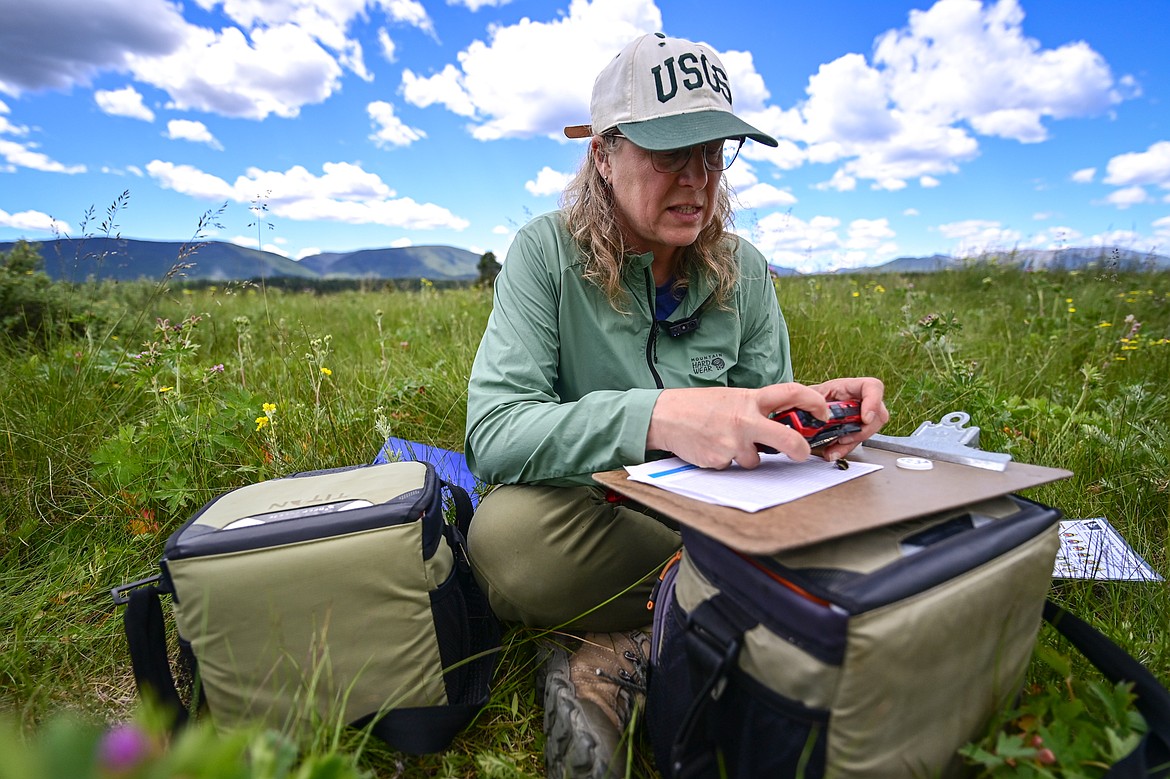
Tabitha Graves, a research ecologist at the USGS's Northern Rocky Mountain Science Center, takes photographs of a cold-stunned western bumble bee along the North Fork Road in Glacier National Park as part of a conservation survey on Wednesday, June 17. (Casey Kreider/Daily Inter Lake)
Casey Kreider
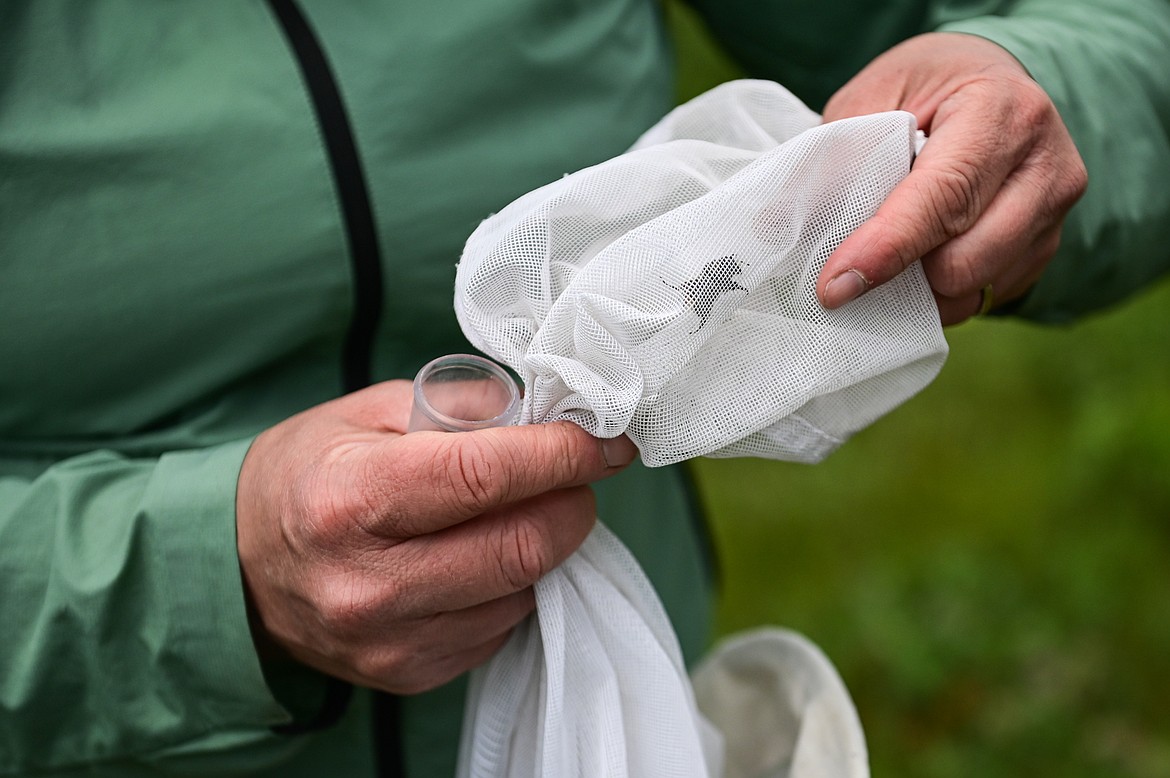
Tabitha Graves, a research ecologist at the USGS's Northern Rocky Mountain Science Center, transfers a western bumble bee from a net to a vial during a conservation survey along the North Fork Road in Glacier National Park on Wednesday, June 17. (Casey Kreider/Daily Inter Lake)
Casey Kreider
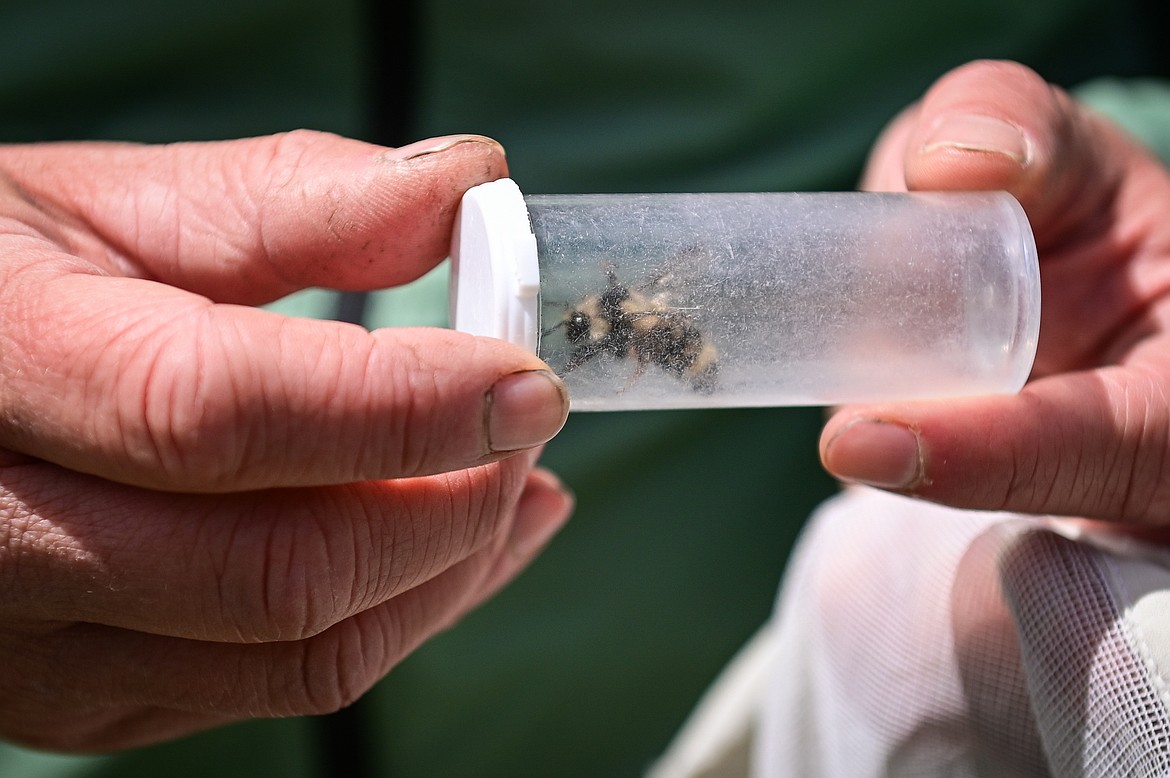
Tabitha Graves, a research ecologist at the USGS's Northern Rocky Mountain Science Center, holds a western bumble bee in a vial during a conservation survey along the North Fork Road in Glacier National Park on Wednesday, June 17. (Casey Kreider/Daily Inter Lake)
Casey Kreider
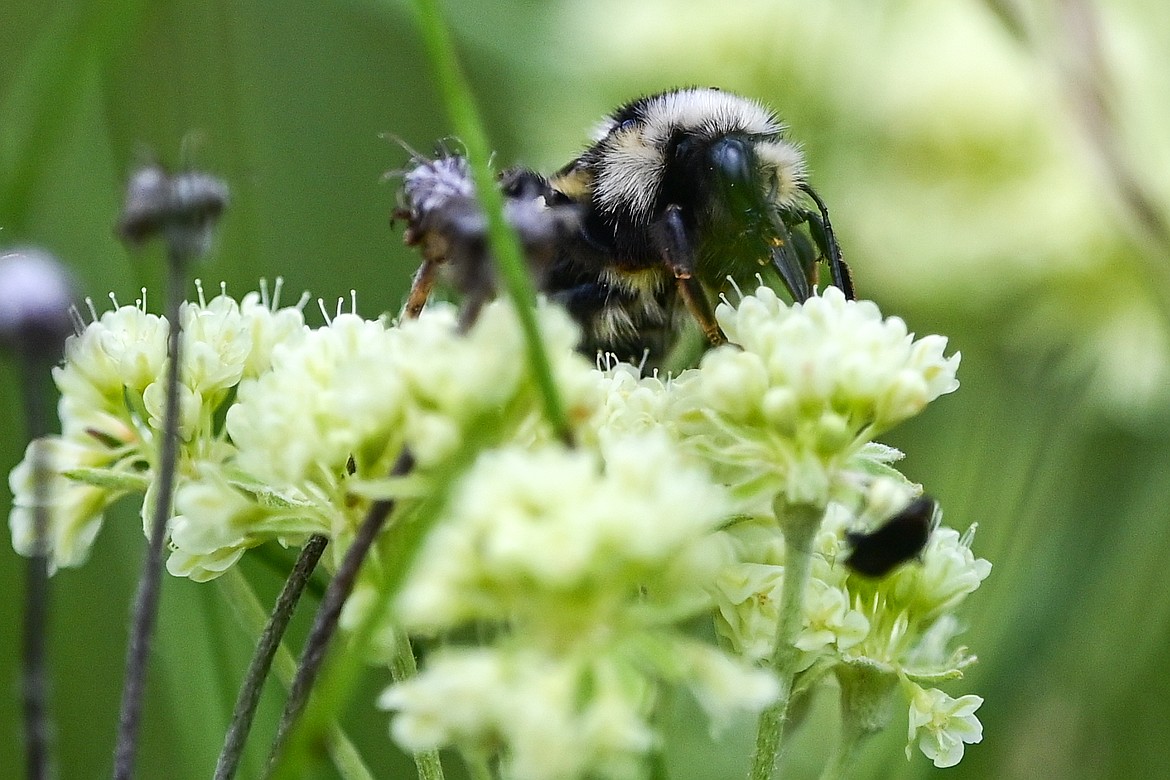
A western bumble bee pauses on a common buckwheat flower in a meadow along the North Fork Road in Glacier National Park on Wednesday, June 17. (Casey Kreider/Daily Inter Lake)
Casey Kreider
A surge of color washes over Montana's alpine meadows in the early summertime. Hazy pink prairie smoke and bright yellow arnica mingle with snowy pussy toes and lupine blanched lavender by the sun.
United States Geological Survey Biologist Tabitha Graves stopped to examine the pinkish-purple petal of a sticky geranium flower as she high-stepped her way into the grassy meadow off the Inside North Fork Road in Glacier National Park. The bounty of high-alpine blooms was a good sign, as was the clear blue sky overhead.
"This is a lovely day," she sighed. "For sampling bumble bees, even though they're cold-adapted, your success is higher generally when it's nicer warmer temperatures, sunny. So, this is a really, really lovely day."
Graves gripped her bug net in one hand and clicked the timer on her phone with the other. For the next 45 minutes, her sole job was to stalk the flower-laden meadow for bumble bees. Each insect she captured would be meticulously documented with close-up photographs and handwritten notes before being released back into the wild.
This summer, hundreds of volunteers across the state, ranging from professional researchers to elementary school students, completed the same basic procedure. They scoured remote meadows and urban parks and cow pastures from Libby to Broadus, documenting thousands of bumble bees as part of the Montana Bumble Bee Atlas.
The landmark citizen science initiative is led by the nonprofit Xerces Society for Invertebrate Conservation and boasts two major goals, as Montana Bumble Bee Atlas Coordinator Michelle Toshack explained. First, the project aims to catalogue the full diversity and occurrence of bumble bees in the Treasure State. That information can then be used as a road map of sorts for land managers hoping to conserve an increasingly imperiled group of insects.
“I think bumble bees capture people’s attention because they are fairly common,” Toshack said. “But that also has a drawback too, that we can take them a little bit for granted and that we think they’re going to be everywhere. We think that their populations are doing okay when that really isn’t the case.”
Researchers first noted declines in several of North America’s 46 bumble bee species about two decades ago. One study, coauthored by Graves in collaboration with Xerces Society, found that the western bumble bee — one of the most frequent fliers in the Rocky Mountain West — occupied 57% less habitat in 2020 than it did in 1998. The researchers estimated that the species' occurrence will likely drop another 51-97% by the 2050s unless the conflagration of threats that bumble bees currently face are quelled.
Increasing summer temperatures, drought, disease, land use changes and insecticides have all been blamed for the precipitous decline in western bumble bees and other pollinating insects.
“There’s just a lot of factors that influence this, and oftentimes they combine,” Toshack said. “If a bee is feeling stressed because it’s not getting enough nutrition in the spring, and then it’s exposed to pesticides, it’s going to be weaker and not respond to those stressors properly.”
The picture was further complicated by the absence of a centralized system for tracking species over time. Each entomologist had their own methodology for estimating bumble bee populations, which made it difficult to combine and compare those counts. The scientific record also suffered from what Toschack called “black holes for data” — huge geographic areas where nobody had ever completed a systematic survey of bumble bee species.
The Bumble Bee Atlas began filling in those gaps in 2018, starting with Washington, Oregon and Idaho. In the years since, the program has grown to include 5,000 volunteers in 19 states. In 2024, the Xerces Society partnered with the U.S. Forest Service and the Missoula County Department of Ecology and Extension to bring the initiative to Montana.
The program's success dwells within the details: each volunteer is trained to collect and photograph bumble bees following the same protocol, allowing the project to quickly generate vast quantities of data without compromising quality.
In 2026 alone, volunteers across Montana completed more than 300 surveys and uploaded pictures of some 2,000 individual bees. In the coming months, Toshack will analyze the bevy of photos in detail, identifying the miniscule details that differentiate each species — the length of the cheek, for example, or the color pattern of the hair
"My fall and early winter, I look at many bees, many photos of bees," Toshack said. "I close my eyes, I see bees."
Identification can prove especially difficult in Montana, which boasts more bumble bee species than almost any other state. Researchers have documented 29 unique bumble bee species in both Montana and South Dakota, but a few other bumble bee species have been recorded just north of the Montana-Canada border, leading many researchers to posit that the Treasure State’s true species tally supersedes its eastern neighbor.
That entomological wealth is foundational to the alpine vistas and eastern prairies that Montana is known for. While plenty of insects contribute to pollination, the unique physiology of bumble bees makes them especially adept at the task.
The bees use a combination of sight, smell and electromagnetic signals to locate flowers with a ready supply of protein-rich pollen. After dropping into the center of the flower, the bumble bee rapidly contracts muscles in its wings. The process, known as buzz pollination, sends vibrations through the flower’s center, loosening grains of pollen that the bee can then scoop into a small hairless cavity on its back leg.
“Corbiculae, they’re called,” Graves said. “It’s basically a pollen basket on the side of their leg. They’ll pack their pollen in there, but it’s a little bit of a messy process, do they’ll get pollen elsewhere on their hairy body and when they go to the next flower then they’ll end up pollinating that as well.”
Graves saw the process firsthand about a decade ago, when she pointed motion-sensitive cameras toward huckleberry bushes as part of study investigating the habitat needs of grizzly bears. That project revealed, for the first time, the leading role bumble bees play in the growth and reproduction of western Montana's infamous huckleberries and sparked Graves' interest in the fuzzy insects.
She has since led an investigation of pollinators in Glacier National Park's eastern grasslands and worked on range-wide studies of the western bumble bee, assessing the species' candidacy for listing under the Endangered Species Act. An ongoing project aims to assess how traces of DNA that bumble bees leave on flowers in the course of pollination can be used in surveying efforts. Another delves into Cuckoo bumble bees, which parasitize the nests of other native bumble bee species, coopting the workers to raise their own young instead.
As she designed each study, Graves said it made sense to build off the work the Bumble Bee Atlas was already doing. She could pull from the established database when needed while adding her own observations and expertise to science's overall understanding of bumble bees.
In late June, Graves paced through the roadside meadow with practiced ease; her ears perked for the telltale buzz of a passing bumble bee. She swiped at a blur with her net, but the insect flew on undeterred.
"It might be hard to catch," Graves sighed. "It's easier if they're just on the flower."
She followed the bee as it ping-ponged around the meadow, flitting from flower to flower before finally nuzzling into the center of an alumroot. Only then did she let the net fall, sealing bee and bloom alike within the fine mesh.
The bumble bee droned menacingly. Undeterred, Graves wiggled a plastic vial into the net and scooped the vibrating bug inside. Most bumble bees were more bark than bite, she said. The rare sting from a bumble bee was also far less painful than that of a honeybee as bumble bee stingers lack a barb.
Still, a flustered bee is difficult to photograph, so Graves stowed the vial in a cooler as she ran out the timer on the survey. Like all insects, bumble bees are ectotherms that take on the temperature of their environment. The cooler is cold enough to slow the bees' metabolism and make them sluggish, but not so cold as to cause actual harm.
"They're pretty chill," Graves said as she settled into the grass at the end of the survey. "I mean, literally, they're chilled, but as they wake up, they're pretty calm."
She took a vial from the cooler and slid the cold-shocked bee onto the back of her clipboard. The insect barely twitched as Graves maneuvered a camera lens within a few millimeters of its face and snapped a photo. She used the tip of her pencil to part the bee's wings, revealing a series of yellow, orange and black bands before clicking the shutter again.
"Basically, we're taking photos of all the key features," Graves said. "So, the first picture I took was of the face, and then a picture of the thorax, and then a picture of the back of the bee."
Once finished, Graves gently nudged the torpid bee onto a shrubby cinquefoil bush. There, nestled amid the butter yellow buds, the bee slowly stirred awake. Its body uncurled and its wings fluttered.
The bee took a few faltering steps across the foliage, then, with a sudden burst of energy, it lifted from flower and flit away.
Reporter Hailey Smalley can be reached at 406-758-4433 or [email protected]. If you value local journalism, pledge your support at dailyinterlake.com/support.
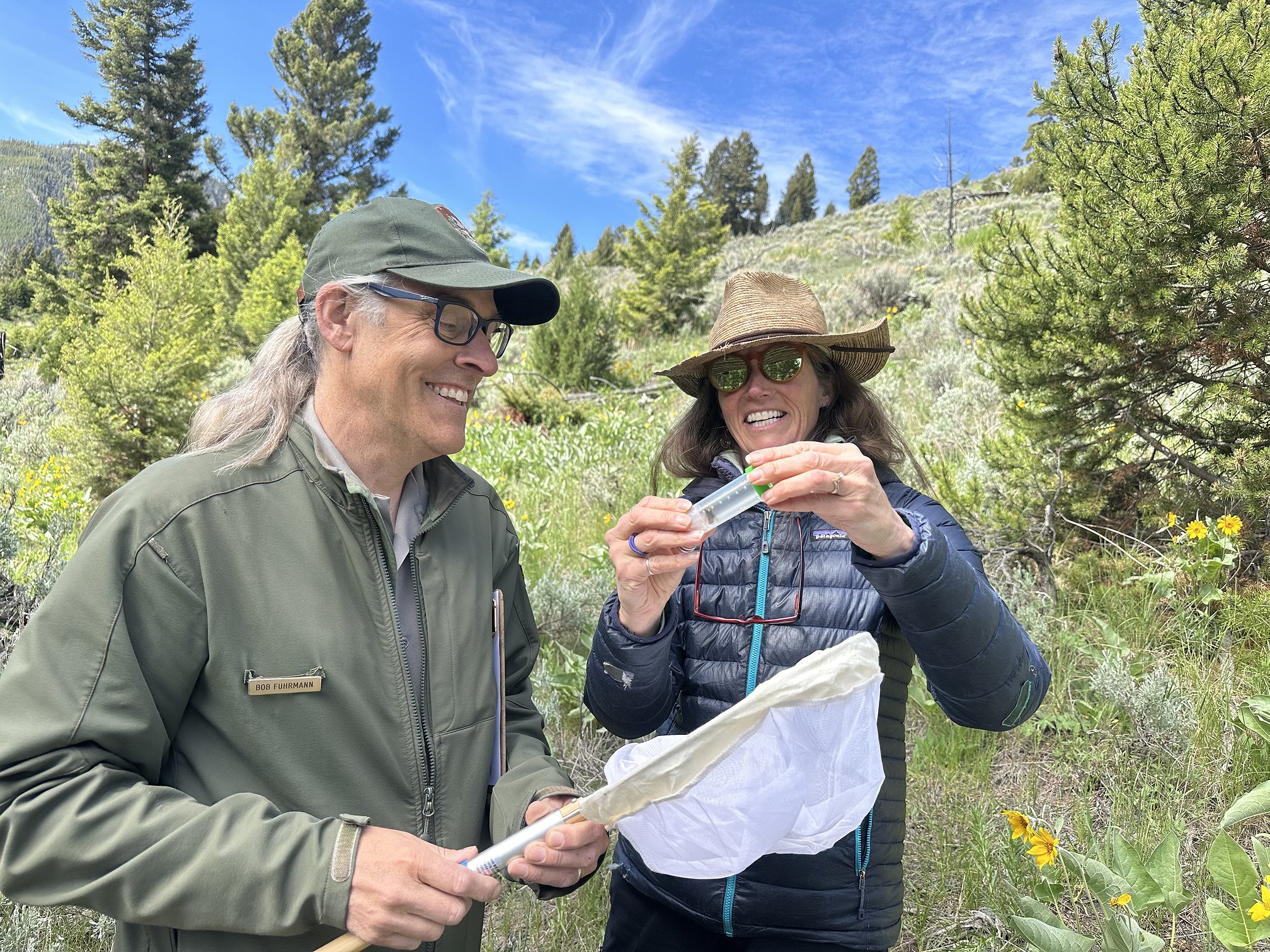 Volunteers with the Montana Bumble Bee Atlas transfer a bumble bee into a plastic vial. (Courtesy of Michelle Toshack, Xerces Society)
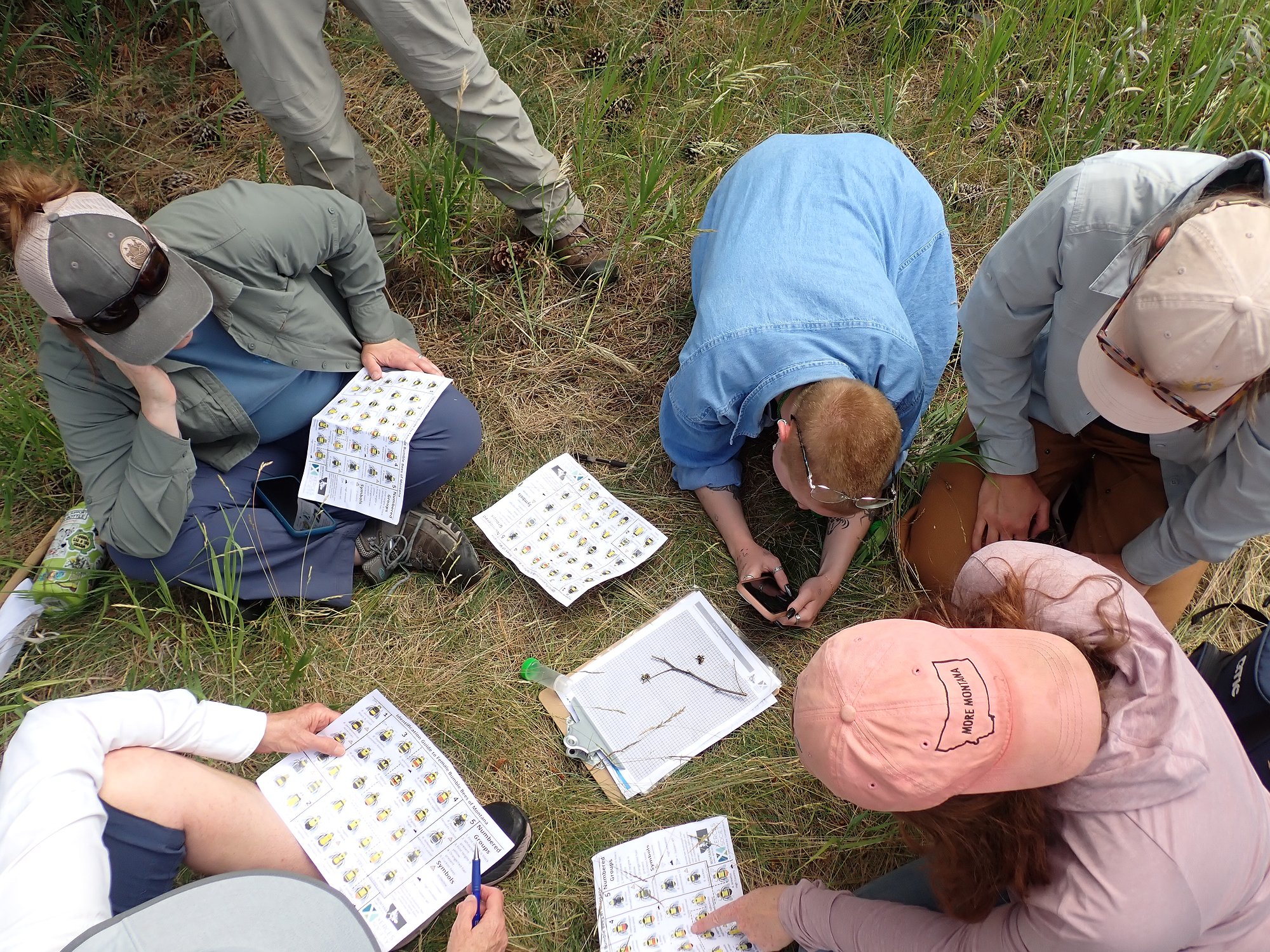 Volunteers reference species identification charts as they photograph bumble bees for the Montana Bumble Bee Atlas. (Courtesy of Michelle Toshack, Xerces Society)
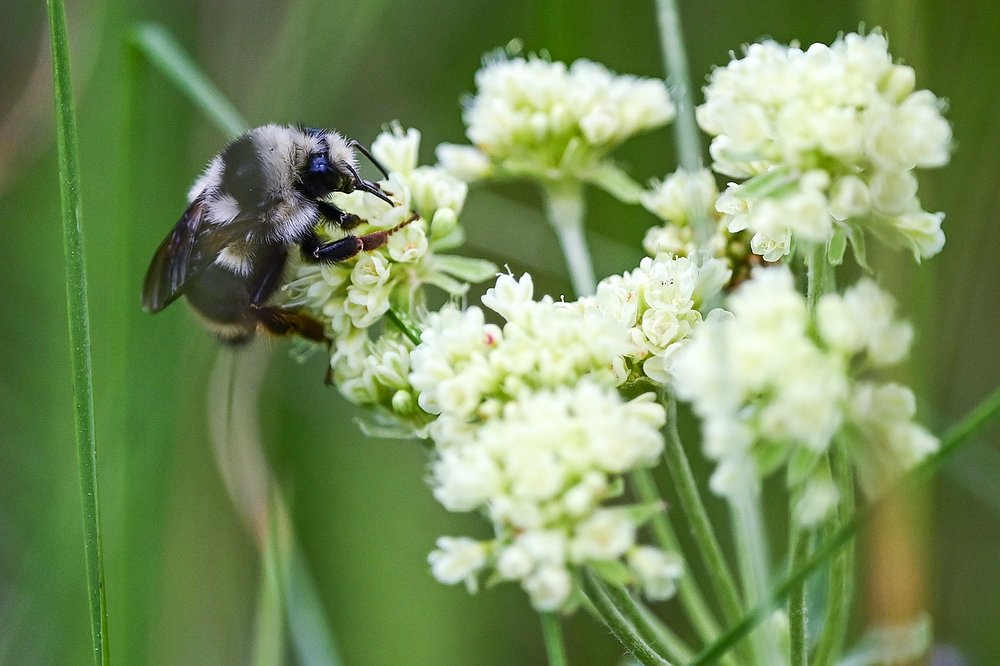 A bumble bee pauses on a common buckwheat flower in a meadow along the North Fork Road in Glacier National Park on Wednesday, June 17. (Casey Kreider/Daily Inter Lake)
Casey Kreider
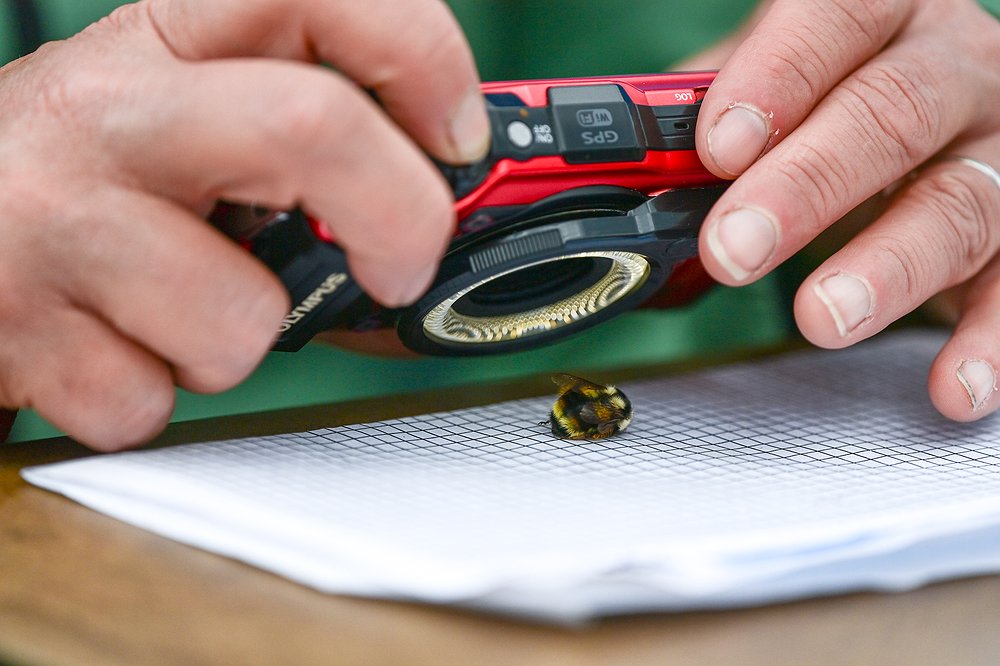 Tabitha Graves, a research ecologist at the USGS's Northern Rocky Mountain Science Center, takes photographs of a cold-stunned bumble bee along the North Fork Road in Glacier National Park as part of a conservation survey on Wednesday, June 17. (Casey Kreider/Daily Inter Lake)
Casey Kreider
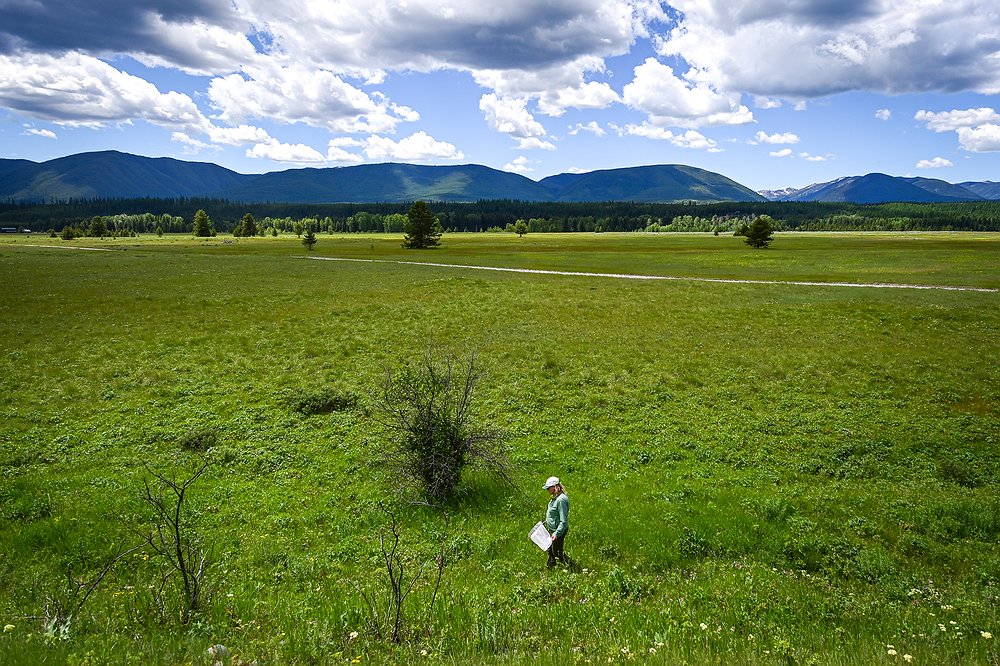 Tabitha Graves, a research ecologist at the USGS's Northern Rocky Mountain Science Center, looks for bumble bees along the North Fork Road in Glacier National Park as part of a conservation survey on Wednesday, June 17. (Casey Kreider/Daily Inter Lake)
Casey Kreider
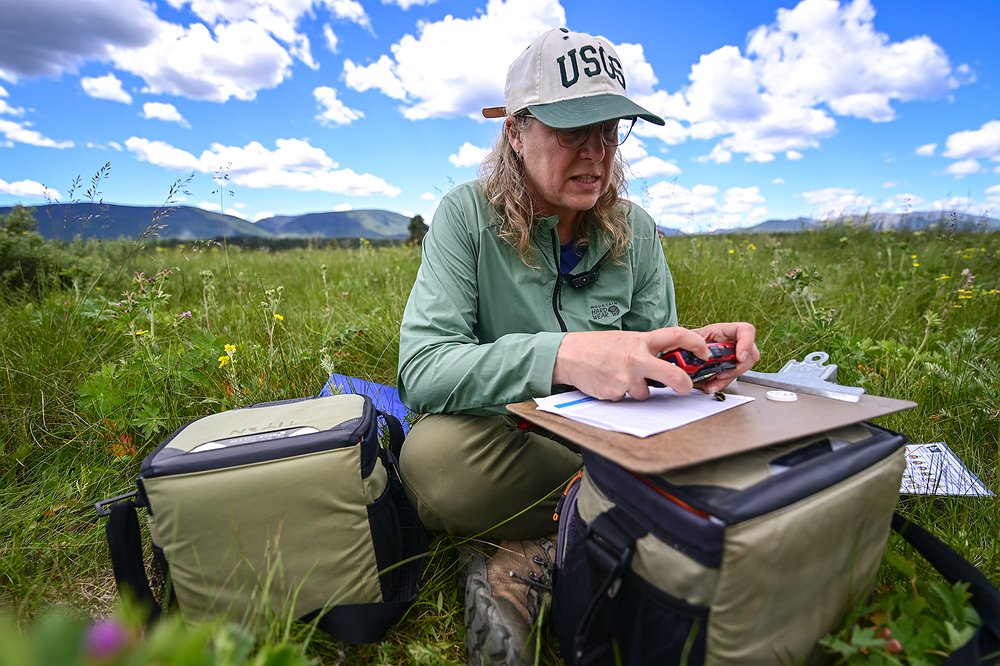 Tabitha Graves, a research ecologist at the USGS's Northern Rocky Mountain Science Center, takes photographs of a cold-stunned bumble bee along the North Fork Road in Glacier National Park as part of a conservation survey on Wednesday, June 17. (Casey Kreider/Daily Inter Lake)
Casey Kreider
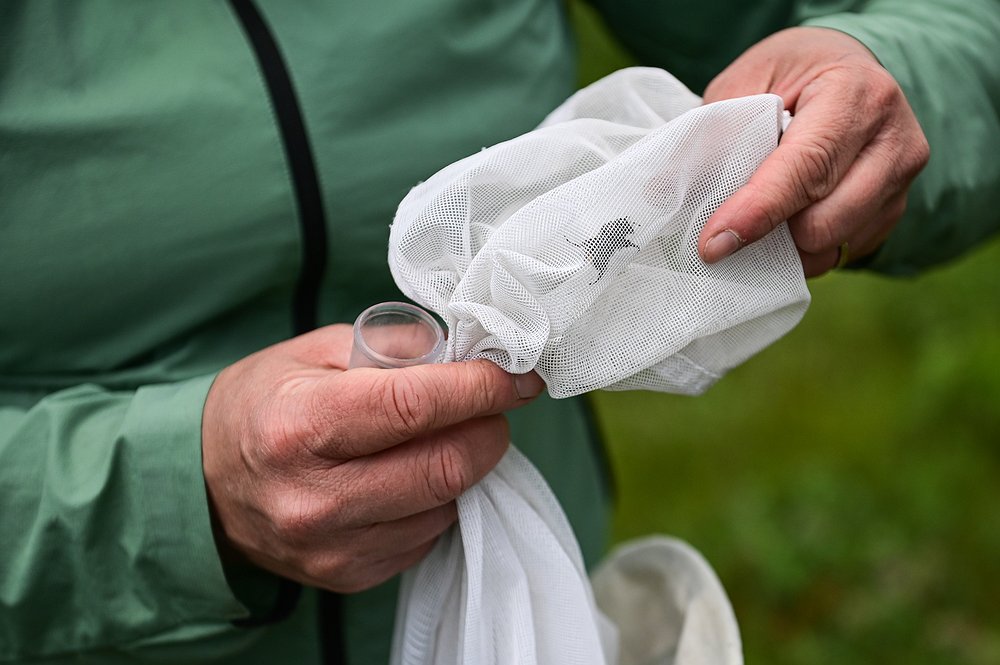 Tabitha Graves, a research ecologist at the USGS's Northern Rocky Mountain Science Center, transfers a bumble bee from a net to a vial during a conservation survey along the North Fork Road in Glacier National Park on Wednesday, June 17. (Casey Kreider/Daily Inter Lake)
Casey Kreider
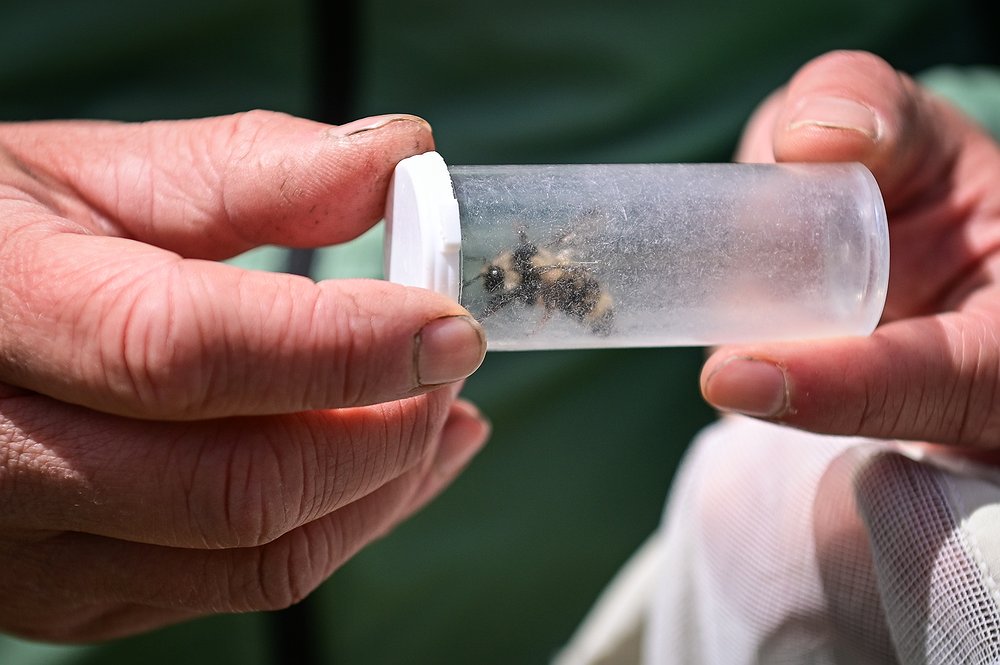 Tabitha Graves, a research ecologist at the USGS's Northern Rocky Mountain Science Center, holds a bumble bee in a vial during a conservation survey along the North Fork Road in Glacier National Park on Wednesday, June 17. (Casey Kreider/Daily Inter Lake)
Casey Kreider
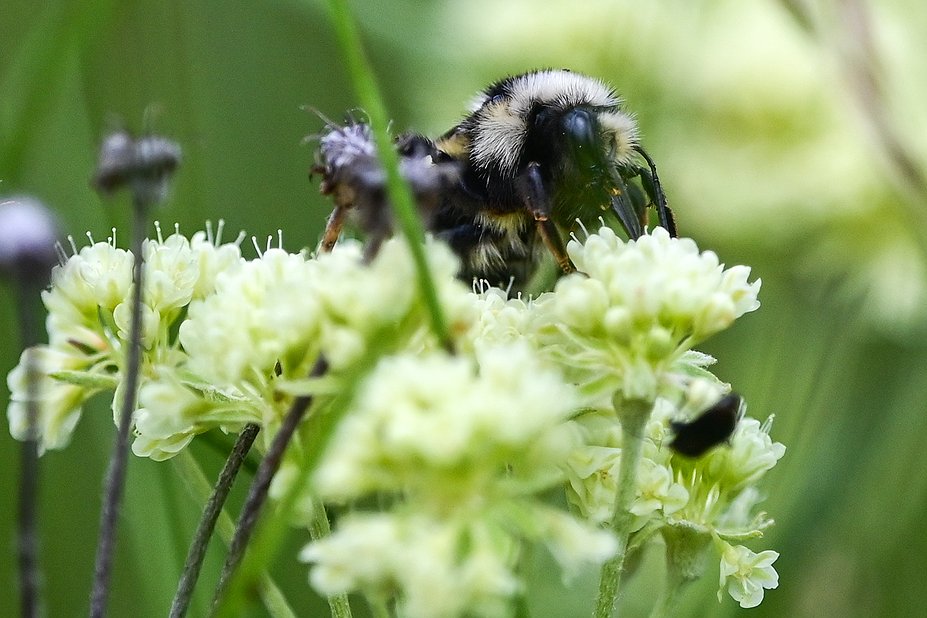 A bumble bee pauses on a common buckwheat flower in a meadow along the North Fork Road in Glacier National Park on Wednesday, June 17. (Casey Kreider/Daily Inter Lake)
Casey Kreider
ARTICLES BY HAILEY SMALLEY

Trump stumps for Flint in Kalispell as Election Day nears
President Donald Trump, wearing a dark suit, red tie and red USA cap, ambled into the Majestic Valley Arena to the raucous roar of a crowd.

Flathead National Forest greenlights Swan Valley timber project
A 2,307-acre timber project is now under way in the Swan Valley.
Flathead National Forest greenlights Swan Valley timber project
A 2,307-acre timber project is now under way in the Swan Valley.