
County airport board discusses operations and future possibilities
MONTE TURNER | Hagadone News Network | UPDATED 4 days, 12 hours AGO
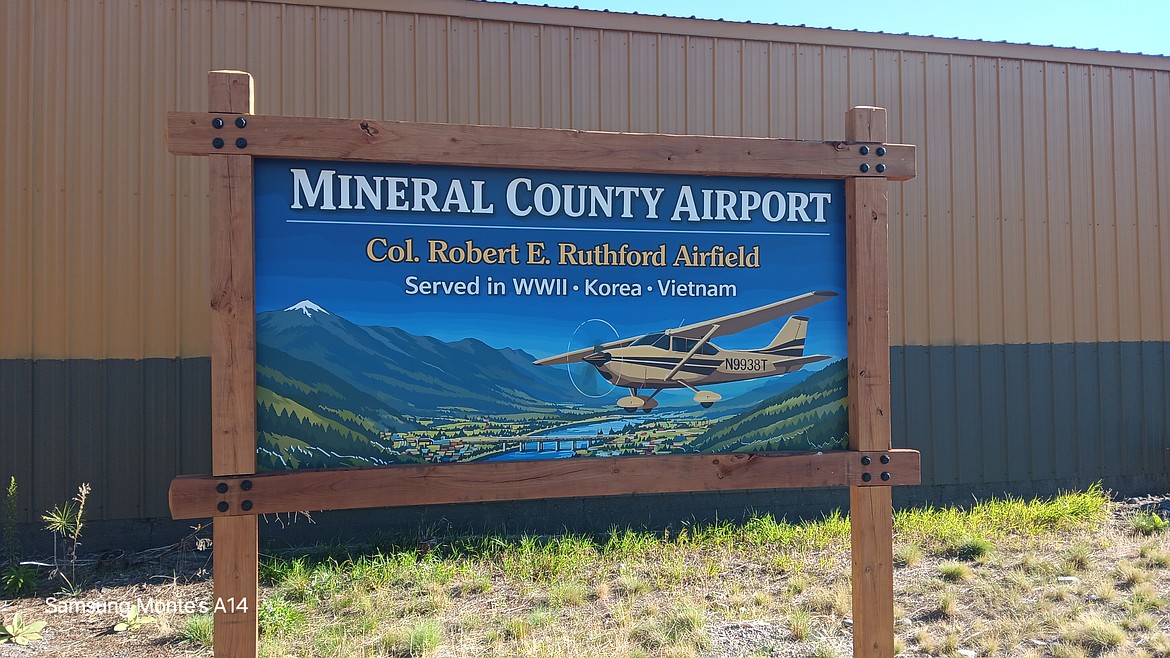
The Mineral County Airport, also known as Lt. Col. Robert E. Ruthford Airfield, is a self-sustaining entity in the county. The new hangers have tenants and a waiting list is on hand as the rental prices are lower than most airports in the area and the pilots are impressed with the conditions and upkeep of the facility.
The Mineral County Airport may be small, but it is doing something that is becoming increasingly difficult for rural facilities: paying its own way while providing services that benefit the community.
Located about 2 miles southeast of Superior, the Mineral County Airport, also known as Lt. Col. Robert E. Ruthford Airfield, has a 3,450-foot paved runway and a history dating back to 1960. It primarily serves private and recreational pilots, but its usefulness goes well beyond providing a place for airplanes to land.
Perhaps the most important part of its story for Mineral County taxpayers is this: the airport supports its routine operations without taking money from county property tax mills. Instead, income from airport activities helps pay the bills, while federal and state grants assist with eligible improvements. That arrangement did not happen by accident.
According to airport board information, several small rural airports closed about 20 years ago, prompting Mineral County Airport officials to recognize that they needed to find ways to generate their own income if they wanted to remain open and viable.
The effort appears to have paid off. At the airport board's quarterly meeting on Oct. 14, President Gary Bullock and board members Jim Silverman, Peggy Temple, and Bill Woodford continued discussing the airport's operations and future possibilities.
The airport's income comes from four main sources: rentals from county-owned hangars, ground leases for privately owned hangars, aviation fuel sales and fees associated with U.S. Forest Service firefighting use. The airport has 12 county-owned hangars, each renting for $200 a month. That amounts to $2,400 in monthly rental income, or $28,800 a year if all 12 remain rented throughout the year.
Five privately owned hangars also generate income through ground leases. Those arrangements allow private owners to have hangars on airport property while paying for the land they occupy. Fuel sales provide another source of revenue. In September, Bullock reported that 1,500 gallons of aviation gasoline had been delivered to the airport's fuel tank. The airport was earning approximately $1 per gallon in gross profit, slightly less than some other rural airports.
Gross profit is not the same as net profit, of course, and the airport still has expenses to meet. But fuel sales provide another way to bring money into the operation without asking county property owners to pick up the tab.
Fees associated with U.S. Forest Service firefighting use round out the four reported sources of income. In a heavily forested region where wildfire activity can require aircraft support, that use provides a practical service as well as an additional source of revenue. Together, these income sources help the airport cover its routine expenses.
Being self-sustaining does not mean the airport has to pay for every major improvement out of its own pocket. The Federal Aviation Administration and the Montana Department of Transportation's Aeronautics Division offer grant programs that help eligible airports pay for approved projects. Mineral County Airport has used this assistance for improvements, including hangars and pavement maintenance.
These grants are important because major construction and runway work can cost far more than a small airport could reasonably cover through monthly rentals and fuel sales alone. There is a difference, however, between receiving a grant for an approved improvement and relying on local property-tax mills to keep an airport operating from day to day. Some federal and state grant programs do involve public funding, and some projects can require matching money.
But that does not mean Mineral County property owners are paying a dedicated airport levy through their local property taxes. The airport has found a way to make its everyday operation largely stand on its own while taking advantage of outside assistance when improvements are needed.
The airport's value is not measured only in dollars. Peggy Temple, the airport board's vice-chair and a member of the Mineral Community Hospital Board of Directors, shared an example of how aviation can help bring medical services to rural communities.
Medical specialists sometimes fly their own aircraft into Mineral County Airport for a day or even just a few hours. They may be traveling on a regular schedule that takes them to several rural hospitals, seeing patients before flying on to another facility.
For residents, having specialists come to the region can make a meaningful difference. Rural patients may otherwise face long drives to obtain specialized care. The airport provides a convenient landing place for these visiting medical professionals.
The airport also offers an important option for medical transportation. Fixed-wing medevac aircraft have used the runway to transfer patients to larger medical facilities, including specialized burn care centers in Seattle or Salt Lake City, according to the information provided to the board.
Helicopter services such as LifeFlight are an essential part of emergency medical transportation in the region. But helicopters can sometimes be grounded by weather conditions, and fixed-wing aircraft may offer another option when circumstances and flight conditions permit.
Neither aircraft type can fly in every weather situation, and the appropriate choice depends on the patient, the destination and operating conditions. Still, having a runway available for fixed-wing medical flights adds another useful resource to the county's emergency transportation network. It is one of those services whose importance may not be obvious until someone needs it.
Mineral County Airport also serves aircraft involved in forest and rangeland firefighting. With surrounding mountains, timber and rugged terrain, the area is familiar with the challenges of wildfire season. The airport can provide a useful landing place for aircraft supporting fire operations, although its role depends on the needs of a particular incident. This past summer many people noticed a helicopter parked at the airport for several days which was based there but was fighting a fire in Idaho.
Private pilots also use the facility for recreational flying and trips to the region. Guides often pick up the passengers and take them fishing or hunting for a few days then return them to the airport where they fly back home in their personal aircraft. The airport's self-service aviation gasoline and aircraft parking provide practical conveniences for visiting pilots. A courtesy car gives travelers another way to get around Superior once they land.
These may seem like small details, but convenience can make a difference to someone deciding where to fly. The airport board has also discussed the possibility of developing a pilots' lounge where local and visiting pilots could gather, meet and plan their travels. Federal grant assistance may be available for certain airport amenities, and the idea remains something for the board to explore.
At the Oct. 14 meeting, the board also discussed a request from Mineral County Search and Rescue about possibly using some airport property to store equipment. Federal aviation rules generally require hangars to be used for aeronautical purposes, so simply turning hangar space into general storage may not be an option. The board planned to continue brainstorming possible solutions. The discussion illustrates how airport property may be useful to other local services, even when regulations limit how it can be used.
The airport's economic contribution is modest, but it is real. Pilots often purchase aviation fuel before departing, and their trips can also bring business to guides, restaurants, lodging providers and other local services. Some families fly in during the summer for outdoor adventures, including floating the Alberton Gorge, riding the Route of the Hiawatha or visiting Quinn's Hot Springs Resort.
Not every dollar spent by a visitor can be traced directly to the airport, and the number of visitors does not automatically translate into a large economic impact. Still, visitors who arrive by air have the potential to bring additional spending to a rural community.
Montana's 2026 airport economic-impact information estimates approximately $180,000 in annual economic output associated with Mineral County Airport. That is a relatively small figure compared with the economic activity generated by major airports, but it represents a contribution to a small rural economy. The estimate should not be confused with the airport's own income.
The broader economic estimate considers activity associated with the facility, rather than simply the dollars deposited into the airport's account. For a county the size of Mineral County, even a modest contribution can be worthwhile, particularly when the facility also supports medical access, firefighting and recreation.
The Mineral County Airport is not a commercial airline terminal, and it does not need to be one to serve a useful purpose. Its 3,450-foot runway supports private aviation, visiting medical specialists, medical transportation, firefighting operations and visitors who come to enjoy western Montana. Its hangars and fuel sales generate revenue, and its leases provide another source of income.
The airport's financial approach is especially noteworthy. Rather than relying on local property-tax mills for routine operations, it uses income generated by the facility to support its everyday needs. Federal and state grant programs help with eligible improvements, allowing the airport to maintain and develop its facilities without depending entirely on local funds. The airport board continues to consider ways to improve the facilities and make it more useful to pilots and the community. Those discussions include possible amenities for visiting aviators and potential cooperation with local emergency services.
For Mineral County residents, the bottom line is straightforward: the airport is more than a runway, and it is not simply another bill paid through local property taxes.
It is a small rural facility that generates its own operating income while providing medical, emergency, recreational and economic benefits to the area. It may not make headlines every day, but when a medical specialist flies in, a firefighting aircraft needs a place to land or a visitor arrives ready to spend money locally, the value of having that airport becomes a little easier to see.
ARTICLES BY MONTE TURNER

Poetry and live music benefit Alberton's historic depot
There’s something special about a small-town gathering where the music is familiar, the poetry comes from the heart, and there’s barely enough room to keep from bumping elbows with old friends or making a few new ones.
County airport board discusses operations and future possibilities
The Mineral County Airport may be small, but it is doing something that is becoming increasingly difficult for rural facilities: paying its own way while providing services that benefit the community.
Senior Health and Resource Fair coming to Superior
Mineral County residents are invited to attend the upcoming Senior Health and Resource Fair on Friday, Oct. 23, from 10:30 a.m. to 1:30 p.m. at the Mineral County 4-H Building at 301 2nd Avenue East in Superior.