
Wahluke Community Coalition works to reduce substance use
CHERYL SCHWEIZER | Hagadone News Network | UPDATED 4 hours, 41 minutes AGO
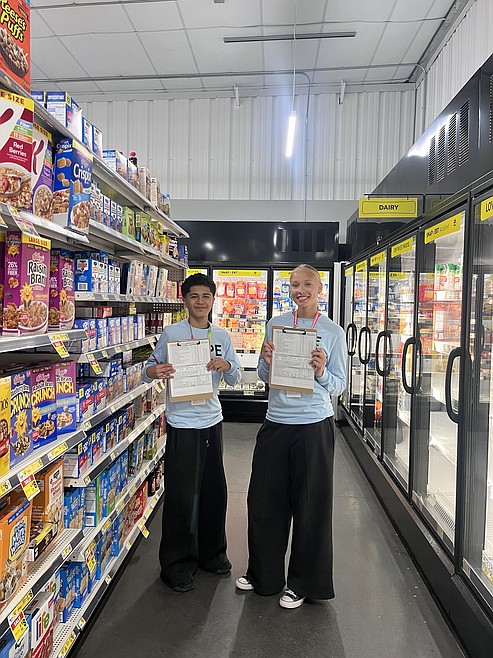
Volunteers with the Wahluke Community Coalition evaluate retail setups as part of a project to convince business owners to adapt their displays to encourage children to choose healthier options.
COURTESY PHOTO/ WAHLUKE COMMUNITY COALITION
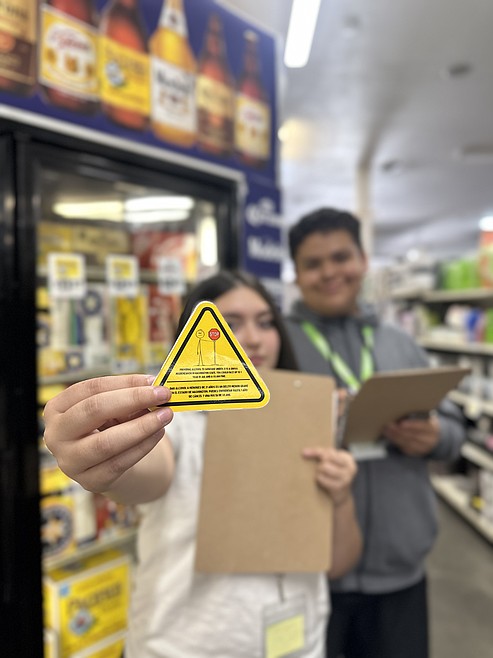
Wahluke Community Coalition members display stickers designed to discourage underage youth from attempting to buy alcohol.
Senior Reporter Cheryl Schweizer is a journalist with more than 30 years of experience serving small communities in the Pacific Northwest. She began her post-high-school education at Treasure Valley Community College and enerned her journalism degree at Oregon State University. After working for multiple publications, she has settled down at the Columbia Basin Herald and has been a staple of the newsroom for more than a decade. Schweizer’s dedication to her communities and profession has earned her the nickname “The Baroness of Bylines.” She covers a variety of beats including health, business and various municipalities. | October 21, 2026 3:00 AM
MATTAWA — The Wahluke Community Coalition starts with the premise that local problems are best solved with local solutions.
Gigi Calaway, student support services director for the Wahluke School District, said Mattawa's size and location make it more difficult to provide services for people affected by substance abuse. As a result, the coalition is working on ways to keep everybody, especially children, from using substances in the first place.
"Our school has to be a hub of education, even for our parents," she said.
Like similar organizations in Grant County, the coalition's goal is to reduce substance abuse and the negative effects it has on a community. One way to do that is to educate children and young people on the negative effect of intoxicating substances or unhealthy products in general. Some of them, like alcohol, marijuana and tobacco, are legal for adults to use but not for children and young people.
The educational effort, from the WCC and other organizations, has had an impact in Mattawa, according to data from the Healthy Youth Survey, which is given to middle school and high school students every two years. Calaway cited data from the years 2018 and 2026 to show the difference.
In 2018, about 20% of Wahluke sophomores reported drinking alcohol in the previous 30 days; in 2026, that number had dropped to about 5.5%. About 18% of Wahluke sophomores reported using marijuana, which dropped to about 3.5% in 2026.
Calaway said one way to help children – and families – avoid substance abuse is to make them more discerning consumers. To that end, the coalition has worked on a multi-year education campaign not only for possible youthful customers but also retailers.
Adult and student volunteers visited retailers around Mattawa in late September, looking at displays for merchandise like beer and tobacco in the 10 businesses they surveyed. Volunteers looked at the merchandise location as well as the placement of advertising.
Coalition members will recognize retailers that worked on effective messaging at an event in March, she said.
Advertising, of course, is designed to affect consumer buying habits, and Calaway said it has an effect on children as well as adults. Routes to and from school lead children by local businesses every day, she said.
"(Advertisements) do influence the perception of those kids as they walk by," she said.
That being the case, coalition members have worked to enlist retailers to consider things like ad placement and the merchandise location. That can mean advertising healthy alternatives in locations that will attract the attention of children.
Calaway cited a business that changed some of its advertising after coalition members pointed out the possible effects on children.
"Recently a store advertised 'cheapest vapes in town,' and a simple conversation about youth health promotion caused the manager to change the advertisement," Calaway said.
They've also worked to educate parents, she said, and it's had an impact.
"The parents have started to become more mindful," she said. "That was our way of changing a community norm."
It's necessary to think about the approach, she said, since too much emphasis on the negative impact can make it look attractive to some kids. As a result the coalition members work to teach young people how to determine when the message is trying to manipulate them. Young people have responded to that, she said.
"They're not suckers," she said. "They're smarter than that."
Coalition members also work on family education, talking to parents about how they teach their children to make good choices – and ways adults can enhance the impact of those lessons with what they do and don't do.
"We want them to think about how their actions affect their kids," she said.
An effective way to keep children from substance use is to get them involved in community activities, she said, and the coalition works to promote things children and families can get involved in, and just as importantly, recognizing their achievements.
"The two things go hand in hand," she said.
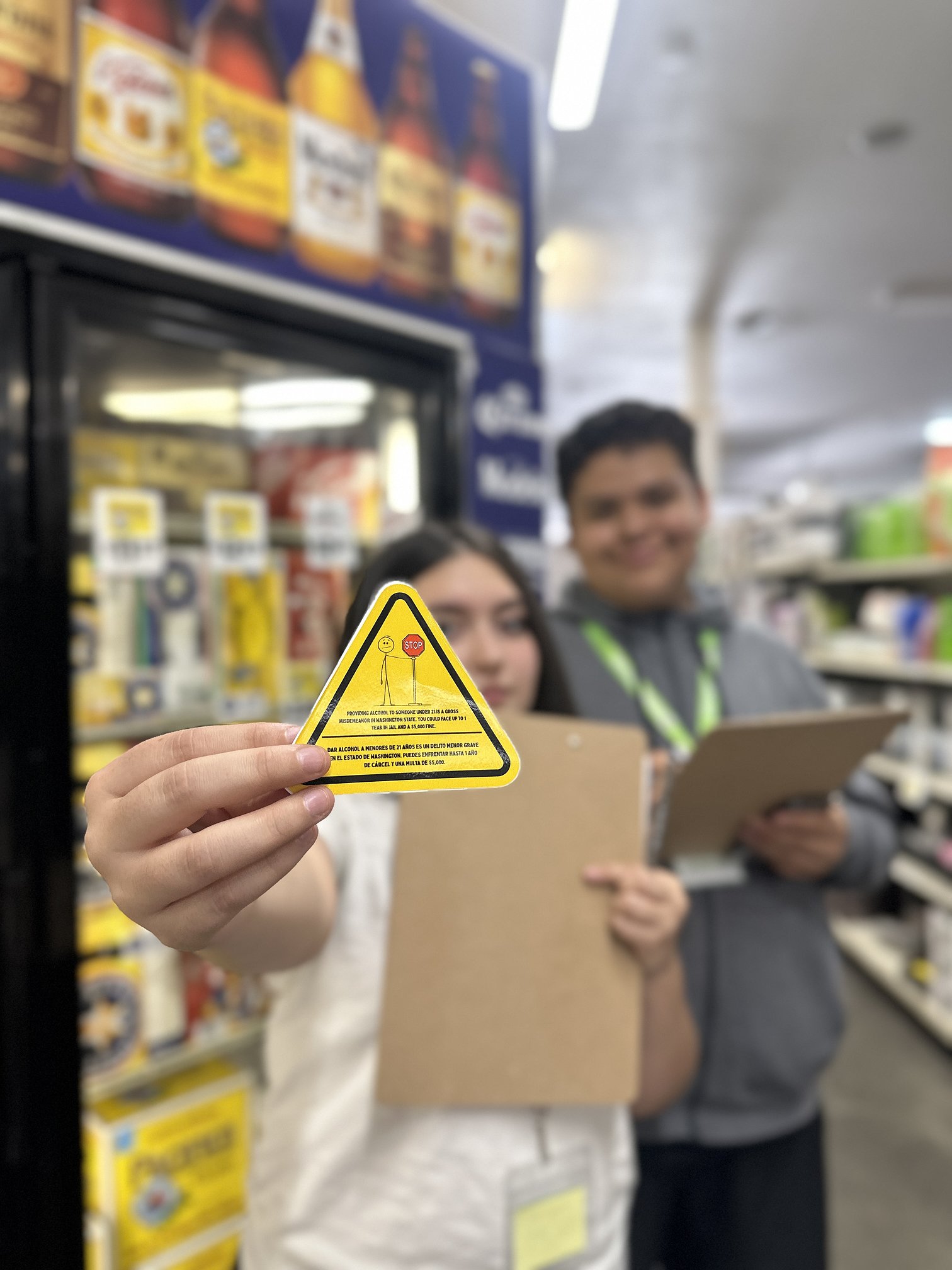 Wahluke Community Coalition members display stickers designed to discourage underage youth from attempting to buy alcohol.
ARTICLES BY CHERYL SCHWEIZER
Driver injured when truck hit by train
BRUCE — An unidentified truck driver sustained unspecified injuries when his tractor trailer was hit by an oncoming train Tuesday morning near Bruce.

Paving scheduled for next week on Royal City's Apple Avenue
ROYAL CITY — The first phase of upgrades to Apple Avenue Northeast is reaching the finish line as the construction season winds down.

Wahluke Community Coalition works to reduce substance use
MATTAWA — The Wahluke Community Coalition starts with the premise that local problems are best solved with local solutions. Gigi Calaway, student support services director for the Wahluke School District, said Mattawa's size and location make it more difficult to provide services for people affected by substance abuse. As a result, the coalition is working on ways to keep everybody, especially children, from using substances in the first place. "Our school has to be a hub of education, even for our parents," she said.