
Tech highlighted in chamber-sponsored Flathead Valley timber tour
HAILEY SMALLEY | Hagadone News Network | UPDATED 15 hours, 25 minutes AGO
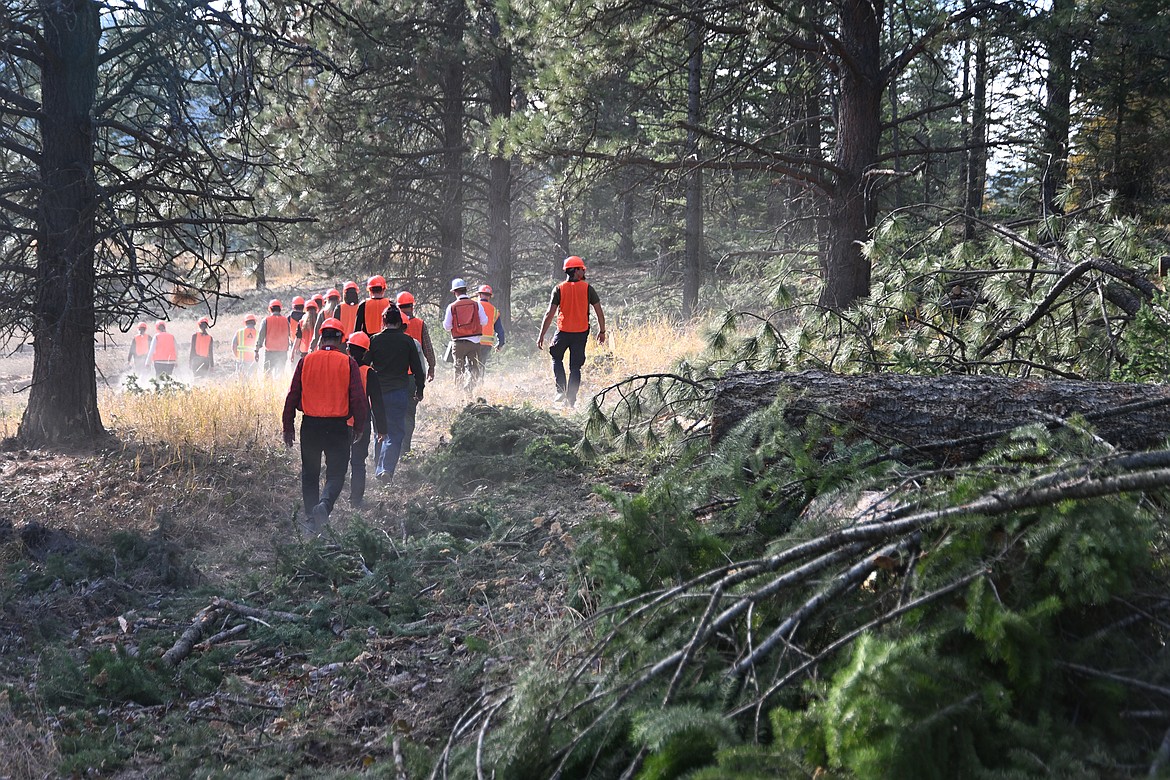
Participants in the Kalispell Chamber of Commerce's annual Timber Tour walk through an active timber site on Oct. 22, 2026. (Hailey Smalley/Daily Inter Lake)
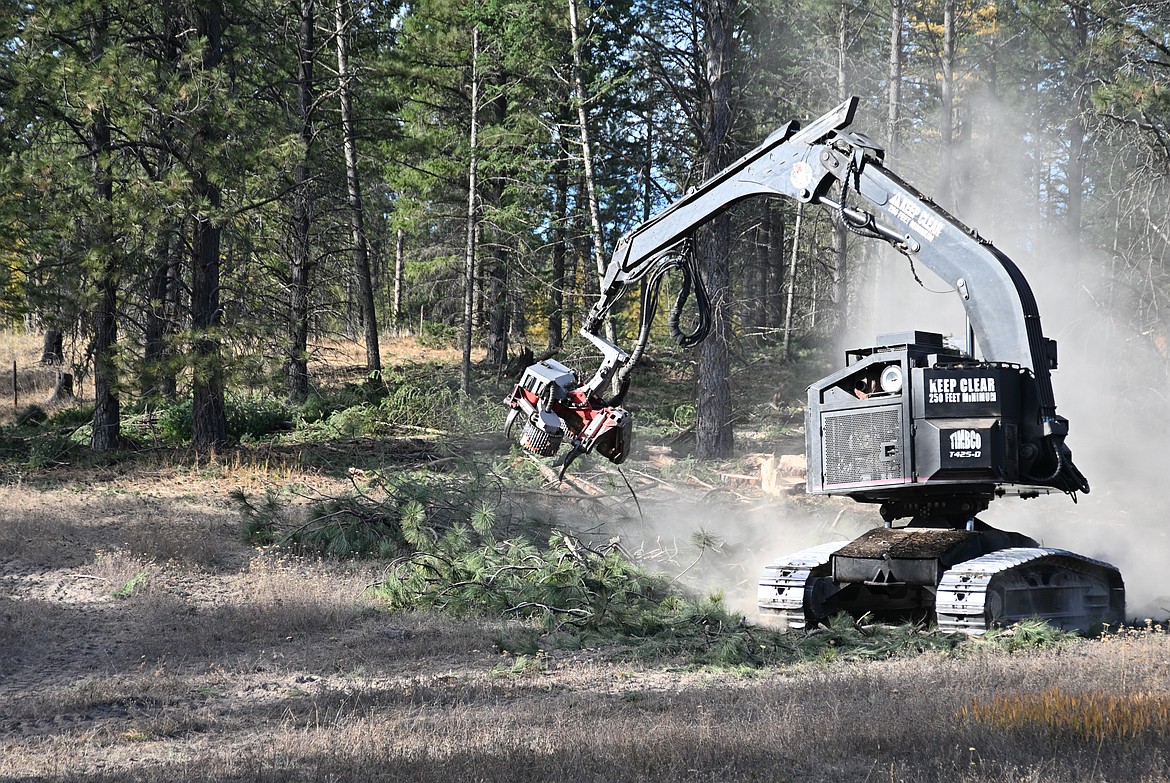
A logger uses a harvester to move material at an active timber site on Oct. 22, 2026. (Hailey Smalley/Daily Inter Lake)
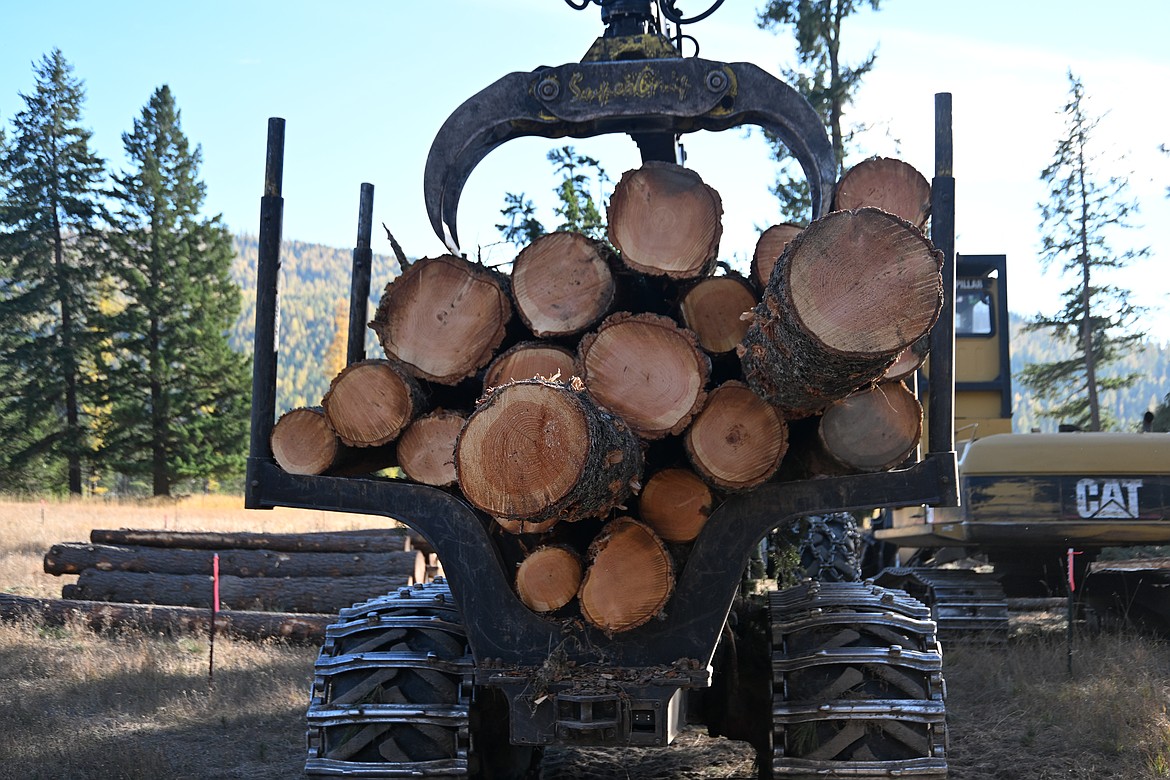
Logs are loaded onto a truck at an active timber site on Oct. 22, 2026. (Hailey Smalley/ Daily Inter Lake)
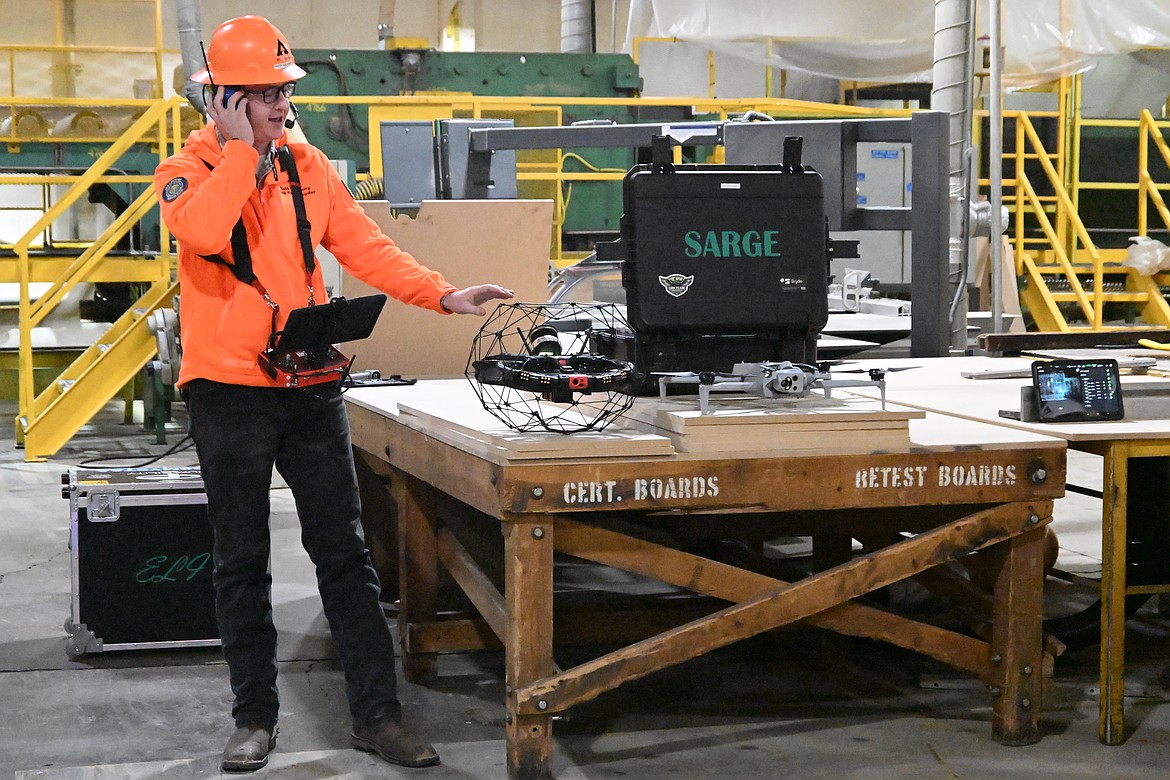
Matt Salisbury showcases two drones used at the Weyerhaeuser medium density fiberboard facility in Columbia Falls on Oct. 22, 2026. (Hailey Smalley/Daily Inter Lake)
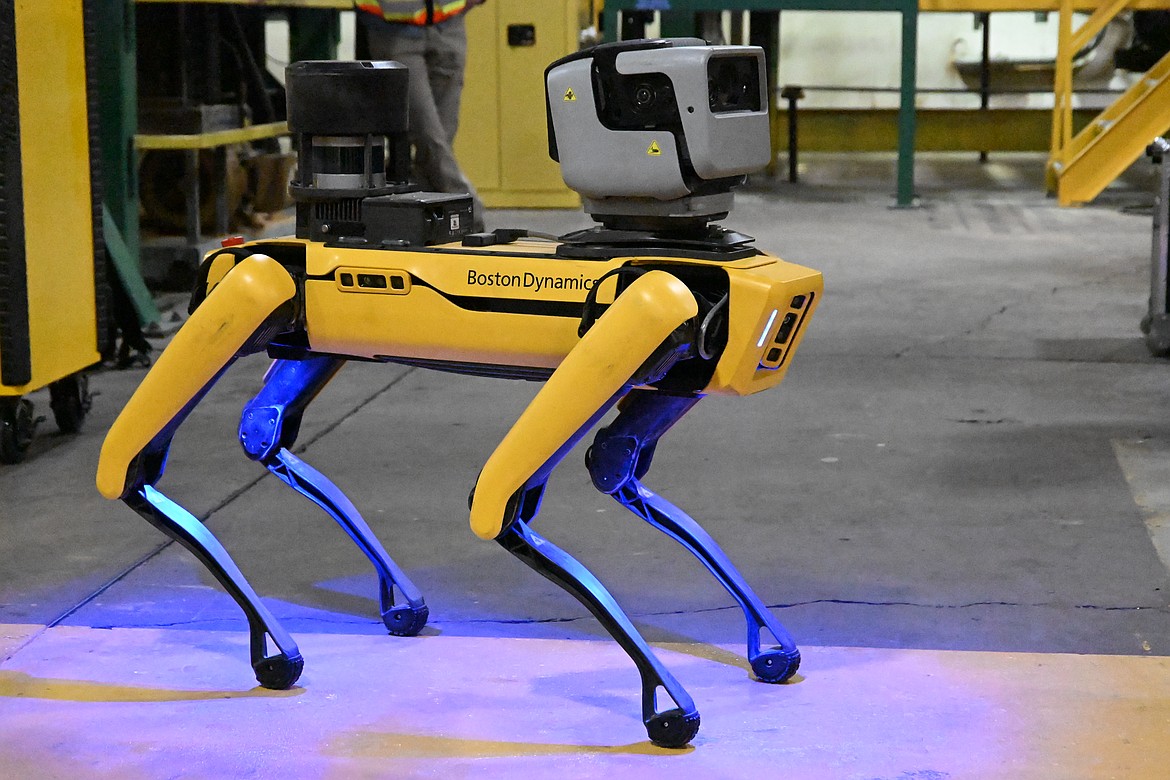
Scout patrols the floor of Weyerhaeuser medium density fiberboard facility in Columbia Falls on Oct. 22, 2026. (Hailey Smalley/Daily Inter Lake)
One of Montana's oldest industries has become fertile ground for innovation in recent years.
Foresters, loggers and lumbermill operators showcased some of the most recent technological leaps and workplace modernizations at the Kalispell Chamber of Commerce's annual Timber Tour on Thursday. The Oct. 22 event took participants through each step of the timber milling process, starting years before trees are ever felled.
Marcus Chin, timber program manager at Flathead National Forest, is currently "looking out to 2033," when it comes to commercial harvest operations.
Last fiscal year, some 42 million board feet of timber were commercially harvested from about 4,300 acres of forestland. Thousands more acres underwent noncommercial forestry treatments, such as hazardous fuel thinning or understory removal.
The goals and parameters of each project vary, but a key objective is often the creation of contiguously thinned areas that can serve as fuel breaks if a wildfire breaks out. The National Forest Foundation is promoting similar projects on private property through cost-share and grant incentives for some landowners.
Thursday's timber tour took participants to one such lot, where a local crew had been contracted to thin the forest of hazardous fuels and less fire-resilient tree species. About 24 hours into the project, the four-person team had already collected a sizable stack of Douglas fir and ponderosa pine logs and thinned three of the project's 22 acres.
A specialized 78,000-pound machine called a harvester helped make quick work of the dense and diseased woodlot. Under ideal conditions, a harvester can fell and delimb somewhere between 600 and 800 trees in a single day. The tree trunks are automatically fed through the processing head, which measures the length of the log and makes cuts at uniform lengths.
From there, the logs will be trucked to a local mill. F.H. Stoltze Land and Lumber Forester Matt Bishop said forestlands within a two-hour driving radius make up the Columbia Falls mill's "wood basket."
Transportation costs make most areas farther afield too much of an economic gamble, and the quality of local timber is hard to surpass.
"We grow strong wood fiber and beautiful lumber," Bishop said.
A FRACTION of local logs go directly to the Weyerhaeuser medium-density fiberboard facility in Columbia Falls to be chipped. The facility also sources chips, wood shavings and other byproducts from other mills.
"We're essentially a big recycler," plant manager Kyle Cram said.
The masses of wood material are softened in hot steam and fed through a series of spinning grooved metal discs that grind it into a downy powder. The fibers are sprayed with resin and water-resistant wax before being layered in what line supervisor Derrick Olson described as "a cake fashion." A combination of high heat and pressure transforms each cake into a solid length of fiberboard.
The basic machinery that pumps out the fiberboard is decades old; one line was installed in 1974 and the second in 2001.
But "behind the scenes, everything has been upgraded with precision controls, that kind of stuff," Cram said.
Few workers roamed the floor of the mill. Most processes are instead overseen using cameras and other remote sensing equipment. The interior of the mill is outfitted with automatic spark-detection sensors that alert whenever they capture a flash of light, and drones have taken the place of people when it comes to some of the more mundane tasks, like measuring the dimensions of the massive sawdust piles heaped outside the facility. A drone that the staff have nicknamed "Eli" can often be seen sweeping sawdust fibers from hard-to-reach places.
One of the mill's newest additions is a roughly dog-shaped Boston Dynamics robot named "Scout" that patrols over 300 inspection points around the facility for unusual heat signatures and hot spots.
"I'll tell you, the first day this was on site, it was a little creepy," Cram said with a grin.
He was quick to come around to the mechanical mutt, which is much more consistent in its data collection than most human employees. Plus, with Scout on guard, Cram said his staff could focus on more important things.
"Really, what the goal with all of these things is, is augmenting what our people do," he said.
Reporter Hailey Smalley can be reached at 406-758-4433 or [email protected]. If you value local journalism, pledge your support at dailyinterlake.com/support.
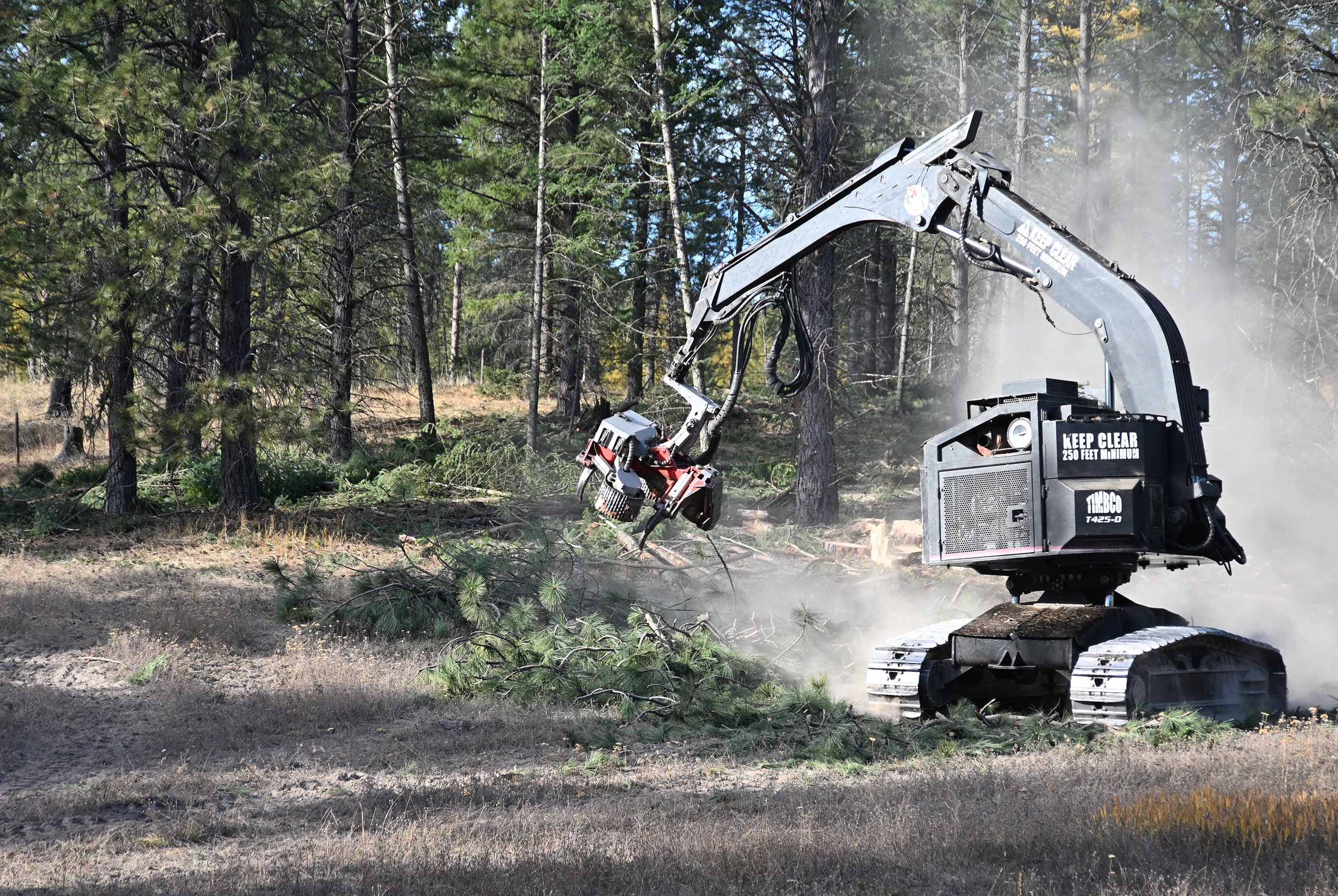 A logger uses a harvester to move material at an active timber site on Oct. 22, 2026. (Hailey Smalley/Daily Inter Lake)
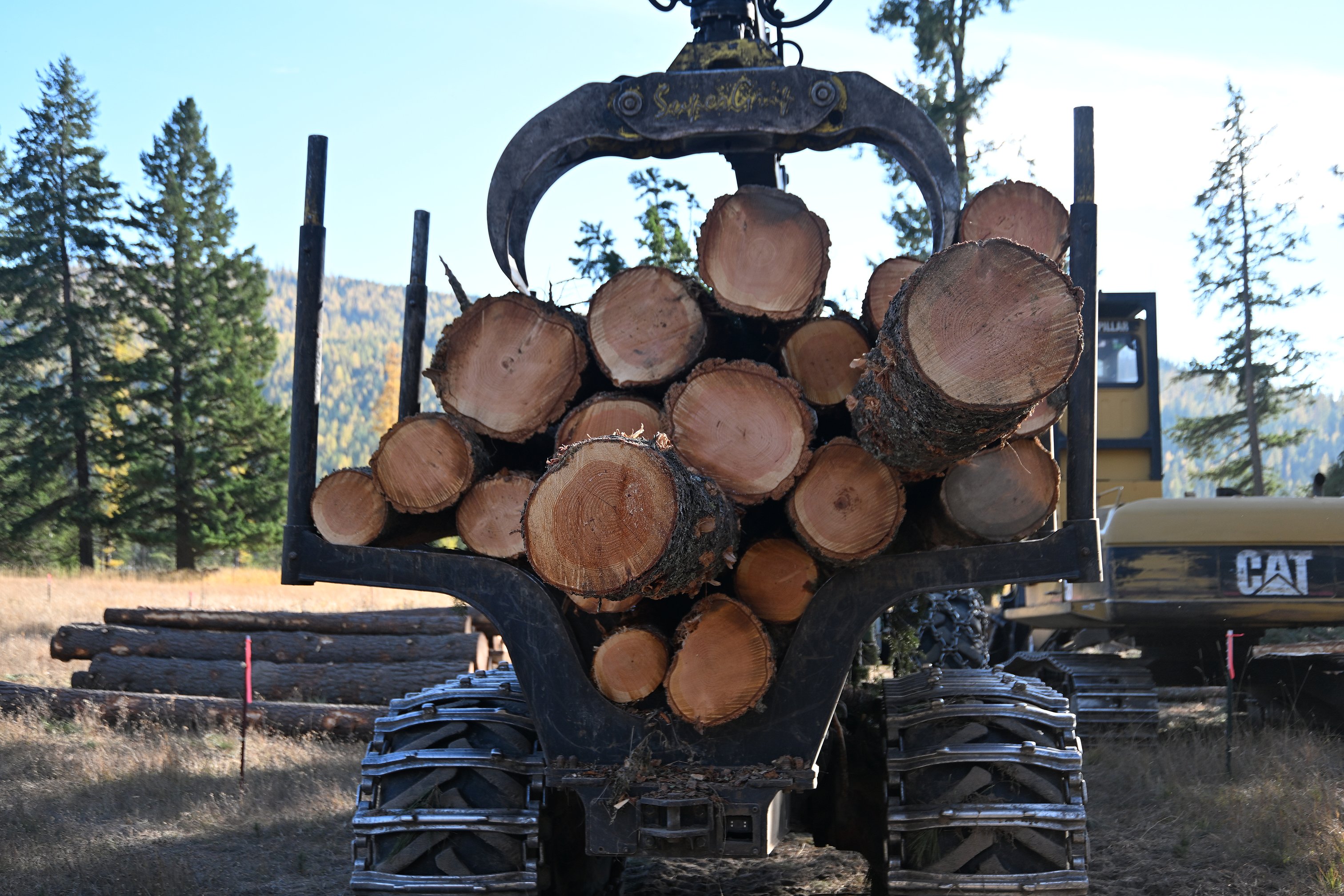 Logs are loaded onto a truck at an active timber site on Oct. 22, 2026. (Hailey Smalley/ Daily Inter Lake)
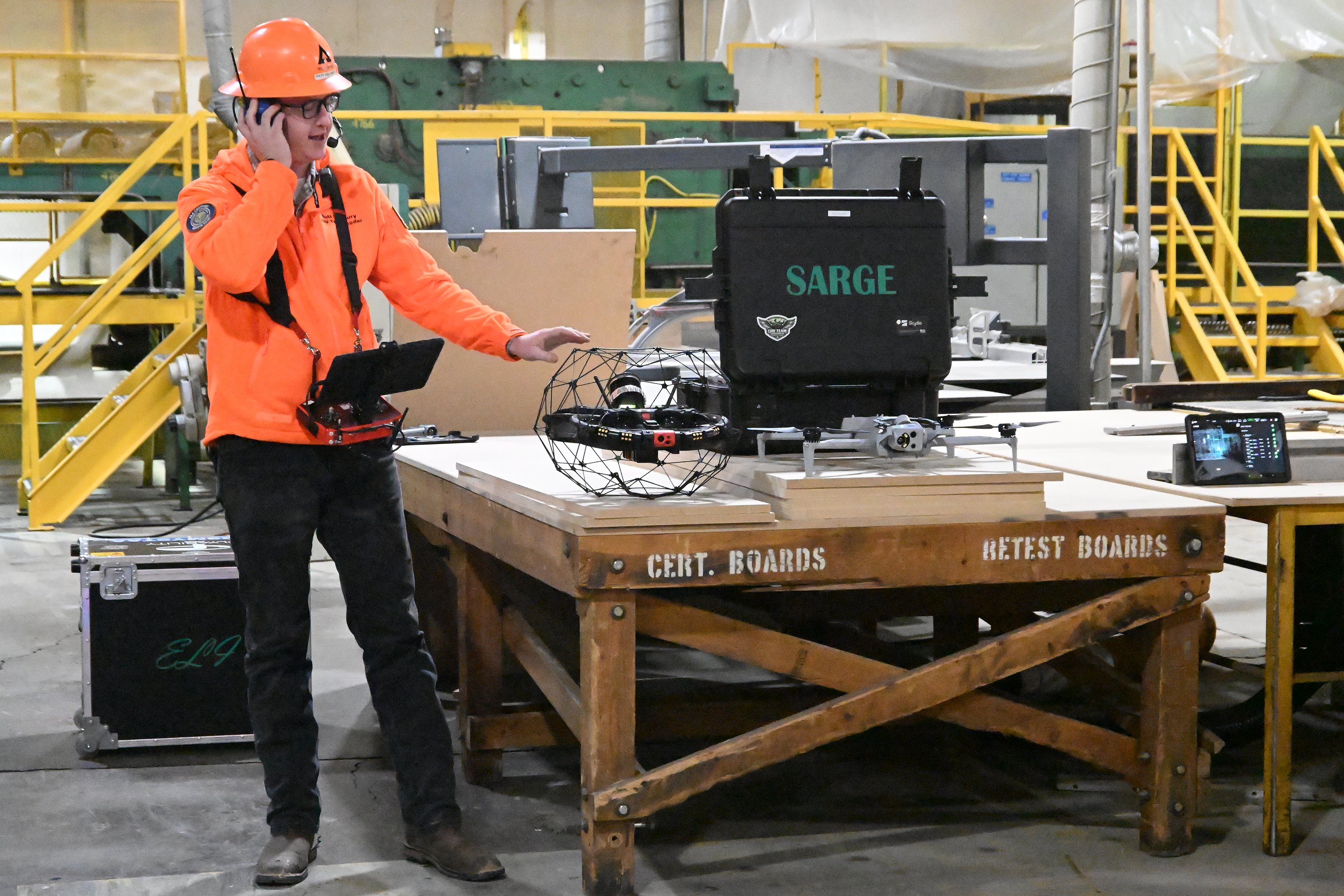 Matt Salisbury showcases two drones used at the Weyerhaeuser medium density fiberboard facility in Columbia Falls on Oct. 22, 2026. (Hailey Smalley/Daily Inter Lake)
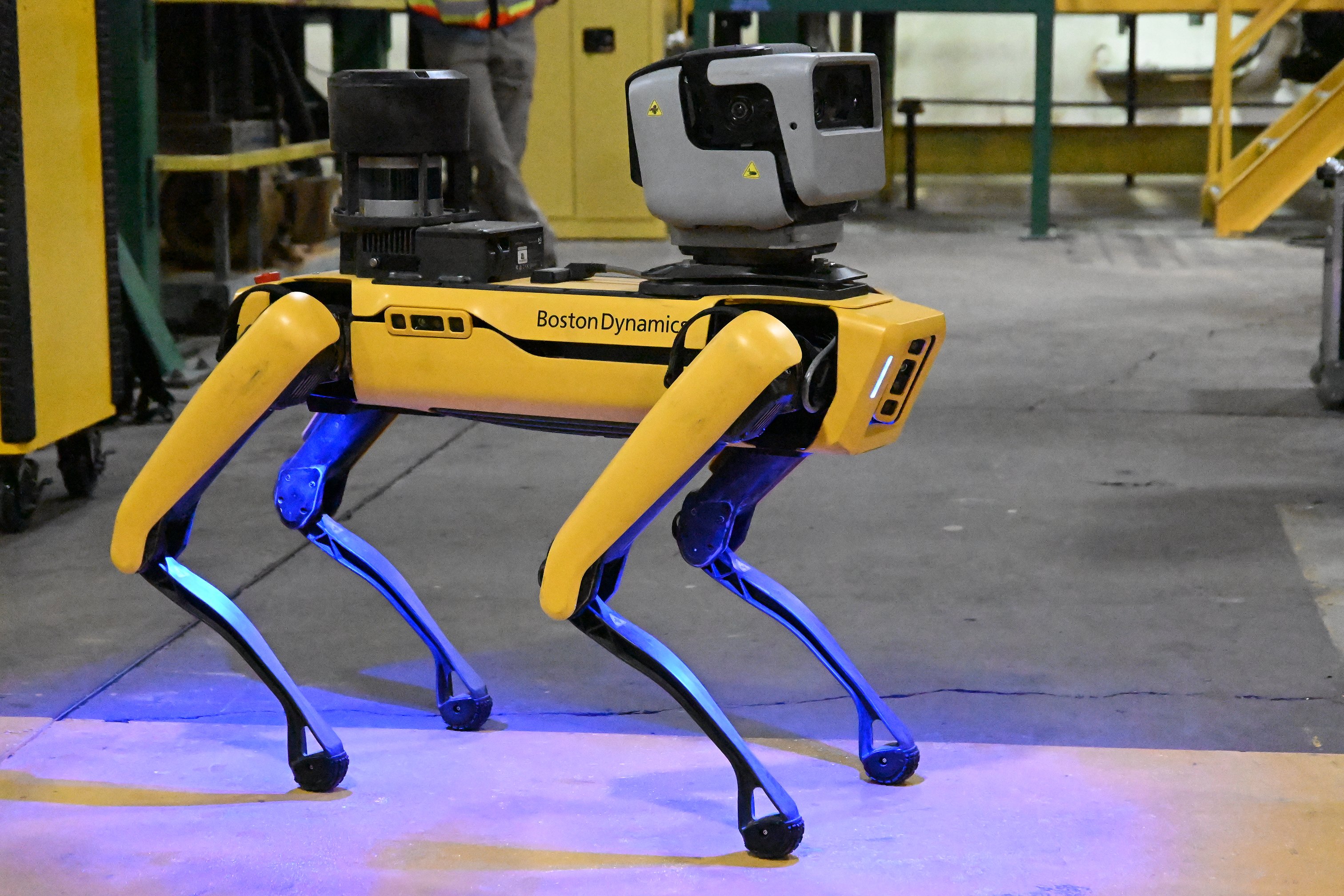 Scout patrols the floor of Weyerhaeuser medium density fiberboard facility in Columbia Falls on Oct. 22, 2026. (Hailey Smalley/Daily Inter Lake)
ARTICLES BY HAILEY SMALLEY
Tech highlighted in chamber-sponsored Flathead Valley timber tour
One of Montana's oldest industries has become fertile ground for innovation in recent years.
A snapshot in time: Volunteer pilot helps residents look at a treasured resource from a new angle
A recent flight would take him across the Thompson chain of lakes, a 20-mile stretch of glacially carved tarns between Kalispell and Libby.
Glacier National Park documents first bat casualty from deadly fungal disease
A bat found dead in the St. Mary area of Glacier National Park has tested positive for white nose syndrome, marking the first confirmed case of the deadly fungal disease within the park's boundaries.