
Stocking program brings back native rainbow trout to Kootenai River
HAILEY SMALLEY | Hagadone News Network | UPDATED 16 hours, 52 minutes AGO
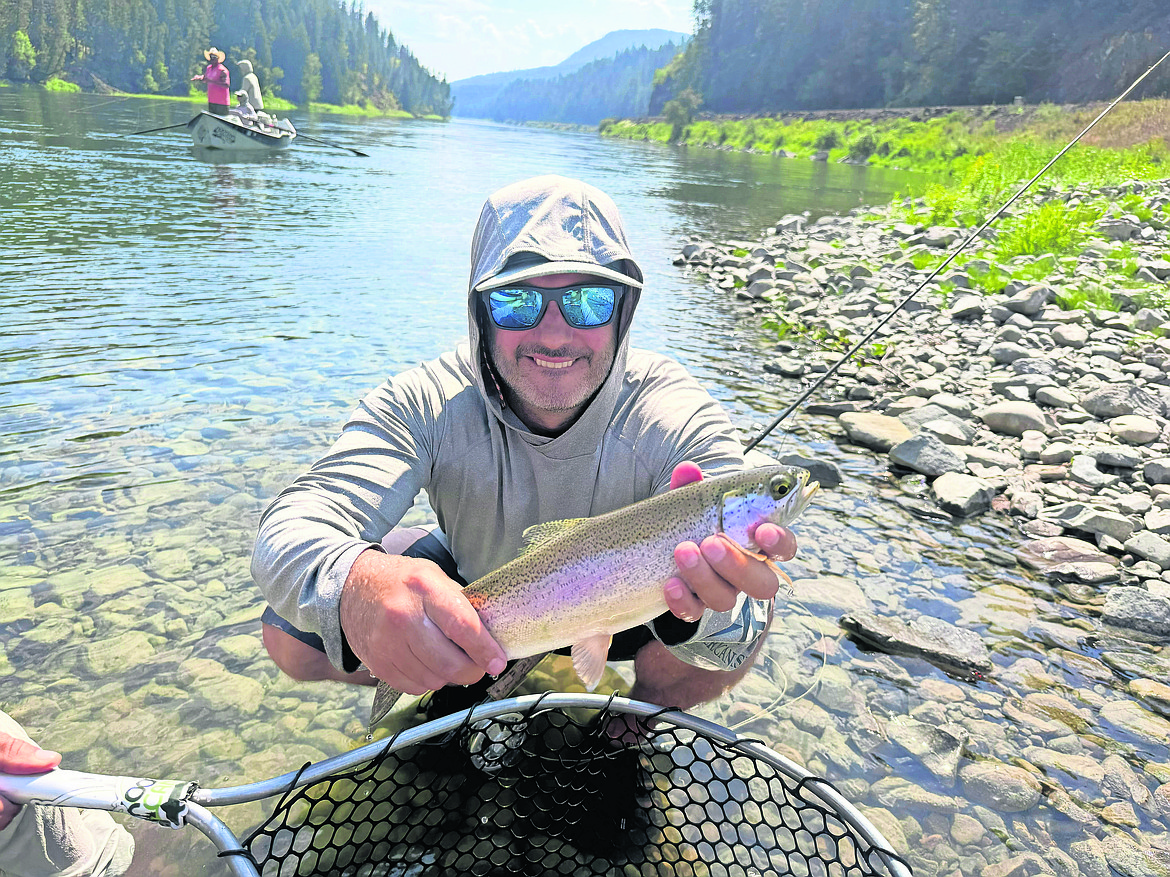
Montana’s only native rainbow trout are on the precipice of a comeback, three years after state wildlife officials first began building a regional stocking program.
The dual pressures of habitat loss and hybridization have long relegated the state’s remaining native redband trout — a type of rainbow trout — to a handful of headwaters in the Kootenai River drainage. Now, you can also find thousands of parr and fry swimming in the waters of Murray Springs Fish Hatchery outside of Eureka.
The young redbands represent the first generation of a domestic broodstock being developed to safeguard the Treasure State’s flourishes on the species’ genetic signature. Eventually, state fisheries biologists hope to reintroduce those genetics to lakes throughout northwestern Montana, including long-treasured fishing holes like Kilbrennan Lake and the Thompson chain of lakes.
The goal, said Montana Fish, Wildlife and Parks Fisheries Management Biologist Brian Stephens, is to both provide new recreational opportunities for anglers and safeguard the future of redbands as a whole.
“They’re unique in that they’re a native species,” Stephens said. “You can go almost anywhere in Montana and catch a rainbow trout, but [redbands] are a true native fish and they’re found only in this northwestern corner.”
“They’re gorgeous,” he added. “Bright red stripe. A fighting fish.”
REDBANDS HAVEN’T always been held in such high regard by the angling community. Throughout the early and mid-1900s, it was common practice to supplement native fisheries with non-native hatchery-raised sportfish, including coastal rainbow trout.
Columbia River redband trout are a subspecies of rainbow trout, meaning the two fish are genetically similar enough to interbreed but distinct enough to have developed unique behavioral and physical characteristics.
In the wild, Columbia River redbands are sequestered from coastal rainbow trout by hundreds of stream miles. The two have little opportunity to interact, much less breed. With the introduction of coastal rainbow trout to inland waterways, the barrier to hybridization was gone and the line between subspecies began to blur.
Once genetic mixing begins, “more of less the process is irreversible,” Stephens said.
A 2018 Western Native Trout Status Report framed the issue of hybridization through the lens of legacy. As a whole, redbands are not at immediate risk of extinction, but the encroachment of non-native species does present a prescient threat to specific populations of redband trout, many of which have developed unique characteristics and life histories that differentiate them from redbands in other areas.
Those nuances are represented in the legal status of interior redbands. In 1995, the U.S. Fish and Wildlife Service declined a petition to list the Kootenai River population of interior redband trout under the Endangered Species Act because there was not enough scientific evidence to justify the regional fishery as a “distinct population segment.”
But Columbia River redband trout did make Montana’s list of species of concern. A 2024 state species assessment ranked the fish as “at high risk” and “highly vulnerable to... extirpation in the state” due to hybridization and habitat loss.
The report noted that only three populations of genetically pure wild redband stock remained in Montana. Waterfalls and dams prevented non-native rainbow trout from permeating these few upstream reaches and created natural preserves of native redband genetics that state biologists are now tapping into.
In 2024, state fisheries managers netted the founding fore-fish for a regional redband trout stocking program. Biologists transported the trout to isolation tanks, injected each fish with a microchip for easy identification and took a genetic sample to analyze for any traces of foreign DNA.
“We’re being very careful to know the fish that are going into the brood,” Stephens said. “We’re trying to weed out that anthropogenic influence.”
Signs that a fish’s ancestors had interbred with coastal or Yellowstone rainbow trout were grounds for expulsion from the program. A hint of westslope cutthroat trout DNA, on the other hand, was permittable, given that the two species had co-inhabited the same waterways long before humans became involved in moving and stocking fish.
As the spring spawning season approached, Stephens and the rest of the regional fisheries biologists kept a close eye on the wild-caught fish for signs they were ready to reproduce.
In the wild, a the female redband can lay up to 2,000 eggs at a time in a shallow nest that she digs into the streambed. A male fish then releases a viscous sperm-containing fluid called milt over the nest, which settles on and fertilizes the pre-laid eggs.
But biologists wanted more control over the gene flow in their own broodstock. They snagged any particularly plump-looking trout and gently squeezed the animal’s belly to “milk” it of eggs or milt. Data gathering during genetic testing was then used to mix and match the eggs and milt, with the ultimate goal of creating a resilient and diverse lineage.
Once fertilized, the eggs were transported to Murray Springs Fish Hatchery. By summer, the eggs hatched into tiny alevin, with bulbous eyes and a translucent yolk sac still attached to their bellies. The sac dwindled over the coming weeks as the young fish began to hunt for aquatic insects. Their bodies gradually lengthened and changed from a soft salmon peach color to a dusky gray-green.
Redband trout reach sexual maturity a few years after hatching, and Stephens said it would likley take the state another two years to build up the hatchery population enough to launch a consistent stocking program, but some redbands could hit local waterways far sooner.
Since the program began in 2024, biologists have continued to capture and spawn wild redbands to add to the hatchery’s broodstock. Last year, Stephens said fisheries managers were especially successful and wound up with more redbands than were needed. About 3,500 of the year-old fish, now just over a half-foot in length, will likely be released into Kilbrennan Lake in the coming months to supplement a long-dwindling and highly hybridized population.
“We’re basically stocking the leftovers,” Stephens said.
Any surplus fish the agency breeds in the coming years will likely see a similar fate, he added. Eventually, Stephens said the agency hopes to re-introduce genetically pure redband trout to Kilbrennan, Howard and Mount Henry lakes as well as some of the lakes in the Thompson chain.
“The hope would be to save what we already have and then to expand their range further,” he said.
THIS ISN’T the first time the state wildlife agency has raised redband trout. Murray Springs Fish Hatchery maintained a brood of native redbands beginning in 2009, but early reintroduction efforts quickly hit a major pothole.
In 2013, one of the hatchery’s backup generators failed during a planned power outage. Pumps that circulate temperature-controlled, oxygenated water into the fish tanks stilled for more than three hours, resulting in the death of about 160,000 of the hatchery’s 195,000 fish.
Faced with a sudden blank slate, fisheries biologists decided to turn toward a simplified stocking regime that utilized a strand of rainbow trout native to Kootenay Lake in British Columbia. Alternatively called both Gerrard and Kamloops rainbow trout, the Canadian fish are considered the heavy-weight champions of all rainbows, often reaching more than 20 pounds.
While ideal for anglers, the Gerrard rainbow trout’s hefty size presented challenges to hatcheries staff. Tanks filled quickly, especially as staff had to raise fresh broods for release each year.
The Gerrard rainbow trout that biologists released into local lakes had all been specifically bred to have three sets of chromosomes instead of the usual two. So-called triploid trout are unable to reproduce, making them a popular choice for hatchery managers worried about introducing foreign genes into native waterbodies.
The downside, of course, is the perpetuation of constant stocking cycle, in which hatcheries managers must raise and release enough fish to offset those caught by anglers.
“Long story short, after a decade, that wasn’t working very well,” Stephens said.
The switch to native redband trout has come with its own challenges. Stephens recalled his first attempts at feeding the freshly caught redband trout in 2024. He scattered the usual food pellets across the water, but the trout just swam on, unfazed.
It took some experimentation before Stephens settled on a strategy of mixing cut-up nightcrawlers in with the pellets. The worms “probably smell and taste like something they might have in the wild,” Stephens said, spurring the fish’s appetites and easing their transition to processed food.
“We’re trying to do the best we can since this project is just starting,” Stephens added.
For him, the promise of preserving Montana’s wild fisheries heritage makes all the effort and on-the-job learning worthwhile.
“There’s a handful of pure redband genetics left,” Stephens said. “Once they’re gone, they’re gone.”
ARTICLES BY HAILEY SMALLEY

Independent Seth Bodnar courts 'politically homeless' voters in Senate race's final stretch
Standing in front of the fireplace at the Montana Taphouse in Whitefish, independent U.S. Senate candidate Seth Bodnar regaled patrons with the story of the first operation he commanded as a lieutenant in the U.S. Army.
White nose syndrome found in Glacier National Park bats
A bat found dead in the St. Mary area of Glacier National Park has tested positive for white nose syndrome, marking the first confirmed case of the deadly fungal disease within the park’s boundaries.
Stocking program brings back native rainbow trout to Kootenai River
Montana’s only native rainbow trout are on the precipice of a comeback, three years after state wildlife officials first began building a regional stocking program.