
Bigger wheat crop in 2026, but challenges with quality
CHERYL SCHWEIZER | Hagadone News Network | UPDATED 1 week AGO
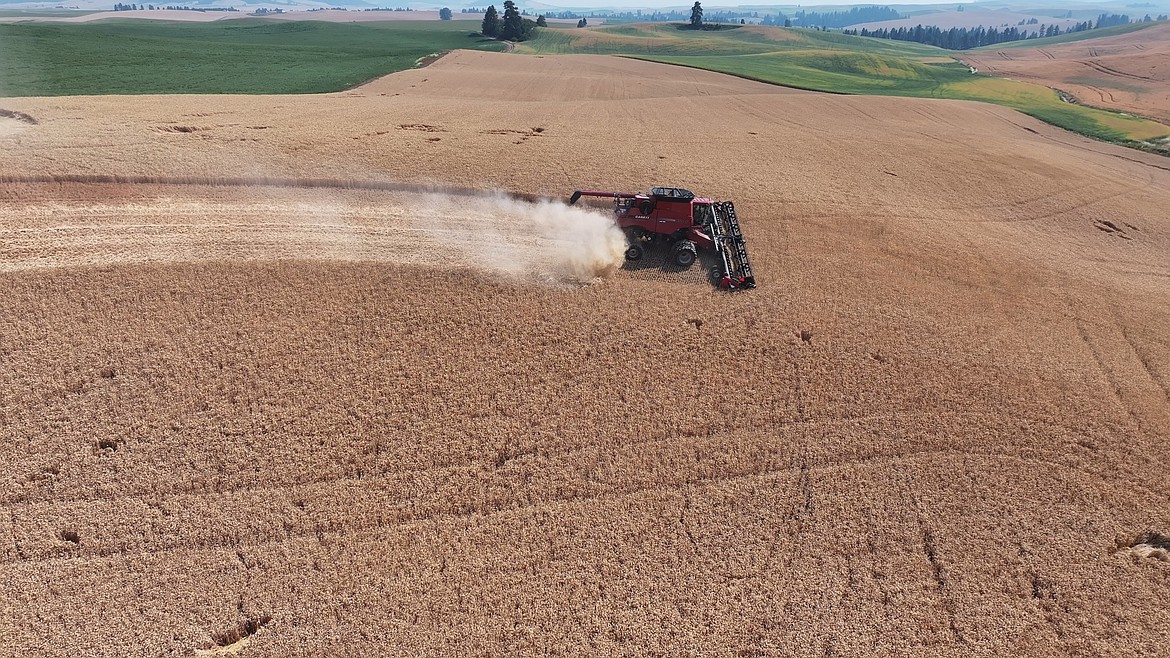
A combine works a wheatfield at the Redman Ranches, Palouse. The 2026 wheat crop was bigger than 2025, but faced some challenges with quality.
COURTESY PHOTO/WASHINGTON GRAIN COMMISSION
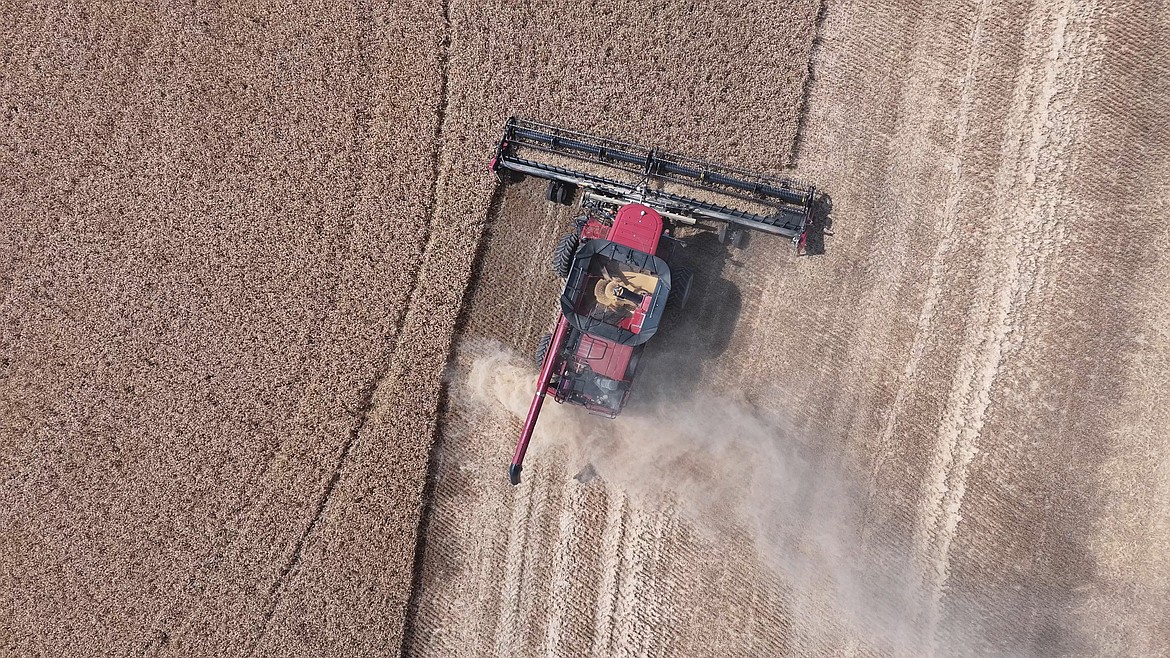
Wheat is cut and winnowed into a combine at Redman Ranches, Palouse.
COURTESY PHOTO/WASHINGTON GRAIN COMMISSION
Senior Reporter Cheryl Schweizer is a journalist with more than 30 years of experience serving small communities in the Pacific Northwest. She began her post-high-school education at Treasure Valley Community College and enerned her journalism degree at Oregon State University. After working for multiple publications, she has settled down at the Columbia Basin Herald and has been a staple of the newsroom for more than a decade. Schweizer’s dedication to her communities and profession has earned her the nickname “The Baroness of Bylines.” She covers a variety of beats including health, business and various municipalities. | October 29, 2026 1:00 AM
PULLMAN — There being no perfect harvest, there was both good news and bad news for farmers in the 2026 wheat crop.
“It’s been mixed,” said Jessica Pupo, market development specialist for the Washington Grain Commission. “Farmers get paid by the bushel; for example, the average bushel (yield) this year was around 73 bushels per acre when last year it was around 63. We have seen people getting anywhere from 10 to 20% more of a crop, and that’s been good when we’re talking about bushels coming off the field.”
While yield per acre is a critical factor, every farmer knows it’s only one factor.
“There have been areas of concern with quality. Usually, when you get a higher quantity, quality doesn’t always follow, and that’s really important for our wheat farmers specifically because of our end-use market,” Pupo said. “The protein levels across many different samples have been at about 9%, which is lower than what some of our exporters are looking at, but not every region saw that concern.”
The conditions that affected quality also affected quantity.
“That happened in yield as well. It was a higher yield, but you did see areas that got a freeze in the early spring,” she said. In some locations that meant wide differences in quantity, sometimes in yield, sometimes in the same field.
Most Washington wheat is dryland farming, and while the weather gods can be kind, sometimes they’re not.
“When you look at the reports for this year of rain, overall it is trending lower, and it has been trending lower, say over the last several years. This year, it seemed that in a lot of areas we got rain right at the right times,” she said. “That’s what contributed to the bushels that we got, was really timely rains. That was more true for winter wheat than spring wheat. Spring wheat did experience dryness, and their yields were not as high.”
Farming is always a delicate balance of estimating, planning, planting and hoping everything aligns, and wheat farming is no exception.
“Another factor – it sounds like it’s controllable by the farmer, but it’s not always – is fertilizer use. It plays a lot into the conversation of weather. When you have a really great year and your yields are looking higher than average, you may be producing more of a crop than how much fertilizer was put on the field, and nitrogen is a big piece of protein. If you fertilized for the yield that you thought you were going to get, and then that yield is 10% higher, then sometimes you might run out of the nitrogen needed to fill the protein to keep up with the yield. Nitrogen is another big factor in quality,” she said.
About 89% of the wheat grown in Washington is soft white wheat, which is primarily used for pastries and other confections. The biggest market is in Asia, Pupo said. Even with the turmoil in American trade policy and the bumpy world economy, export markets for soft white wheat remain relatively steady.
“We have, pretty much, our top three purchasers, (including) Philippines, South Korea, and Japan. We have really great long-term relationships with those countries. Japan has been a customer with us for 70 years,” she said. “Korea has been a customer with us for 60 years. (We’ve had) really long, stable relationships, and so the impacts that geopolitics are having on many other crops hasn’t been super impactful for us.”
Washington also sells wheat to countries like Indonesia, Bangladesh, Vietnam, and Thailand. Most of the top 10 markets are in Asia, she said.
Even with more stable markets, the turmoil over tariffs has affected wheat farmers in much the same way the combination of tariffs and a jittery world oil market have affected everybody else.
“It’s been more impactful for the farmer’s price of inputs,” Pupo said. “The prices were okay this year. What might counter the positivity is the cost of inputs, and especially looking at diesel prices with harvest and now going into planting. And then fertilizer prices are now hitting farmers. A positive bushel per acre price coming off the field may have been countered by some high input prices.”
A lot of wheat grown in Washington is purchased early in the season, before the crop is harvested. Those transactions usually come with a set of standards, the protein levels in the wheat being one of the most important.
“If the harvest comes in and it doesn’t meet those protein levels, then there’s a discount that’s usually applied,” Pupo said.
Part of the grain commission’s job is to help wheat farmers and wheat purchasers in a year where the wheat is not meeting conditions.
“The grain commission continues to be really focused on market development for any crop that might not be meeting the specifications that some of our customers want,” Pupo said. “With our focus, we’ve contributed a lot of our time and energy to making sure that when we do come up on a year like this - which was very abnormal to see the lower protein that we saw this year – we have been very active in taking steps to figure out what to do with that crop, and how to make sure that our international customers know how to use the crop at the lower protein levels.”
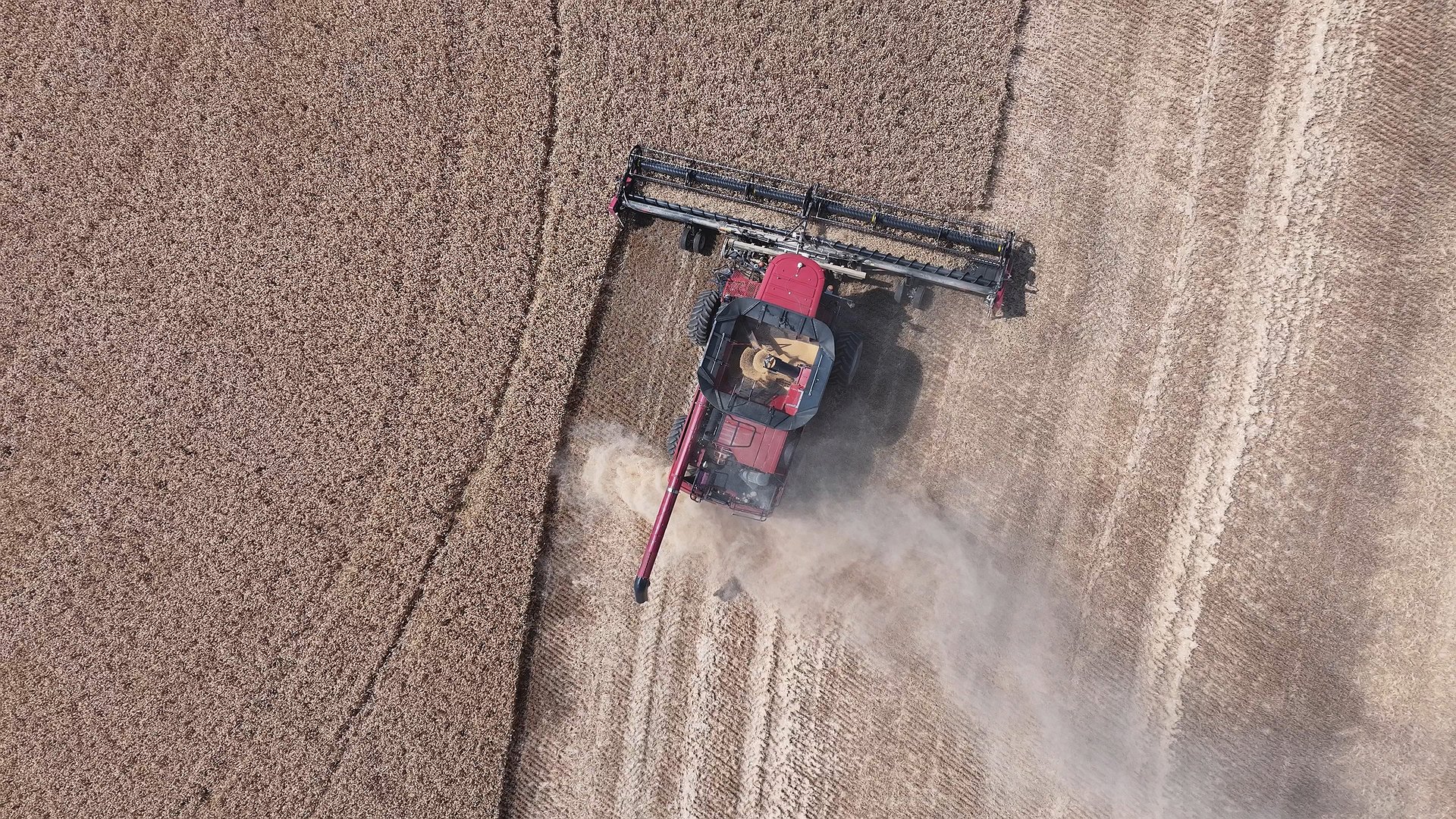 Wheat is cut and winnowed into a combine at Redman Ranches, Palouse.
COURTESY PHOTO/WASHINGTON GRAIN COMMISSION
ARTICLES BY CHERYL SCHWEIZER
Comment period still open for 2027 Grant PUD budget
EPHRATA — Grant County Public Utility District customers can still submit their opinions on the proposed 2027 budget in writing on the PUD website until the budget is adopted. Utility district commissioners are scheduled to vote on the final budget Nov. 24. The PUD is projected to spend $738.1 million in 2027, according to a presentation at the budget hearing Oct. 27. That's about a 5% increase over the 2026 budget. Some of those expenses will be offset by money the PUD gets from its customers and from selling power to outside customers. That's projected to be about $224.6 million.

Two hospitalized after collision near Othello
OTHELLO — Two people were injured and hospitalized when a car collided with a semitruck about 12 miles west of Othello Wednesday morning. According to a press memo from the Washington State Patrol, Leslie Villalobos, 23, was driving south on Road D Southeast at about 8:15 a.m. when she failed to slow down at the intersection. Rigoberto Pruneda, 41, Othello, was driving west on SR 26 when Villalobos's car entered the intersection, the WSP memo said. Trooper Jeremy Weber, WSP District 6 public information officer, said Pruneda attempted to steer out of the way of her vehicle, which is difficult to do in a semitruck.
State Route 26 closed due to collision
UPDATE: As of 12:30 p.m. SR 26 has been reopened. OTHELLO — State Route 26 is closed about 12 miles west of Othello due to a serious two-vehicle collision, according to a media alert from the Grant County Sheriff's Office. The highway is closed in both directions, according to a release from the Washington Department of Transportation. The closure is at the intersection of SR 26 and Road D Southeast, according to the GCSO release. There is a detour in place, the WSDOT release said. As of 10 a.m. Wednesday, there was no estimated time for reopening, the WSDOT release said. This is a developing story and will be updated as more information becomes available.