
MOVING HISTORY FORWARD: The Long-Forgotten Pandemic — part two
STEPHEN SHEPPERD / Moving History Forward | Coeur d'Alene Press | UPDATED 8 hours, 3 minutes AGO
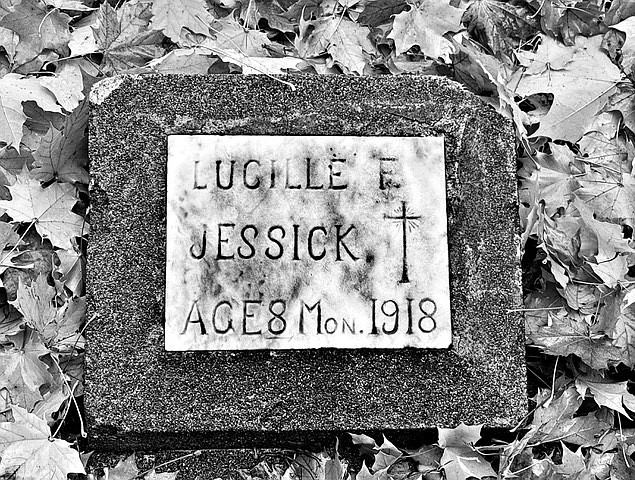
The City’s First Victim – A good number of Kootenai County residents died from the Spanish Flu virus before the first death was reported from within the boundaries of the city of Coeur d’Alene. Sadly, the first to succumb was Lucille Francis Jessick, who was just two days short of turning eight months old as listed. The official cause of death listed on her death certificate was pneumonia, and she had been ill for one week before passing away.
Stephen Shepperd photo
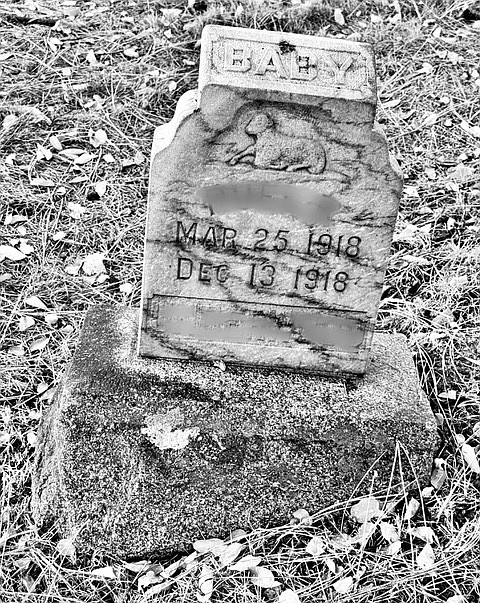
The Children’s Section – The strain of Spanish Flu that struck Coeur d’Alene generally attacked the most vulnerable in the city’s population, taking a toll on the aged, the infirm, and the very young. There is an “Infant Section” on the west side of Forest Cemetery where many of the children who died from the virus are buried. Some of their graves are identifiable by the numerous symbols engraved on their headstones and grave markers, as seen in these marker photos. Small crosses, angels, lambs, calves, and other symbols of childhood are visible in Section F, part of the infant section. The e…
The strain of Spanish Flu that struck Coeur d’Alene generally attacked the most vulnerable in the city’s population, taking a toll on the aged, the infirm, and the very young. There is an “Infant Section” on the west side of Forest Cemetery where many of the children who died from the virus are buried. Some of their graves are identifiable by the numerous symbols engraved on their headstones and grave markers, as seen in these marker photos. Small crosses, angels, lambs, calves, and other symbols of childhood are visible in Section F, part of the infant section. The examples seen in this phot…
When Part 1 of The Forgotten Pandemic ended, the State Health Authority’s quarantine had just been implemented, and Coeur d’Alene appeared to be complying fully, isolating at home with family. In part two, we take a look at the effects the November 1918 general election and the armistice ending World War I had on the maintenance of protective measures.
The week of Oct. 28, 30 cases of flu were reported, bringing a warning from county health physician Dr. Darius Drennan. He blamed congested living conditions and the failure by some families to fully isolate as the main factors for the spread of the virus. The same weekend, Dr. Drennan himself contracted a gastrointestinal strain of the virus, losing 10 pounds over three days, but he survived.
With Drennan sidelined, the job of county physician fell to Dr. Alexander Barclay. He quickly moved to organize response teams of nurses and first-aid-trained volunteers to provide in-home services to families and, with the help of the Red Cross, was able to coordinate their deployment.
Despite these new measures, the number of cases began to swell in number. By the eve of the Nov. 3 general election, active cases had risen to 135. On Oct. 29, the city had also reported its first death, a 7-month-old child, Lucille Francis Jessick. Two days later, Dr. John T. Wood’s 8-year-old daughter, Dorothea, became the second to succumb. Health officials also reaffirmed trick-or-treating had been canceled, and the response coming from Mayor Claude H. Potts was to issue a request for poll workers on the upcoming election day to wear masks, and for voters not to congregate while waiting to vote.
Suddenly, listing the names of the local citizens who had died as well as their funeral times became front-page news.
However, the news that came Nov. 11 that World War I had come to an end quickly chased any news of the death toll to page two or even further back in the newspapers. Caution was then truly thrown to the wind when Mayor Potts called for all work to cease for the day in Coeur d’Alene at 11 a.m. This opened the door to a public celebration, with the citizenry filling Sherman Avenue with merriment and dancing until the early hours of the next morning.
Just a week later, the State Board of Health, acting on reports that the epidemic was diminishing, sent a letter to local boards of health, lifting all restrictions effective Nov. 24. True that there was even evidence that Coeur d’Alene’s situation was also showing signs of improvement, but there was still a collective feeling among area physicians that it was too early to lift any constraints. The doctors advocated for at least one more week to pass, but their resolve crumbled when they met with the city leaders and county and city health officers. On Friday, Nov. 22, it was announced that a decision had been made to begin the process of completely peeling back the quarantine.
In our next installment, we will see whether the decision to loosen restrictions was the correct one.
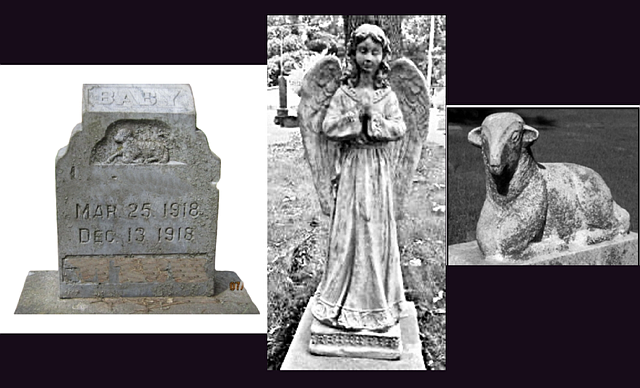
 The Children’s Section – The strain of Spanish Flu that struck Coeur d’Alene generally attacked the most vulnerable in the city’s population, taking a toll on the aged, the infirm, and the very young. There is an “Infant Section” on the west side of Forest Cemetery where many of the children who died from the virus are buried. Some of their graves are identifiable by the numerous symbols engraved on their headstones and grave markers, as seen in these marker photos. Small crosses, angels, lambs, calves, and other symbols of childhood are visible in Section F, part of the infant section. The examples seen in this photo collage adorned the grave stones of children who passed away in the last few months of 1918.