
Kalispell Public Schools adopts budget, discusses countywide levy
HILARY MATHESON | Hagadone News Network | UPDATED 1 month, 2 weeks AGO
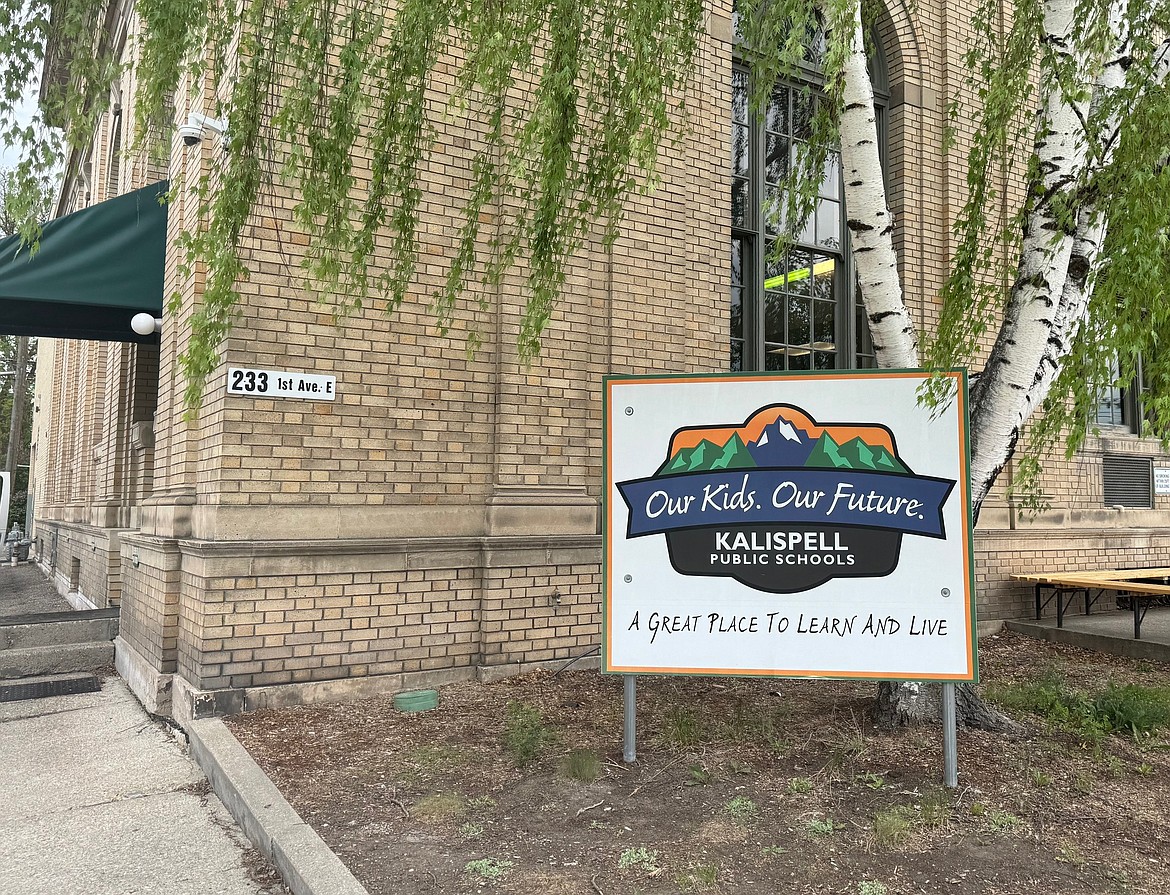
The Kalispell Public Schools central office at 233 First Ave. E. in Kalispell.
EDUCATION REPORTER Hilary Matheson covers education for the Daily Inter Lake. Her reporting focuses on schools, students, and the policies that shape public education across Northwest Montana. Matheson regularly reports on school boards, district decisions and issues affecting teachers and families. Her work examines how funding, enrollment and state policy influence local school systems. She helps readers understand how education decisions affect students and communities throughout the region. IMPACT: Hilary’s work provides transparency and insight into the schools that serve thousands of local families. | September 3, 2026 12:00 AM
Kalispell Public Schools will operate on a $92.8 million budget for the 2026-27 school year with school officials projecting surpluses.
The Board of Trustees unanimously approved the final budget on Aug. 11, adopting separate budgets for the elementary and high school districts after a presentation on how state funding changes, enrollment and staffing decisions shaped the numbers.
The elementary district will operate on $45.1 million, about a 2.5% increase compared to last school year. The high school district will operate on $47.8 million, a 2.2% increase.
The general fund is the largest of the budgeted funds, paying for most day-to-day school operating costs, including salaries, benefits and department budgets. The elementary general fund is about $26 million while the high school general fund stands at about $30.4 million.
Other budgeted funds include retirement, transportation, building reserve, bus depreciation, tuition for students attending out-of-district schools, technology, adult education and a flexibility fund.
In a follow-up budget projection presentation on Aug. 25, Finance and Business Director Chris Campbell said the elementary district was looking at a projected deficit of about $700,000 in May, noting higher-than-expected health insurance costs as a contributing factor. However, subsequent revenue increases were realized and reductions made, turning the expected deficit into a projected surplus of about $119,000 for fiscal year 2027.
The added revenue came from out-of-district tuition, which is paid by a student’s home school district to the district the student chooses to attend. Campbell said tuition revenue typically would not increase the district’s spending authority but would instead provide tax relief. With House Bill 156 in effect this year, however, he said the Office of Public Instruction is allowing the district to use the tuition to increase its over-base budget.
“That totaled to an increase of $257,000 in revenue for elementary and $336,000 for high school,” he said, with the caveat that the rate districts are required to pay could be reduced by nearly half next year or nixed altogether.
“But for now, the money is available,” he said.
District administrators also worked to reduce more than $501,000 in costs from the budget. Assistant Superintendent Sarah Cole said the K-8 team reviewed enrollment, staffing levels, paraeducator positions, school block grants and technology subscriptions. Prior staff reductions also were made through attrition.
Campbell said the elementary district is in a much better position than the May projection but reiterated that it will be tight.
The high school district is in a stronger position. Campbell said the district had expected a surplus of about $359,296, but the latest projection puts that figure at $479,610. He described it as a solid position to be in for fiscal year 2027.
Campbell said the high school surplus was boosted by the $2.97 million high school general fund levy voters approved in 2025 and by STARS Act funding, which seeks to increase starting teacher salary.
BEYOND THE district’s budget projections, officials warned that recent state legislation could change how school taxes appear on property tax bills due to House Bill 156, which changes the BASE levy system structure.
In Montana, each public school district has a BASE (Basic System of Quality Public Schools) budget that is meant to set a baseline of funding to operate, regardless of a city’s taxable value. Property taxes collected through BASE levies are a key funding source. Campbell and Flathead County Superintendent Marcia Stolfus both said that, in conferring with colleagues, there is a major learning curve to understanding the full implications of the bill for school budgets and taxpayers.
Stolfus described HB 156 as shifting school BASE funding from separate district levies to a countywide levy in a recent letter to the Flathead County commissioners.
“Rather than each school district levying separately for its BASE funding requirement, Montana is moving to a countywide BASE funding levy,” Stolfus wrote.
“Under HB 156, the BASE funding requirements of the school districts within the county are combined, and the countywide levy is established to support those requirements.
“This means the way school mill levies appear on the tax bill will change. A taxpayer may see a countywide school BASE levy rather than a levy that is calculated solely from the budget of the individual district in which the property is located.
“The purpose of this change is to provide greater equalization in the funding of school district BASE budgets. It also changes the roles and calculations involving the county superintendent, school districts and county treasurer,” she continued.
The extent of how it will affect schools and taxpayers is not clear yet, according to Stolfus and Campbell.
“As of now, we don’t have really good clarity yet of this shift from local to county,” Campbell said. “You could see specific school district taxes go down but county taxes go up.”
Stolfus said it is important to distinguish between a school district’s budget, which is determined by enrollment, and mill levies, which are affected by taxable value.
“The mill levy, however, is determined after considering the amount that must be raised locally and the taxable value available within the district or county,” Stolfus stated. “Consequently, two districts with very different budgets may have similar mill levies, while two districts with similar budgets may have substantially different mill levies.
Campbell surmised that taxpayers in towns with higher taxable values, including resort communities such as Whitefish and lakefront areas such as Lakeside, could potentially pay more. Stolfus made a similar point.
Stolfus said districts with smaller taxable-value bases may need more mills to raise the same amount of local revenue.
“This becomes even more important under HB 231 and SB 542 because changes to property tax rates and taxable values have affected the value of each mill. The Montana Legislature has acknowledged that lower taxable values can be offset by higher mill requirements for dollar-based levies.
In other school district news, Kalispell Public Schools has sold its Auxiliary Services Building at 514 E. Washington St., Kalispell. The building went on the market after the board declared it surplus/obsolete property in October 2025.
The building was sold to Paul and Brandy Peters for $765,000. Proceeds from the sale will be held in a reserve account for future property purchases or go toward supporting the district’s regular operations.
Reporter Hilary Matheson can be reached at 406-758-4431 or [email protected]. If you value local journalism, pledge your support at dailyinterlake.com/support.
ARTICLES BY HILARY MATHESON

Evergreen educator named Montana Teacher of the Year
Evergreen Junior High special education teacher Kenny Ross is Montana's Teacher of the Year.

FVCC faculty issues no-confidence vote amid president contract negotiations
The FVCC Education Association, the Flathead Trades Instructors Association and the Federation of Flathead Valley Community College Adjunct Faculty have voted no confidence in FVCC Executive Director of Human Resources Karen Glasser, saying they have lost trust in her leadership and judgment.

United by yellow: Crosstown rivals stand together for suicide prevention
Students from Flathead and Glacier high schools used one of the valley’s top rivalries to send a visible message of hope and solidarity by wearing yellow for suicide prevention awareness in September and through October.