Once again, federal $ assist county budget; taxes slightly decrease
SCOTT SHINDLEDECKER | Hagadone News Network | UPDATED 1 month, 1 week AGO
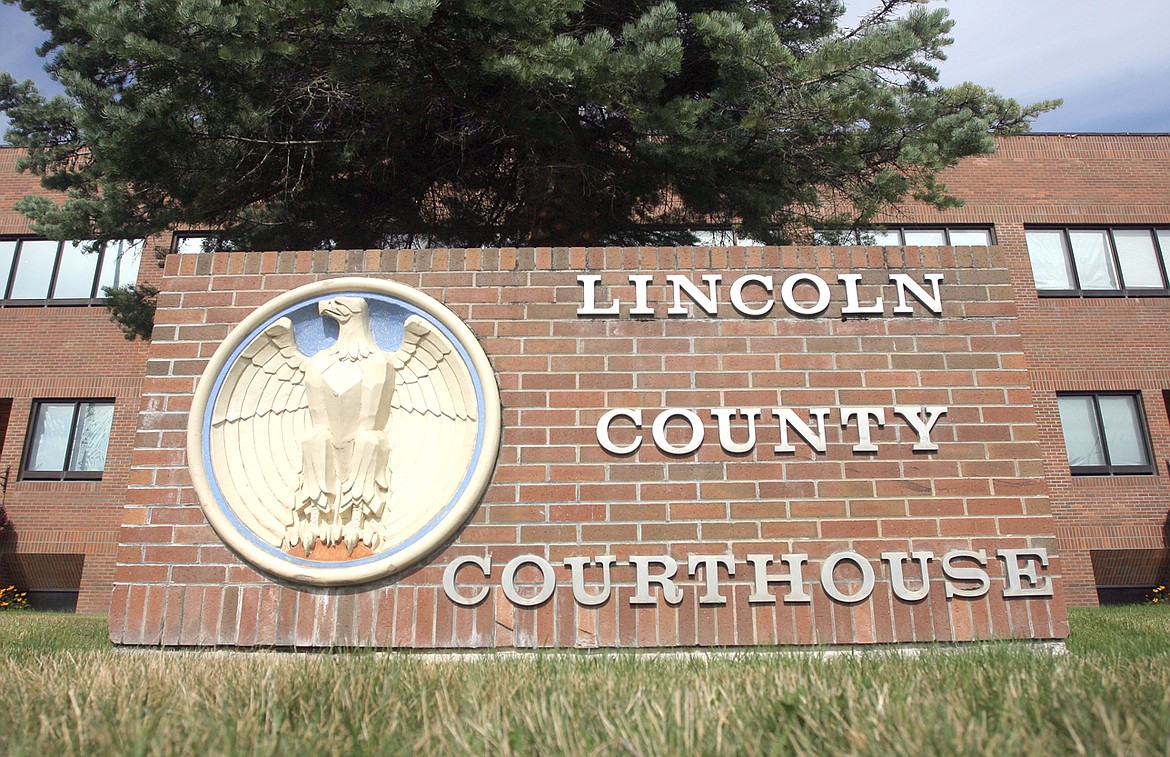
Lincoln County Courthouse. (Paul Sievers/The Western News)
While some residents clamor for declining federal money, that safety net helped substantially in developing a balanced budget in Lincoln County.
Nearly $3 million in grant money allowed the county commissioners to present and approve the $16.2 million budget for Fiscal Year 2027 last week at the Sept. 2 meeting.
While there is no assurance of future federal funds, one small bright spot was a reduction in property taxes.
Owners of a property valued at $100,000 will see a $24.59 reduction on next year’s bill. For a $300,000 property, the drop will be $73.78 and for owners of a $600,000 property, it’s $207.86.
While it’s not much, it is better than what happened in the last three fiscal years.
Property taxes increased the last three years, each by the same amount. In Fiscal Years 2024-2026, properties valued at $100,000 saw tax increases of $100.01. Properties worth $300,000, the increase was $300.02 and for $600,000 properties, it was $600.05.
The county received $12 million in LATCF money in 2023, which originated from an American Rescue Plan (ARPA) appropriation of $2 billion across fiscal years 2022 and 2023 to provide payments to eligible revenue sharing counties and eligible Tribal governments for use on any governmental purpose except for a lobbying activity. Former President Joe Biden signed the American Rescue Plan Act into law in March 2021.
According to county Administrator Matt Williams, $2.2 million from the Local Assistance and Tribal Consistency Fund (LATCF) helped make up the deficit.
“The FY27 budget adopted Sept. 2 appropriates $2,211,957 from LATCF to cover the difference between the county's non-voted levy requirement and the amount the county is permitted to levy under 15-10-420. That transfer is funded from operating cash, not from selling investments. After the transfer, the fund holds approximately $7,631,000: the $7,000,000 that is invested and roughly $631,000 in operating cash,” Williams said in an email.
He explained the remaining ARPA balance is $154,092.61, with a further $605,979.00 in a separate ARPA-funded landfill project fund. “CDBG is a reimbursement program, so the county's CDBG funds show a negative balance where project costs have been paid ahead of the reimbursement draw,” Williams said.
Last year, the operating cash provided $1.3 million to get things even. Two years ago, nearly $637,000 was pulled to achieve a balance.
Williams reported that, according to the county Treasurer’s July report, the LATCF fund held about $9.8 million as of July 31. $7 million is invested and $2.8 million is held as operating cash.
The county did invest about $7 million from the LATCF money, but that has produced a return less than commissioners hoped for a few years ago due to lower interest rates. The return was used to pay for Cost of Living Adjustment pay increases for elected county employees the last two years.
During a meeting earlier this summer where the county approved a 1.5% Cost of Living Adjustment, District 2 Commissioner Jim Hammons, also on his way out after a recent resignation announcement, said the investment earnings for the current year are projected at approximately $283,000. Hammons said the county's investment portfolio, managed through Raymond James Investments, produced an approximate return of 2%.
There was also discussion about reviewing investment strategies to see if higher returns were possible while maintaining appropriate safeguards for public funds.
Williams said regarding investments, the county did not move funds to another firm.
“County investments remain custodied at Raymond James with Rademacher Financial as advisor, and the Treasurer is the officer of record,” Williams said. “The returns on the original investments reflected the low interest rates in effect when those funds were first invested, not the choice of firm. State law (MCA 7-6-202) limits counties to a narrow range of investments, principally U.S. government and agency securities, so that public funds are conserved rather than put at risk, and every firm operates within the same limits. “As the original securities have matured, the proceeds have been reinvested at current rates, which are considerably higher than when the question of seeking a better return was raised, with maturities set to match when the county expects to need the cash.”
The county was fortunate to see the Secure Rural Schools Act (SRS) renewed late in 2025 for the first time in two years.
Of the $248 million allocated by the U.S. Forest Service, Lincoln County got about $3.6 million. It was the largest allocation among 16 Western Montana counties. Sanders County was next with $1.4 million.
The SRS payments support critical infrastructure, rural schools and fund essential local services in communities surrounded by federally managed lands.
The program was only reauthorized through 2026.
Another boon was the $799,000 the county received from the Law Enforcement Resiliency Project, via U.S. Rep. Ryan Zinke. It will be used for new police vehicles and equipment for the sheriff’s office.
The second amount of money, $454,000, went to the county for repairs to the Troy Airport runway as part of the Rural Airport Reconstruction and Emergency Services Expansion project, which will help maintain reliable aviation access for emergency services and rural transportation.
There was no public comment at the Aug. 26 commission meeting when a public hearing was held during the presentation of the budget and there was none at last week’s meeting.
Williams put together a summary on the county’s fiscal position.
In it, he points out that if the annual gap grows with inflation at 3% and no other changes occur, the $9.8 million would be exhausted during FY 2031.
District 3 Commissioner Noel Duram spoke of the unique challenges that occur in Lincoln County.
“We’re going to have to be more creative and very specific in how we get this done, but I welcome the challenge and I thank you for putting this together,” Duram said. “I’m with you in reduction of services and I don’t think that’s feasible and the local taxpayers really can’t bear the brunt of a lot of this, so we have to find way… I know our finance department has looked at this as well and it’s dangerous path were on so thank you for putting this together.”
Outgoing District 1 Commissioner Brent Teske also spoke. He was defeated in the June primary election by Stu Crismore.
“This (the fiscal plan) is gonna be beneficial and if we can reach out to our federal partners, especially with this House Bill discussion and the county getting stumpage again, there’s a definite, necessary need for it and it’s not just us. There are other counties, Sanders, Ravalli, a lot of those smaller counties who have huge parts of federal land in it that are just getting their annual welfare handout, I think we need to express to them that this needs to happen.
“It funded counties for a long time and then, all of a sudden, it’s gone and now you’re allocated a small amount and they want you to maintain the same,” Teske said. “This paper really lays it out for a federal delegation to make that argument.”
Duram echoed those sentiments.
“Commissioner Teske, you’re right, and SRS (Secure Rural Schools) was never meant to be continued support and funding,” Duram said. ‘Stumpage was supposed to be there and we can’t use SRS for certain things and it doesn’t all go to us, and the challenges are gonna be great.”
ARTICLES BY SCOTT SHINDLEDECKER

Libby Loggers get much-needed win over Ronan