
Logan Pass time limits helped juggle record July visitation, Glacier National Park officials say
HAILEY SMALLEY | Hagadone News Network | UPDATED 2 months AGO
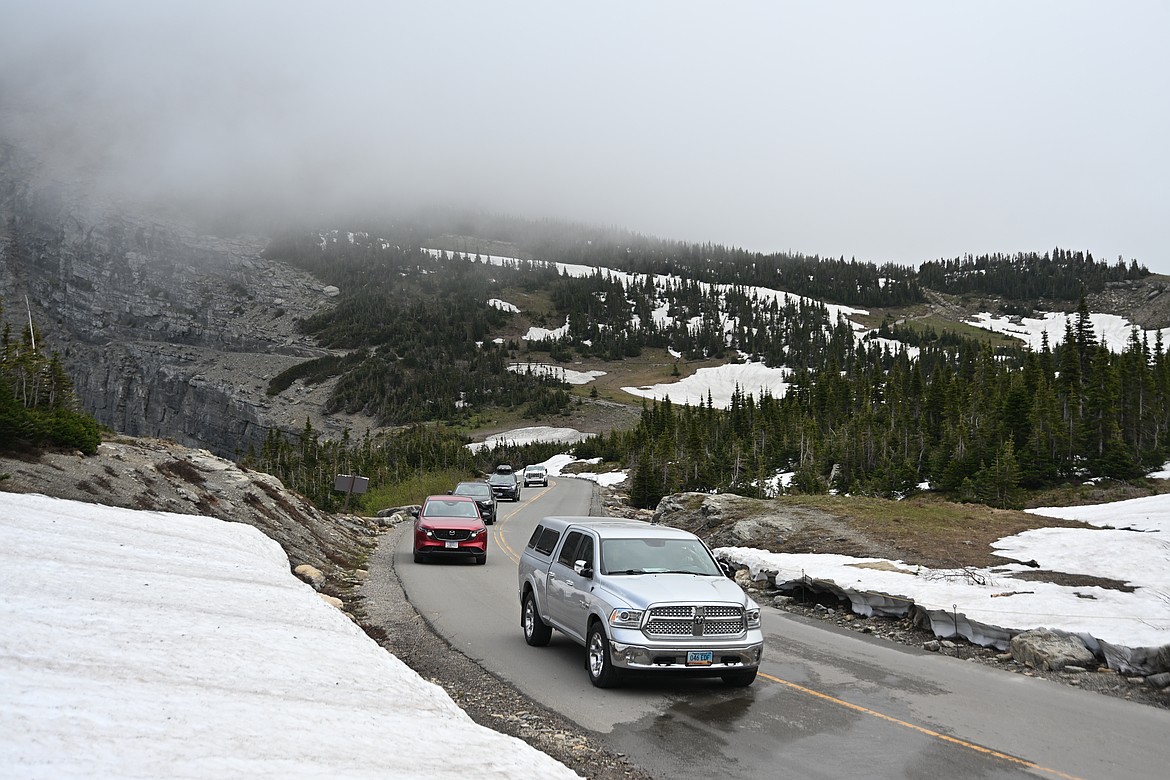
Visitors drive up the west side of Going-to-the-Sun Road on June 22, 2026. (Hailey Smalley/ Daily Inter Lake)
Labor Day marked the close of Glacier National Park’s pilot season for a timed parking system at Logan Pass.
The introduction of a three-hour time limit on personal vehicle parking generated faster turnover at Logan Pass and allowed more people to access nearby trails, park officials said in a Sep. 8 press release. Between 1,200 and 1,300 parking permits were issued for the 235-space parking lot each day that the time restrictions were in place, with up to 100 permits issued per hour during peak times.
Thousands of other summertime visitors accessed the Continental Divide via a revamped shuttle system, featuring reservable tickets and a direct service line to Logan Pass.
"By utilizing stand-by access, we filled seats that were available and provided service to Logan Pass that maximized ridership," Superintendent Dave Roemer said of the decision to shift to ticketed shuttles. "This new reservation program significantly reduced wait times at boarding and pickup locations compared to previous years."
Both changes rolled out July 1 as the park swelled with summer tourists. More than 896,300 visitors spent a cumulative 10.1 million hours within Glacier Park during July 2026, making it the fourth busiest month in the history of the park. The surge in visitation came even with Glacier Park International Airport operating at a dramatically reduced pace owing to work on its runway that month.
About 910,000 people visited the park in both August 2017 and July 2018, and the park saw upwards of 1 million visitors in July 2017.
The park tallied a total of 1,823,247 visitors between January and July of this year — the highest seven-month visitation count since the record-breaking summer of 2017.
Monday was the last day of shuttle operations within the park until next summer. The parking time limit at Logan Pass was lifted for the duration of the season on Tuesday, and all spots will be first-come, first-served.
Water at Logan Pass has been turned off to prepare for the coming winter, so all visitors are advised to pack their own supply of potable water. The Logan Pass Visitor Center will shift to reduced hours starting Sep. 13. The building will remain open from 9 a.m. to 4 p.m. every day through Sep. 27.
Winter closures on Going-to-the-Sun Road vary year to year, based on local weather patterns. Logan Pass typically becomes inaccessible sometime between late September and late October. Visit nps.gov/glac for the most up-to-date information on road and facility closures.
Reporter Hailey Smalley can be reached at 406-758-4433 or [email protected]. If you value local journalism, pledge your support at dailyinterlake.com/support.
ARTICLES BY HAILEY SMALLEY

Forstag flips western congressional district amid wave of blue votes
The blue wave left its mark on Montana Tuesday, as Democratic candidate Sam Forstag clinched victory in the western congressional district and his party made gains in the statehouse.

Northwest Montana Republicans enter election night in high spirits, despite close congressional race
Spirits were high at Republican Congressional candidate Aaron Flint's election night watch party, despite projections of a long night waiting on results.
Northwest Montana groups threaten new lawsuit in years-long legal battle over logging roads
Local environmental groups are threatening to sue the U.S. Forest Service and U.S. Fish and Wildlife for "fail[ing] to rationally consider the impacts" of logging roads on endangered species, further entrenching the federal agencies in a legal battle that has already spanned eight years and three lawsuits.