
Guest opinion: Gas station drug an emerging crisis
Madeline Turner, Ari Greenberg, Nicholas Sloan and Brett Bell | Daily Inter-Lake | UPDATED 1 month, 1 week AGO
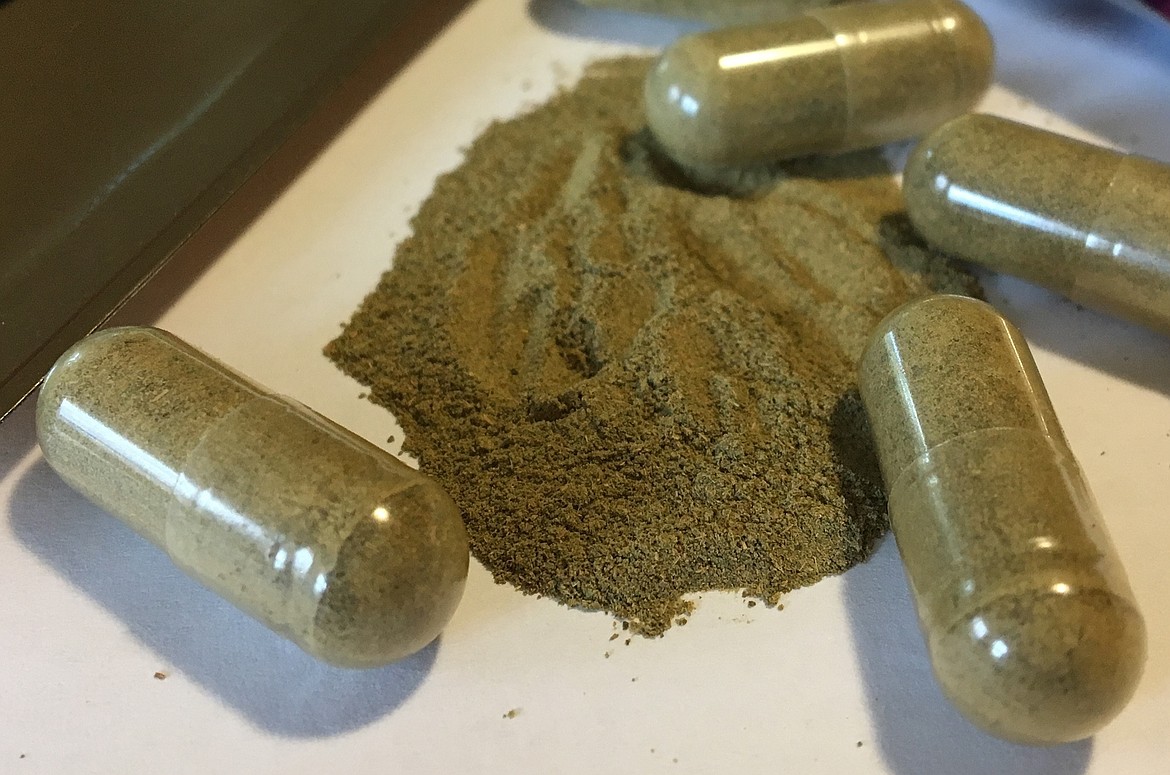
This file photo shows kratom capsules. (AP Photo/Mary Esch, File)
As doctors and addiction specialists, we have a responsibility to speak when we see a substance causing harm to our patients. That is why we are concerned about kratom.
Kratom is often described as a “natural supplement,” which can make it sound harmless. But natural does not mean safe. Kratom contains psychoactive compounds that act on the same opioid receptors affected by fentanyl and other opioids. Regular use can lead to tolerance, dependence, cravings and withdrawal. We have seen patients who began using kratom believing it was a safer alternative for pain, anxiety, energy or opioid withdrawal. What started as occasional use became daily use. When they tried to stop, they experienced withdrawal symptoms similar to those of fentanyl.
Healthcare providers are increasingly seeing patients who struggle with kratom use, specifically since the DEA scheduled 7-hydroxymitragynine (7-OH) synthetics. We should not assume that “natural kratom” is safe while synthetic products are dangerous. Kratom’s prominent psychoactive compounds are mitragynine and 7-OH. The industry will state that only <1% of dried kratom leaf contains 7-OH. In reality, kratom leaf users are unaware that a proportion of mitragynine is converted in the liver to 7-OH, increasing their exposure. Manufacturers can concentrate these compounds into extracts, gummies, shots, powders and other products that may have dramatically different potency from traditional leaf material.
So we have to ask a basic question: Why would Montana legalize and legitimize another substance that acts on the same opioid receptors as fentanyl or other opioids?
Seven states have banned kratom altogether. In Montana, Kratom has been a contributing factor in at least 25 deaths over the last five years. We have kids accidentally overdosing on their parents’ kratom supply, babies being born dependent on the substance and needing morphine to get through withdrawals, and young adults dying of overdoses. Some kratom-related deaths are going undetected, primarily because kratom is not included in standard hospital or postmortem toxicology drug panels. In Idaho, Kratom has been implicated in 83 deaths, including six deaths in an 18-month period that prompted Idaho Falls to ban the products.
It’s also worth noting that most southeast Asian countries, such as Myanmar, Malaysia and Vietnam, where kratom grows, have banned its sale and use. Additionally, it is actually illegal to import the product into the US for human use. Shipping manifests are purposely altered to bypass physical inspection at ports of entry. Yet, this hasn’t stopped Kratom companies from getting products on the shelves.
The kratom industry is estimated to be worth approximately $1.6 billion. Its size and economic power should not determine our public health policy. This industry spends millions of dollars lobbying every year and is sure to bring money to the coming legislative session. If manufacturers believe their products are safe and effective medicines or supplements, there is an established process for proving it: Put the products through the FDA’s appropriate approval process. Demonstrate their safety, quality, dosage, interactions, and effectiveness. Why should kratom be different? Montanans should not be the subjects of an uncontrolled experiment conducted for commercial profit.
Montana has spent years fighting the devastating consequences of opioid addiction. It makes little sense to create a broad commercial market for another psychoactive substance capable of producing dependence and withdrawal — particularly when it has already been linked to overdose deaths. As healthcare and addiction treatment providers, we believe Montana should put patients before profits and say no to the sale of kratom products until they have demonstrated through the appropriate FDA process that they are safe and effective. We should not wait until more Montana families experience tragedies before acting.
Dr. Madeline Turner, Helena; Ari Greenberg, physician assistant, Billings; Dr. Nicholas Sloan, Kalispell; and Dr. Brett Bell, Missoula.