
Zoning and Collections
KELLI TAYLOR / Staff Writer | Coeur d'Alene Press | UPDATED 1 month, 1 week AGO
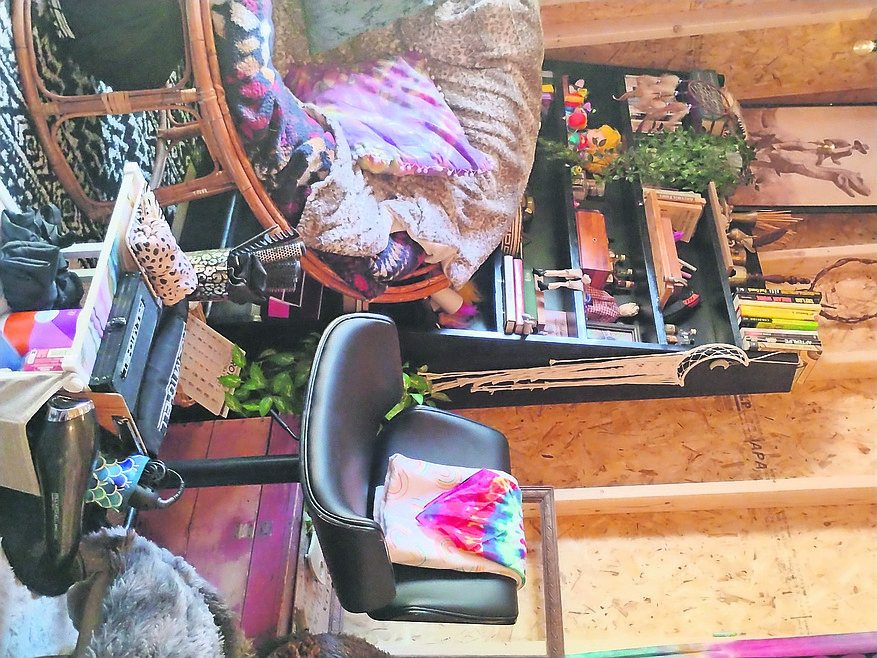
I have reached a point in my life where my thrift-shopping habit has required infrastructure. Not shelves. Not a bigger closet. Not a storage bin. A building. I bought a $4,000 She Shed … to house my treasures.
I realize that sentence may require some explanation. First, I should clarify that I don’t go thrift shopping just to buy random things. I have very specific interests. I collect things. I hunt for things. I find things that I believe are interesting, valuable, nostalgic or just too good to leave sitting on a thrift-store shelf.
This is not clutter. This is collecting. There is a difference.
At least that’s what I tell myself.
I collect ‘90s memorabilia, for example. I have an extensive Troll collection, because apparently, I looked at those tiny naked dolls with fluorescent hair and jeweled bellies and thought, yes. I need all of them (they are my spirit animal, I’m pretty certain).
And before anyone asks: Yes, I realize how ridiculous that sounds. But if you grew up in the ‘90s, you understand.
I also collect occult and oddity items, because my taste in home décor falls somewhere between nostalgic childhood memorabilia and something you might find in the back room of a Victorian-era curiosity shop, such as taxidermy alligator heads, a Ouija board, a conglomerate of crystals, gemstones and extremely cool … rocks.
I collect first-edition books, too. Those are different, though. Those are investments. At least, that’s the plan. I buy first editions with the intention of reselling them online. I’ve actually sold four.
Four.
I have considerably more than four. And here’s where my perfectly rational resale business starts to break down: Because the books are valuable. I know they’re valuable because I’ve researched them. I’ve looked at what they’re worth. I’ve compared prices. I’ve mentally calculated the profit I could make. But when someone actually wants to buy one, suddenly I have a problem. Because what if I can’t find another one? What if it becomes more valuable? What if I regret selling it? What if I need it someday?
So I keep it. And that’s how an investment portfolio becomes a collection. And a collection becomes a storage problem. And eventually, a storage problem becomes a $4,000 She Shed.
This isn’t hoarding. This is zoning.
My other half is a mechanic and a carpenter, so, naturally, he has a shop. His shop contains tools, car parts, equipment, lumber and various mechanical projects that I don’t ask too many questions about. I have my shed.
We’ve essentially divided the property according to our respective versions of the word treasure. He sees an old piece of machinery and thinks; I can fix that. I see an old piece of furniture and think; I can do something with that. He sees a box of tools and knows exactly what every one of them does.
I see an original Furby from 1999 at Goodwill and daydream of one day having my own Furby farm, where I raise them and rescue them and teach other Furby enthusiasts Furbish.
Thrift shopping has another psychological trick built into it: the fear that if you leave it behind, you’ll never see another one. You’ll never bring your Furby farm to realization if you don’t take action! So, you buy it.
Because it’s unique. Because it’s vintage. Because it’s a good deal. Because somebody else might buy it. Because you can resell it. Because you might need it. Because it’s too cool. Because it’s only $3.
And eventually you look around your house and realize that you’ve accumulated enough “only $3” items to require their own zip code.
At some point, I think every thrift shopper has experienced the moment when they realize they are no longer acquiring things. They’re acquiring responsibilities. That piece of furniture needs refinishing. That vintage item needs to be cleaned. Those books need to be photographed and listed. That weird little oddity needs a proper place to display it. And those Trolls?
Well, obviously they need to remain together. They’re a family. I don’t make the rules.
The funny thing is, I don’t actually want to get rid of all of it. That’s the part minimalist culture doesn’t understand about people like me.
I don’t look at my collections and see useless things taking up space. I see memories. I see history. I see things that aren’t being made anymore. I see objects that make me laugh or remind me of being a kid or make me curious about who owned them before me. And yes, sometimes I see something that I could probably sell for considerably more than I paid for it. But then I have to actually sell it.
So I’ve accepted that I may never become a wildly successful online reseller. I may simply become the curator of a very small, very strange museum that nobody asked for. Fortunately, I have somewhere to put it. A $4,000 somewhere. But let’s not think about that. Besides, I have a She Shed now. And this isn’t hoarding. This is zoning.