
Green tomatoes vs. September: What to pick, what to let go
CANDACE GODWIN/Gardening at the Coop | Coeur d'Alene Press | UPDATED 1 month, 1 week AGO

Candace Godwin
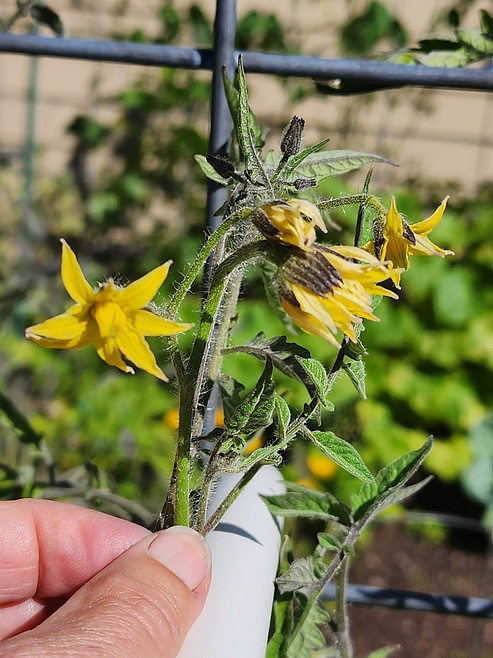
Blossoms like these in September have no chance of producing a ripe tomato.
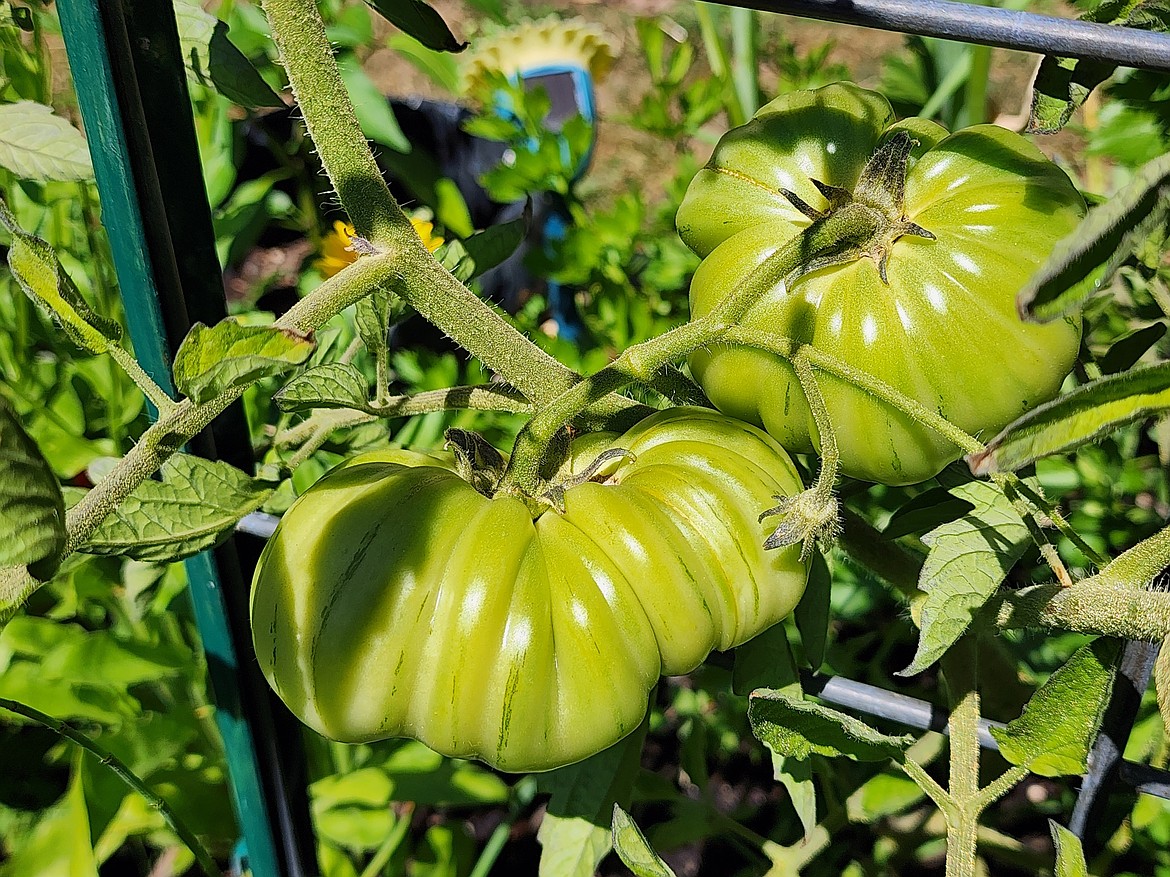
Not all green tomatoes will have a chance to ripen in September. These are mature green, meaning they’ve stopped growing and can ripen off the vine.
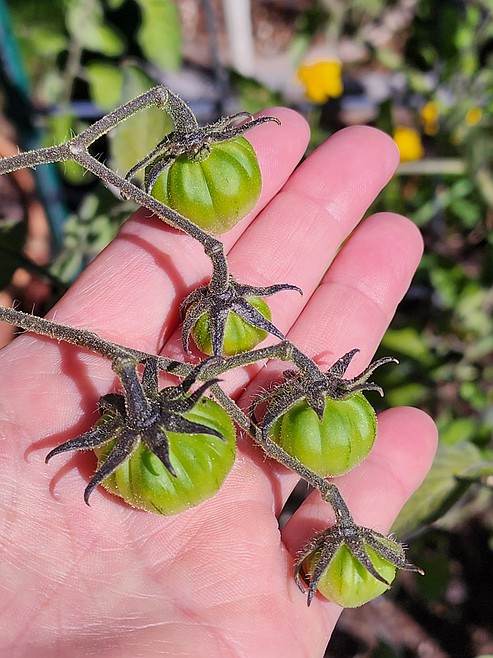
Small, immature tomatoes have no chance of ripening in September and should be removed and composted.
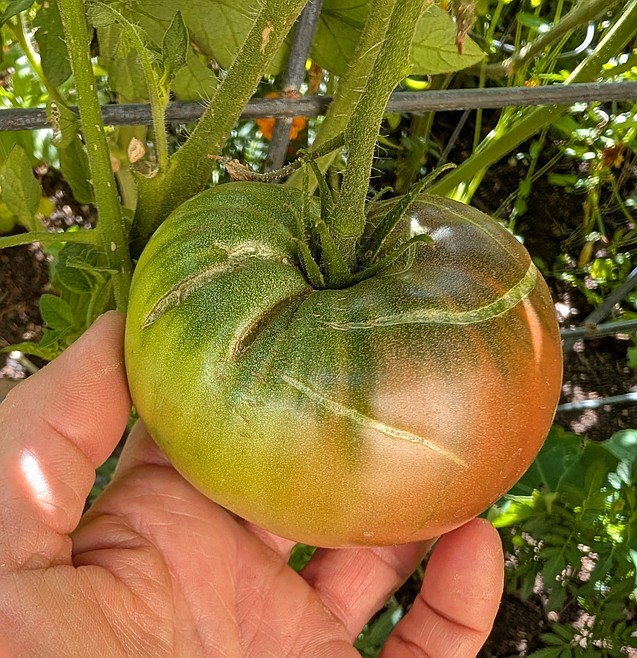
This Black Krim tomato is in the breaker stage, showing some color change. It also has a few cracks from recent rain – another reason to harvest it now.
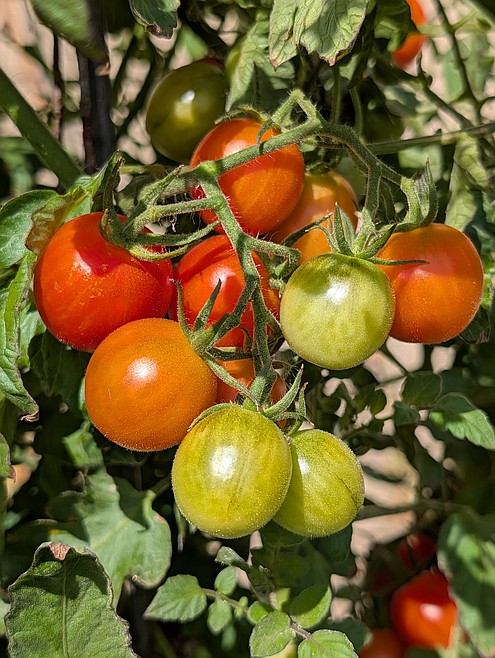
This cluster of cherry tomatoes shows various stages of maturity — some are ripe, many are in the breaker stage, some are mature green, and some are immature green.
I’m in my garden, looking at a jungle: before me is a tangle of cherry tomatoes in various stages of ripening … and blossoming. The next bed over holds the indeterminate beefsteaks — the biggies we wait for all summer. There, I’m seeing more of the same: some ripening, some mature greenies, and a whole lot of small green marbles staring back at me. And what’s this? Blossoms? Hello, Black Krim — it’s September already!
A month ago, I would have been delighted by this potential — a month ago, I was. Now, I have some tough decisions to make.
I like to think of this as September’s Tomato Triage: what gets harvested, what stays on the vine, and what, unfortunately, must go.
At this point in the season, the question is no longer “Will my tomatoes ripen?” but “Which tomatoes have a realistic chance of ripening before (or after) the season ends?”
First: Is the Tomato Mature Enough to Ripen?
When deciding what to triage, first decide if the tomato is mature enough to ripen. In other words, not all “green” tomatoes are equal. Some may be mature green, with a better chance of fully ripening on or off the vine. Others have no chance. So, how can you tell?
Depending on the variety and weather conditions, it takes six to eight weeks after pollination for the tomato fruit to reach full maturity. The tomato has reached, or is very close to, its expected full size (be it a beefsteak or a currant), and the seeds and internal tissues have developed enough for ripening.
But full maturity doesn’t mean fully ripe; the tomato is still green, but it has finished growing. In tomato-talk, this is known as the mature green stage.
Physically, the tomato changes from a hard, dull green orb to a lighter shade of green, somewhat softer and glossier. You may also notice a tinge of white or pale color near the blossom end.
The color will gradually intensify as the tomato reaches the breaker stage — the point where fruit begins to show its first notable change in color. This can be anything from the palest yellow to blush pink or creamy orange. In September, I harvest any tomato in this stage.
The September Triage: Stay, Pick, or Go
My triage system falls into three neat categories: what stays on the vine, what gets harvested, and what has to go — meaning it gets cut from the plant and composted.
• What Stays: Full-sized green fruit when no frost is predicted. If the tomato appears mature and there isn't an immediate frost threat, I’ll let it hang. My goal is to get it to the breaker stage on the vine.
As nights cool, fruit development slows. Temperature and ethylene influence tomato ripening, while pigments like lycopene and carotene produce the changing color. Surprisingly, light doesn’t influence tomato ripening.
The optimal temperature range for ripening is between 68 and 77 degrees. The further the temperature moves in either direction, the slower the process.
While we still have warm days, mature green tomatoes can continue their journey on the vine to the breaker stage.
• What Gets Picked: All the breakers. Once tomatoes reach the breaker stage, they can finish ripening elsewhere. You can spot them easily because they show just a tinge (or more) of color.
I know we all believe the “vine-ripened” tomato is the best. Still, tomatoes harvested at the breaker stage will continue to ripen and can develop excellent tomato flavor off the vine in a warm location out of direct sunlight.
This time of year, I harvest all the breakers to protect my hard-earned harvest from cracking due to fall rains, birds or squirrels, dropping temperatures, and the threat of an early frost. It's just a wise move.
• What Goes: Blossoms, tiny fruit, and obviously immature tomatoes. A hard truth: Blossoms have no chance of producing ripe tomatoes before the first frost. And those tiny newly set fruit? The same.
It’s time to toughen up, buttercup.
Grab your snips and remove the flowers and small, immature fruit so you're no longer asking the plant to support growth that has virtually no chance of producing a harvest.
While a mature-green tomato can ripen after it's picked, a very immature green tomato won’t ripen simply by being brought indoors — its best use now is in the compost pile.
Frost Is Forecast: Cover or Pick?
September can be a fickle month — summer may linger until October, or frost can end it all by mid-month. But not every frost forecast means the tomato season is over.
This is where watching the weather becomes important, keeping in mind that first-frost dates are probabilities, not appointments, and microclimates matter. One garden may freeze while another, just a few miles away, doesn’t.
Tomatoes are warm-season crops, and cold temperatures slow growth, maturity, and ripening, even if frost doesn’t kill them.
If a cold night is predicted but warmer weather follows, protect your plants with frost cloth or another suitable covering to buy more growing time. If repeated frosts or sustained cold weather are imminent, it’s probably time to harvest the fruit worth saving.
Bringing the Harvest Indoors
If Jack Frost is swinging on your garden gate, pick all mature green and breaker-stage tomatoes and bring them indoors.
Breaker-stage tomatoes can go on the kitchen counter and will usually ripen within several days, depending on temperature and how much color they already show.
Place mature green tomatoes in a single layer in a cardboard box, paper bag, or other container that lets you inspect them easily for decay, and keep them out of direct sunlight.
So … what about adding a banana or apple to those mature greenies? These fruits produce ethylene and can help speed ripening, but a mature tomato produces its own ethylene and will ripen without them. Remember, this only works with mature fruit — a banana can encourage ripening; it can’t manufacture maturity.
And What About the Ones That Won't Ripen?
Not every tomato needs to ripen to earn its keep. Many delicious ways to use mature green tomatoes include delectably moist green tomato pound cake (my favorite), salsa, relish, chutney, and, of course, fried green tomatoes. Just make sure they're ready to eat, not the tiny, underdeveloped fruits that really belong in the compost.
Work with the Season You Have Remaining
By now, success isn't measured by keeping every tomato plant producing until frost. It's about recognizing each fruit's stage of development and making the best use of the remaining growing time.
Leave the tomatoes that will still benefit from time on the vine; harvest those that can finish ripening indoors; and compost the ones that arrived too late to the party.
The September garden requires a little less optimism and a little more triage — but there's still plenty of tomato season left to salvage.
• • •
Candace Godwin is a certified Idaho Master Gardener, garden consultant, writer, and owner of The Coeur d’Alene Coop (thecoeurdalenecoop.com), a licensed nursery offering seasonal online plant sales.
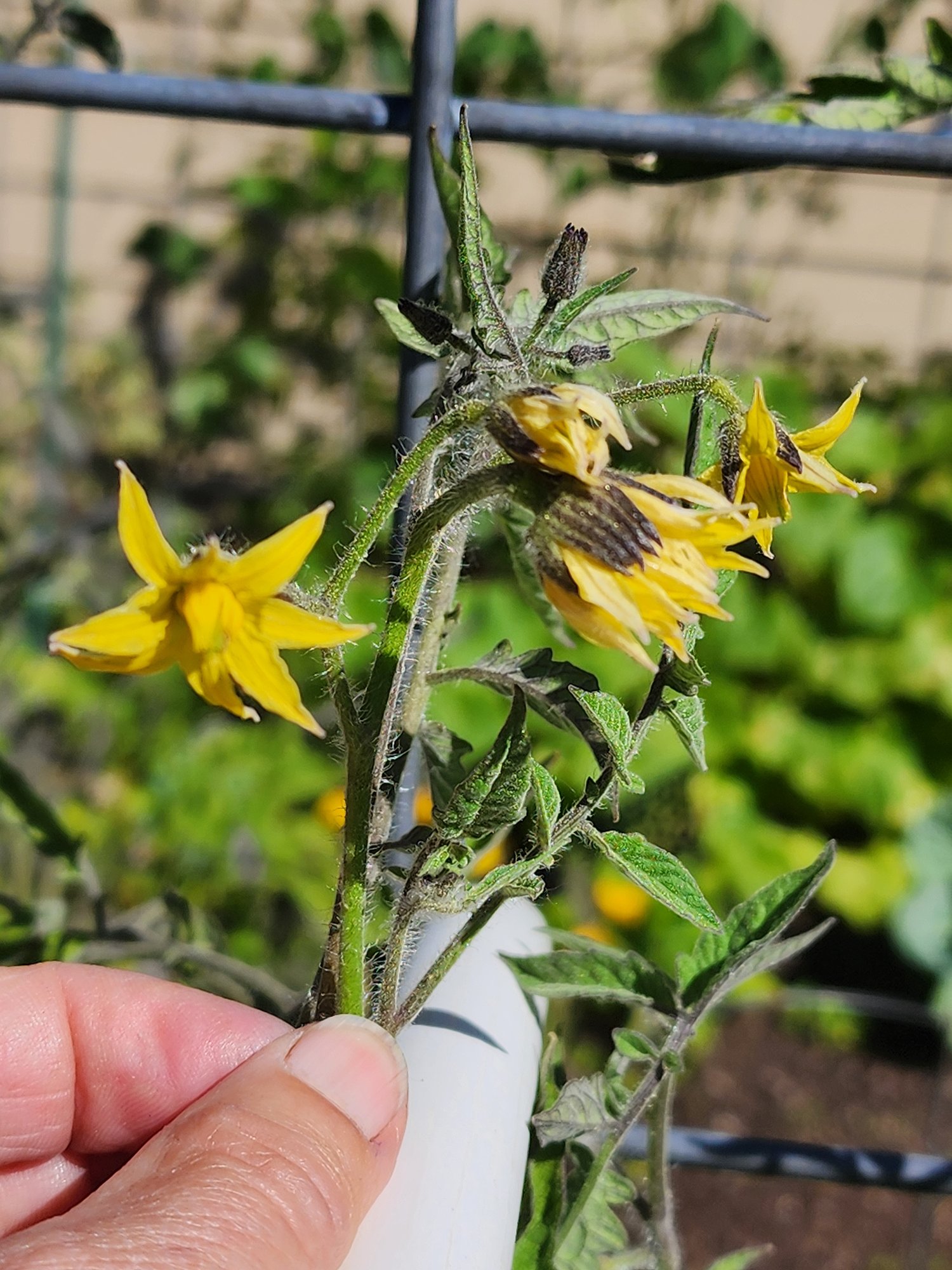 Blossoms like these in September have no chance of producing a ripe tomato.
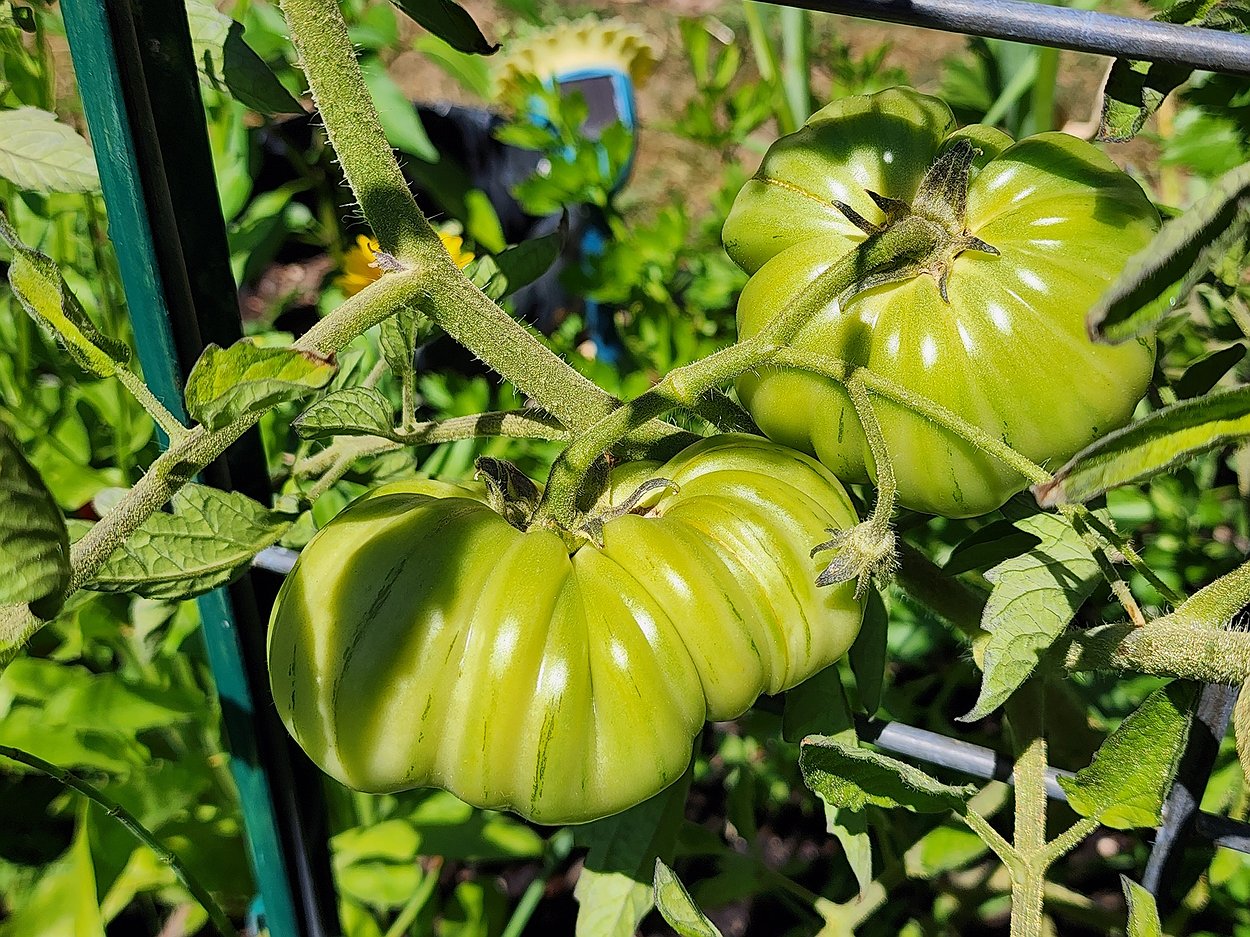 Not all green tomatoes will have a chance to ripen in September. These are mature green, meaning they’ve stopped growing and can ripen off the vine.
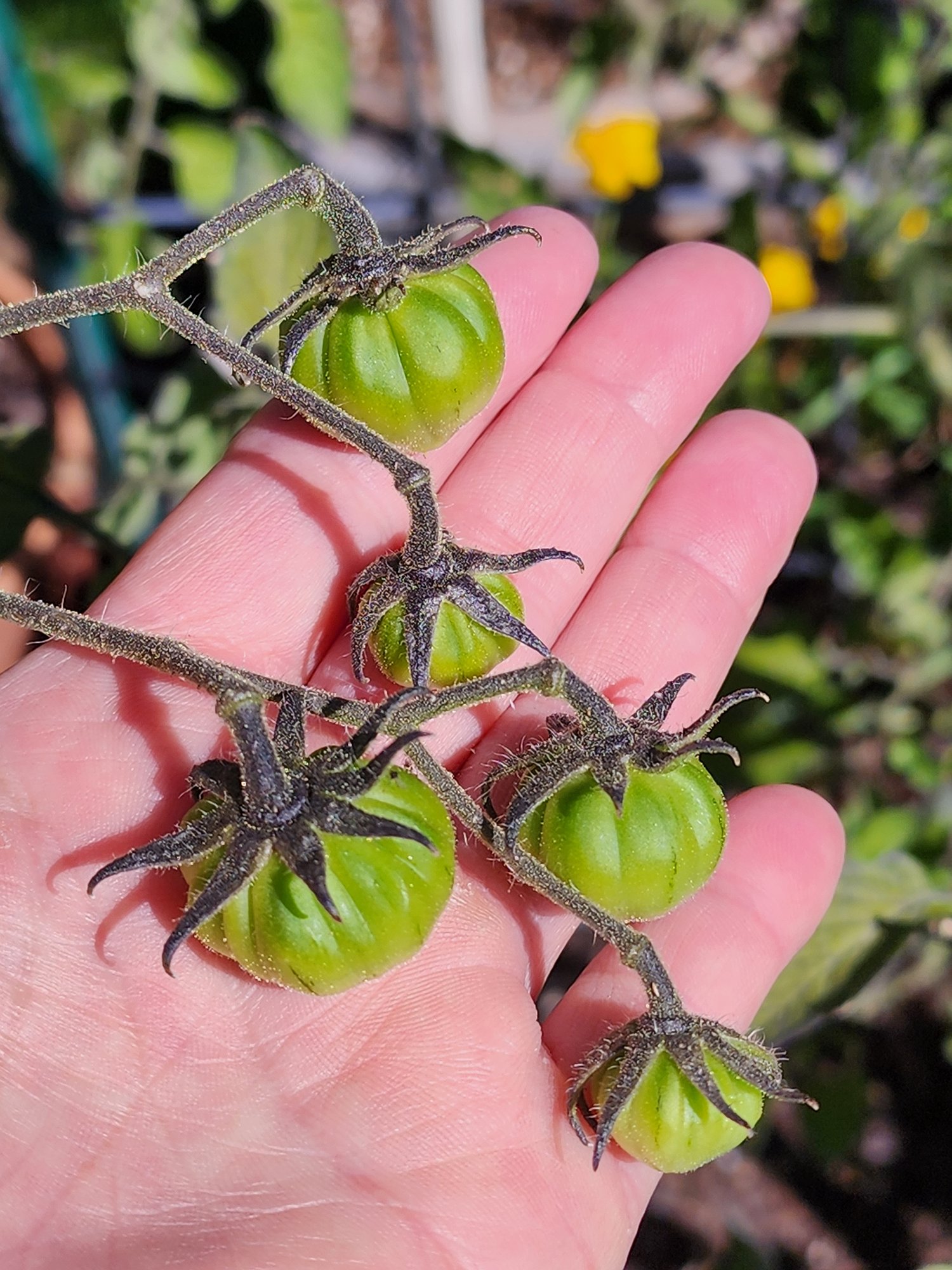 Small, immature tomatoes won't ripen in September and should be removed and composted.
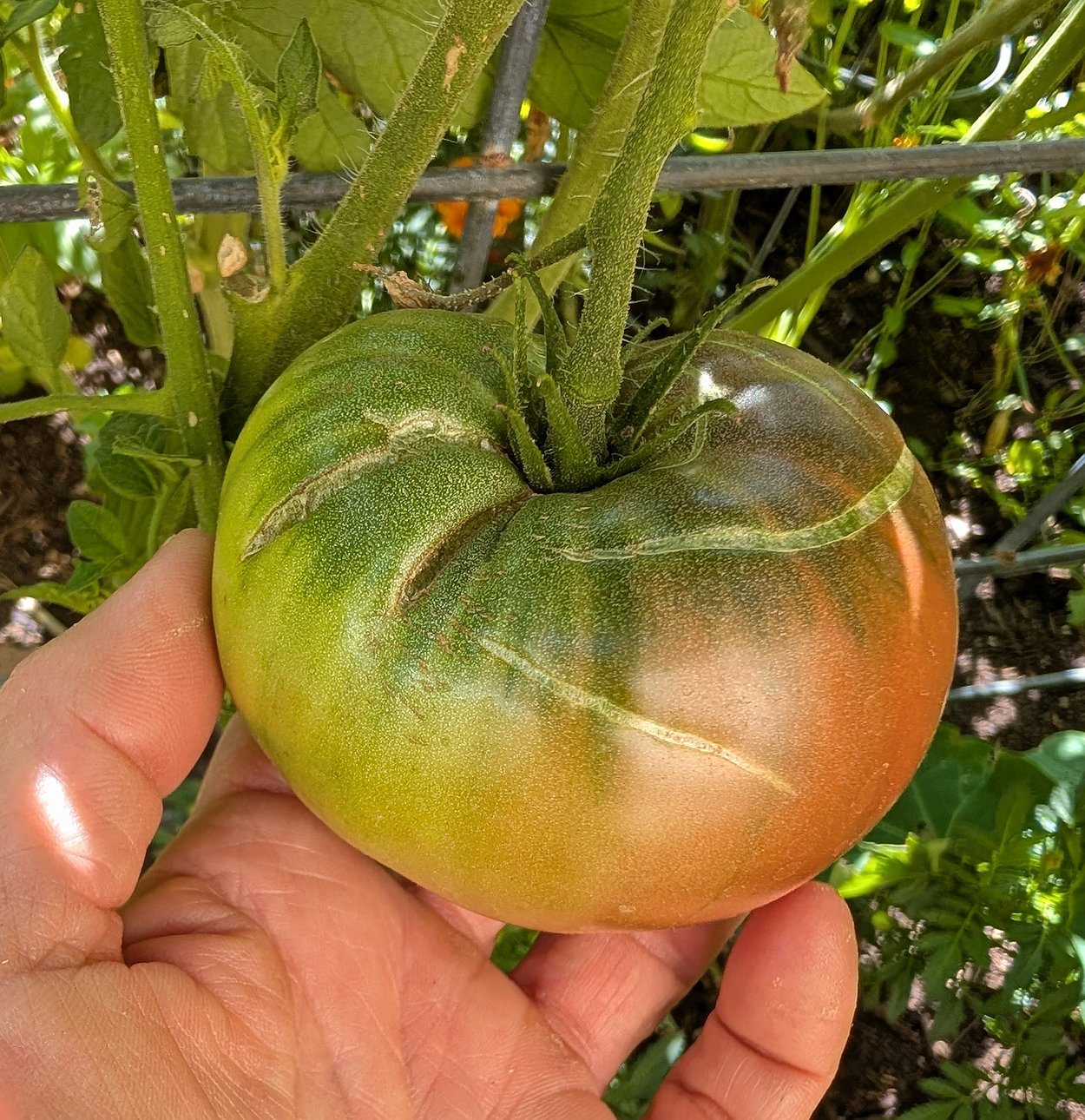 This Black Krim tomato is in the breaker stage, showing some color change. It also has a few cracks from recent rain – another reason to harvest it now.
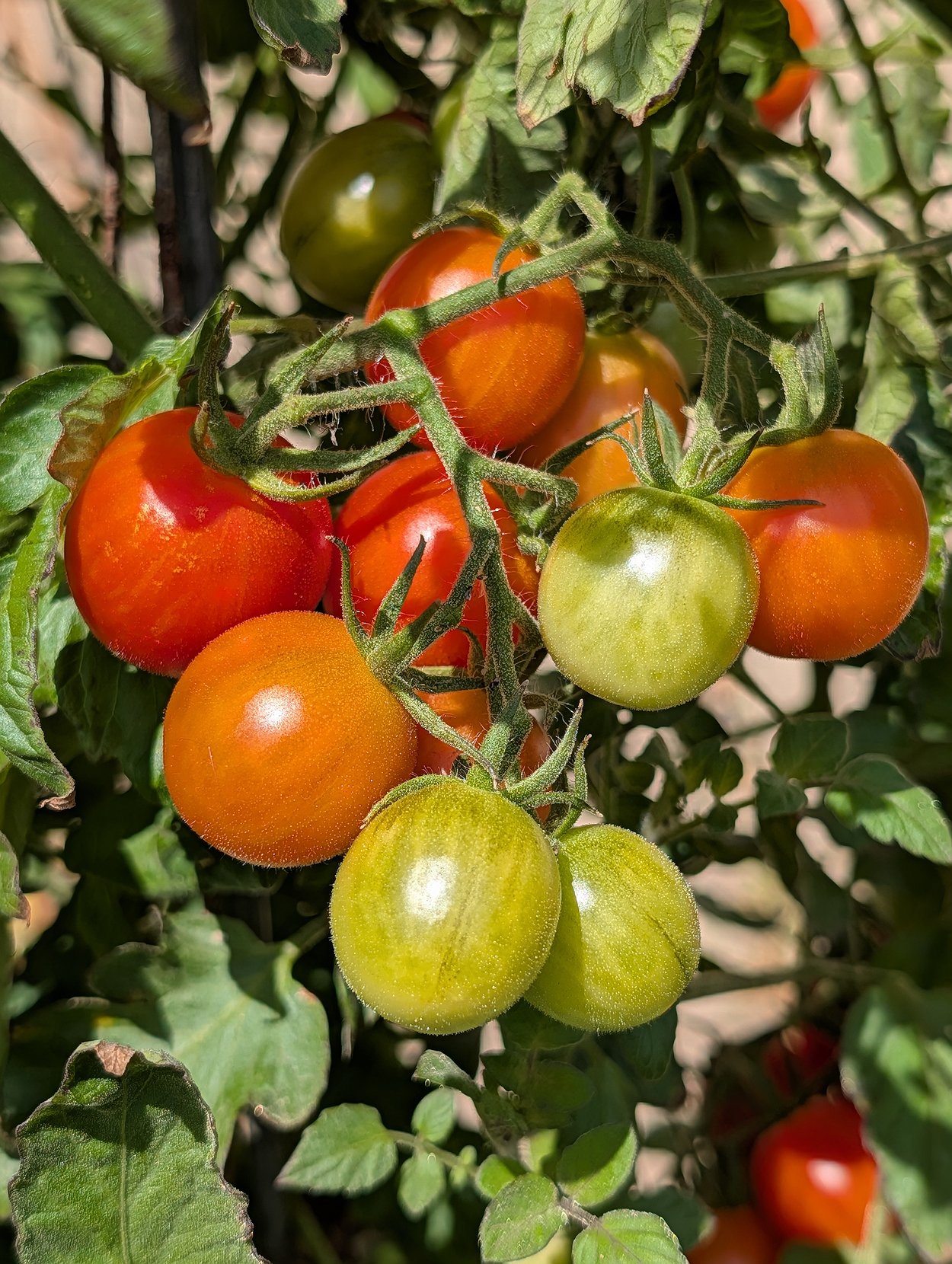 This cluster of cherry tomatoes shows various stages of maturity — some are ripe, many are in the breaker stage, some are mature green, and some are immature green.