
Being humble is no bumble
HARVEY MACKAY | Coeur d'Alene Press | UPDATED 3 weeks, 1 day AGO
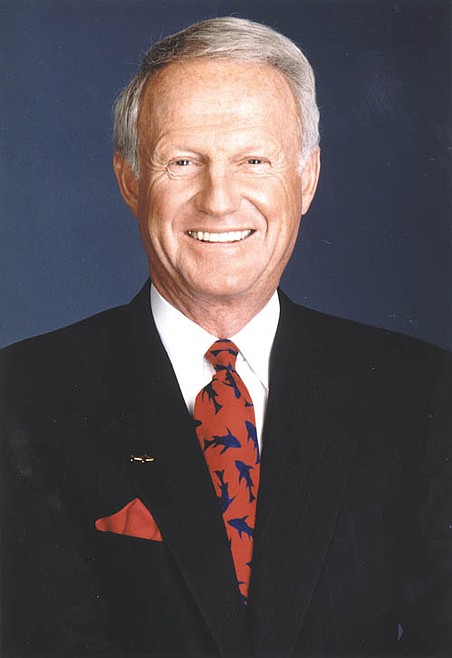
Harvey Mackay
A self-absorbed chief executive officer who, upon arriving at the hotel ballroom where his company's annual meeting was to be held, was stopped at the door by a uniformed guard. The guard asked the CEO to wait while he checked the list.
"But don't you know who I am?" sputtered the CEO.
"No, sir," the guard replied, "but as soon as I find out, I'll let you know."
I have noticed that the world is becoming a little more about "me" and less about "we." That's why I was excited to read Ethan Willis' new book, "Humble Power: Less Ego, More Impact, Better Results."
Frankly, I was more excited that Willis wrote what I consider to be the definitive study on being humble. Even though he has "built and sold and runs companies of enormous value and success," as Brendon Burchard writes in the foreword, "over decades, he's remained one of the most true, aligned and humble people in my life."
Willis begins his book with Los Angeles Dodgers superstar Shohei Ohtani, a $700 million batter-pitcher extraordinaire, arguably the greatest two-way player in modern baseball history. You might ask, how could you call one of sports' highest-paid players humble?
As Willis explains, it all goes back to his high school coach in Japan. The coach had a knack for cultivating character in addition to skill. Regarding pitchers, he said: "The mound is the most important place on the field. It's a stage ... You receive the most attention ... They are at the pinnacle. For the rest of the day, I tell them, 'You have to do the lowest job.'" That's why Ohtani fills water cups for his teammates between innings and stacks them on the cooler.
The adjective "humble" is mentioned in nearly every media interview with Ohtani.
Throughout the book, Willis offers a variety of stories about everyday people and corporate giants who exemplify humbleness. He also describes examples of how humility has decreased over the years.
And he distinguishes between phony, self-deprecating behavior and true humility. You'll learn that "humble power is a mighty and expansive force multiplier of good things." It is real, sincere and essential to great leadership.
As Willis writes, "When ego isn't in the way, criticism becomes information. Adjustment becomes possible. And improvement continues." Using the Ohtani example, "it's not merely that he succeeds despite being humble, rather it's that, to a substantial degree, he succeeds because of it."
Willis believes that humility grows out of two core beliefs:
1. Our perspective is limited and shallow.
2. There is a power and purpose beyond our own.
Those lead to developing humble attitudes of openness, curiosity and resilience, from which behaviors including listening, learning and serving follow. The power that those behaviors unlock opens the path to lead well and deliver sustainable results.
And yet, Willis maintains, even with these benefits, society is drifting away from humility. And that is going in the wrong direction. So he provides a road map on how to reverse the trend to improve your life, your relationships and your business.
He sums it up like this: Less ego. More impact. Better results.
Ethan divides his work into three sections: The Power of Personal Humility, The Power of Relational Humility and Leading with Humble Power.
"Personal humility clears the way for better results, wiser goals and a deeper kind of strength," he explains. He shares the very personal story of the humility his father showed as he was dying. He talks about how humility enabled the NASA scientist who helped map the moon.
The chapters on relational humility describe how collaboration rather than competition is essential to strengthening our connections to others, and the role that forgiveness plays in connections. Ethan stresses the close relationship between honesty and humility. He also describes the connection between gratitude and success.
Leading with "Humble Power," simply put, is "not about diminishing yourself — it's about amplifying others." He shows how humble leaders stay grounded. "Humble power isn't soft," he writes. "It's the kind of power that is strong enough to last."
Humble pie may taste awful, but it contains much nourishment.
Mackay's Moral: Humility is that precious quality that makes us feel smaller as we grow greater.
• • •
Harvey Mackay is the author of the New York Times bestseller "Swim With the Sharks Without Being Eaten Alive." He can be reached through his website, www.harveymackay.com, by emailing [email protected] or by writing him at MackayMitchell Envelope Co., 2100 Elm St. SE, Minneapolis, MN 55414.